Shopping Cart


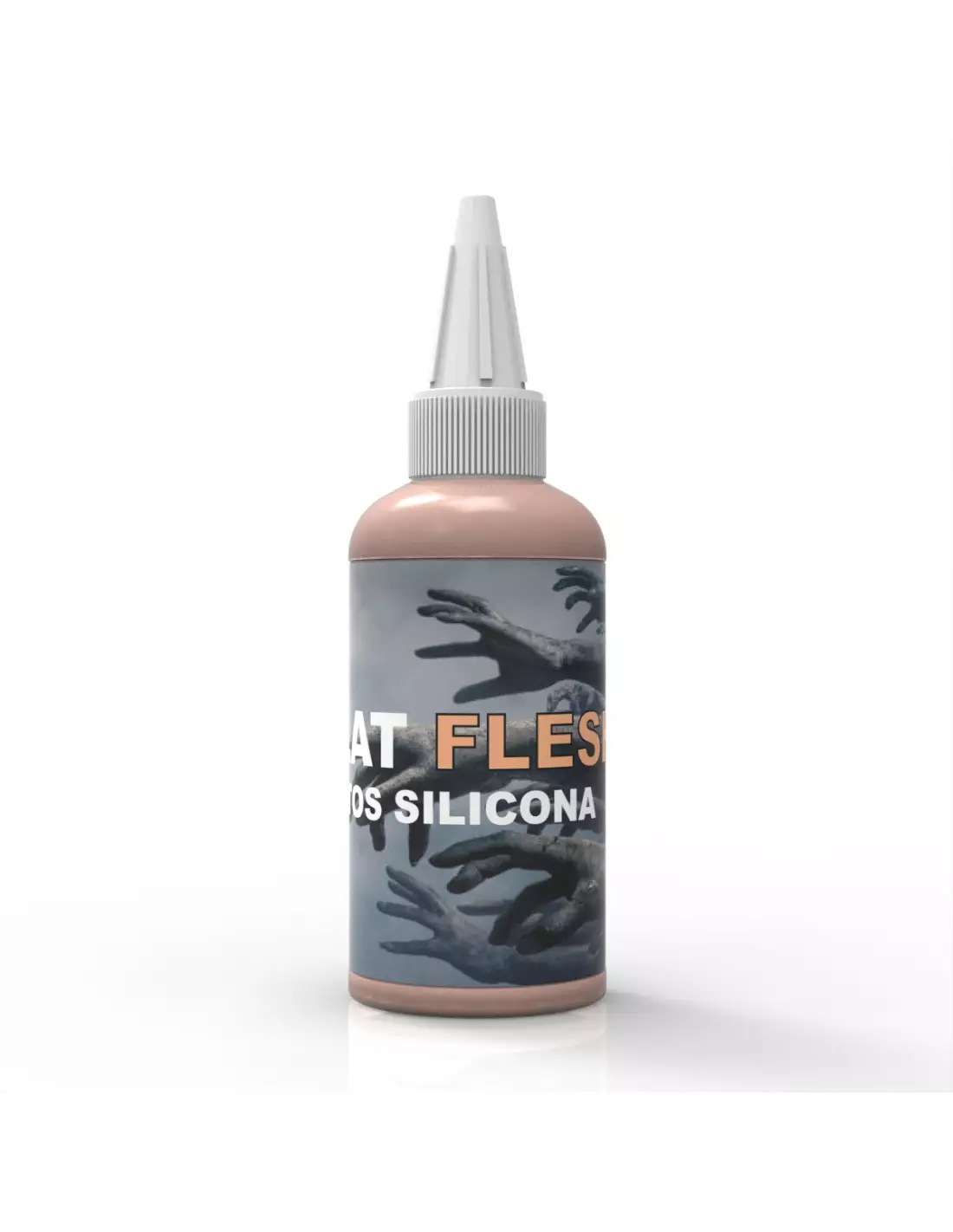
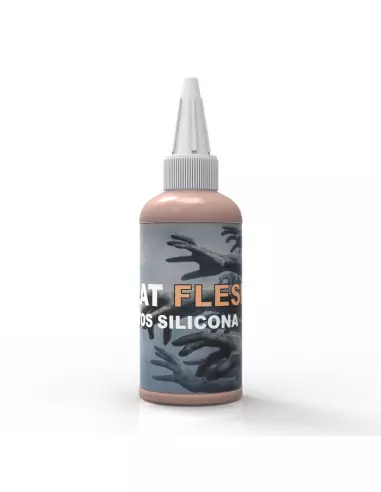
DYE PLAT - FLESH TONES
590330200
Product available with different options
€5.50
6,66 € Tax incl.
6,66 € Tax incl.
Highly concentrated liquid pigments in flesh tones for platinum and tin silicones. 20 g container. One drop colours large quantities.
DYE PLAT - Flesh Tones is a range of highly concentrated liquid pigments specifically formulated to colour silicones, both platinum (addition) and tin (condensation). They are specially designed to reproduce realistic flesh tones, essential for special effects, prosthetics and anatomical figures. Their high concentration makes them very cost-effective: tiny amounts produce intense, homogeneous colours.
Technical specifications
| Compatibility | Platinum (addition) silicones and tin (condensation) silicones |
|---|---|
| Pigment type | Liquid pigment for silicone |
| Colour range | Flesh Tones |
| Concentration | High — one drop colours large volumes |
| Format | 20 g container / 7-unit kit |
| Use | Direct mixing with uncured silicone |
What it is used for
DYE PLAT Flesh Tones is designed for any application where you need to reproduce skin tones with precision and consistency. Its formulation guarantees homogeneous dispersion throughout the silicone mass without altering mechanical properties or curing.
- Prosthetics and makeup special effects (SFX)
- Manufacture of anatomical figures and realistic mannequins
- Sculptures and human figure replicas
- Medical or paramedical silicone parts with skin finish
- Production of silicone dolls and reborn babies
- Intrinsic and extrinsic layers in platinum prosthetics
- Bulk colouring of silicones for wound, burn and aged skin effects
How to use it
- Prepare the amount of uncured silicone you need (part A or base mix, depending on the system).
- Add a small amount of DYE PLAT Flesh Tones pigment directly to the silicone. Start with one drop per 100 g of silicone and adjust until you achieve the desired shade.
- Mix thoroughly with a spatula or stirring rod for at least 1–2 minutes, making sure to scrape the sides and bottom of the container thoroughly.
- Combine different shades from the Flesh Tones range to nuance and achieve the exact skin colour you need.
- Once you have the colour, add the catalyst (for two-component silicones) and mix again following the silicone's instructions.
- Pour or apply the pigmented silicone according to your usual moulding or encapsulation process.
- Allow to cure under the conditions recommended by the silicone manufacturer.
Important notice — Inhibition in platinum silicones: If you are using DYE PLAT Flesh Tones with platinum (addition) silicones, bear in mind that these silicones are very sensitive to cure inhibition. Make sure that all materials in contact (mould, model, tools, gloves) are free from sulphur, tin, amines, cyanoacrylate adhesives, sulphur-containing clays, latex or residues from other catalysts. Contamination can cause the silicone to fail to cure correctly on the surface or throughout the mass. Always carry out a compatibility test before a full production run.
Usage tips
Start with a small amount of pigment
The concentration of DYE PLAT Flesh Tones is very high. Always add pigment gradually: it is far easier to darken a shade than to lighten it. One drop in 100 g of silicone already produces a perceptible colour. For very light or translucent tones (useful for surface layers of prosthetics), use minimal amounts and mix well before assessing the result.
Combine shades for greater realism
The Flesh Tones range includes several colours designed to be mixed together. Combining a lighter base tone with small additions of darker or pinkish tones allows you to accurately reproduce different skin phototypes. Test in small amounts on paper or transparent plastic to preview the cured colour before preparing the full mix.
Batch consistency
If you need to reproduce an exact shade across several castings (for example, for a production run), record the proportions of each pigment and the amount of silicone used with precision. Weigh the pigment on a precision scale rather than counting drops, as drop size can vary. This ensures consistency across different production runs.
Frequently asked questions
Do these pigments alter the silicone's cure time?
Under normal conditions, DYE PLAT Flesh Tones does not significantly alter the silicone's cure time. As pigments specifically formulated for silicones, their chemistry is compatible with both platinum and tin systems. However, if you add excessive amounts, slight variations may occur. Always work within the recommended percentages (generally between 0.1% and 2% by weight relative to the silicone).
Can I use these pigments with any silicone?
DYE PLAT Flesh Tones is compatible with platinum (addition) silicones and tin (condensation) silicones. It is not formulated for polyurethanes, resins or other elastomers. If you need to colour polyurethane resins or foams, consult the range of specific pigments for those materials in the Feroca catalogue.
Is the colour I see in the container the final cured colour?
Not necessarily. The colour of the silicone may vary slightly between the liquid and cured states, depending on the base silicone used (some are more translucent, others more opaque) and the pigment concentration. We recommend always doing a colour test on a small amount before preparing the final mix.
How much pigment do I need per 100 g of silicone?
DYE PLAT Flesh Tones is highly concentrated. In most cases, between 0.5 g and 2 g per 100 g of silicone is sufficient to achieve a solid colour. For translucent tones or glaze layers, 0.1–0.3 g is enough to appreciate the shade. Weigh with a precision scale to control the result accurately.
Can different shades be mixed together?
Yes. All shades in the DYE PLAT range are miscible with each other, so you can mix Flesh Tones to obtain the exact hue you need. You can also combine them with other colours from the DYE PLAT range (whites, yellows, reds) to fine-tune the result. Remember to record the proportions so you can reproduce the shade in future castings.
Does the pigment migrate or bleed over time?
No. As they are specifically formulated for silicones, DYE PLAT pigments become trapped within the silicone matrix once cured. They do not migrate, bleed or detach under normal conditions of use. This stability is especially important in prosthetics applications or parts in contact with skin.
How much does a 20 g container yield?
Thanks to its high concentration, a 20 g container of DYE PLAT Flesh Tones can colour between 1 kg and 20 kg of silicone, depending on the desired colour intensity. For soft, translucent skin tones, the yield is greater. For solid, intense colours, consumption is somewhat higher, though it remains very economical per piece produced.
Can I use these pigments to paint the surface of silicone instead of mixing them into the bulk?
DYE PLAT Flesh Tones is intended for bulk mixing (intrinsic colouring). If you want to paint the surface of an already cured silicone, you need a suitable medium to act as a vehicle and provide adhesion: the pigment is generally dissolved in a small percentage of uncured silicone and applied as an extrinsic layer before final curing, or a silicone-specific paint medium is used. Contact the Feroca technical team for guidance based on your specific application.
No reviews
Tap to zoom