Shopping Cart



Burlap
103300001
€4.00
4,84 € Tax incl.
4,84 € Tax incl.
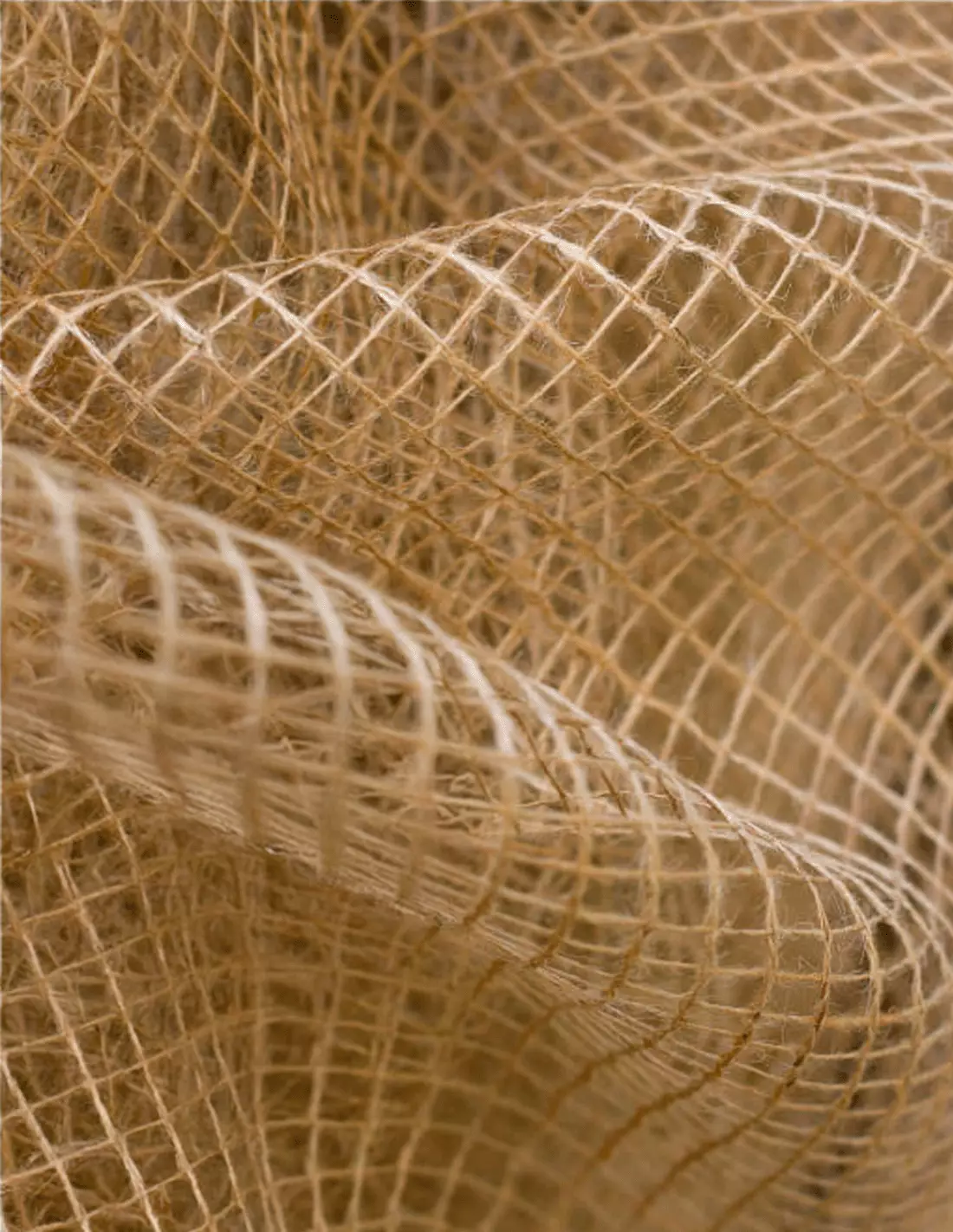
Natural jute burlap, 82 g/m², 160 cm wide. Ideal for plaster reinforcement in moulds, mother moulds and scenic structures.
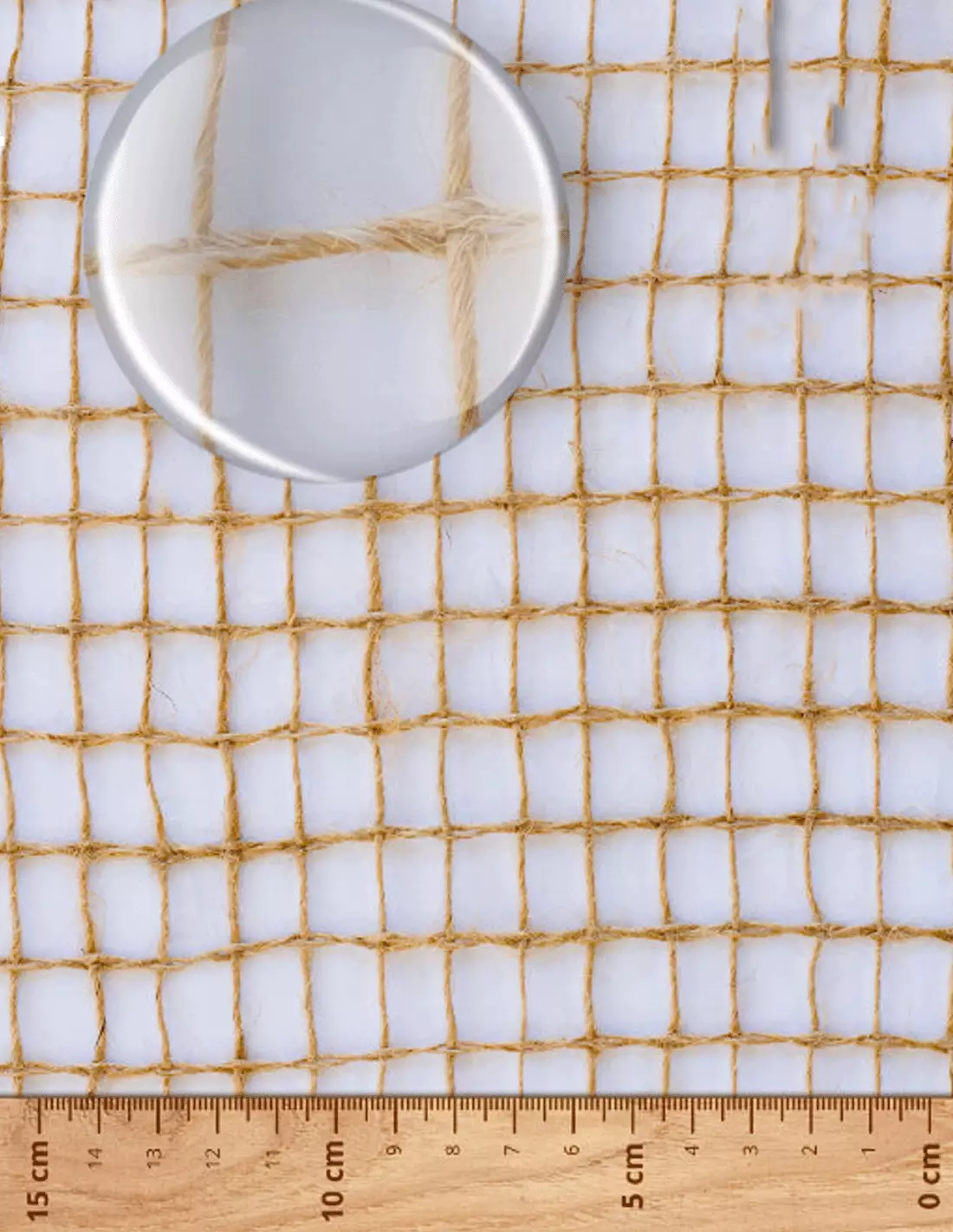
Burlap is a natural jute fabric weighing 82 g/m² with an open weave that makes it particularly effective as a structural reinforcement material. Combined with plaster or resins, it provides mechanical strength and cohesion to surfaces that would otherwise be fragile. It is lightweight, easy to handle and 100% natural, making it the most economical and versatile solution for mother moulds, shells and lightweight scenic structures.
Technical specifications
| Property | Value |
|---|---|
| Material | Natural jute (100% natural) |
| Weight | 82 g/m² |
| Width | 160 cm |
| Availability | Various sizes |
| Strength | High |
What it is used for
Burlap is used as a fibrous reinforcement in combination with stiffening materials such as plaster or resins. Its open weave allows the binding material to penetrate completely between the fibres, creating a strong, lightweight composite structure with a clean finish. It is a common material in special effects workshops, set design, sculpture and technical modelling.
- Fabrication of mother moulds and rigid shells over silicone moulds
- Reinforcement of Escayola Exaduro plaster pieces to increase their resistance to breakage
- Scenic and lightweight prop structures impregnated with plaster
- Three-dimensional artistic modelling over maquettes or wire armatures
- Construction of organic shapes for special effects (FX) and prosthetic makeup
- Reinforcement of moulds and body casts (LifeCast) in combination with plaster bandages
- Lightweight laminates with polyester or epoxy resins when a natural reinforcement is required
How to use it
- Cut the burlap to the required size and shape before starting, as wet material is harder to handle with scissors.
- Prepare the plaster mix with water following the manufacturer's ratios until you obtain a smooth, creamy consistency.
- Submerge the pieces of burlap in the plaster mix, making sure the fabric is completely impregnated on both sides.
- Remove excess plaster by running the impregnated fabric between your fingers or over the edge of the container.
- Place the burlap over the base structure, silicone mould or form you want to stiffen, and adjust it to the desired geometry before the plaster begins to set.
- Apply successive layers (2–3 layers is typical for a strong shell), allowing each layer to gel slightly before adding the next.
- Allow to dry completely until the piece has fully hardened before demoulding or handling.
Usage tips
Prepare cuts before mixing the plaster
Plaster has a limited working time. Cut all the burlap into pieces of the appropriate size before preparing the mix. Small pieces (10–15 cm) are easier to overlap and adapt to curved or relief surfaces.
Apply release agent to the mould before laminating
If you are using burlap with plaster to make a shell over a silicone mould, apply a coat of release wax to the silicone beforehand. This way, the plaster shell will separate cleanly without damaging the mould. Avoid solvent-based spray release agents on soft silicones.
Combine with plaster bandages for body work
For larger structures or body moulds (LifeCast), burlap works very well alongside Sio-2 plaster bandages. The bandages offer speed of application on flat or convex surfaces, while impregnated burlap allows you to reinforce areas of greater mechanical stress or the edges of the mother mould.
Frequently asked questions
Which plaster is most suitable for impregnating burlap?
Escayola Exaduro is one of the most recommended for this use because it combines good fluidity in liquid state (which makes fabric impregnation easy) with a final hardness superior to that of conventional plasters. You can also use Arquero or Aladur depending on the final strength you need.
How many layers of burlap and plaster do I need for a strong shell?
For a general-purpose shell or mother mould, 2–3 overlapping layers is sufficient. If the piece will be subject to significant mechanical loads or is large in size, you can apply 4–5 layers in the areas of greatest stress. Allow each layer to gel before adding the next to prevent slipping.
Can burlap be used with resins instead of plaster?
Yes. Burlap can be impregnated with polyester or epoxy resins, although in that case it is also worth considering fibreglass if high structural strength is required. Jute burlap provides a more natural finish and is easier to handle by hand, but its final mechanical strength is lower than that of glass or carbon fibre fabrics.
Is it safe to use in body moulds or on skin?
Jute burlap itself is a natural, harmless material. The risk in body applications comes not from the fabric but from the impregnating material: plaster generates heat as it sets (exothermic reaction) and must not be applied directly to skin without protection. For direct body casting (LifeCast), use the alginate and plaster kit with skin-specific materials.
What is the difference between using burlap and using plaster bandages?
Plaster bandages come pre-impregnated with dry plaster and only need to be dipped in water, making them faster and cleaner to use. Burlap is more economical per square metre, allows you to control the amount of plaster applied and adapts better to complex shapes as it can be cut into irregular pieces. Both are complementary and are frequently used together.
Can I paint or finish the surface of a burlap and plaster piece?
Yes. Once the plaster has dried and hardened, the surface can be sanded, painted with acrylic or water-based paints, and even sealed with resins or varnishes. Make sure the piece is completely dry before applying any finish, as wet plaster can take several hours to lose all residual moisture.
What sizes are available?
Burlap is available in various sizes with a standard width of 160 cm. Check the available options on the product page or contact Feroca for advice on the quantity you need for your project.
Can it be used as reinforcement in composite laminates?
Yes, though with limitations. Jute burlap can be used as a natural reinforcement in low-structural-demand laminates. For higher-performance composite applications, the most common alternative is fibreglass. In any case, burlap is an interesting option when a natural, sustainable material is sought.
No reviews
Tap to zoom