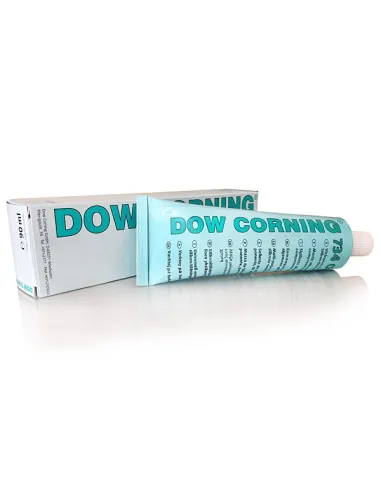
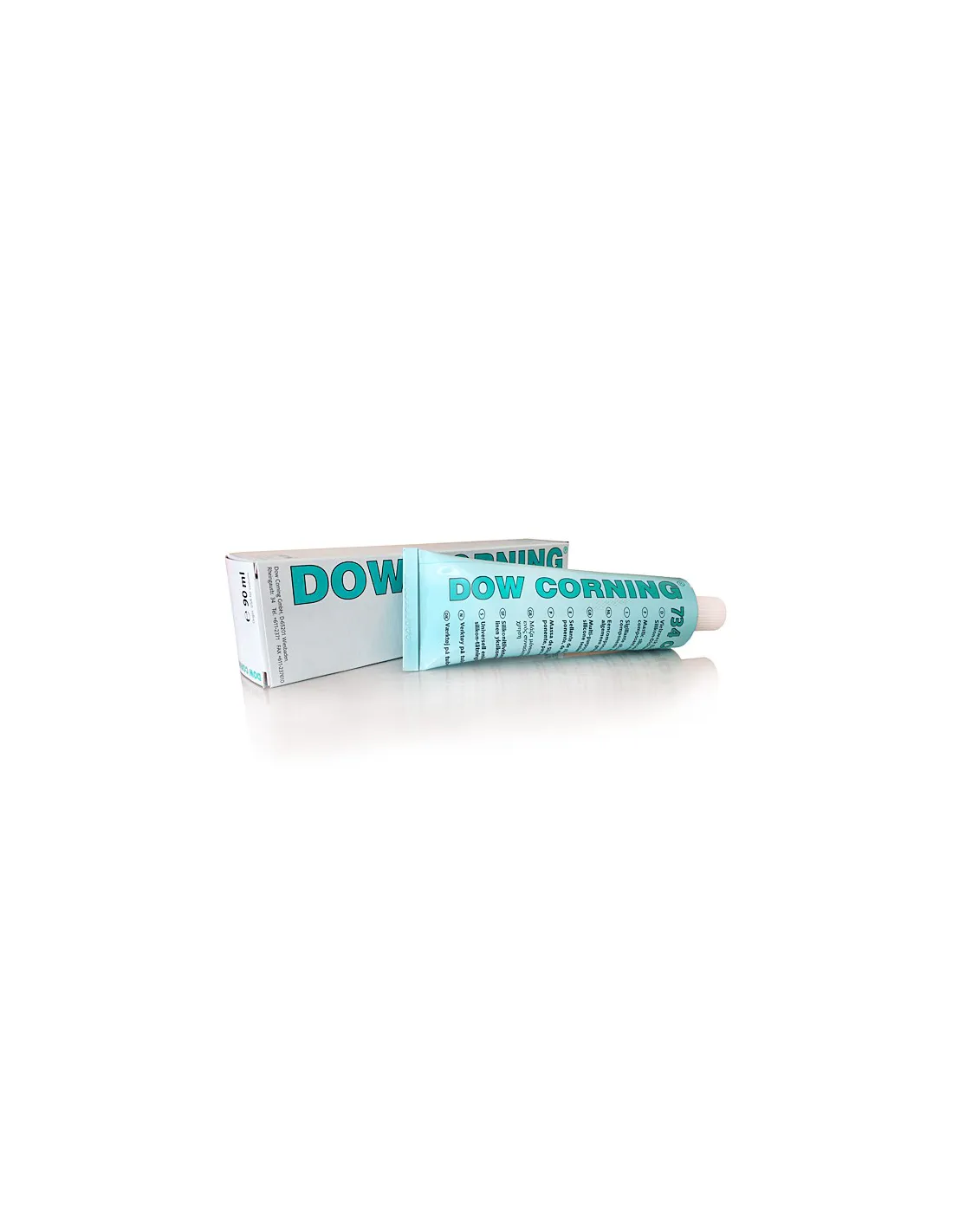
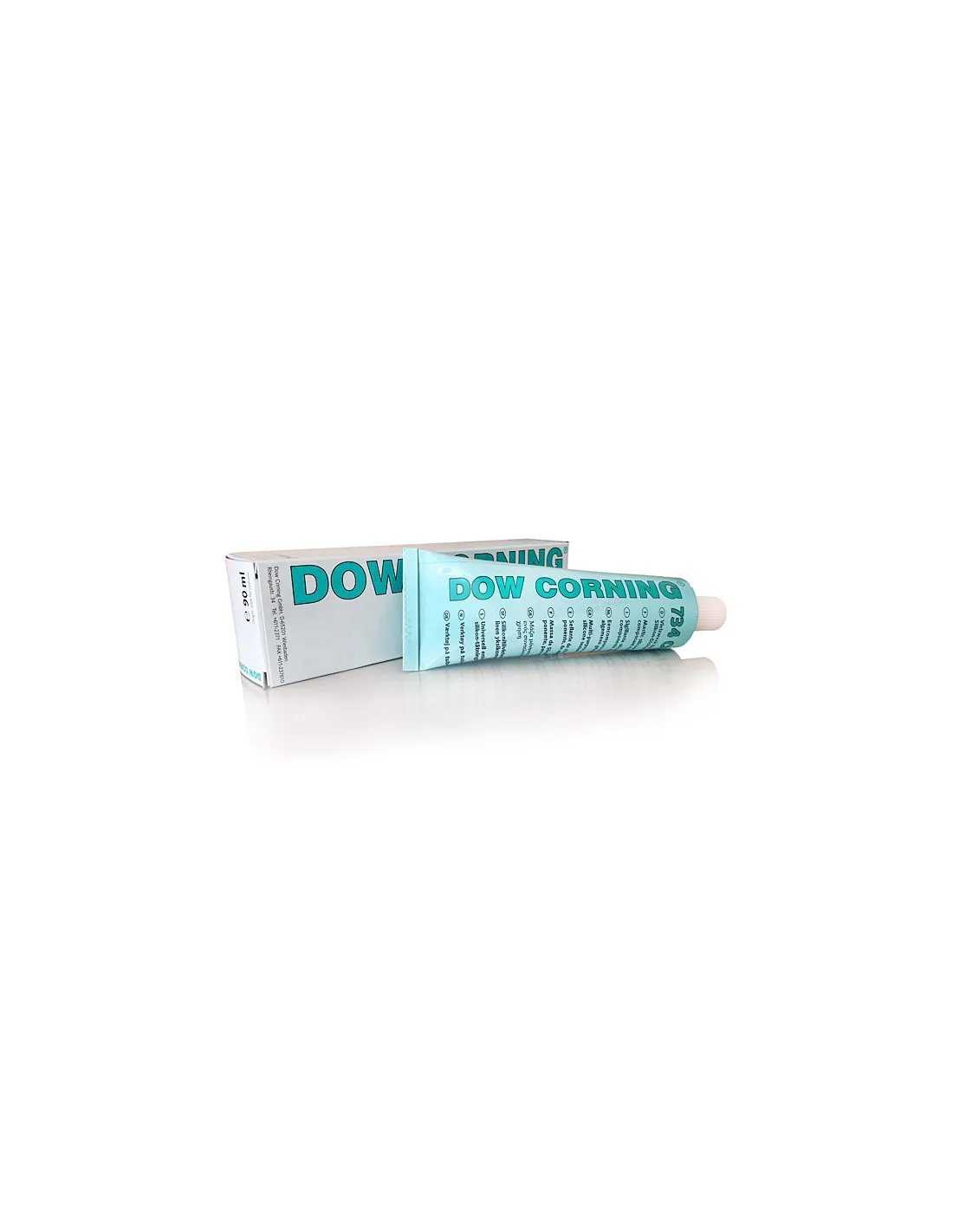
DC 734 is a transparent single-component silicone that cures by ambient moisture, more fluid than the DC 732, making it the perfect choice for repairing broken moulds, bonding silicone pieces and, above all, for painting cured silicone mixed with specific pigments. Compatible with both tin and platinum silicones.
Technical specifications
| Property |
Detail |
| Type |
Single-component silicone (RTV-1) |
| Colour |
Transparent |
| Cure |
Ambient moisture cure |
| Viscosity |
Fluid (more fluid than DC 732) |
| Packaging |
90 ml |
| Main applications |
Adhesive, mould repair, silicone painting |
What it is used for
DC 734 covers a wide range of workshop needs, from quick mould repairs to the creation of high-quality silicone paints for prosthetics and special effects. Its fluidity makes it easy to penetrate fine cracks and to dilute with solvents for thin-layer application.
- Repairing cracks and breaks in silicone moulds (both tin and platinum)
- Bonding and joining silicone pieces: masks, prosthetics, encapsulations
- Formulating silicone paints by diluting with Naphtha and adding silicone pigments or Key-Pigments for FX
- Sealing joints and edges on finished silicone pieces
- Finishing and touch-ups on already cured silicone pieces
- Base for intrinsic paints in character work and special effects
How to use it
- Make sure the surface to be repaired or bonded is clean, dry and free of dust or Release agent residue.
- For use as an adhesive or sealant: apply DC 734 directly onto the area to be treated using the nozzle or a fine spatula.
- Press the parts together and hold in position until the product achieves initial set (approximately 10–20 minutes depending on ambient humidity).
- Allow to cure fully in an environment with normal humidity. Full cure may require several hours or up to 24 h depending on the thickness applied.
- To formulate a silicone paint: mix DC 734 with Naphtha until the desired fluidity is achieved, add the chosen silicone pigment and apply with a brush or airbrush onto the cured silicone piece.
- If you need to speed up the cure, you can add a few drops of Curing Agent 81 VF to the mixture.
- For thicker or vertical applications, add Thixo Additive to prevent sagging, without affecting cure time.
Usage tips
Ratios for silicone paint
There is no single formula: the ratio between DC 734 and Naphtha depends on the application technique. For brush work, a 1:1 dilution is usually sufficient. For airbrushing, more solvent may be needed. Start with small amounts and adjust until you achieve the right fluidity. The resulting paint should be applied in thin layers, allowing each coat to dry before applying the next.
Mould repair: achieving a solid bond
For mould tears, clean the edges of the break thoroughly and apply DC 734 to both faces. Join the parts and, if possible, reinforce the outside with a patch of fine fabric soaked in DC 734. Full cure before using the mould again is essential for the repair to hold without the crack reopening. If the mould is platinum-based and you need to work faster, Curing Agent 81 VF will speed up the process.
Differences from DC 732 and when to choose each one
DC 732 is more viscous and paste-like, ideal for sealing and bonding where the product needs to stay in place without running. DC 734, being more fluid, is the right choice when you need penetration into fine cracks, brush application or the formulation of diluted silicone paints. For vertical applications with DC 734, use Thixo Additive to add body without sacrificing its controlled fluidity advantage.
Frequently asked questions
Does it bond silicone to silicone?
Yes. DC 734 is one of the few products capable of effectively bonding cured silicone to cured silicone. It is the go-to adhesive for repairing moulds and joining silicone pieces in the workshop.
Is it compatible with both platinum and tin silicones?
Yes, DC 734 works as both an adhesive and a silicone paint on both types. You can use it to repair moulds of any kind or to paint finished pieces regardless of the silicone base used.
Can it be used undiluted for painting silicone?
Yes, but applying it undiluted will result in a thicker coat with less surface penetration. For thin, even layers that bond well to the piece, it is recommended to dilute it with Naphtha before adding the pigment.
What solvent is used to dilute it?
The recommended diluent is Naphtha (petroleum ether 40–60) or hexane. Both solvents are compatible with silicone and evaporate without leaving residue. Avoid aggressive solvents such as acetone or MEK, which can alter the product's properties.
How long does it take to cure?
DC 734 cures by ambient moisture. A surface skin forms within 10–20 minutes under normal conditions. Full cure depends on layer thickness: thin applications may complete in a few hours, while thicker layers may require up to 24 hours. If you need to speed up the process, add a few drops of Curing Agent 81 VF.
Does the thixotropic additive affect cure time?
No. Thixo Additive only modifies the viscosity of the product, adding body and preventing sagging on vertical surfaces. Cure time remains the same as without the additive.
Can it be pigmented to achieve any colour?
Yes. Being transparent, DC 734 is a perfect neutral base for adding silicone pigments or Key-Pigments for FX to achieve virtually any shade. It is important to use pigments specifically designed for silicone, as conventional pigments will not disperse correctly and may inhibit the cure.
Can it be used on materials other than silicone?
DC 734 is formulated primarily for use on silicone. It can bond to some substrates such as glass, metal or ceramic, but its optimal use in a workshop context is as an adhesive and paint for silicone pieces and moulds.