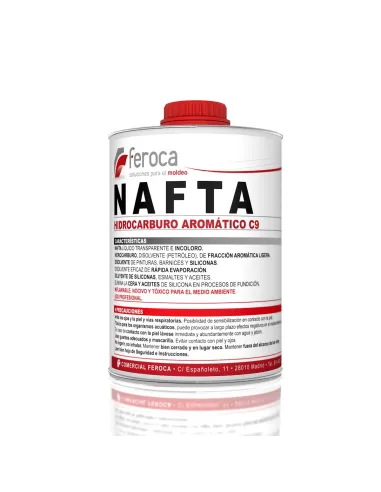
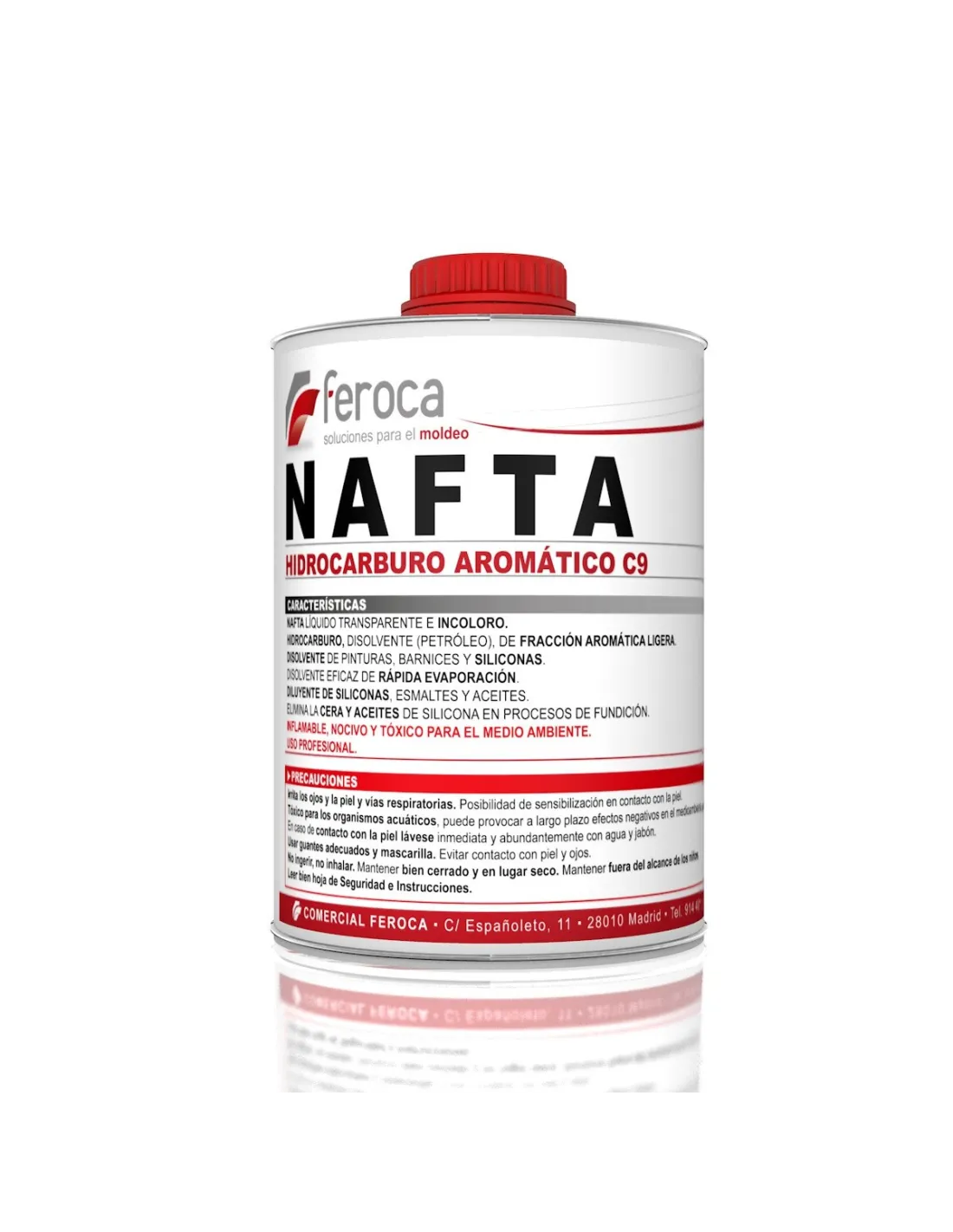
Naphtha is a C9 hydrocarbon solvent, light aromatic fraction of petroleum, with very fast evaporation and high efficiency as a thinner and cleaner. It is the reference product for cleaning tools, removing silicone residues, wax and silicone oils in casting and moulding processes, and for adjusting the viscosity of enamels, oils and one-component silicones.
Technical specifications
| Appearance | Clear, colourless liquid |
|---|
| Composition | C9 hydrocarbon, light aromatic fraction of petroleum |
|---|
| Main function | Solvent and thinner |
|---|
| Evaporation | Fast |
|---|
| Application | Silicones, enamels, varnishes, oils |
|---|
| Use | Professional |
|---|
What it is used for
Naphtha has multiple uses in professional workshops, especially in moulding processes, special effects and work with silicones:
- Thinner for one-component silicones to adjust their application viscosity.
- Cleaning tools, spatulas, brushes and surfaces with silicone or enamel residues.
- Removal of waxes and silicone oils from moulds before or after the casting process.
- Thinner for enamels, varnishes and industrial oils.
- Pre-degreasing of surfaces before applying silicone paints or other coatings.
- Cleaning application equipment (spray guns, brushes) after working with silicone or resin-based products.
How to use it
- Make sure you work in a well-ventilated space, away from heat sources, flames or sparks. Naphtha is flammable.
- Use nitrile gloves and eye protection. Avoid prolonged contact with skin.
- To clean surfaces or tools: soak a cloth or absorbent paper with the required amount of naphtha and rub the area to be cleaned.
- To dissolve or thin one-component silicones such as DC 734 or Elastosil A07: add naphtha in small amounts, mixing until the desired viscosity is achieved.
- To remove silicone oils from moulds: apply naphtha to the surface, let it act for a few seconds and wipe off with a clean cloth.
- Allow the naphtha to evaporate completely before continuing with the next step of the process.
- Seal the container tightly after each use and store in a cool, dry and ventilated place, away from ignition sources.
Safety warning: Naphtha is flammable, harmful and toxic to the environment. Keep the product away from flames, sparks and hot surfaces. Do not pour down drains or into the natural environment. Use only with adequate ventilation. Professional use only. Consult the Safety Data Sheet (SDS) before handling the product.
Usage tips
Evaporation and waiting times
Naphtha evaporates quickly, but do not proceed to the next step of the process until there is no trace of smell or moisture. On porous surfaces or in recesses, evaporation time may be longer. If you use naphtha as a thinner for a one-component silicone, make sure the final mixture is homogeneous before applying.
Minimum effective quantity
Always use the minimum amount necessary. Excess naphtha in the mixture with silicone can alter its final properties (adhesion, cure time or mechanical resistance). For cleaning, soak the cloth — do not saturate the surface — to avoid unnecessary residues and reduce vapour exposure.
Compatibility and limitations
Naphtha is compatible with silicones, enamels and industrial oils, but it is not a universal solvent. Do not use it to clean cured epoxy or polyurethane resins: in those cases specific solvents are required. Do not combine it with water-based paints or coatings either. If you are going to apply Plat-Paint New or other silicone paints, make sure the surface is completely dry and free of naphtha residues before painting.
Frequently asked questions
What is this type of solvent used for in silicone work?
Naphtha is used mainly to clean tools and surfaces with silicone residues, remove waxes and silicone oils from moulds, and as a thinner for one-component silicones. It also degreases surfaces before applying silicone paints or coatings.
Can I use this solvent to thin any type of silicone?
Naphtha is suitable for thinning one-component silicones (condensation, RTV-1 type) such as DC 732, DC 734 or Elastosil A07. Its use as a thinner is not recommended for two-component platinum (addition) silicones, where any contamination can interfere with curing.
Is it safe to use this product indoors?
Only if the space has sufficient ventilation. Naphtha generates flammable vapours that are harmful by inhalation. Indoors, open windows and doors, use an extractor fan if possible, and keep exposure time to a minimum. Never use it near flames, heaters or electrical equipment that could generate sparks.
What is the difference between naphtha and other cleaning solvents?
Naphtha is a C9 hydrocarbon of light aromatic fraction, with high dissolving capacity for greases, oils and silicones, and very fast evaporation. Unlike slower solvents (such as mineral spirits or esters), naphtha leaves less residue, making it ideal for cleaning in processes where contamination is critical.
How do I remove silicone oil residues from a mould before casting?
Apply a small amount of naphtha with a cloth or absorbent paper to the mould surface. Rub gently and repeat if necessary. Allow to evaporate completely before pouring the casting material. This process prevents silicone oils from contaminating the cast piece or interfering with finish adhesion.
Can I use this solvent to clean platinum silicone moulds?
Yes, cleaning the exterior or surface of an already cured mould is fine. However, make sure no naphtha residues remain inside the mould before pouring fresh platinum silicone, as any contaminant can cause inhibition in the contact zone.
Which containers and materials are compatible for storage?
Store naphtha in its original container, tightly closed, or in approved containers for flammable liquids (metal or high-density polyethylene). Avoid polystyrene or PVC containers, as naphtha can attack them. Store in a cool, dry and ventilated place, away from heat and ignition sources.
How should I dispose of the waste from this solvent?
Naphtha is toxic to the environment. Do not pour it down drains, onto the ground or into waterways. Cloths and materials soaked with naphtha must be treated as flammable waste. Take residues to an authorised hazardous waste collection point or waste management facility, following local regulations.