
Shopping Cart

Molds for taxidermy
The mold is the starting point of any taxidermic reproduction. It captures the animal's anatomy with millimetric precision and lets you reproduce it as many times as you need. There are two elastomer families commonly used in taxidermy:
Tin silicone (condensation)
Tin silicone is a good choice when you're molding pieces with relatively simple geometry and you're looking for a balance between quality and cost. It reproduces detail faithfully, doesn't require release agent on most surfaces, and is compatible with polyurethane resins and plaster. It's the usual entry point for workshops that are starting to produce their own molds.
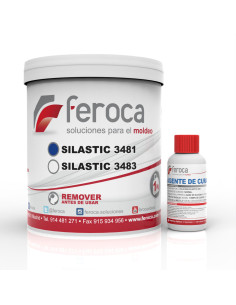 Silastic 3481
Professional, Shore A30, high tear resistance. For head and trophy molds.
Silastic 3481
Professional, Shore A30, high tear resistance. For head and trophy molds.
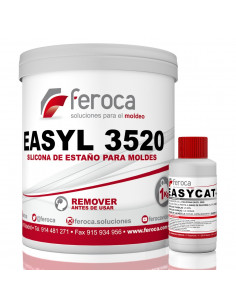 EASYL 3520
Shore A20, great elasticity. Ideal for complex geometries and pieces with undercuts.
EASYL 3520
Shore A20, great elasticity. Ideal for complex geometries and pieces with undercuts.
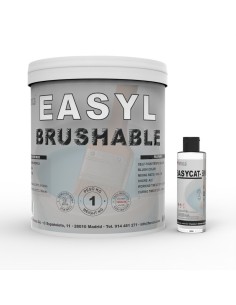 EASYL Brushable
Thixotropic, suitable for brush-on molds. For vertical surfaces and large pieces.
EASYL Brushable
Thixotropic, suitable for brush-on molds. For vertical surfaces and large pieces.
Polyurethane rubbers — the most widely used in industrial taxidermy
In professional taxidermy and series production, polyurethane rubber is the preferred molding material. Its tear and abrasion resistance far exceeds that of silicone, resulting in molds that withstand thousands of pours without losing detail. They're especially useful for molding complex shapes such as heads with antlers, articulated legs or surfaces with very pronounced textures. They require release agent on porous surfaces.
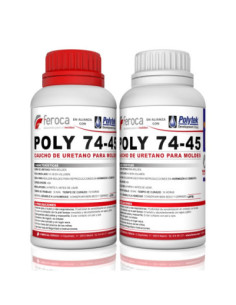 Poly 74-45
Shore A45. High durability for long production runs. The most widely used in taxidermy workshops.
Poly 74-45
Shore A45. High durability for long production runs. The most widely used in taxidermy workshops.
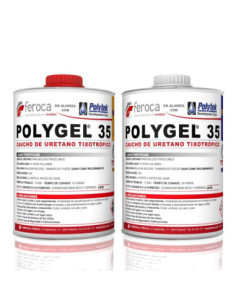 Polygel 35
Thixotropic, doesn't drip. Ideal for pieces with complex anatomy featuring protrusions and recesses.
Polygel 35
Thixotropic, doesn't drip. Ideal for pieces with complex anatomy featuring protrusions and recesses.
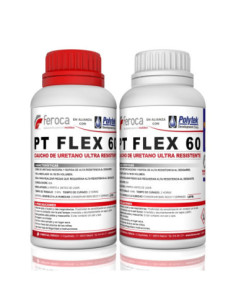 PT Flex 60
Ultra-resistant, Shore A60. For intensive production molds.
PT Flex 60
Ultra-resistant, Shore A60. For intensive production molds.
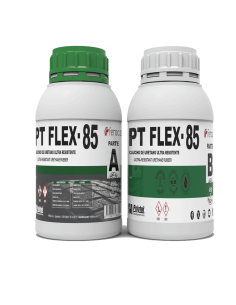 PT Flex 85
Maximum Shore A85 hardness and abrasion resistance. For very long production runs.
PT Flex 85
Maximum Shore A85 hardness and abrasion resistance. For very long production runs.
Silicone vs. PU rubber: If you produce few pieces or need a quick mold for a delicate original, tin silicone is sufficient. If your workshop produces in series, works with molds used daily or molds abrasive surfaces, choose a polyurethane rubber: the difference in durability is very significant.
Bodies and fillings: polyurethane foams
The inside of a taxidermy piece needs to be lightweight, structurally firm and easy to work with. Polyurethane foams are the standard solution: they expand inside the mold, take on the exact shape of the cavity and harden in minutes. They're much lighter than a solid filling — a large head can weigh less than 500 g — and they offer an excellent base for attaching the skin or covering material.
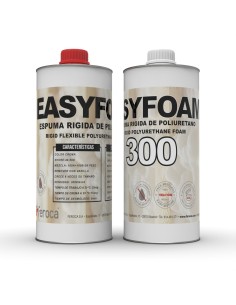 EASYFOAM 300
Rigid foam, 250–450 kg/m³. For structural cores and bodies of medium and large animals.
EASYFOAM 300
Rigid foam, 250–450 kg/m³. For structural cores and bodies of medium and large animals.
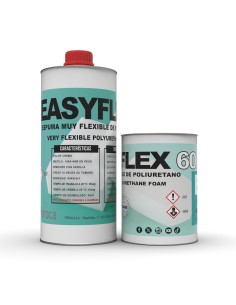 EASYFLEX 60
Flexible foam, 60 kg/m³. For soft details, areas of movement and pieces that need some flexibility.
EASYFLEX 60
Flexible foam, 60 kg/m³. For soft details, areas of movement and pieces that need some flexibility.
Rigid or flexible? For the main body use EASYFOAM 300 (rigid): it provides structure and lets you insert wires or staples. EASYFLEX 60 is better for legs, ears or other areas where a more natural feel is desired.
Resins for pieces and reproductions
Many parts of a taxidermy piece — jaws, tongues, hooves, claws — are reproduced in resin rather than preserving the original. Feropur PR55+E55 provides the structural rigidity needed for pieces that will be painted and handled. For transparent eyes, scales and occlusions you have two options: Ferpol 1973 (polyester, fast cure, glassy finish) or ClearWater Joyería (epoxy, bubble-free, greater optical clarity over time).
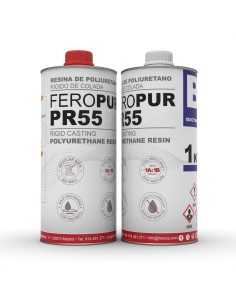 Feropur PR55+E55
Rigid PU resin Shore D75. For structural pieces, jaw replicas, claws and hooves.
Feropur PR55+E55
Rigid PU resin Shore D75. For structural pieces, jaw replicas, claws and hooves.
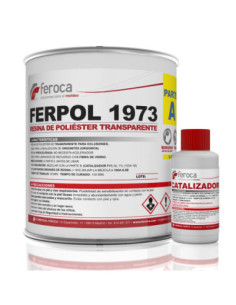 Ferpol 1973
Transparent resin for eyes, scales and occlusions. High-quality glassy appearance.
Ferpol 1973
Transparent resin for eyes, scales and occlusions. High-quality glassy appearance.
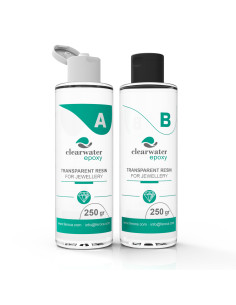 ClearWater Joyería
Crystal-clear epoxy resin for artificial eyes and high-transparency pieces. Bubble-free.
ClearWater Joyería
Crystal-clear epoxy resin for artificial eyes and high-transparency pieces. Bubble-free.
Modeling clays for sculpting
For anatomical touch-ups and modeling in taxidermy there are two approaches: two-part epoxy putties (Masilla Epoxica 610, Wood Putty) cure permanently, can be sanded, painted and bond to almost any surface — ideal for definitive corrections on the mannequin. Monster Clay is a reusable, non-curing clay: it lets you work back and forth, correct proportions and sculpt fine details before molding; it contains no sulfur, so it's compatible with platinum silicones.
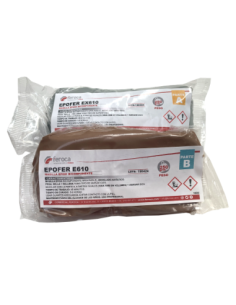 Masilla Epoxica 610
Two-part epoxy putty for permanent anatomical modeling. Cures rigid, can be sanded and painted.
Masilla Epoxica 610
Two-part epoxy putty for permanent anatomical modeling. Cures rigid, can be sanded and painted.
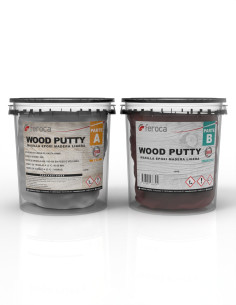 Wood Putty
Lightweight, easy-to-model epoxy putty. Ideal for filling and reshaping the mannequin.
Wood Putty
Lightweight, easy-to-model epoxy putty. Ideal for filling and reshaping the mannequin.
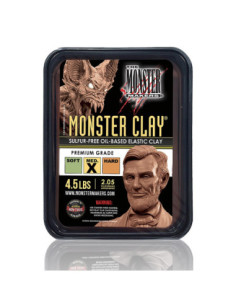 Monster Clay Medium
Reusable professional modeling clay, medium hardness. Perfect for anatomical sculptures and shape touch-ups.
Monster Clay Medium
Reusable professional modeling clay, medium hardness. Perfect for anatomical sculptures and shape touch-ups.
Plaster for counter-molds
The counter-mold is the rigid shell that holds the flexible mold during pouring and prevents it from deforming. EXADURO is the reference plaster for this purpose: low expansion and hard set. Arquero, with over 5,000 kg/cm² of resistance, is the choice when the counter-mold will be subjected to high pressures or used in intensive production. ALADUR 9 stands out for its very smooth surface and low expansion, useful when the counter-mold also acts as a reproduction mold for decorative pieces.
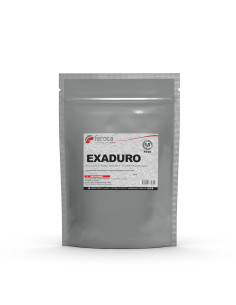 EXADURO
Hard plaster for counter-molds. High resistance, low expansion.
EXADURO
Hard plaster for counter-molds. High resistance, low expansion.
 Arquero
5,000+ kg/cm². For industrial counter-molds requiring maximum rigidity.
Arquero
5,000+ kg/cm². For industrial counter-molds requiring maximum rigidity.
 ALADUR 9
For high-detail reproductions. Low expansion, very smooth surface.
ALADUR 9
For high-detail reproductions. Low expansion, very smooth surface.
Quick material guide by use
| Use in taxidermy | Recommended material | Product |
|---|---|---|
| Molds for unique pieces or few reproductions | Tin silicone | Silastic 3481 / EASYL 3520 |
| Brush-on molds on vertical surfaces | Thixotropic tin silicone | EASYL Brushable |
| Molds for series production (heads, trophies) | Polyurethane rubber Shore A45 | Poly 74-45 |
| Molds for complex shapes with protrusions | Thixotropic PU rubber | Polygel 35 |
| Maximum wear-resistance molds | Ultra-resistant PU rubber Shore A60–A85 | PT Flex 60 / PT Flex 85 |
| Structural body of the animal (rigid core) | Rigid polyurethane foam | EASYFOAM 300 |
| Soft details, ears, flexible legs | Flexible polyurethane foam | EASYFLEX 60 |
| Structural reproductions (jaws, claws) | Rigid polyurethane resin | Feropur PR55+E55 |
| Eyes and occlusions (fast cure, glassy look) | Transparent polyester resin | Ferpol 1973 |
| Artificial eyes (maximum optical clarity) | Crystal-clear epoxy resin | ClearWater Joyería |
| Permanent corrections on the mannequin | Two-part epoxy putty | Masilla Epoxica 610 / Wood Putty |
| Reusable anatomical sculpture and fine detail | Sulfur-free professional clay | Monster Clay Medium |
| Standard counter-mold | Hard plaster | EXADURO |
| Counter-mold for intensive production | High-resistance plaster | Arquero |
| Counter-mold with decorative reproduction function | High-detail plaster | ALADUR 9 |
Frequently asked questions about taxidermy
Which polyurethane rubber is best for taxidermy molds?
For most taxidermy work, Poly 74-45 (Shore A45) is the most balanced option: flexible enough to demold without damaging the piece, but with the firmness needed to hold the mold's shape during pouring. If you're molding pieces with many protrusions or complex geometries, the thixotropic Polygel 35 will give you greater control when applying it by brush. For very intensive production runs where the mold is used daily, PT Flex 60 or PT Flex 85 will significantly extend its service life.
How many pours can a PU rubber mold handle?
It depends on the rubber material and the product you pour into it. Under normal conditions, a Poly 74-45 mold can handle between 500 and 1,000 pours with polyurethane resins, as long as you apply release agent correctly and don't force the demolding. The PT Flex 60 and PT Flex 85 models, with greater abrasion resistance, can exceed 2,000 pours. The most common cause of deterioration is insufficient release agent or rough demolding in the first pours, when the rubber hasn't yet reached its full cure (minimum 24–48 h rest before first use).
Which resin should I use to make animal eyes?
The two usual options are Ferpol 1973 and ClearWater Joyería. Ferpol 1973 is a polyester resin with fast cure (30–60 min) and a very clean glassy finish — the most widely used in taxidermy for its speed and great results with casting pigments. ClearWater Joyería is a crystal-clear epoxy with greater long-term optical clarity (doesn't yellow) and bubble-free thanks to its low viscosity, although its cure is slower (12–24 h). For semi-spherical eye molds use tin silicone; pour at a low temperature to minimize bubble formation.
What material do I use to fill the animal's body?
The most widespread solution in modern taxidermy is rigid polyurethane foam (EASYFOAM 300): it's mixed in simple proportions, expands inside the mold or cavity, takes on exactly the shape of the contour and hardens in a few minutes, forming a very lightweight and resistant core. For large animals, it can be combined with a thick wire armature before pouring the foam. Areas that need some flexibility (ears, thin legs) are better filled with EASYFLEX 60.
Modeling clay or epoxy putty for anatomical touch-ups?
It depends on whether the touch-up is permanent or temporary. Epoxy putties (Masilla Epoxica 610, Wood Putty) cure permanently: once set they can be sanded, painted and become part of the piece — perfect for correcting the mannequin before mounting the skin or for rebuilding damaged areas. Monster Clay is a reusable clay: it doesn't cure, so you can work back and forth until you get the exact shape before molding it. It's the ideal option for sculpting fine anatomical details such as folds, nostrils or the corner of the mouth. All three are sulfur-free and compatible with platinum silicones.