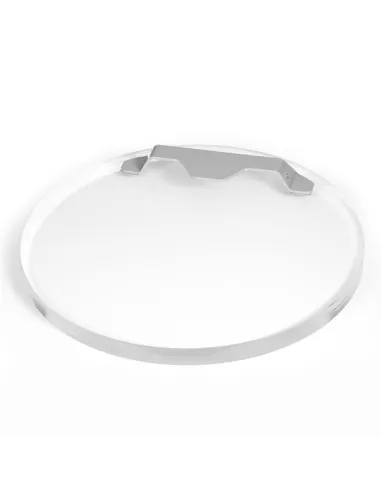
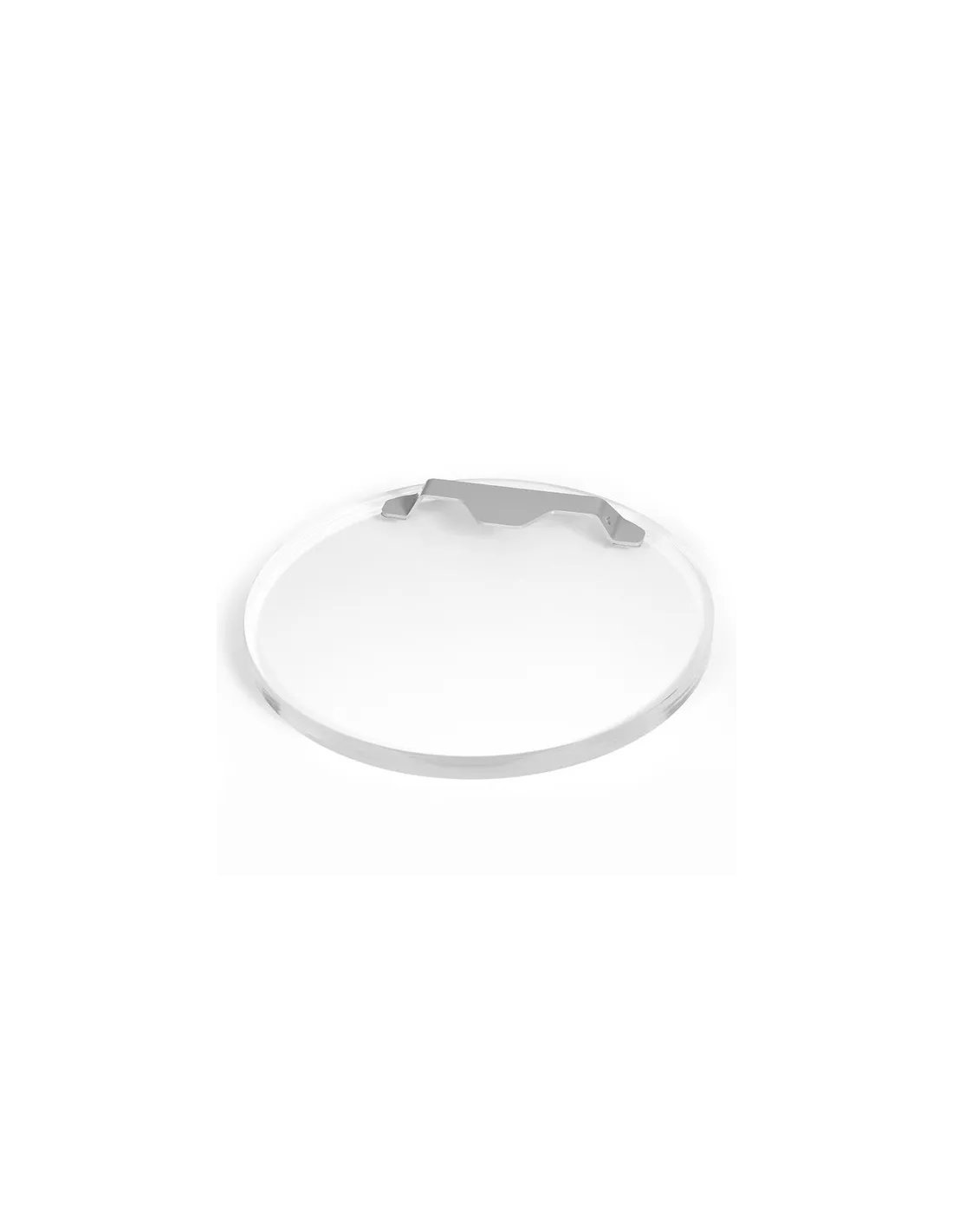
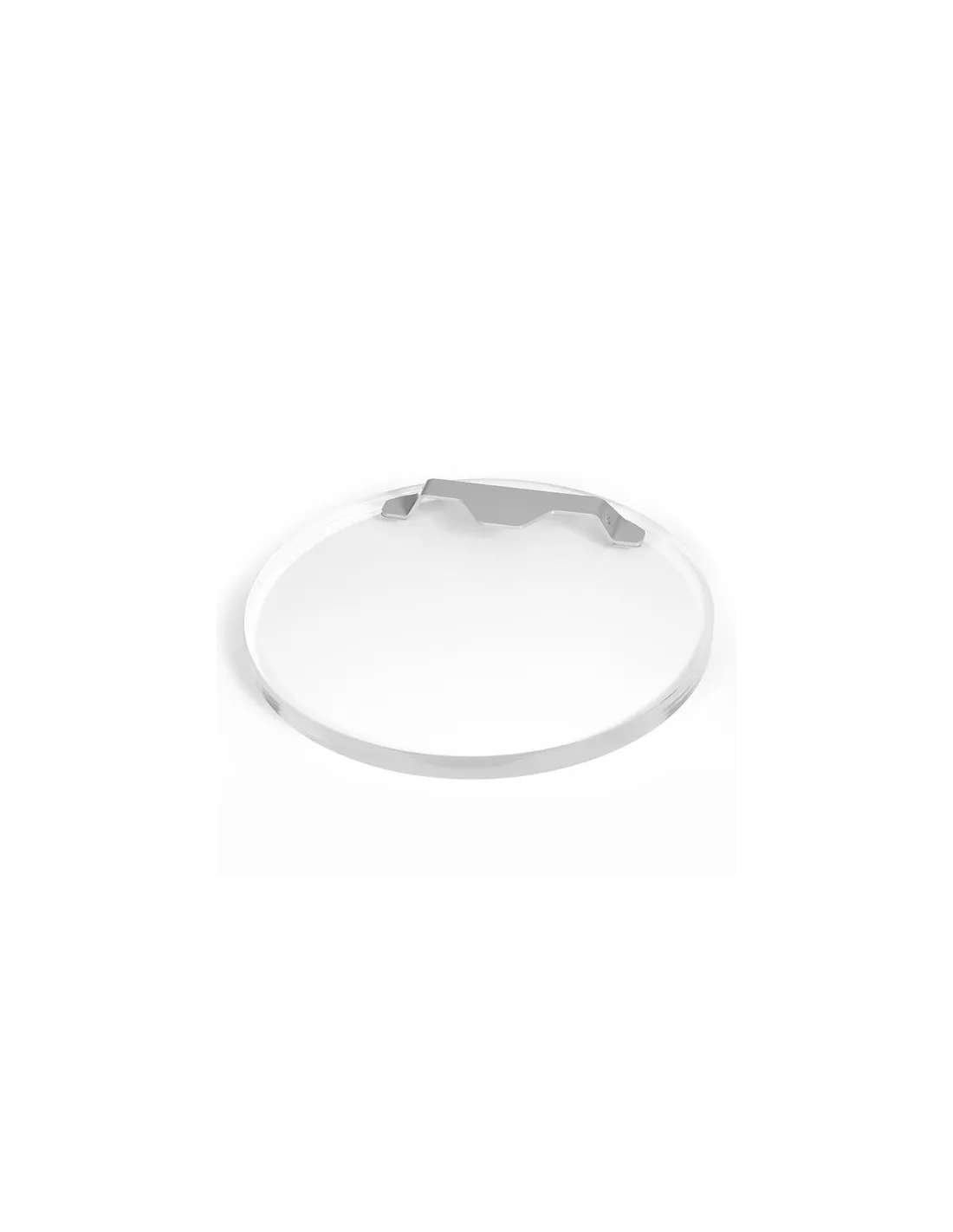
The vacuum chamber lid is the component that closes and seals the degassing chamber, allowing you to reach and maintain the vacuum level needed to eliminate bubbles in silicones and resins. If your lid shows cracks, deep scratches or has lost its flatness, this replacement accessory lets you restore your system's full performance without replacing the entire chamber.
Technical specifications
| Feature |
Detail |
| Use |
Closing lid for vacuum chamber |
| Compatibility |
Feroca standard vacuum chamber (26 litres) |
| Function |
Airtight sealing of the vacuum chamber |
| Related accessory |
Vacuum chamber gasket (recommended to replace together) |
What it is used for
This lid is an essential replacement component for any workshop working with vacuum degassing systems. It allows you to replace a damaged or worn lid and restore the airtight seal needed to work with platinum silicones, polyurethane resins, epoxy resins and any material that requires bubble removal before curing.
- Degassing of platinum silicones before pouring into the mould
- Bubble removal in casting polyurethane and epoxy resins
- Material preparation for precision Mold Making in special effects and prosthetics
- Degassing for reborn baby figures and ultra-thin silicone parts
- Any process where the presence of bubbles compromises the final quality of the piece
- Replacement of a worn lid in the 26-litre vacuum chamber system
How to use it
- Check that the chamber gasket is in good condition before fitting the new lid. A worn gasket prevents a proper seal even if the lid is brand new.
- Place the lid on the chamber, correctly aligning its surface with the sealing ring.
- Connect the vacuum pump to the corresponding port on the chamber.
- Start the pump and observe that the gauge drops continuously to the required vacuum level. If the lid is correctly positioned and the gasket is sound, the seal forms automatically due to the pressure differential.
- Once the desired vacuum level is reached, place the material to be degassed inside and maintain the vacuum for the time required according to the material's instructions.
- To open the chamber, release the pressure through the valve before removing the lid.
Usage tips
Replace the lid and gasket at the same time
If the lid has reached the end of its service life, the silicone gasket is very likely also deformed or hardened. Replacing both parts at once ensures an optimal seal from the very first use and avoids having to open the system again shortly afterwards.
Take care of the lid surface
Acrylic or polycarbonate lids are durable but sensitive to deep scratches and solvents. Always clean with a soft cloth and soapy water. Avoid contact with acetone, concentrated isopropyl alcohol or strong solvents, as they can weaken the material and compromise the integrity of the seal. Store the lid protected when not in use.
Check the vacuum before each session
Before starting a degassing process, run a quick test: connect the pump with the empty chamber and check that the gauge reaches the usual vacuum level and holds it when the pump is switched off. If the pressure rises quickly, there is a leak, usually at the gasket or the lid. Detecting this before adding material saves you wasting an entire batch.
Frequently asked questions
When should I replace the lid of a vacuum chamber?
You should replace it when it shows cracks, fractures, deep scratches that affect visibility, or when the chamber no longer reaches the usual vacuum level despite the gasket and pump being in good condition. A worn lid is the most common cause of silent leaks that prevent proper degassing.
Do I need to replace the gasket when changing the lid?
It is not mandatory, but it is highly recommended. If the lid has reached the end of its service life, the gasket is probably also deformed or hardened. Replacing both parts at the same time ensures an airtight seal from the very first moment.
What vacuum level should I reach to degas silicones and resins?
In general, you work between -0.85 and -1 bar (850–1000 mbar of vacuum). For low-viscosity platinum silicones, -0.9 bar for 3–5 minutes is usually sufficient. More viscous resins may require slightly longer times. Always consult the technical data sheet of the material you are using.
Can I use this lid with any vacuum chamber?
This lid is designed to be compatible with the Feroca 26-litre vacuum chamber. Before purchasing, confirm with Feroca that the dimensions match your chamber model.
What should I do if the chamber does not hold the vacuum after replacing the lid?
First check the condition of the gasket: if it is flattened, hardened or has permanent marks, it will not seal correctly even if the lid is new. If the gasket is fine, check that the pump connection port has no leaks and that the pump is still in good working order. You can apply a small amount of petroleum jelly to the gasket to improve the temporary seal while you diagnose the problem.
Can I degas epoxy resins in a standard vacuum chamber?
Yes. Epoxy resins degas effectively in the standard vacuum chamber. Bear in mind that when vacuum is applied the mixture can expand considerably, so use a container with sufficient capacity and do not fill it more than one third of its volume before placing it in the chamber.
Is it necessary to use a vacuum chamber when working with silicone?
It is not essential in all cases, but it is highly recommended when a bubble-free finish is required in precision applications: prosthetics, reborn baby figures, jewellery moulds or industrial parts. For general-purpose workshop moulds, pouring slowly and carefully may be sufficient. The complete vacuum system is the most effective solution when surface quality is the priority.
What complete vacuum system does Feroca recommend for a professional workshop?
For a professional workshop with frequent use, the Sistema Profesional de Vacío SV-26P is the most complete option. It includes the chamber, a two-stage pump and all the accessories needed for efficient and repeatable degassing.