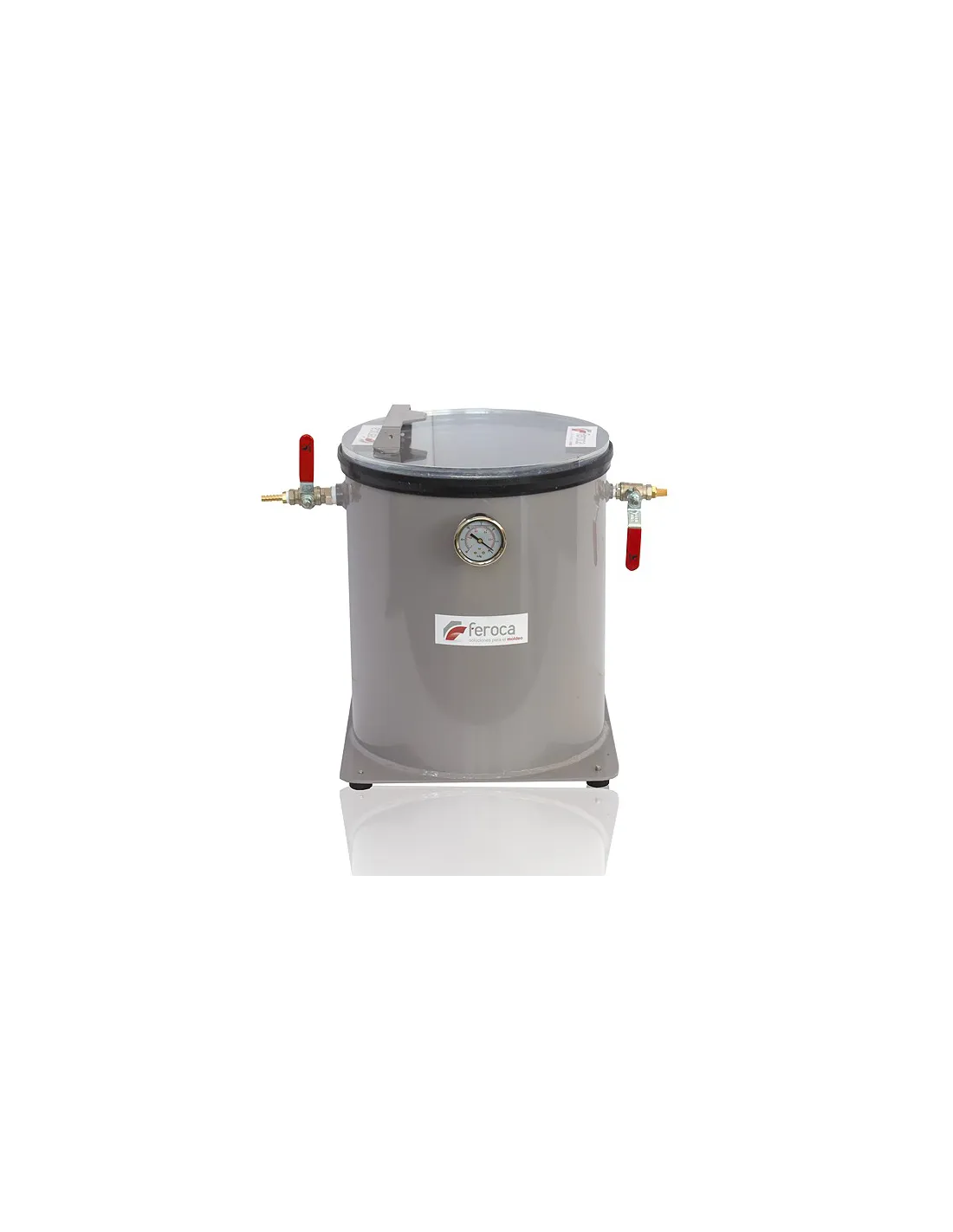
Professional 26 L vacuum chamber with acrylic lid, pressure gauge and valves. Ideal for degassing silicones and resins. Internal dimensions: 350 x 300 mm.
The 26-litre vacuum chamber is the reference equipment for degassing moulding silicones, casting resins and epoxy or polyurethane systems in professional workshop environments. With a coated steel body, laser-cut acrylic lid and quick-seal silicone gasket, it delivers reliable performance at a competitive price. If you regularly work with moulding materials, a vacuum chamber of this capacity eliminates the air bubbles that ruin moulds and parts before they become a problem.
Technical specifications
Parameter
Value
Internal volume
26 litres
External dimensions (H x Diameter)
440 x 330 x 330 mm
Internal dimensions (H x Diameter)
350 x 300 mm
Weight
14.55 kg
Recommended working capacity
Up to 6 litres of material
Body material
Steel with protective coating
Lid
Laser-cut transparent acrylic
Sealing gasket
Silicone
Includes
Pressure gauge, air release valve and adjustable shut-off valve
What it is used for
Vacuum degassing involves applying negative pressure to a liquid material so that micro air bubbles trapped during mixing rise to the surface and escape before the material cures. It is an essential step when the aesthetics, mechanical integrity or dimensional precision of the mould or part are critical. This 26-litre chamber has sufficient capacity to work with containers holding up to 6 litres of material and comfortably accommodates medium-sized parts.
Degassing of RTV moulding silicones before pouring, to obtain bubble-free moulds with greater tear resistance
Degassing of casting resins (polyurethane, epoxy, polyester) for parts with a clean surface finish
Removal of air in vacuum infusion systems for composites (fibreglass, carbon fibre)
Degassing of fillers, pastes and two-component adhesives before application
Use in the production of reborn babies and articulated figures in ultra-flexible silicone, where any bubble is unacceptable
Consolidation of laminates and prepregs in small format
How to use it
Connect the chamber to your vacuum pump via the shut-off valve. For optimal performance, a pump of at least 12 CFM is recommended.
Place the container with the already-mixed material inside the chamber. Make sure the container is no more than 50% full: the material can expand up to three times its volume during degassing.
Place the acrylic lid on the chamber and check that the silicone gasket is properly seated around the entire perimeter.
Open the shut-off valve and start the pump. Watch the pressure gauge: the vacuum level will rise progressively.
Maintain the vacuum until the bubbles have risen and burst. Depending on the viscosity of the material, the process can take between 2 and 10 minutes.
Close the shut-off valve and use the release valve to equalise the internal pressure with the external pressure in a controlled manner.
Remove the lid and work the material immediately before the working time (pot life) begins to expire.
Usage tips
Control the container fill level
During degassing, the foam generated by the escaping air can grow to two or three times the initial volume of the material. Always use a container with at least twice the capacity of the mix volume. If the foam reaches the lid, you can slightly release the vacuum to let it subside and then reapply it: the material does not lose its properties with short vacuum and pressure cycles.
Keep an eye on the working time
Degassing uses up working time (pot life). Always check the technical data sheet of the material you are using and degas as soon as you have finished mixing. For silicones and resins with a short pot life (less than 10 minutes), work in a cool environment to gain extra time.
Gasket and lid maintenance
The airtightness of the system depends largely on the condition of the silicone gasket and the acrylic lid. Clean both with a damp cloth after each use and periodically check that the gasket has no cuts or deformations. A deteriorated gasket prevents reaching the necessary vacuum level and can cause the pump to overwork.
Frequently asked questions
What vacuum pump do I need to use this chamber?
For this 26-litre chamber, a vacuum pump of at least 12 CFM is recommended. A lower-flow pump can reach the necessary vacuum level, but will take longer and may struggle with high-viscosity materials. At Feroca you can find the standard vacuum system that includes a pump and chamber pre-configured to work together.
How much material can I degas at once?
The recommended working capacity for this 26-litre chamber is up to 6 litres of material. Although the internal volume is larger, space must be reserved for the expansion of the material during the process and for the container itself. Degassing more volume than recommended can cause the foam to reach the lid and contaminate the material or damage the system.
Can I degas any type of resin or silicone?
Yes. The vacuum chamber is compatible with tin and platinum RTV silicones, polyurethane resins, epoxy resins, polyester resins and any other two-component liquid material that requires bubble removal. The only requirement is that the material has a sufficient pot life to complete the degassing process before it begins to cure.
Is degassing always necessary, or only in some cases?
It depends on the result you need. For production moulds, parts with a visible surface finish or technical applications where bubbles compromise mechanical strength, degassing is essential. For quick prototypes or uses where bubbles do not affect the final result, it can be skipped. In general, working under vacuum always improves the quality of the result.
What should I do if I cannot reach the correct vacuum level?
First check the condition of the silicone gasket: it is the most frequent cause of vacuum loss. Also check that all connections between the chamber and the pump are tight and that the shut-off valve is fully open during the process. If the gasket is damaged, you can purchase a replacement gasket directly from Feroca.
Can the acrylic lid scratch or break with use?
Acrylic is transparent but can scratch if cleaned with abrasive materials or if reactive material falls on it. Always clean with a soft cloth and water. If the lid accumulates too many marks and makes it difficult to see the process, you can purchase a replacement lid. Do not use aggressive solvents such as acetone on the acrylic, as they attack it and make it brittle.
Can I use this chamber for vacuum infusion in composites?
The vacuum chamber is designed primarily for degassing liquid materials before pouring. For vacuum infusion of composites (a process in which vacuum is applied directly to the infusion bag with the fabric inside), the vacuum pump is connected directly to the infusion system, not the chamber. Even so, the chamber can be used to degas the resin before introducing it into the infusion system, improving the final result.
How often should I replace the silicone gasket?
The silicone gasket has no fixed service life: it depends on use and care. Visually inspect the gasket before each session. Signs that it needs replacing: loss of elasticity, cuts, permanent deformations or difficulty reaching the usual vacuum level. Keeping a replacement gasket in the workshop avoids interruptions in the middle of production.
Professional 26 L vacuum chamber with acrylic lid, pressure gauge and valves. Ideal for degassing silicones and resins. Internal dimensions: 350 x 300 mm.
Cookies on this site are used to personalise content and ads to deliver social media features and to analyse traffic. We also share information about your use of the site with our social media partners for advertising, personalisation and web analytics.. More information.