Shopping Cart



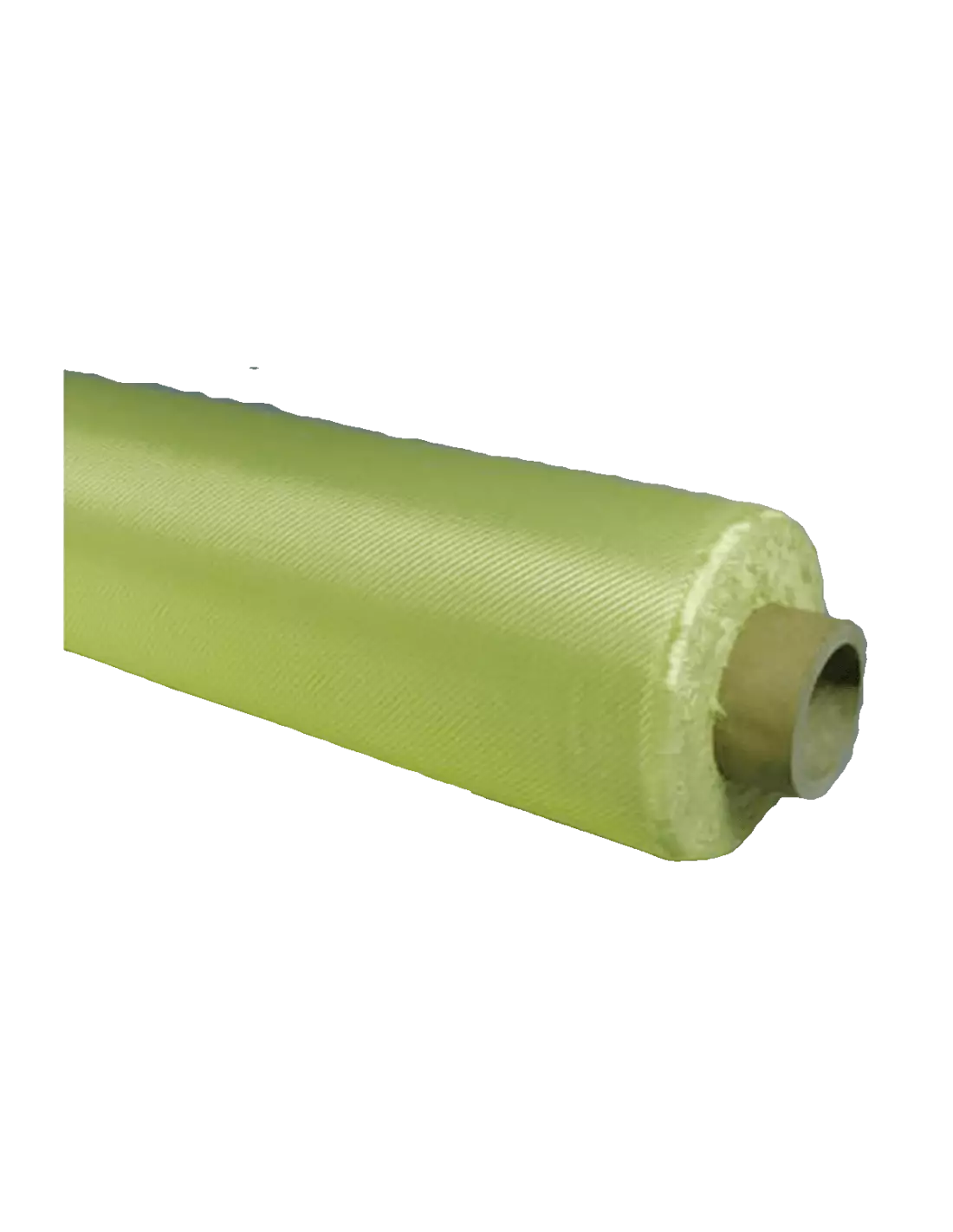
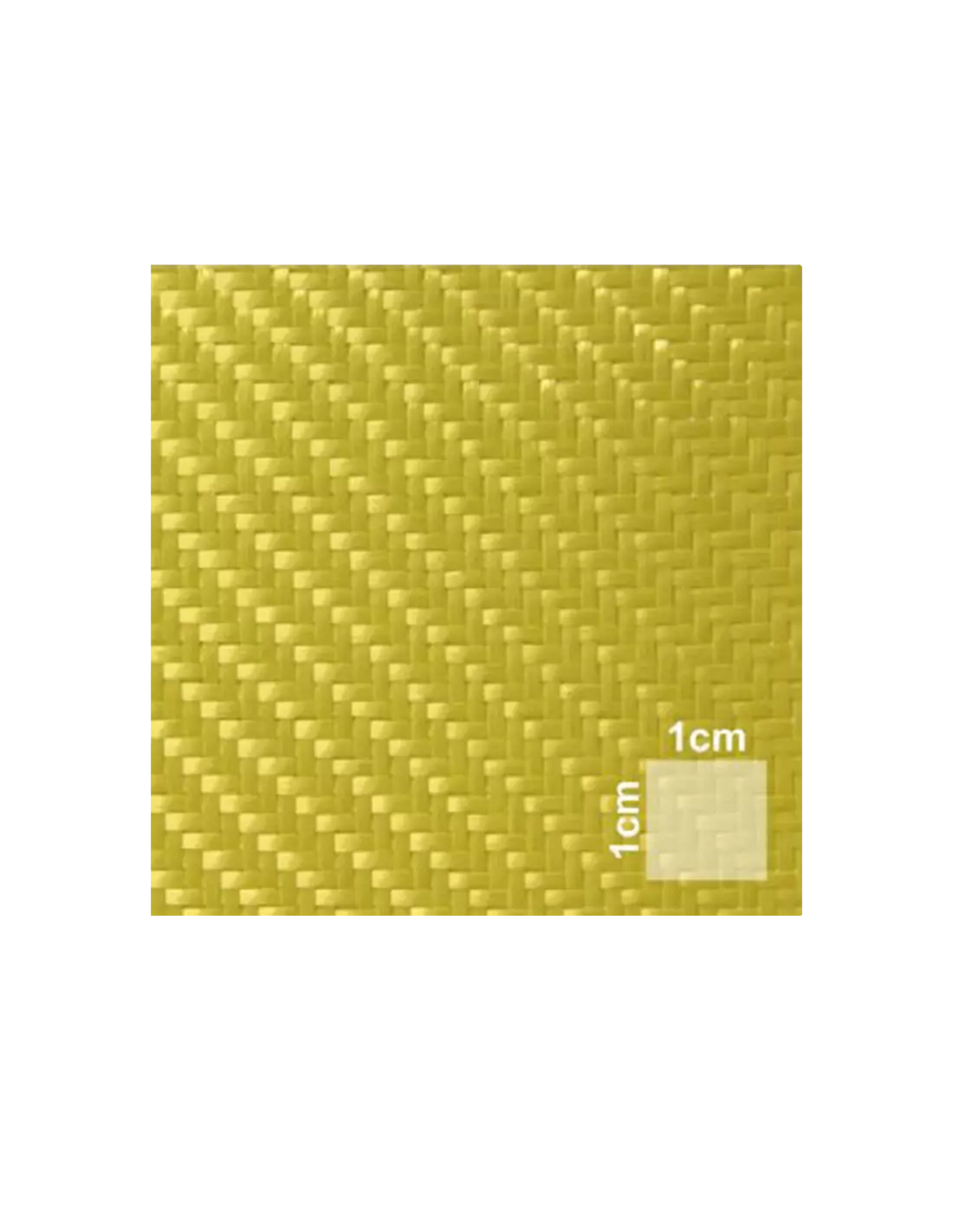
Aramid Twill fabric 170g x 100cm 2/2
103210001
€18.00
21,78 € Tax incl.
21,78 € Tax incl.
Aramid (Kevlar) fabric in twill 2/2 weave, 170 g/m², 100 cm wide. Thickness 0.34 mm, high tensile strength, heat and abrasion resistance.
The 170 g/m² twill 2/2 aramid fabric is a high-performance fibre reinforcement made with aramid fibres (Kevlar equivalent) in a twill weave, combining exceptional tensile strength, heat resistance and abrasion resistance with very low weight. It is the go-to choice for lightweight structural composites, protective equipment and industrial applications where aluminium or fibreglass are not sufficient.
Technical specifications
| Parameter | Value |
|---|---|
| Material | Aramid (high-modulus fibre) |
| Weave | Twill 2/2 |
| Weight | 170 g/m² |
| Width | 100 cm |
| Thickness | 0.34 mm |
| Weft | 5.2 Fd/cm — 158 Tex |
| Warp | 5.2 Fd/cm — 158 Tex |
| Colour | Characteristic golden yellow of aramid |
| Heat resistance | High |
What it is used for
Thanks to its strength-to-weight ratio and twill pattern that facilitates draping over complex geometries, this fabric is used across a wide range of technical and manufacturing sectors:
- Lightweight structural parts in epoxy or vinylester resin composites (body panels, housings, panels)
- Reinforcement and repair of impact zones on boats, vehicles and light aircraft
- Manufacture of personal protective equipment: vests, helmets, motorcycle protectors
- Flame-resistant technical clothing: firefighter suits, welder's clothing, high-temperature gloves
- Reinforcement of ropes, cables and tensile elements subjected to extreme loads
- Manufacture of technical sails and high-demand nautical components
- Cut protection in gloves and industrial protective sleeves
- Lutherie projects, archery and high-end sports equipment
How to use it
- Plan the laminate: determine the number of layers required according to the mechanical requirements of the part. For high-rigidity composites, combine aramid layers with carbon fibre or fibreglass layers.
- Cut the fabric: use long-blade scissors specifically designed for aramid fibre (conventional blades wear out quickly). Mark lines with masking tape before cutting to prevent the edge from fraying.
- Prepare the mould or substrate: apply release agent if working on a mould. Make sure the surface is clean and free from moisture.
- Wet out the fabric: apply resin (epoxy, polyester or vinylester) to the surface, lay the fabric and spread a second layer of resin on top. Use a bubble roller or spatula to remove trapped air and ensure even wet-out.
- Apply Peel Ply if desired: placing a layer of peel ply over the wet laminate makes surface finishing easier and allows bonding of subsequent layers without sanding.
- Allow to cure: follow the cure time instructions for the resin used. If possible, apply pressure with vacuum bagging to improve the fibre/resin ratio.
- Demould and post-cure: once cured, demould carefully. If the resin requires it, carry out post-cure in an oven according to the resin manufacturer's specifications.
Usage tips
Cutting: the right tool makes all the difference
Aramid fibre is notoriously difficult to cut with conventional scissors or a utility knife because the fibres do not break under compression — they slide instead. Use shear-cut scissors with long, serrated or aramid-specific blades. Never try to cut with a knife against a ruler: the result will be frayed edges that complicate laminating. For very precise cuts, a small laboratory guillotine gives excellent results.
Wet-out and fraying control
Before cutting the final pieces, apply a small dot of resin or adhesive tape to the cut edges to consolidate them. During wet-out, the twill fabric has good conformability over curves, but always work from the centre outwards to avoid wrinkles. If the laminate has excess resin, the fibre/resin ratio drops and mechanical properties suffer: aim for a wet finish with no puddles.
Combining with other fibres
Aramid offers outstanding tensile and impact resistance, but its compressive modulus is lower than that of carbon. For parts that need both stiffness and impact resistance simultaneously, interleave aramid layers between carbon fibre layers (hybrid sandwich). If the project requires localised reinforcement without adding thickness, 6 mm chopped fibreglass strands are an effective complement for reinforcing specific areas with resin.
Frequently asked questions
What resin is compatible with this fabric?
The 170 g aramid twill fabric is compatible with epoxy, polyester and vinylester resins. Epoxy resin is the most recommended for structural applications because it offers better fibre adhesion, lower shrinkage and superior mechanical properties. Polyester and vinylester resins are suitable for less critical applications or where cost is a determining factor.
What scissors cut aramid fibre correctly?
Aramid fibres require shear-cut scissors with long, sharp blades, preferably designed specifically for this material. Conventional scissors or a utility knife do not work well because the fibres slide rather than break. Keep the blades sharp: blunt scissors cause frayed edges that make laminating difficult.
How many layers do I need for a structural part?
It depends on the application, resin and strength requirements. As a rough guide, for lightweight protections or local reinforcements 2–3 layers of 170 g/m² fabric may be sufficient. For structural parts subject to impact, between 4 and 8 layers are typically used, often in combination with other fabrics. Always refer to the specific structural design data for your project.
Can it be used with infusion or vacuum bagging?
Yes. The 170 g aramid twill fabric is compatible with resin infusion and vacuum bag laminating. Vacuum bagging improves laminate compaction and reduces residual resin content, resulting in better mechanical properties. Peel Ply 83 g/m² is a common addition to these processes to achieve a surface finish ready for bonding or painting.
Why is aramid yellow and does it stay that colour after resin infusion?
The golden yellow colour is intrinsic to aramid fibres and remains visible once impregnated with clear resin, unlike fibreglass which becomes almost invisible. If you need a specific colour finish, apply a layer of pigmented gel coat in the mould before laminating, or paint the cured part once demoulded.
Does aramid resist heat?
Yes, aramid fibre has far superior thermal resistance compared to conventional fibreglass or polypropylene. It retains a good proportion of its mechanical properties at elevated temperatures and does not melt like thermoplastic polymers. This is why it is widely used in protective clothing for firefighters, welders and high-temperature industrial applications. The actual limit also depends on the resin used in the composite.
Is it suitable for ballistic protection applications?
Aramid fibre is the base material of many ballistic protection systems thanks to its ability to absorb and dissipate impact energy. However, a standard workshop laminate is not equivalent to a certified ballistic panel, which requires specific design, a validated number of layers and standardised testing. If your project has normative ballistic requirements, consult a specialist engineer.
Can cured aramid be sanded or machined?
Aramid is particularly resistant to conventional machining. Sanding produces an uneven finish with loose surface fibres ("fuzz"), which makes final finishing difficult. For drilling and cutting, use sharp tungsten carbide or carbide tools at appropriate cutting speeds. Using Peel Ply during curing minimises the need to sand the surface.
No reviews
Tap to zoom