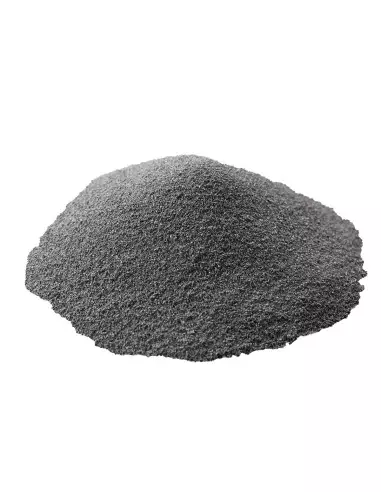
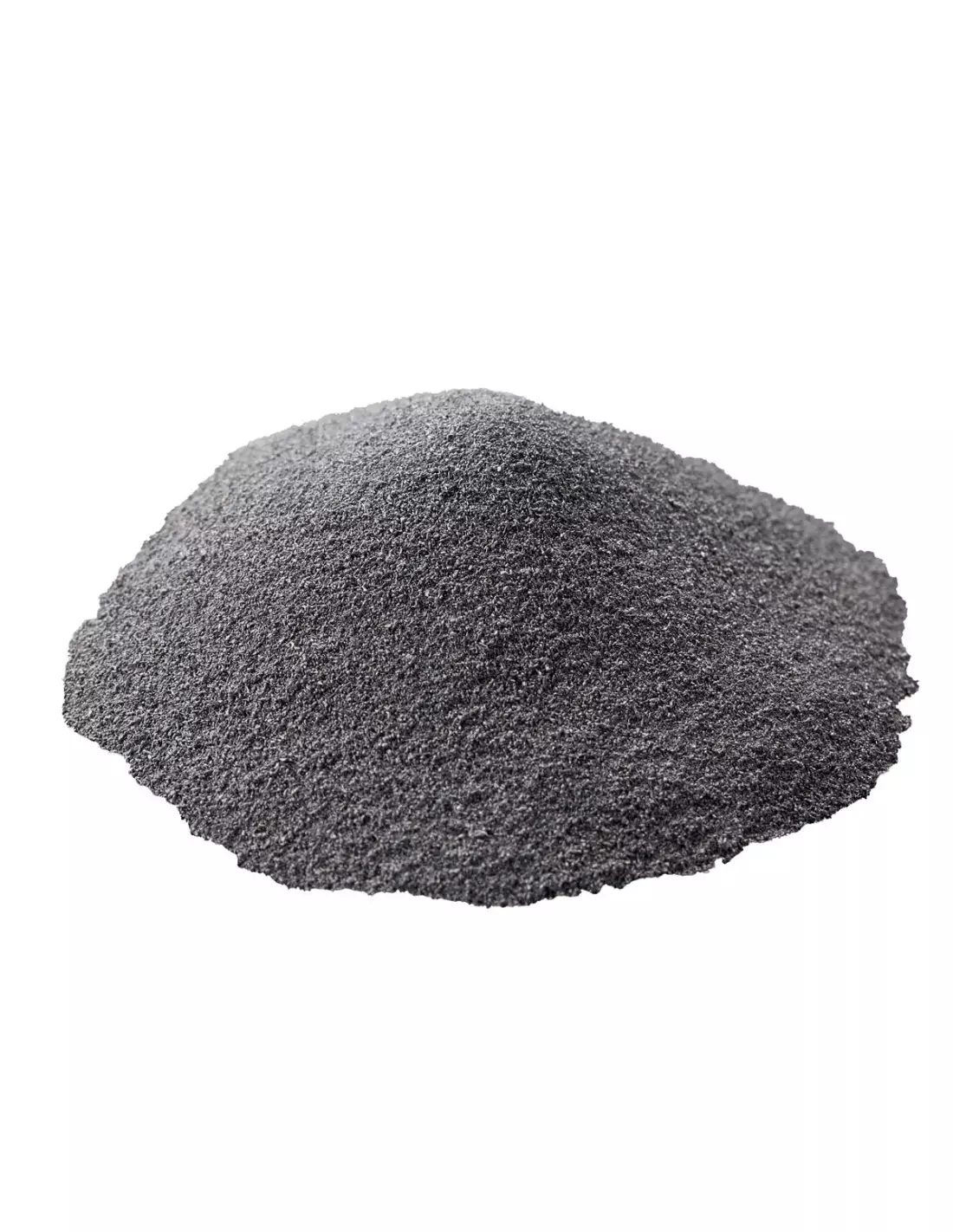
Feroca's aluminium powder is an impalpable metallic filler with a 150 µm particle size, designed to be mixed with polyurethane resins and other polymeric systems. Added to the mix, it gives an industrial greyish appearance that, after light sanding, reveals a genuine metallic finish. Beyond its aesthetic effect, it improves the thermal dissipation of the part and increases surface resistance without compromising the curing process.
Technical specifications
| Parameter |
Value |
| Material |
Aluminium |
| Particle size |
Mesh 150 µm |
| Density |
2.7 g/cm³ |
| Colour |
Grey |
| Format |
Impalpable powder |
| Resistance |
Corrosion and wear |
What it's used for
This metallic filler is intended for projects where you need to replicate the look of cast aluminium or reproduce parts with an industrial aesthetic without using solid metal. It is primarily compatible with low-viscosity polyurethane resins. It is also used to improve the thermal behaviour of cast parts, as aluminium distributes heat more evenly and reduces hot spot formation.
- Replicas and prototypes with a greyish metallic finish
- Special effects and scenography requiring an aluminium appearance
- Prop or industrial decoration parts
- Improved thermal dissipation in resin castings
- Increased surface and wear resistance in polyurethane parts
- Recreation of metallic textures and surfaces in handmade composites
How to use it
- Prepare your chosen polyurethane resin (for example, Axson F40) and its components according to the manufacturer's instructions.
- Add the aluminium powder to component A (polyol) or to the overall mix before adding the hardener. The usual proportion ranges between 10% and 30% by weight relative to the total resin — adjust it according to the desired finish and flowability.
- Mix with slow, circular movements to avoid incorporating air. Make sure the powder is completely dispersed with no lumps.
- Add component B (isocyanate) in the proportion indicated by the resin manufacturer and mix again carefully.
- Pour the mix into the mould or apply it to the surface. Adding the filler may slightly increase viscosity, so work efficiently within the resin's working time.
- Allow to cure according to the times indicated by the base resin. Aluminium powder does not significantly interfere with polyurethane curing.
- Once demoulded and cured, sand the surface with fine sandpaper (grit 400–800) to reveal the bright metallic aluminium finish.
- Optionally, apply wax or protective lacquer to preserve the metallic finish.
Caution: Aluminium powder is a fine, impalpable material. Always work in a well-ventilated space and wear a particulate respirator (FFP2 or higher) to avoid inhaling the dust. Avoid prolonged contact with skin and eyes. Store in a dry place, away from heat sources and flames, as fine metallic powder can be flammable at certain concentrations in air.
Usage tips
Proportions and consistency
The amount of filler you add determines both the final appearance and the flowability of the mix. At 10–15% by weight you get a fluid casting and a subtle greyish finish. Going up to 25–30%, the mix gains body, the colour intensifies and the metallic effect after sanding is more pronounced. Do not exceed 40% without prior testing, as the viscosity may hinder casting and cause trapped bubbles.
Sanding is key for the metallic finish
Without sanding, the part has a uniform matt grey appearance. The real metallic finish is only achieved by sanding the cured surface: start with grit 220, move to 400 and finish with 800 or finer. The finer the final sanding, the higher the metallic sheen. You can also use an angle grinder or orbital polisher for large surfaces to reduce working time.
Combining with other fillers and pigments
You can combine aluminium powder with other fillers to adjust density, colour or texture. If you need a warmer finish, mix small proportions with bronze powder or brass powder. To add bulk or reduce material costs without losing the surface metallic effect, you can combine it with marmolina in the core of the part and reserve the aluminium powder for the last layers or for the gel coat.
Frequently asked questions
Can I add less metallic filler than recommended?
Yes. Filler proportions in resins are guidelines and you can adjust them to suit your project's needs. With less aluminium powder you will get a more fluid mix and a subtler finish, although the metallic effect after sanding will be less intense. Always run a small test before working on the final part.
Is this filler compatible with all types of resins?
Aluminium powder is primarily compatible with low to medium viscosity polyurethane resins. Its use with acrylic resins such as Jesmonite or with epoxy resins is not recommended without prior testing, as the exothermic reaction of epoxy may affect the behaviour of the mix. For metallic effects with acrylic resins, consult other specific solutions in the Feroca catalogue.
Does metallic powder affect the curing time of the resin?
Not significantly. Aluminium powder does not interfere with the curing process of polyurethane resins. A slight variation in the exothermic temperature of the casting may occur, as aluminium improves heat conduction, but working and demoulding times remain practically unchanged.
How do I achieve a polished aluminium-like bright finish?
The bright metallic finish is achieved by progressively sanding the cured surface: start with grit 220, continue with 400 and finish with 800 or finer. You can then apply metallic wax or a transparent protective lacquer to maintain the shine and prevent surface oxidation. Without sanding, the part has a matt grey finish.
Does aluminium powder improve the mechanical resistance of the part?
Yes, to some extent. Adding aluminium powder increases surface wear resistance and improves the hardness of the outer layer of the part. However, it is not a structural reinforcement: to improve the overall mechanical resistance of a casting, fibres or specific reinforcement fillers should be used. The main benefit of aluminium powder is aesthetic and thermal.
Does this filler allow the working temperature of the part to be increased?
Aluminium powder improves heat dissipation and helps distribute it more evenly within the part, reducing hot spots. However, it does not significantly increase the maximum safe working temperature of the base resin. The thermal resistance of the part remains limited by the polyurethane resin used.
Can I mix aluminium powder with other metallic powders?
Yes, you can combine aluminium powder with other metallic powders from the Feroca catalogue, such as bronze powder, copper powder or brass powder, to create custom tones and metallic effects. Always mix in small test quantities before applying to the final part.
What safety measures should I take when handling fine metallic powder?
Always work in a well-ventilated space or with air extraction. Wear an FFP2 or higher particulate respirator to avoid inhaling the dust. Protect your eyes with safety goggles and wear gloves during handling. Store the product in a sealed container, away from heat sources and open flames.