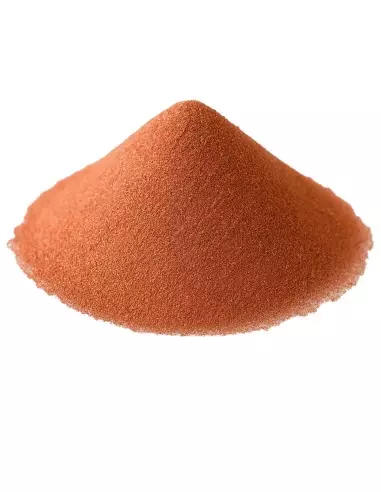
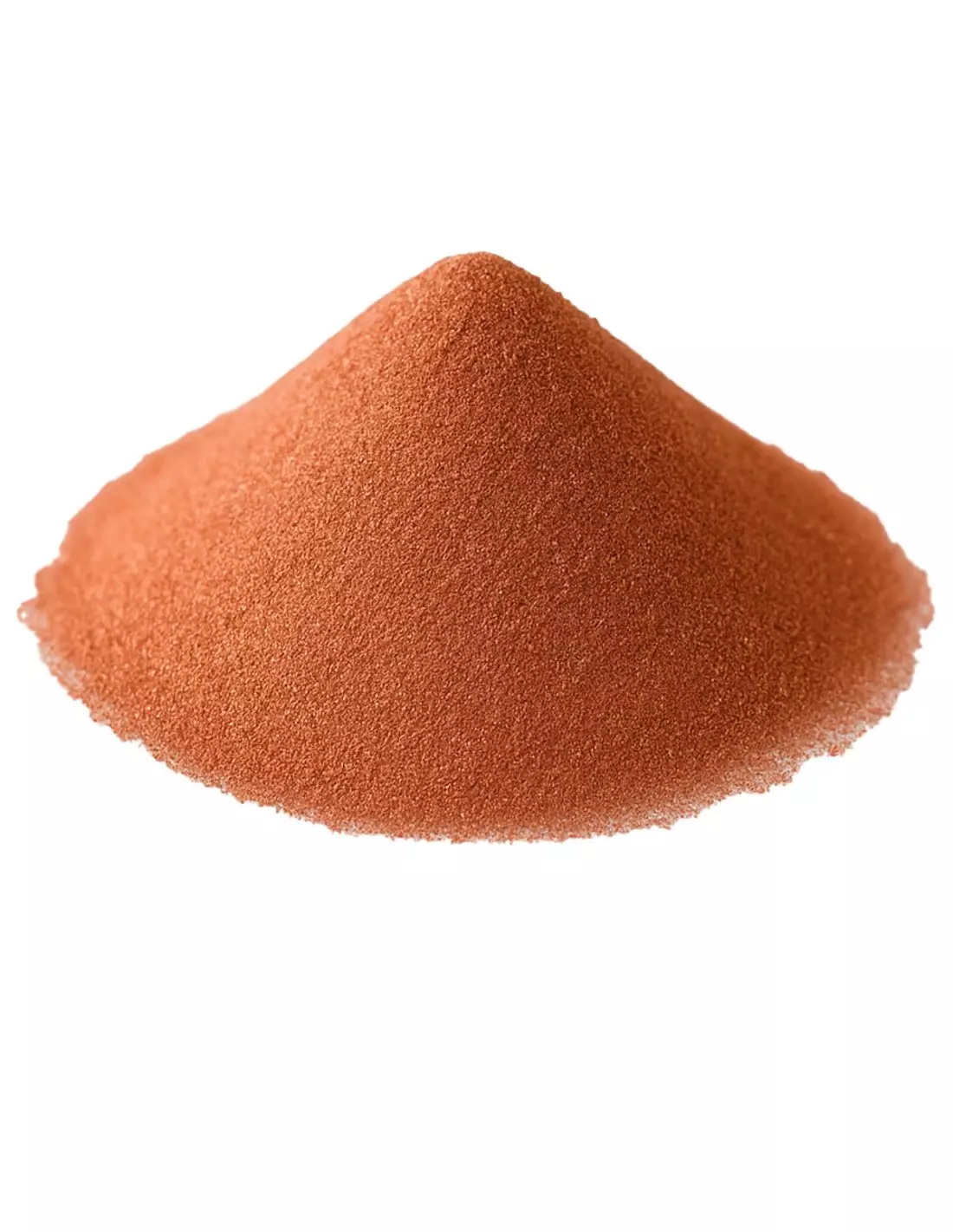
Copper Metal Powder Filler is a fine pure copper metallic pigment designed to be mixed with polyester, polyurethane or epoxy resins to produce pieces with a visual and tactile finish identical to real copper. It is applied in the first laminating or casting layer to concentrate the metallic effect on the visible surface, achieving high-quality reproductions and decorations at a much lower cost than solid metal.
Technical specifications
| Parameter |
Detail |
| Base material |
Metallic copper powder |
| Supply form |
Fine powder |
| Colour |
Copper |
| Recommended use |
Metal filler for resins (first layer) |
| Reference resin |
Ferpol 3501 (polyester) and compatible resins |
| Mix ratio |
Variable depending on project and desired effect |
What it is used for
This metal powder is used in projects where you need to simulate the appearance of real copper on resin-cast pieces, reducing weight and cost compared to traditional casting. Once the surface is polished or patinated, the result is virtually indistinguishable from solid copper.
- Reproductions of sculptures and decorative figures with copper finish
- Prop and set-dressing fabrication for film and theatre
- Creation of interior decoration pieces with metal effect
- Industrial prototypes with metallic appearance
- Restoration and copying of ornamental pieces
- Contemporary art and sculpture with composite materials
- Special effects and architectural models
How to use it
- Prepare the mould and make sure it is clean and correctly released.
- Mix the copper powder with the chosen resin — it is recommended to use Ferpol 3501 or another low-viscosity polyester resin for the first layer. Adjust the powder ratio according to the desired effect: more powder gives greater metallic density.
- Apply this mixture as a gel coat layer on the mould surface. Wait for it to gel without allowing it to cure completely.
- Apply the structural backing layers with unfilled resin (or a lower proportion) to give the piece structural strength.
- Demould once the whole assembly has fully cured.
- Gently sand the surface with fine-grit sandpaper to bring the metal to the surface.
- Buff with a cloth and, if desired, apply wax or patinas to age or protect the copper finish.
Usage tips
Filler ratio: start with moderation
There is no single ratio that works for every project. As a starting point, try a high powder ratio (up to 1:1 by weight relative to the resin) in the first layer to maximise the metallic effect. You can reduce it in intermediate layers. Always do a small test before applying to the final piece. Bear in mind that adding too much powder can increase the brittleness of the surface layer.
The final finish makes all the difference
Sanding and polishing after demoulding is what activates the true metallic effect. Without this step, the surface will have a dull matt appearance. Use progressive grits (120 → 240 → 400) and finish with a metal polish or wax to achieve the characteristic copper shine. If you want an aged look, apply copper-specific chemical patinas to the already-polished surface.
Compatibility with resins
Copper powder is compatible with polyester, epoxy and polyurethane resins. For working with polyester resins, Ferpol 3501 is the recommended workshop reference. If you work with acrylic resins, be aware that not all systems are equally compatible: check the resin's technical data sheet and, if in doubt, contact Feroca before formulating. For neutral-colour fillers or extenders, you can combine with Marmolina in backing layers to reduce cost without sacrificing structural strength.
Frequently asked questions
Can I mix this powder with any type of resin?
Copper powder is compatible with most polyester, epoxy and polyurethane resins. It is especially recommended to mix it with low-viscosity resins for the first layer. With acrylic resins, compatibility may vary; contact Feroca if you have doubts about your specific system.
How much metal powder should I add to the resin?
The ratio is flexible and depends on the desired effect and the base resin. For the first layer with maximum metallic effect, a 1:1 ratio by weight can be used. For backing layers a lower proportion or even no filler is sufficient. Always do a prior test to adjust the formulation to your project.
Does the result look like real copper or can you tell it is resin?
With a good proportion of copper powder in the first layer and correct sanding and polishing, the finish is visually very similar to solid copper. The piece has metallic weight, colour and texture. The level of realism largely depends on the post-demould finishing work.
Can I patinate the surface to simulate aged copper?
Yes. Once the surface is polished, you can apply copper-specific chemical patinas or manual ageing techniques. The real copper powder in the surface layer reacts in a similar way to solid metal when exposed to these treatments.
Is it possible to use less filler in structural backing layers?
Yes, and in fact it is recommended. The metal filler is concentrated in the first layer for the visual effect. Backing layers can carry less powder or none at all, which reduces cost and maintains the structural strength of the piece.
What is the difference between copper powder and bronze or brass powder?
Each metal powder gives a different tone: copper offers its characteristic reddish-orange hue, bronze a warmer and darker gold, and brass a cooler metallic yellow. The choice depends on the finish you want to replicate in your piece.
Where can I find the product technical data sheet?
On the product page on the Feroca website you will find the downloadable technical data sheet under the "Documentation" tab. If you have further questions, the Feroca technical team can advise you on ratios and compatibilities.
Can this powder be used with acrylic resins such as Jesmonite?
Mixing copper powder directly with water-based acrylic resins such as the Jesmonite system is not recommended, as compatibility and finish are not optimal. For acrylic resins with a metallic effect, Feroca has specific solutions formulated for that system. Contact our technical team for the best alternative.