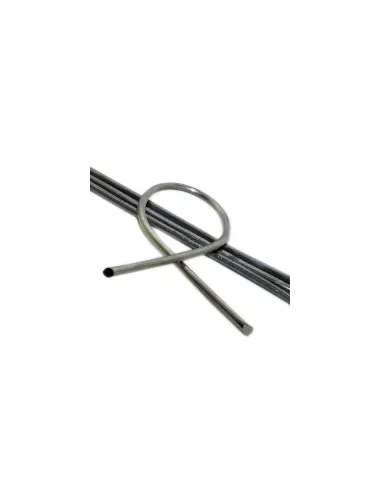
Lead/tin alloy rods are the reference material for casting low-melting-point metal figures in silicone moulds. Their reduced melting point makes them ideal for working with flexible moulds without damaging them, producing solid metallic-looking pieces with good detail and a consistent finish.
Technical specifications
| Format |
Pack of 10 rods (approximately 1 kg) |
| Weight per rod |
Approx. 83 g |
| Composition |
Lead/tin alloy |
| Melting type |
Low-melting-point |
| Main application |
casting in tin silicone moulds |
| Recommended mould |
Tin Sil 70-60 |
What it is used for
This alloy is designed for the artisanal production of figures, replicas and decorative pieces by hot casting in condensation silicone moulds. As it melts at a relatively low temperature, it can be used with the melting ladle without the need for industrial equipment, making it accessible for craft workshops, artists and small-scale manufacturers.
- Collectible figures and metal miniatures
- Low-cost decorative replicas
- Series production of identical pieces using a reusable mould
- Functional prototypes with a metallic appearance
- Craft soldering and restoration applications
- FX work requiring real metallic weight and appearance
How to use it
- Prepare the silicone mould (the mould made with Tin Sil 70-60 is recommended) and make sure it is completely dry and free of moisture before casting.
- Place the rods in the melting ladle and heat until the metal is completely melted and fluid.
- Remove any surface dross with a metal spatula before pouring.
- Pour the molten metal into the silicone mould in a continuous and controlled flow, avoiding turbulence that could create bubbles.
- Allow to cool at room temperature without moving the mould until the piece has fully solidified.
- Demould carefully, extracting the piece from the flexible mould. No release agent is needed with silicone moulds.
- Remove sprues and flash with suitable finishing tools. The piece can be sanded, painted or patinated to achieve the desired result.
Caution: Lead is a toxic metal. Always work in well-ventilated spaces, use heat-resistant gloves and eye protection during melting and casting. Avoid inhaling metal fumes. Do not use casting utensils for food purposes. Wash your hands after any contact with the material.
Usage tips
Working temperature and safety
Do not overheat the metal beyond what is necessary for it to flow well. Excessive temperature accelerates oxidation of the alloy and can progressively damage the silicone mould. Work in a ventilated environment and keep the ladle clean of residues between castings.
Mould preparation
The silicone mould must be completely free of moisture before pouring the molten metal. Any trace of water causes a violent reaction on contact with the hot metal. If the mould has been stored for some time, warm it slightly before use to ensure it is dry. The Feroca metal casting kit includes everything needed to get started from scratch.
Piece finishing
Once demoulded and clean, the piece can be progressively sanded, polished, chemically patinated or painted. If you wish to reduce the weight of similar pieces or experiment with decorative effects, you can complement your work with aluminium powder as a metallic filler mixed with resins, to achieve a visually metallic result without casting.
Frequently asked questions
What type of mould do I need for low-melting-point metal casting?
Condensation (tin) silicone moulds are the most suitable for casting low-melting-point alloys. They withstand the heat of molten metal without deforming and allow clean demoulding without the need for a release agent. Feroca's lead/tin rods are especially recommended for use with the Tin Sil 70-60 mould.
How many pieces can I get from one pack?
It depends on the volume of the piece you are reproducing. The pack contains approximately 1 kg of alloy (10 rods of around 83 g each). For small figures weighing just a few grams you can get dozens of pieces; for larger pieces, the yield will be lower. Plan the required quantity based on the estimated weight of your model.
Can molten metal be used with latex or resin moulds?
No. Latex moulds and most resins cannot withstand the working temperatures of low-melting-point metal alloys. The mould would deform or be destroyed during casting. Use only heat-resistant condensation silicone moulds, such as those made with Tin Sil 70-60.
Is a release agent needed with silicone moulds?
No. Silicone has natural non-stick properties, so the metal does not stick to the mould wall. Demoulding is clean and straightforward once the piece has cooled completely.
Can I reuse leftover metal or sprues?
Yes. Sprues and leftover metal can be remelted and reused in subsequent castings. Bear in mind that each remelting may result in a small loss due to oxidation. Always remove dross before pouring the recycled metal.
What tool do I need to melt the rods?
Feroca's melting ladle is the specific tool for this task. It allows the metal to be melted and poured in a controlled and safe manner, with adequate capacity for craft work.
Can cast pieces be painted or patinated?
Yes. Once clean and deflashed, the pieces can be sanded, mechanically polished, chemically patinated and painted. Aged, glossy or oxidised finishes are all achievable depending on the technique applied.
Are there any special risks when working with this alloy?
Yes. The alloy contains lead, which is toxic. It is essential to work in ventilated spaces, with heat-resistant gloves and eye protection. Avoid inhaling fumes generated during melting and wash your hands thoroughly after handling the material. It is not suitable for food use or for environments with unsupervised minors.