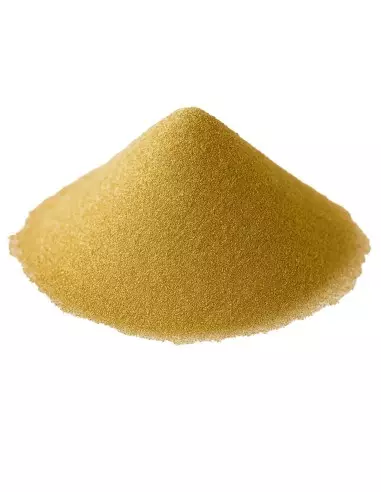
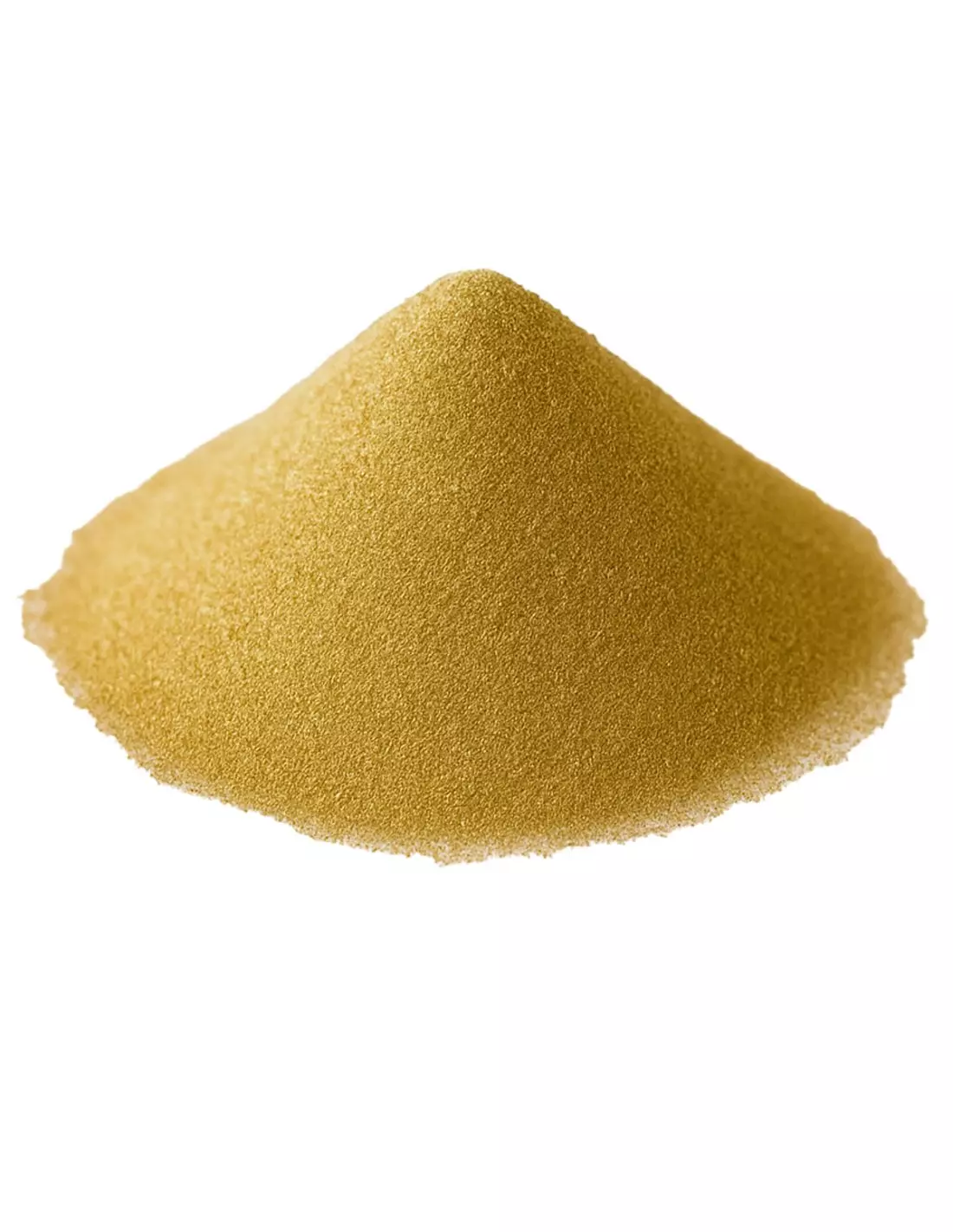
Brass powder is a fine-granulometry metallic filler that is incorporated directly into resins, pastes and composite materials to achieve parts with genuine metallic content, greater density and the characteristic golden finish of brass. It is the direct solution when you need real metallic weight and appearance without resorting to paints or surface coatings.
Technical specifications
| Property |
Detail |
| Base material |
Brass (copper-zinc alloy) |
| Format |
Fine powder |
| Colour |
Metallic golden yellow |
| Main use |
Filler for resins, pastes and composite materials |
What it is used for
Brass powder is incorporated as a filler in the liquid phase of polyurethane resins, epoxy resins and other casting systems to add mass, weight and real metallic appearance to the final part. It is also used in gel coat surface layers to achieve a golden finish without the need for metallisation.
- Decorative and sculptural pieces with genuine metallic weight and feel
- Replicas and reproductions of period metal objects
- Special effects and props with a brass appearance
- Metallic gel coat layers in open moulds
- Prototypes and scale models with a premium metallic finish
- Designer jewellery, art pieces and crafts
- Joint filling and restoration with a metallic appearance
How to use it
- Prepare the base resin (polyurethane or epoxy) according to the manufacturer's instructions, without mixing the two components yet.
- Add the brass powder to component A or directly to the already prepared resin mixture, at an approximate ratio of 10–30% by weight of the total resin. Adjust according to the desired finish and density.
- Mix with a spatula or stirrer until a homogeneous distribution of the powder in the resin is achieved. Avoid incorporating air bubbles.
- If you are looking for a gel coat type surface finish, first apply a layer loaded with brass powder to the mould, allow it to partially gel, and then fill with the structural resin.
- Pour or apply the mixture into the mould or surface following the usual process of your resin system.
- Once the part has cured, you can sand, polish or patinate the surface to intensify the metallic effect.
Usage tips
Ratios and density
The amount of brass powder you add will determine both the weight and the final appearance. At low ratios (10–15%) you get a subtle metallic effect and the part retains good fluidity. At high ratios (25–30%) you achieve greater density and a more opaque, metallic finish, but the mixture becomes more viscous and may require more agitation. Do not exceed 40% by weight to avoid compromising the structural integrity of the resin.
Surface finish
To maximise the metallic effect, apply a concentrated surface layer of brass powder (gel coat technique): paint the inside of the mould with the loaded mixture, allow it to gel, and fill with the structural resin without filler or with a lower proportion. Once the part has been demoulded, sand with progressive grit sandpaper (from 220 to 600 grit) and buff with a soft cloth to bring out the characteristic golden shine of brass. If you want an aged look, apply a patina with specific products for metals.
Compatibility and storage
Brass powder is compatible with epoxy, polyurethane and polyester resins, as well as decorative pastes and mortars. It is not recommended to mix it with water-based acrylic resins, as moisture can alter the metallic powder and affect the finish. Store the powder in an airtight container, in a dry place away from moisture, to prevent oxidation. If the powder shows lumps or colour changes before use, sieve it before incorporating it into the mixture.
Frequently asked questions
What ratio of metallic filler should I add to the resin?
The ratio can vary depending on the effect you are looking for. For a subtle metallic finish, start at 10–15% by weight of the total resin. For greater density and a more opaque, metallic appearance, you can go up to 25–30%. Brass powder allows you to adjust the amount to the needs of each project without compromising the resin cure, as long as you do not exceed 40% by weight.
Can a metallic filler be used with any type of resin?
Brass powder is compatible with epoxy, polyurethane and polyester resins. It is not recommended for use with water-based acrylic resins, as moisture can affect the metallic powder and the final result. For each resin system, consult the technical data sheet of the base product to ensure that the addition of filler does not alter the cure times or mechanical properties.
Is the resulting part genuinely metallic?
Yes, in the sense that it contains real metal (brass powder) in its mass. This gives it greater weight, density and thermal conductivity than an unfilled resin part. However, the part is not machinable like a solid brass piece: it is a resin-metal composite with genuine metallic appearance, feel and weight.
How do I achieve maximum metallic shine on the surface?
Apply a concentrated surface layer of brass powder to the mould (gel coat technique), allow it to gel slightly, and fill with the structural resin. Once the part has been demoulded and cured, sand progressively with 220, 400 and 600 grit papers, and buff with a soft cloth. This process brings out the characteristic golden shine of brass.
Can I mix brass powder with other metallic fillers?
Yes. It is possible to combine brass powder with other metallic powders such as copper powder, bronze powder or aluminium powder to create custom tones and effects. Mix all the powders together thoroughly before incorporating them into the resin to ensure a homogeneous distribution.
Does the metallic powder affect the resin's cure time?
In general, brass powder does not significantly alter the cure times of epoxy or polyurethane resins. However, in highly reactive resins or those with short working times, the greater mass of the mixture can generate slightly more exothermic heat. Work in small batches if you are using high filler ratios.
How should I store the metallic powder?
Store the brass powder in an airtight container, in a dry place away from sources of moisture. Moisture can cause oxidation of the powder and alter the colour and finish. If you notice lumps or a change in tone before use, sieve the powder before incorporating it into the resin.
Where can I find the technical data sheet for this product?
On each product page on the Feroca website you will find the downloadable technical data sheet under the "Documentation" tab. If you have questions about specific compatibilities or ratios, you can contact the Feroca technical team.