
Shopping Cart

Where do I start? The logic of LifeCasting
Before choosing materials, it helps to be clear on the workflow. The skin mold captures fine detail — every pore, every wrinkle — and must be body-safe and flexible so you can demold without hurting the model. The plaster shell gives the soft mold rigidity so it doesn't distort when you pour. And the casting material — resin, plaster, silicone — is what produces the final piece. Every decision in one phase affects the next ones, so we'll walk you through each one separately.
Body-safe alginates: the fast and safe option
Alginate is the most widely used material for getting started with LifeCasting. You mix it with water, apply it directly to the skin, and it captures detail with extraordinary precision. It's completely safe for the human body, generates no heat, and releases without any release agent. Its only limitation is that the mold ages and shrinks within a few hours, so you need to pour the plaster shell as soon as you're done. We stock two variants of Alga-Cast depending on the working time you need:
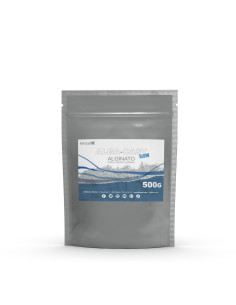 Alga-Cast Slow
Longer working time, ideal for large or complex pieces.
Alga-Cast Slow
Longer working time, ideal for large or complex pieces.
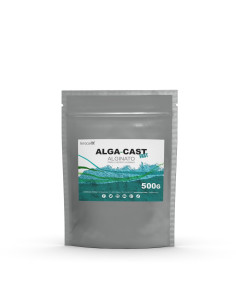 Alga-Cast Fast
Fast setting, perfect for faces and smaller areas.
Alga-Cast Fast
Fast setting, perfect for faces and smaller areas.
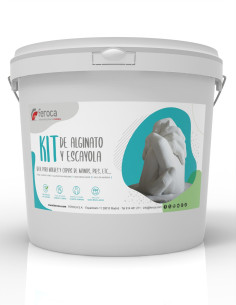 Kit Hands, Feet & More
Everything included: alginate, plaster and container to get started.
Kit Hands, Feet & More
Everything included: alginate, plaster and container to get started.
Body-safe silicones: reusable and high-detail
When you need to reuse the mold, work with more time, or reproduce skin textures at an extreme hyperrealism level, platinum body-safe silicones are the best option. They're more expensive than alginate, but the mold holds up to dozens of pours without distorting. Some have a built-in release agent, others are formulated specifically for special effects prosthetics. Choose based on the Shore hardness you need and the final use of the piece:
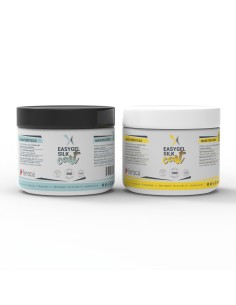 EASYGEL Silk Cast
Body-safe, self-releasing, ultra-low Shore for skin applications.
EASYGEL Silk Cast
Body-safe, self-releasing, ultra-low Shore for skin applications.
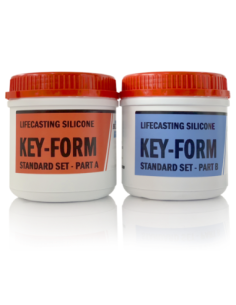 KEY-FORM
Body-safe platinum, high elasticity, long-lasting reusable molds.
KEY-FORM
Body-safe platinum, high elasticity, long-lasting reusable molds.
 PlatSil Gel-25
Shore A25, platinum, versatile for molds and FX applications.
PlatSil Gel-25
Shore A25, platinum, versatile for molds and FX applications.
FX prosthetics silicones and hyperrealism
If your goal isn't just the mold but also the final piece — a prosthetic, a hyperrealistic skin, a character makeup element — the EasyGel FX family offers different hardnesses and cure speeds. All are compatible with silicone pigments and can be intrinsically painted to mimic skin with results that are hard to tell apart from the real thing:
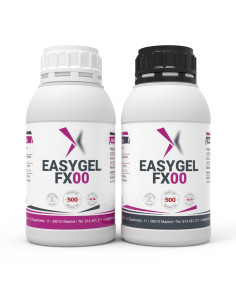 EasyGel FX00
Shore 0, extremely soft, for ultra-thin skin prosthetics.
EasyGel FX00
Shore 0, extremely soft, for ultra-thin skin prosthetics.
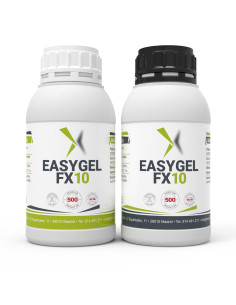 EasyGel FX10
Shore A10, balance between softness and tear resistance.
EasyGel FX10
Shore A10, balance between softness and tear resistance.
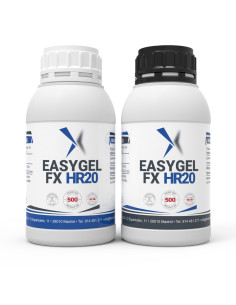 EasyGel FX HR20
Fast cure, Shore A20, high resistance for intensive work.
EasyGel FX HR20
Fast cure, Shore A20, high resistance for intensive work.
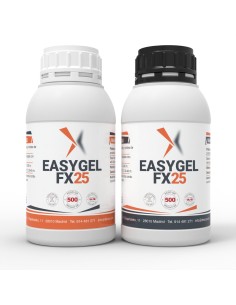 EasyGel FX25
Shore A25, greater firmness for prosthetics with volume and definition.
EasyGel FX25
Shore A25, greater firmness for prosthetics with volume and definition.
Plaster for the mother mold
Both alginate and body-safe silicone are flexible: they need a rigid mother mold to support them and hold the correct shape before you pour. Plaster is the classic material for this step. Choose the hardness based on your use: for functional production mother molds a high-strength plaster works best, while for reproductions with a fine-detail finish a dental or high-hardness plaster gives better results:
 EXADURO
Robust plaster for mother molds that stand up to repeated use.
EXADURO
Robust plaster for mother molds that stand up to repeated use.
 Arquero
High mechanical strength, ideal for production mother molds.
Arquero
High mechanical strength, ideal for production mother molds.
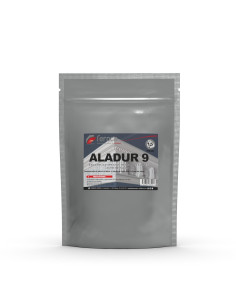 ALADUR 9
High detail, smooth surfaces for quality reproductions.
ALADUR 9
High detail, smooth surfaces for quality reproductions.
Frequently asked questions about LifeCasting
What's the difference between making a face mold with alginate versus body-safe silicone?
Alginate is faster and more affordable: you mix it with water, apply it, and in just a few minutes you have the negative. It's ideal if you're doing a small number of reproductions or you're just starting out. The downside is that the mold shrinks and deteriorates within a few hours, so you need to pour the plaster shell right away and make the reproduction the same day. Body-safe silicone takes longer to cure, requires a bit more preparation, and costs more — but the mold holds up to dozens of pours without distorting and you can store it for months. If you need to reproduce the same shape many times or you work in production, silicone is the right choice.
Do I need a release agent to apply alginate or body-safe silicone on skin?
No. Both Alga-Cast alginates and body-safe silicones like EASYGEL Silk Cast are formulated to be used directly on skin without any release agent. What you should do is protect hair, eyebrows and facial hair with plenty of petroleum jelly or a barrier cream before applying the material, as alginate and silicone can get tangled in hair and be difficult to remove. Don't use any chemical release agent that isn't explicitly indicated for skin contact.
What is the plaster mother mold for and when do I need to make it?
The alginate or silicone mold is flexible and can't support itself: if you leave it on a flat surface, it flattens out and the shape distorts. The plaster mother mold is the rigid shell that wraps around the soft mold from the outside and holds it in the correct position for pouring. With alginate you need to make the mother mold before you even demold the model, because alginate shrinks quickly as it dries. With silicone you have more time, but it's still a good idea to make the mother mold before the first reproduction. Use EXADURO or Arquero for mother molds that need to withstand repeated use.
Can I use PlatSil Gel-25 or EasyGel FX directly on skin?
PlatSil Gel-25 is a general-purpose platinum silicone that can be used in contact with skin as long as the model has no known sensitivities to cured platinum. EASYGEL Silk Cast and KEY-FORM are formulated specifically for LifeCasting and are the most recommended options for prolonged direct application on skin. The EasyGel FX family is primarily designed for making prosthetics and special effects pieces — the reproduction, not the mold — although it can also be used as a mold material in certain applications. If you have any doubts about skin compatibility, always do a patch test on a small area of the forearm and wait at least 30 minutes before proceeding.
Which plaster is best for casting the final copy from a face mold?
It depends on the finish you're looking for. If you want a reproduction with very smooth surfaces and high detail — for example, to paint or use as a base for prosthetic makeup — ALADUR 9 is the best option thanks to its fine grain and resistance to polishing. If the copy will see more functional or structural use — such as a base for sculpture or a workshop support — Arquero offers superior mechanical strength. EXADURO is a good middle-ground option for mother molds that are used repeatedly without requiring a perfect surface finish.