
Shopping Cart

What does the EverGreen seal mean?
EverGreen is not just a marketing claim. Every product carrying this seal meets at least one of the following criteria: water-based formula or absence of volatile organic solvents, natural or mineral origin of its main components, absence of tin compounds or other heavy metals in the curing system, suitability for skin or food contact in accordance with current regulations, or the ability to be reused in a way that extends its life cycle. Many of them meet several criteria at once. You'll find the technical data sheet and safety data sheet for each product on its product page.
Jesmonite — water-based acrylic-mineral resin
Jesmonite is the go-to material in sustainable architecture, decoration and object art. Its acrylic-mineral system contains no solvents, cures at room temperature and produces pieces with a strength and texture reminiscent of stone or cement. You can laminate it, pour it into a mould, mix it with natural fillers and pigment it with the brand's own colours. It's suitable for interior use and, depending on the formulation, exterior use too.
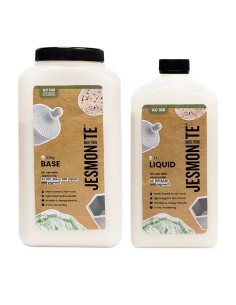 Jesmonite AC100
Water-based acrylic-mineral resin for casting and laminating.
Jesmonite AC100
Water-based acrylic-mineral resin for casting and laminating.
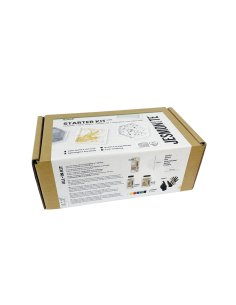 Jesmonite AC100 — Starter Kit
Complete kit to get started with Jesmonite AC100.
Jesmonite AC100 — Starter Kit
Complete kit to get started with Jesmonite AC100.
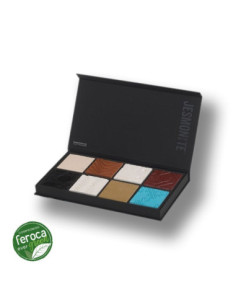 Jesmonite AC100 — Sample Box
Finish samples to evaluate the AC100 before going into production.
Jesmonite AC100 — Sample Box
Finish samples to evaluate the AC100 before going into production.
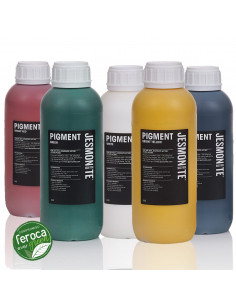 Jesmonite Pigments
Specific pigments compatible with the entire Jesmonite range.
Jesmonite Pigments
Specific pigments compatible with the entire Jesmonite range.
Jesmonite AC730 — cement and stone effect
The AC730 is the Jesmonite version aimed at cement, concrete and natural stone finishes. It works both as a direct cast and in a gel coat plus laminate system, allowing you to create large-format pieces with very little weight. The Flex Metal adds metallic particles to the system to achieve metallic-sheen surfaces without using sprays or additional coatings. All of them maintain the water-based, low-toxicity philosophy.
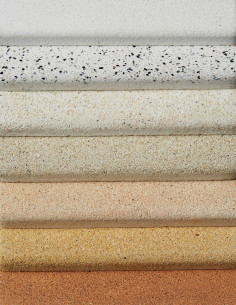 Jesmonite AC730
Water-based acrylic cement with stone-effect finish.
Jesmonite AC730
Water-based acrylic cement with stone-effect finish.
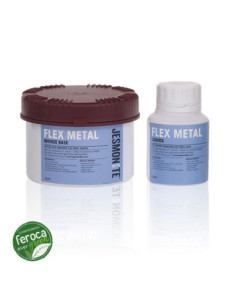 Jesmonite AC730 Flex Metal
Gel coat with metallic particles, free of organic solvents.
Jesmonite AC730 Flex Metal
Gel coat with metallic particles, free of organic solvents.
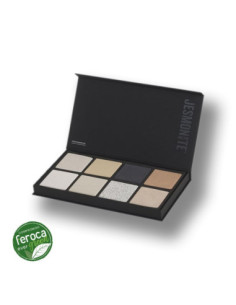 Jesmonite AC730 — Sample Box
Finish samples to validate the AC730 in your project.
Jesmonite AC730 — Sample Box
Finish samples to validate the AC730 in your project.
Acrystal — non-toxic mineral acrylic resin
Acrystal is another water-based acrylic-mineral resin, an alternative to Jesmonite for casting, laminating and sculptural finishes. Its formulation contains no organic solvents and the mineral powder it's made from comes from natural sources. The retarder and the thixotropic agent are additives that expand its application possibilities without introducing problematic compounds: the retarder extends working time on large pieces and the thixotropic agent lets you brush the resin onto vertical surfaces without it running.
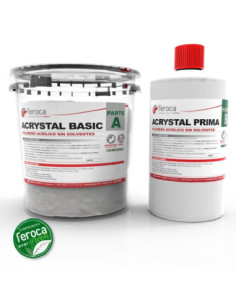 Acrystal Prima + Basic Crystal
Water-based mineral acrylic resin for casting and laminating.
Acrystal Prima + Basic Crystal
Water-based mineral acrylic resin for casting and laminating.
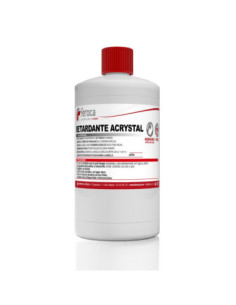 Acrystal Retarder
Extends working time on large pieces without solvents.
Acrystal Retarder
Extends working time on large pieces without solvents.
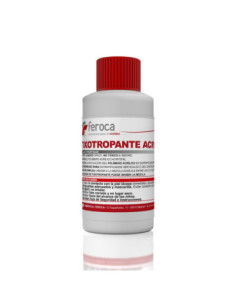 Acrystal Thixotropic Agent
Allows vertical brushing without runs or toxic additives.
Acrystal Thixotropic Agent
Allows vertical brushing without runs or toxic additives.
EpoFood — epoxy resin suitable for food contact
EpoFood is a colourless epoxy resin formulated without BPA and certified for food contact. It's the responsible choice when you're working on kitchen boards, chocolate moulds, resin-coated cutlery or any surface that will be in contact with food or drink. Its crystal-clear finish, high hardness and chemical resistance also make it equally suitable for jewellery, object art and decorative applications where total transparency is essential.
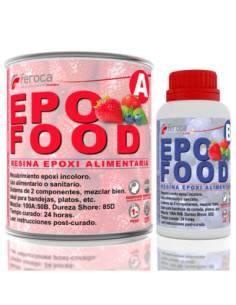 EpoFood
Platinum silicones — tin-free, solvent-free
Platinum silicones cure by addition: they need no solvents or tin catalysts, and the by-product of curing is ethanol in minimal quantities, not acetic acid as with condensation silicones. The result is a stable, inert elastomer suitable for skin or food contact applications according to each product's certification. PlatSil Gel-10 is the professional reference for precision moulds and special effects; Easyl 940-FDA is the FDA-certified option for confectionery moulds and food applications.
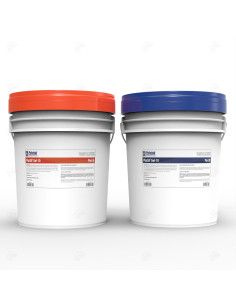 PlatSil Gel-10
Tin-free platinum silicone, Shore A10, high precision.
PlatSil Gel-10
Tin-free platinum silicone, Shore A10, high precision.
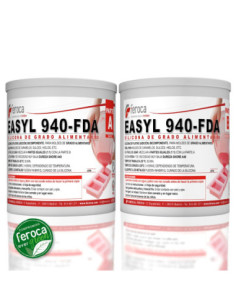 Easyl 940-FDA Pink
FDA-certified platinum silicone for food moulds.
Easyl 940-FDA Pink
FDA-certified platinum silicone for food moulds.
Pros-Aide — medical-grade adhesives without aggressive solvents
Pros-Aide is the reference adhesive for theatrical prosthetics, FX and character make-up. Its medical-grade formulation does without the aggressive solvents common in industrial contact adhesives, making it a responsible choice both for the person applying it and for the person wearing it on their skin. The cream version has greater body and is especially useful for applying pieces to areas with relief or constant movement.
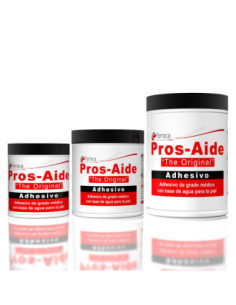 Pros-Aide
Medical adhesive without aggressive solvents, suitable for skin.
Pros-Aide
Medical adhesive without aggressive solvents, suitable for skin.
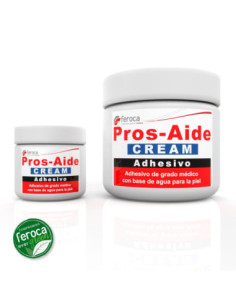 Pros-Aide CREAM
High-adhesion cream version for areas with movement.
Pros-Aide CREAM
High-adhesion cream version for areas with movement.
Monster Clay — sulphur-free reusable clay
Monster Clay is a professional modelling clay that softens with heat and hardens again as it cools, meaning you can reuse it indefinitely: no waste, no material lost. Its formulation is sulphur-free, making it compatible with platinum silicones without any risk of cure inhibition. It also does without hard paraffins that would make recycling the material harder. It's available in three hardnesses to suit different modelling styles and piece sizes.
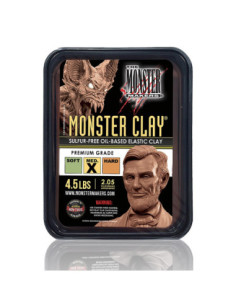 Monster Clay MEDIUM
Medium hardness, sulphur-free, indefinitely reusable.
Monster Clay MEDIUM
Medium hardness, sulphur-free, indefinitely reusable.
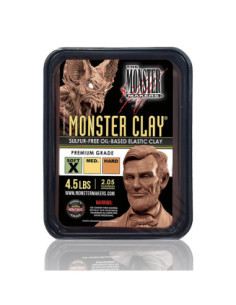 Monster Clay SOFT
Soft version, ideal for fine details and small pieces.
Monster Clay SOFT
Soft version, ideal for fine details and small pieces.
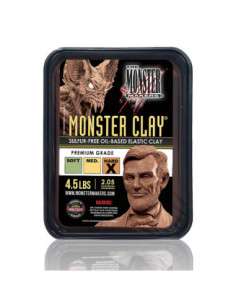 Monster Clay HARD
Hard version, for large sculptures that need firm support.
Monster Clay HARD
Hard version, for large sculptures that need firm support.
Alga-Cast — biodegradable marine-origin alginate
Alginate is one of the most sustainable moulding materials in existence: it's extracted from seaweed, is biodegradable, contains no petrochemical components and is completely safe in contact with human skin. Alga-Cast is formulated specifically for body moulds, life casting and special effects. You have two cure speeds to choose from depending on the size of the piece and the time you have available: Slow for more working time, and Fast when you need to finish quickly or the ambient temperature is low.
 Alga-Cast Slow
Biodegradable marine alginate, slow cure for large pieces.
Alga-Cast Slow
Biodegradable marine alginate, slow cure for large pieces.
 Alga-Cast Fast
Biodegradable marine alginate, fast cure for agile work.
Alga-Cast Fast
Biodegradable marine alginate, fast cure for agile work.
Plaster and burlap — mineral and natural materials
Plaster and burlap are two of the lowest-footprint materials in the workshop. EXADURO plaster is of mineral origin, contains no synthetic polymers and at the end of its useful life can return to the ground without leaving problematic residues. Burlap is a jute fabric — a natural plant fibre — used as reinforcement in Jesmonite, Acrystal or plaster laminates, adding mechanical strength without resorting to synthetic fibres. Both materials fit perfectly into projects where you want to minimise the use of petroleum-derived plastics.
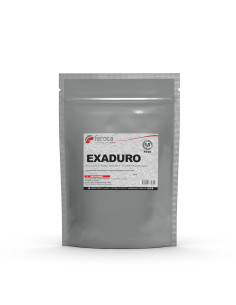 EXADURO
High-strength mineral plaster for moulds and counter-moulds.
EXADURO
High-strength mineral plaster for moulds and counter-moulds.
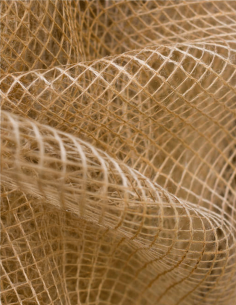 Burlap
Natural jute fabric for laminate reinforcement without plastic.
Burlap
Natural jute fabric for laminate reinforcement without plastic.
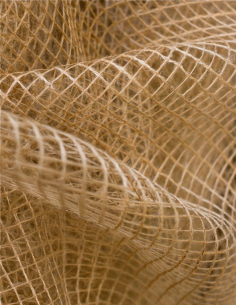 Pre-cut Burlap
Burlap in ready-to-use pieces, with no material waste.
Pre-cut Burlap
Burlap in ready-to-use pieces, with no material waste.
Frequently asked questions about EverGreen materials
- Are Jesmonite and Acrystal really safe to work with at home or in workshops without industrial ventilation?
- Yes. Both Jesmonite and Acrystal are water-based systems with no volatile organic solvents. This means they don't emit the harmful vapours that conventional polyurethane or epoxy resins generate during mixing and curing. You can work in spaces with normal ventilation — an open window is enough in most cases — although we always recommend reading the product safety data sheet and wearing nitrile gloves to avoid prolonged skin contact. The mineral dust from the solid components can irritate the respiratory tract if handled carelessly, so work without draughts that might raise dust and wear an FFP1 mask when weighing.
- Can I use Monster Clay to make the original model and then mould it with PlatSil Gel-10 directly?
- Yes, and it's precisely the recommended combination. Monster Clay contains no sulphur, which is the main inhibitor of platinum silicone curing. You can pour or brush PlatSil Gel-10 directly onto your Monster Clay sculpture without needing to apply any sealer or special release agent first. If the surface of the clay has been exposed to dust or external contaminants, simply clean it with a dry cloth or a little isopropyl alcohol before moulding.
- Are Alga-Cast moulds single-use? What do I do with the material once I've demoulded?
- Alginate moulds are single-use or very limited use: the material dehydrates quickly and loses stable dimensions within a few hours, so you need to reproduce it in plaster, Jesmonite or another material as soon as possible after demoulding. Once the mould has served its purpose, you can put it in the organic waste bin or a home composting container if your local authority allows it: alginate is biodegradable and leaves no hazardous residues. Don't pour it down the drain in large quantities as it can gel in the pipes when it mixes with water.
- Is EpoFood suitable for chocolate and confectionery moulds that go in the oven or freezer?
- EpoFood is certified for food contact and withstands temperatures from around –20 °C up to approximately 60 °C in continuous service. For freezer use it's perfectly valid. Tempering chocolate rarely requires exceeding that temperature, so in most confectionery applications it works without any problem. However, if you need a mould that regularly withstands oven temperatures above 60 °C, the most suitable option is the platinum silicone Easyl 940-FDA, which can handle up to 200 °C. Always check the product's technical data sheet to confirm the exact thermal range before using it in production.
- Can I mix Jesmonite with natural fillers such as sand, soil or marble powder to achieve custom textures?
- Yes, and it's one of the great advantages of the Jesmonite system — a common practice in product design and decoration. You can add fine sand, limestone powder, coloured earth, marble powder, mica or even short plant fibres to modify the colour, texture and weight of the final piece. The general rule is not to exceed 30–40% of the filler weight relative to the total mix so as not to compromise mechanical strength, but this varies depending on the filler. If you're using natural aggregates you don't know well, first make a small sample to verify that they don't interfere with curing and that the result is what you're looking for before committing to the final piece.
- Is jute burlap compatible with Jesmonite and Acrystal as reinforcement?
- Yes, and it's the most coherent combination within the EverGreen philosophy: a water-based mineral binder reinforced with a natural plant fibre. The technique is similar to fibreglass laminating, but without the drawbacks: burlap doesn't irritate the skin when handled, doesn't generate synthetic microfibres and at the end of the piece's useful life the resulting material is far easier to manage as waste. For laminating, thoroughly saturate each layer of burlap with the resin before adding the next one and remove air bubbles with a spatula or roller. Pre-cut burlap saves you time if you're working in series or with standard-format pieces.