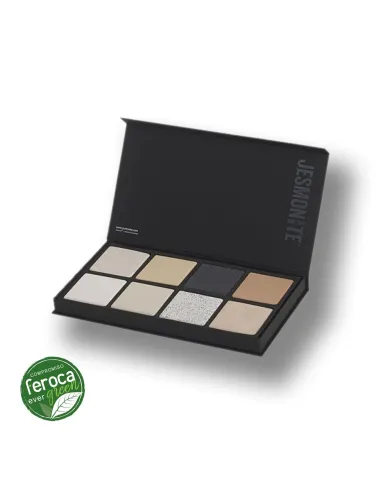
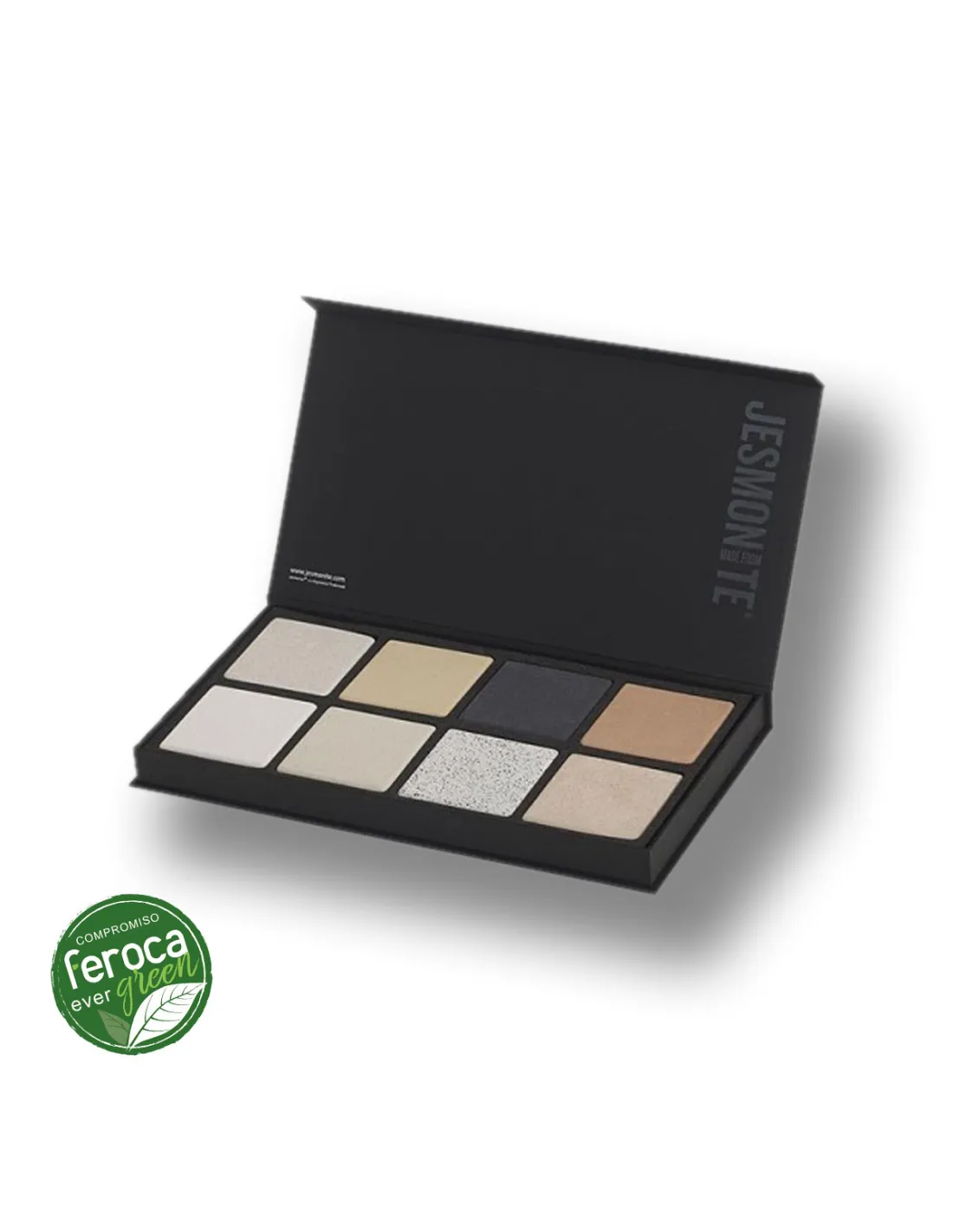
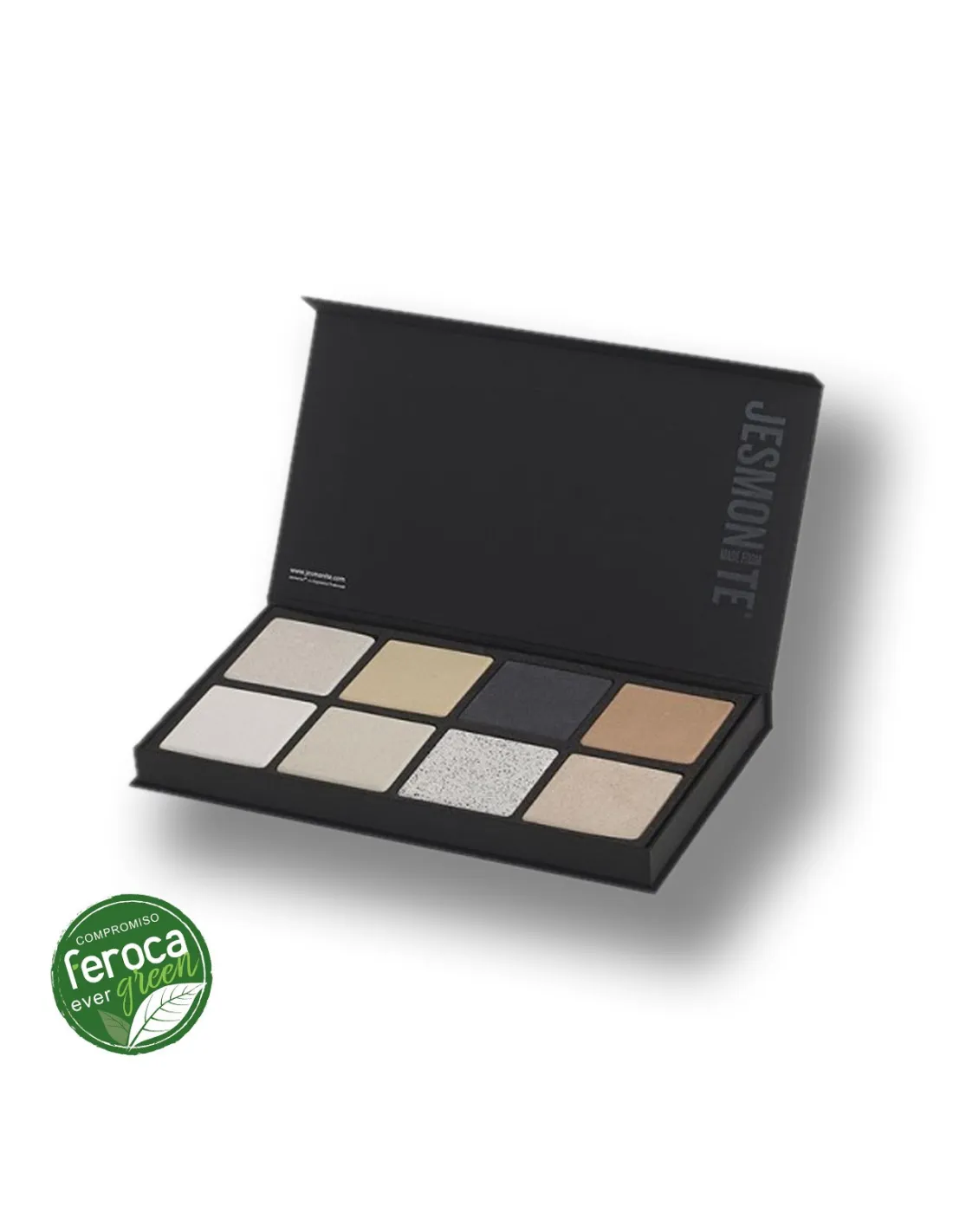
The Jesmonite AC730 Sample Box brings together real cured pieces that illustrate the different finishes you can achieve with this stone-effect acrylic cement. It is the perfect tool for presenting proposals to clients, validating finishes before production, and making decisions on pigmentation, texture and flexibility without needing to manufacture your own prototypes.
Pack contents
| Box included |
Reference product |
Finish type |
| Jesmonite AC730 Sample Box |
Jesmonite AC730 |
Standard stone effect |
| Jesmonite AC730 Flex Sample Box |
Jesmonite AC730 Flex |
Stone effect with increased flexibility |
| Jesmonite AC730 Metal Sample Box |
Jesmonite AC730 Metal |
Metallic effect on stone base |
What it is used for
This pack is designed for professionals in design, interior architecture, decoration and special effects who work with acrylic cements and need to visually communicate the final result before committing to a project or a specific finish.
- Presenting finish options to clients in meetings or site visits
- Comparing the real texture and colour of the three AC730 variants under actual curing conditions
- Validating the compatibility of a finish with the decorative environment before producing final pieces
- Training production teams on the visual and tactile differences between variants
- Using as a quality control reference in serialised processes with Jesmonite AC730
How to use it
- Open the box and remove the cured samples. They are ready to handle without any additional preparation.
- Compare the three variants — standard, Flex and Metal — under the lighting of the space where the final piece will be installed, as illumination affects the perception of the finish.
- Present the samples to the client alongside the available pigment range to show the scope of chromatic customisation possible.
- Once the variant has been chosen, consult the TECHNICAL DATA SHEET of the corresponding product to prepare the mix with the correct ratio of base and acrylic liquid.
- If you need colour or texture references during production, use the samples as a physical comparison standard.
Usage tips
Lighting during presentation
The stone effect finish and the metallic finish of AC730 Metal vary noticeably depending on the colour temperature of the light. Always present the samples under the intended lighting for the final project — warm, cool or natural light — to avoid surprises at delivery.
Combining samples with real pigmentation
The samples in the pack are cured in their natural base tone. To show pigmented versions, you can apply a thin layer of pigmented Jesmonite AC730 directly over the samples, or prepare small sample tiles in the workshop. This expands your visual catalogue without increasing presentation costs.
Sample storage
Store the samples in a dry place away from direct sunlight. Cured acrylic cement is stable, but prolonged exposure to humidity or intense UV rays can alter the surface appearance and reduce the accuracy of comparisons with recently produced pieces.
Frequently asked questions
Are the samples made using the same process as would be used in production?
Yes. The samples included in this box are cured with the same parameters recommended in the workshop, so they faithfully represent the result you will obtain when working with Jesmonite AC730 under correct mixing and temperature conditions.
Can I order samples in custom colours?
The sample box includes finishes in natural base tone. To see pigmented versions, the usual approach is to make small tiles in the workshop by adding compatible mineral or acrylic pigments to the Jesmonite AC730 mix. This is the most reliable way to validate a specific colour.
What is the difference between standard AC730, Flex and Metal?
Standard AC730 offers a rigid finish with stone-effect texture. The Flex variant incorporates additives that increase the flexibility of the cured material, making it more suitable for thin pieces or those subject to vibration. Metal adds metallic pigmentation to the stone base, achieving metallic reflections without sacrificing the robustness of the acrylic cement.
Is it necessary to apply a Release agent when working with Jesmonite AC730?
It depends on the mould. In silicone moulds, Jesmonite releases well without a release agent. In plaster, wood or metal moulds it is advisable to apply a suitable Release agent or release wax to ensure a clean demould and protect the mould.
Can a thixotropic agent be used with AC730?
Yes. If you need to apply the material on vertical or inclined surfaces without it running, you can incorporate a thixotropic agent for acrylic resins into the mix. Adjust the amount according to the desired consistency and always carry out a prior test.
What is the mixing ratio for Jesmonite AC730?
The standard ratio for Jesmonite AC730 is 3 parts powder base to 1 part acrylic liquid by weight. Always consult the TECHNICAL DATA SHEET of the product, as the Flex and Metal variants may have specific instructions. A suitable mixing paddle helps achieve a homogeneous, bubble-free mix.
Is AC730 compatible with the same moulds as AC100?
Generally yes. Both are water-based acrylic cements and share compatibility with silicone, plaster and other common workshop mould materials. The main difference lies in the particle size and the final finish: AC100 is finer and AC730 has a rougher stone-type texture. The AC100 samples allow you to compare both finishes directly.
Can I use a retarder to extend the working time of AC730?
Yes. For complex applications or with long moulding times you can incorporate a retarder for acrylic resins into the mix. This slows the setting without compromising the final mechanical properties of the material. Always carry out prior tests to calibrate the amount needed according to ambient temperature.
How much product do I need?Calculate the exact amount before buying and avoid wasting material.
Go to the calculator →