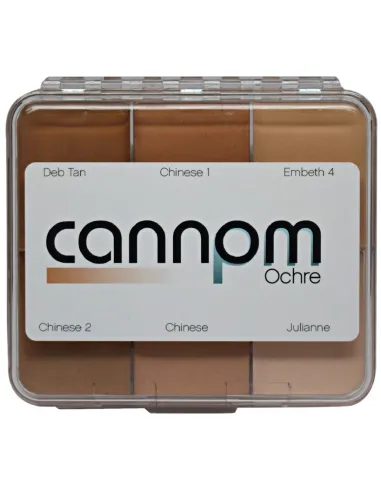
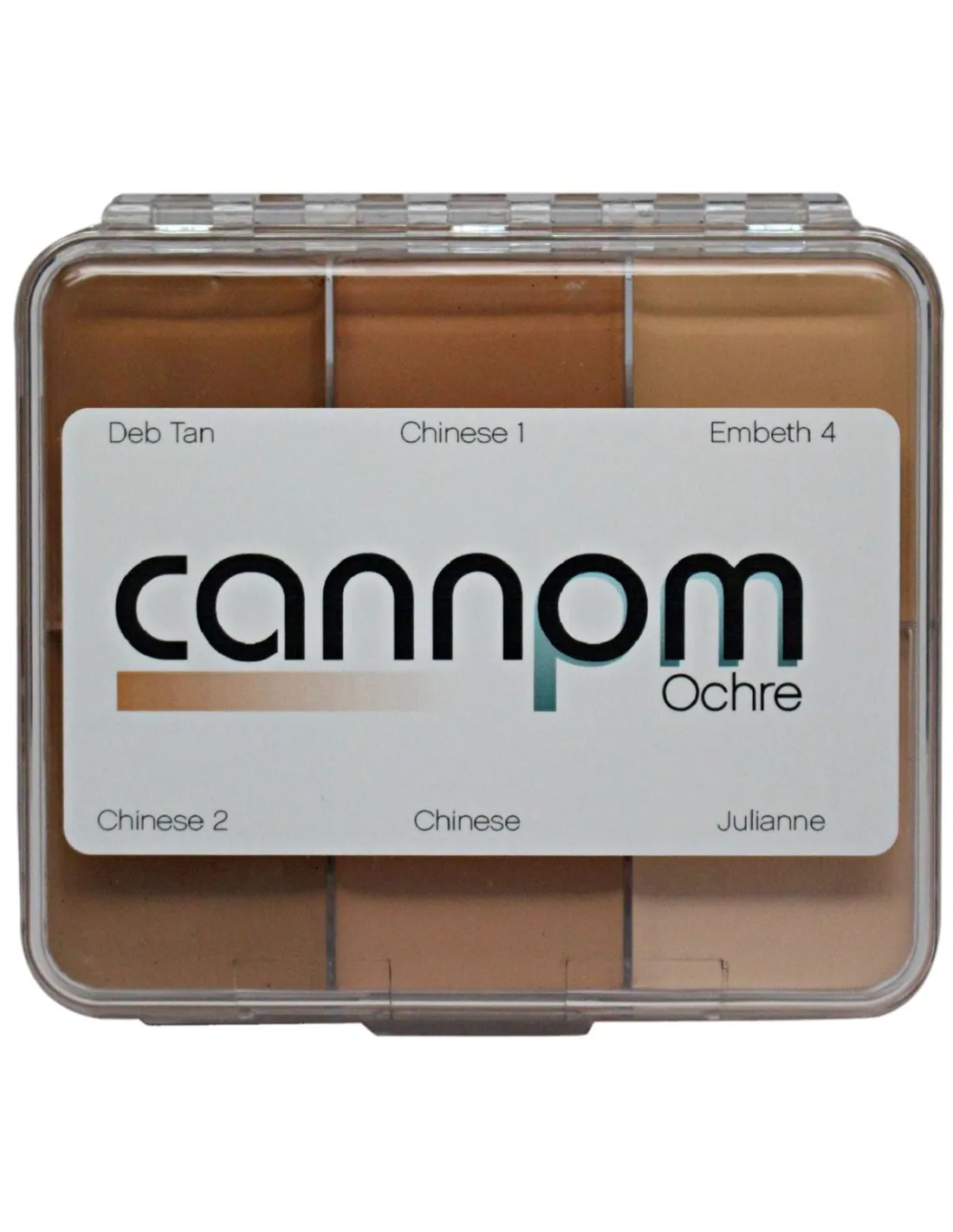
The Skin Illustrator On Set Greg Cannom Ochre palette is a selection of six oil-based makeup colours originally formulated from William Tuttle's creams and waxes, refined by Greg Cannom over decades of work on top-level film productions. They are designed to work directly on skin, silicone and latex, with dense pigmentation and smooth blending that make them essential in any professional special effects kit.
Technical specifications
| Collection | Skin Illustrator On Set — Greg Cannom Signature |
|---|
| Number of colours | 6 |
|---|
| Colours included | Deb Tan, Chinese 1, Embeth 4, Chinese 2, Chinese, Julianne |
|---|
| Colour range | Ochres, tans and Asian and Mediterranean skin tones |
|---|
| Formula type | Oil-based makeup (cream/wax base) |
|---|
| Compatible surfaces | Skin, silicone, latex |
|---|
| Version | On Set Signature |
|---|
What it is used for
This palette is designed for special effects makeup artists, character makeup artists and film and television artists who need high-fidelity colours in ochre and deep skin ranges. The shades have been personally selected by Greg Cannom to cover the most common needs in character makeup with Mediterranean, Asian and aged skin tones.
- Painting silicone prosthetics with ochre base colours and mid-tones
- Character makeup on foam latex for ageing and transformation effects
- Direct makeup on skin for film, television and advertising productions
- Mixing shades to create custom warm-toned complexion bases
- Applying shadows and glazes over already fitted and sealed prosthetics
- Base for ageing effects and uneven skin pigmentation
- Chromatic integration between prosthetics and the actor's skin in golden and tan tones
How to use it
- Prepare the surface — make sure the skin, silicone or latex is clean, dry and free of grease or residue. On skin, apply your usual workflow base first if applicable.
- Load the brush or sponge — pick up a small amount of colour with a soft-hair brush, a makeup sponge or a precision applicator. The oil-based formula requires very little product per pass.
- Apply in thin layers — work in transparent layers, building up to achieve colour density and avoid build-up. This makes correction and gradients easier.
- Blend while wet — while the colour has not fully set, feather the edges with a clean brush or your fingers to integrate the transitions.
- Combine shades — mix the six colours in the palette with each other or with other Skin Illustrator Flesh Tone or Skin Illustrator Complexion palettes to extend the colour range.
- Set the result — for greater durability and touch resistance, apply an HD matte setting spray compatible with the Skin Illustrator range once the makeup is complete.
- Cleaning — remove the oil-based makeup with 99.9% isopropyl alcohol or a suitable oil-based makeup remover, both from the actor's skin and from the brushes.
Tips for use
Work in layers and do not overload the brush
The oil-based formula of Skin Illustrator is highly pigmented. It is better to apply three thin layers than one thick one: thin layers integrate better with the texture of the prosthetic or skin, do not obscure sculpted details and are easier to correct if the intensity is too high. Use minimal product on the brush and build up the colour gradually.
Take advantage of direct mixing on the palette
Cannom's six ochre shades are designed to be used alone or as a base for mixing. You can combine Deb Tan with Embeth 4 for very luminous skin tones, or deepen with Chinese 1 and Chinese 2 for higher chromatic density makeups. Use the empty space at the edge of the palette as a clean mixing area, or a separate mixing palette if you need a large amount of product.
Compatibility with silicone surfaces
On intrinsically unpigmented silicone (translucent base silicone), these colours work especially well as a final integration layer. Apply with a natural-hair or soft synthetic brush, and always blend in the direction from the prosthetic edge towards the skin so the transition is imperceptible. If you are combining them with the FX palette to add vascular effects or spots, apply the ochre base colours first and the effects on top.
Frequently asked questions
Can this type of oil-based makeup be used directly on sensitive skin?
In general, Skin Illustrator's oil-based makeup formula is suitable for use on skin. However, if the actor has particularly sensitive skin or known allergies to components of cosmetic creams and waxes, always perform a patch test on a small area in advance. For professional on-set use, the decision regarding skin compatibility rests with the makeup artist responsible on set.
Can these colours be used on foam latex prosthetics?
Yes. The Cannom Ochre palette is compatible with foam latex. Apply the colours with a brush or sponge in thin layers. The elasticity of latex makes it preferable to build up colour with very thin layers so the paint does not crack with movement. Setting with a matte spray improves durability on this substrate.
How long does oil-based makeup last on set without touch-ups?
Longevity depends on factors such as the actor's perspiration, the set temperature and whether a setting spray has been applied. Without a setting spray, oil-based makeup can shift with sweat or contact. With a suitable HD matte setting spray applied on top, durability increases considerably and it can hold through several hours of continuous shooting without touch-ups.
Can these colours be mixed with other palettes from the same brand?
Yes, all colours in the Skin Illustrator range are compatible with each other and are formulated to mix. You can combine the Cannom Ochre palette with the Flesh Tone, the Complexion, the Dark Fleshtone or the FX to expand the available range of shades and create complex character makeups.
How do you clean oil-based makeup from brushes?
Oil-based makeup is effectively removed with 99.9% isopropyl alcohol. Gently rub the brush hairs with a cloth or gauze soaked in alcohol until no more colour comes off. Then clean the brush with warm water and mild soap to remove any remaining alcohol and leave the bristles in good condition.
What is the difference between the On Set version and other versions of Skin Illustrator?
The On Set Signature line is signed by reference artists from the film industry and gathers personal colour selections that these professionals have used in their most acclaimed work. In the case of the Cannom Ochre palette, Greg Cannom has selected the six shades he has used most throughout his career for makeups in warm, ochre and deep skin tones. It is not simply a generic commercial palette, but a working kit curated by someone who has spent decades using it on set.
What type of projects is this palette especially suited for?
The Cannom Ochre palette is ideal for makeups requiring warm, tan and Mediterranean, Asian or aged skin tones. It is especially useful for ageing effects (where ochres and tans are fundamental to simulate spots and changes in the skin), period character makeups and any project where realistic integration between prosthetics and skin is critical.