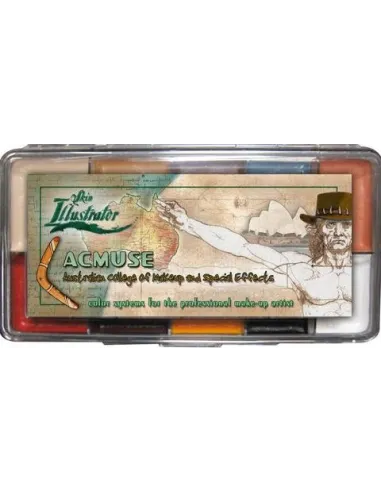
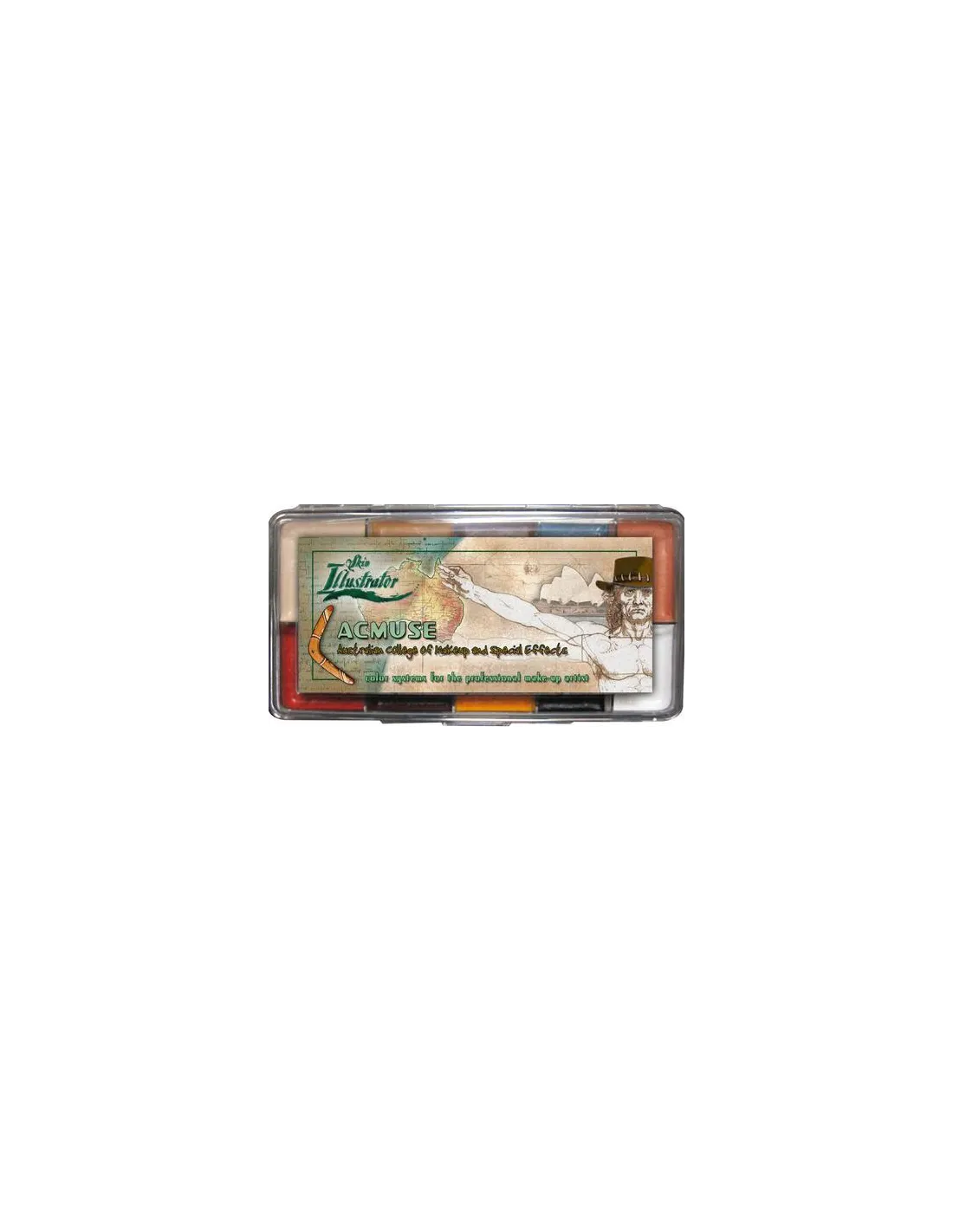
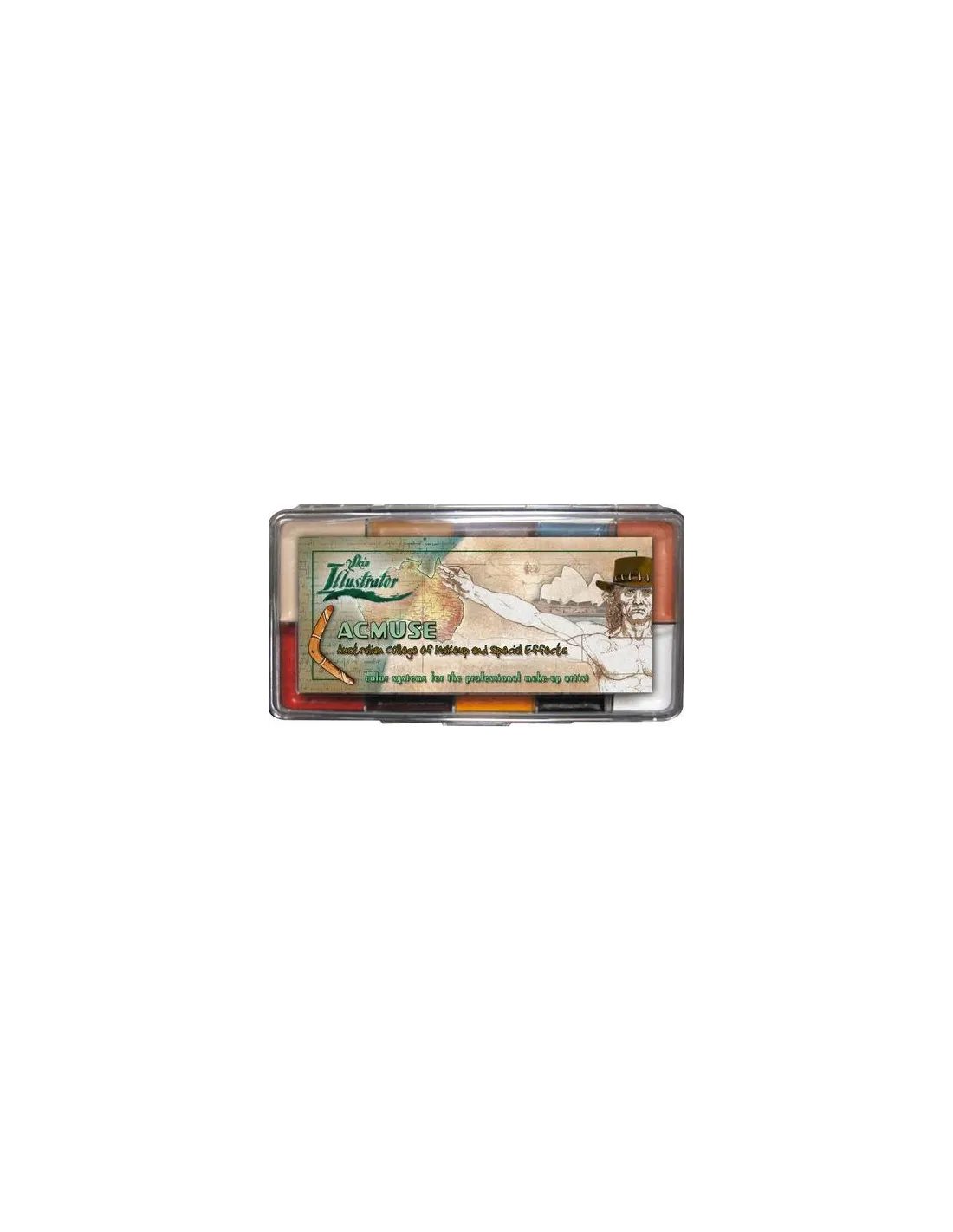
The Skin Illustrator ACMUSE Palette is a 10-color alcohol-activated makeup palette designed in collaboration with Scott Lattimer, founder of the Australian College of Makeup and Special Effects (ACMUSE) in Sydney. It offers exceptional coverage and wear resistance far superior to conventional makeups, and is compatible with natural skin, silicone prosthetics and latex. If you're looking for a versatile palette for special effects and professional character work, this is a reference choice in the industry.
Technical specifications
| Number of colors | 10 |
|---|
| Base | Alcohol (alcohol-activated) |
|---|
| Compatible surfaces | Skin, silicone, latex |
|---|
| Recommended activator | Skin Illustrator Activator / Skin Illustrator Slow Activator / isopropyl alcohol 99% |
|---|
| Removal | Telesis Super Solv / Telesis Makeup Remover |
|---|
| Origin | ACMUSE collaboration (Australia) |
|---|
What it's used for
The ACMUSE Palette is designed for professional makeup artists and special effects practitioners who need high-performance colors on multiple surfaces. Its alcohol-based formulation ensures long-lasting adhesion even under film set or stage conditions.
- Character makeup and special effects for film, television and theatre
- Painting and detailing on silicone and latex prosthetics
- Long-lasting facial and body artistic makeup
- Creating wounds, bruises, spots and age effects
- Touch-up and shading on already-applied prosthetics
- Work on dark skin or skin with complex pigmentation
How to use it
- Make sure the surface (skin, silicone or latex) is clean, dry and free of grease or residue.
- Dampen the brush or applicator sponge with isopropyl alcohol 99%, Skin Illustrator Activator or Skin Illustrator Slow Activator. Never use 70° alcohol, MEK, acetone or water.
- Load the brush with the desired color by gently gliding it over the palette pan.
- Apply the color to the surface with gentle strokes. Work in thin layers for greater control and progressive coverage.
- Allow to dry briefly between layers. Drying time is very fast thanks to alcohol evaporation.
- Mix colors directly on the palette or on the skin to achieve custom shades.
- To remove the makeup, use Telesis Super Solv or Telesis Makeup Remover with gentle strokes. Avoid harsh solvents on skin.
Usage tips
Choose the right activator for the situation
Isopropyl alcohol at 99% is the most accessible activator and works correctly for most applications. If you need more working time to blend or make transitions over large areas — for example, on large silicone prosthetics — opt for Skin Illustrator Slow Activator, which delays evaporation and gives you more room to work. Never use 70° alcohol: the water it contains affects adhesion and finish.
Application on silicone: key preparation
When painting on silicone prosthetics, make sure the surface has no release agent residue or talcum powder. A prior clean with a little isopropyl alcohol at 99% and a lint-free cloth is sufficient. Work with very thin layers and allow each one to dry thoroughly before adding the next; color on silicone can visually saturate quickly with very little product.
Mixing and using the palette as a working tool
The palette pans are not just individual colors: they are designed to be mixed together. You can create custom skin tones by blending directly on a clean mixing surface or by loading the brush with two colors at once. Keep the palette closed when not in use to prevent ambient alcohol from prematurely drying out the pans.
Frequently asked questions
What activates these colors?
The colors in the Skin Illustrator ACMUSE Palette are activated with Skin Illustrator Activator, Skin Illustrator Slow Activator or isopropyl alcohol at 99%. It is essential that the alcohol is 99%: 70° alcohol contains water that harms adhesion and finish. Never use MEK, acetone or water as an activator.
Can these colors be used directly on skin?
Yes. The ACMUSE Palette is formulated for application on natural skin. It is resistant to sweat and contact, although a skin tolerance patch test is always recommended before use on sensitive areas or on people with delicate skin.
Does it work on silicone and latex prosthetics?
Yes, this is one of the great advantages of this palette. Skin Illustrator alcohol colors adhere very well to both platinum silicone and latex, allowing the prosthetic to be visually integrated with the surrounding skin. Clean the surface thoroughly before painting to ensure adhesion.
How is this makeup removed?
It is easily removed with Telesis Super Solv or Telesis Makeup Remover. Apply the remover with a gauze pad or cotton, allow it to work for a few seconds and remove with gentle strokes. Avoid scrubbing hard on skin or delicate prosthetics.
Can the colors be mixed together?
Yes, the colors in the ACMUSE Palette are fully miscible with each other. You can mix them directly on the palette, on a mixing surface or even on the skin, as long as the activator has not yet fully evaporated.
How long does the makeup last once applied?
Alcohol-based makeups like those from Skin Illustrator have far superior wear resistance compared to cream or water-based makeups. Once dry, it holds up well to sweat, handling and contact. For long-duration applications on film sets or live performances, it can be additionally set with a sealer or translucent powder.
Is this palette different from other Skin Illustrator palettes?
Yes. The ACMUSE Palette was created in collaboration with Scott Lattimer and is oriented towards a specific color selection for special effects and character work. Other palettes in the range, such as the Flesh Tone Palette or the Complexion Palette, are focused on skin tones and color correction. The base technology is the same across the entire range.
Can I use water to thin or activate these colors?
No. Water does not activate alcohol colors and can ruin the result. It alters the texture, prevents proper adhesion and can cause uneven staining. Always use isopropyl alcohol at 99% or another compatible activator from the Skin Illustrator range.