Shopping Cart



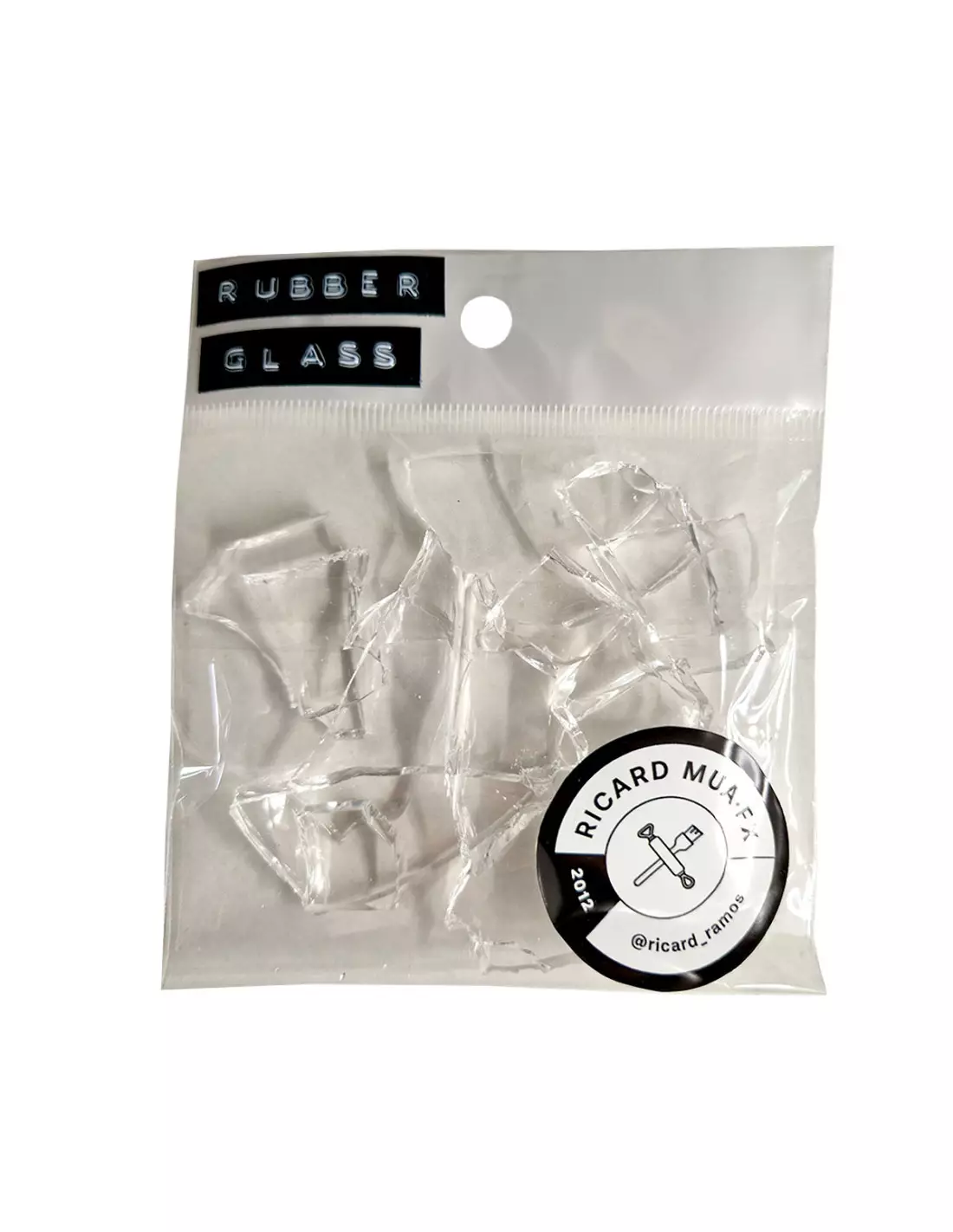
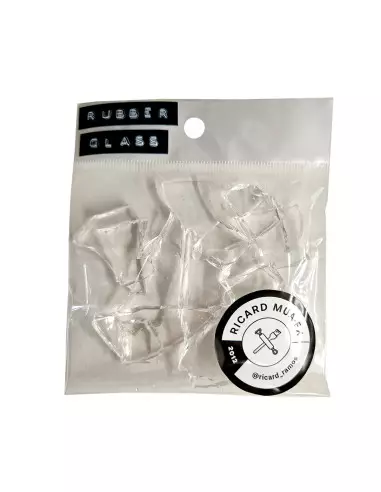
Rubber Glass from Ricard MUA FX
221000300
Temporarily out of stock
€16.00
19,36 € Tax incl.
19,36 € Tax incl.
Transparent platinum silicone for safely simulating broken glass in special effects. Flexible, realistic and compatible with platinum silicone prosthetics.
Rubber Glass by Ricard MUA FX is a transparent platinum silicone specially formulated to create completely safe prop broken glass. Its glassy finish and flexibility allow you to simulate glass shards with extraordinary realism, without any of the risks of real glass. It is the go-to solution for special effects makeup professionals who need convincing results on set, stage or in photo shoots.
Technical specifications
| Property | Detail |
|---|---|
| Material type | Platinum silicone (addition cure) |
| Appearance | Transparent, glassy look |
| Flexibility | High — simulates glass with no risk of cuts |
| Compatibility | Compatible with platinum silicone prosthetics from the Ricard MUA FX line |
| Application | Special effects, FX makeup, props |
| Use | Professional and semi-professional |
What it's used for
Rubber Glass is designed to create prop elements and special effects that safely and convincingly replicate broken glass. Its transparency and glassy finish make it ideal for any situation where you need to simulate glass without putting actors, extras or crew at risk.
- Broken glass shards for action scenes, fights or accidents in film and television
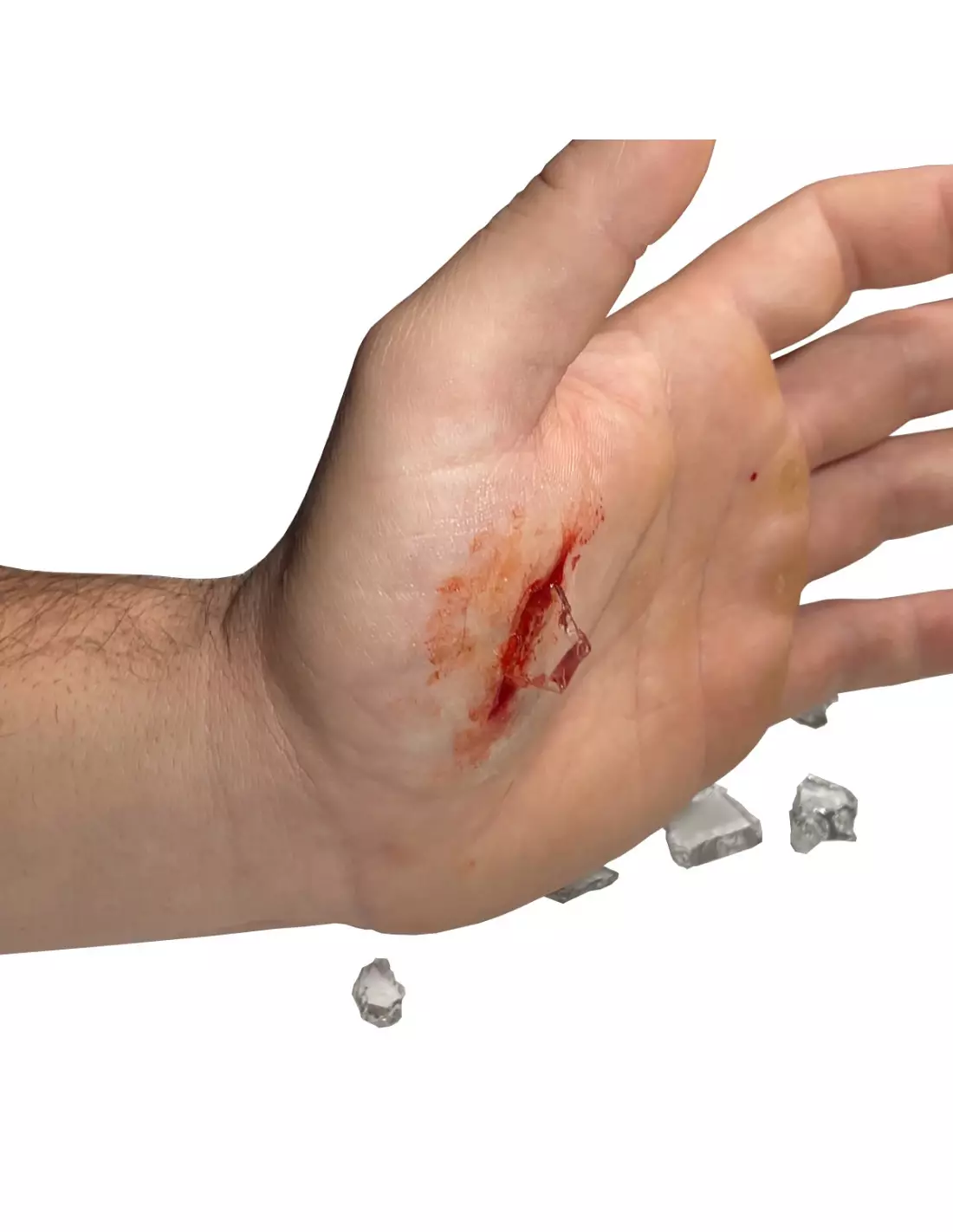
- Wounds with embedded glass for prosthetic special effects makeup
- Safe glass props for theatre, dance and live performances
- Impact effects on shop windows or simulated surfaces in advertising and photography
- Complement to platinum silicone prosthetics for complex wounds with embedded fragments
- Advanced cosplay and character makeup with glass effects integrated into the makeup
How to use it
- Prepare your work surface: Use a flat, non-stick surface (PTFE, polypropylene or silicone paper) that is clean and free from contaminants. Apply a Release agent if you are pouring into a mould.
- Pour or spread the material: Spread the Rubber Glass over the surface in a thin, even layer, or pour it into a mould in the desired fragment shape. For controlled thickness, use spacers or guides.
- Adjust the shape: While the material is still fresh, you can break or cut it to achieve irregular silhouettes that mimic real glass shards.
- Wait for full cure: Allow to cure at room temperature until the material is completely solid and transparent. Do not handle before it is fully cured to avoid deformation.
- Demould or remove from the surface: Once cured, carefully peel off the fragments. They are flexible, so they will not break or cut.
- Integrate into the FX composition: Apply the fragments onto the prosthetic or directly onto skin using compatible silicone adhesives. PTM Clear can help you secure and blend the edges seamlessly.
- Paint or tint if needed: Although the material is transparent, you can add compatible silicone pigments to achieve slightly smoky, blood-tinted or dirty tones.
Warning — Cure inhibition (platinum silicone): Rubber Glass is an addition-cure (platinum) silicone. Some materials inhibit its cure and leave the silicone tacky or uncured. Avoid contact with: sulphur-containing clays, latex, cyanoacrylate adhesives, latex or nitrile gloves (use vinyl or polyethylene gloves), woods treated with certain varnishes, and any surface you have not previously tested. Always perform a compatibility test before working with a new material.
Usage tips
Thickness and realism
To mimic real glass, work with very thin layers: the thinner the fragment, the more convincing the optical effect. Try pouring the material between two surfaces separated by thin shims to achieve a uniform, controlled thickness. Once cured, you can break the sheet by hand to obtain natural, random fracture shapes.
Integration with silicone prosthetics
Rubber Glass is formulated to be compatible with the rest of the Ricard MUA FX line. You can embed fragments directly into PTM Light Flesh prosthetics while they are still partially cured, allowing the glass shards to become permanently and realistically integrated into the prosthetic. Use PTM Clear for edge transitions and to adhere fragments to skin without visible seams.
Storage and preservation
Close the container tightly after each use and store away from heat sources and direct light. Keep the material in a clean environment, free from contaminants that could inhibit future applications. Do not use the same tools you have used with latex, sulphur-containing clays or other incompatible materials without thoroughly cleaning them first.
Frequently asked questions
Is this material safe to use directly on skin?
Rubber Glass is a platinum silicone, a material generally well tolerated by the skin. However, before applying it to the face or sensitive areas, always perform a patch test on a small area first. For direct application to skin, it is recommended to use a compatible silicone adhesive. If you have any concerns about skin tolerance, consult a professional SFX makeup artist.
How can I get fragments with realistic irregular edges?
The best technique is to create a thin sheet of cured Rubber Glass and break it by hand or with a blunt tool. Being a flexible silicone, the breaks are not as clean as real glass, but by adjusting the thickness and temperature you can control the result. For visually sharper edges, you can trim the edges of the cured sheet with precision scissors or a scalpel before the final break.
Can it be pigmented or tinted?
Yes. You can add compatible silicone pigments before curing to achieve smoky, bluish, blood-tinted or any other effect. Since the base material is transparent, a very small amount of pigment produces visible results. Do not use water-based or acrylic paints directly in the mass, as they may inhibit curing or fail to disperse correctly.
What do I do if the silicone stays tacky and does not cure?
A platinum silicone that does not cure correctly indicates inhibition from contact with an incompatible material. Check the work surface, tools and materials it has been in contact with: sulphur-containing clays, latex, cyanoacrylate adhesives and certain varnishes are the most common inhibitors. Clean all tools with isopropyl alcohol, change the work surface and retry with fresh material. Always perform a small-scale cure test before working on the final piece.
Is it compatible with other platinum silicone brands?
In principle, platinum silicones are compatible with each other as long as they are fully cured before contact. Rubber Glass is optimised to work within the Ricard MUA FX line, guaranteeing compatibility with PTM Light Flesh and PTM Clear. If you want to combine it with other platinum silicones, always perform an adhesion and compatibility test first.
Can it be reused or repositioned once cured?
Cured Rubber Glass fragments are flexible and can be repositioned if secured with a silicone adhesive. They cannot be melted down or remoulded once cured, as platinum silicone is a thermosetting elastomer. However, their durability is high and the same fragment can be used across multiple shoots or sessions if handled with care.
How do you clean and store props made with this material?
Clean the fragments with warm water and mild soap or diluted isopropyl alcohol. Store them separately in individual bags to prevent them from sticking together in warm conditions. Avoid exposing them to excessive heat during storage, as although they do not degrade, they may deform if left under pressure with heat.
What type of productions is it best suited for?
Rubber Glass is suitable for any production that requires safely simulating broken glass: film, television, advertising, music videos, theatre, editorial photography and cosplay. Its main advantage over other materials is the combination of genuine transparency and flexibility, allowing close-up camera shots and direct contact with actors with absolutely no risk.
No reviews
Tap to zoom