Shopping Cart



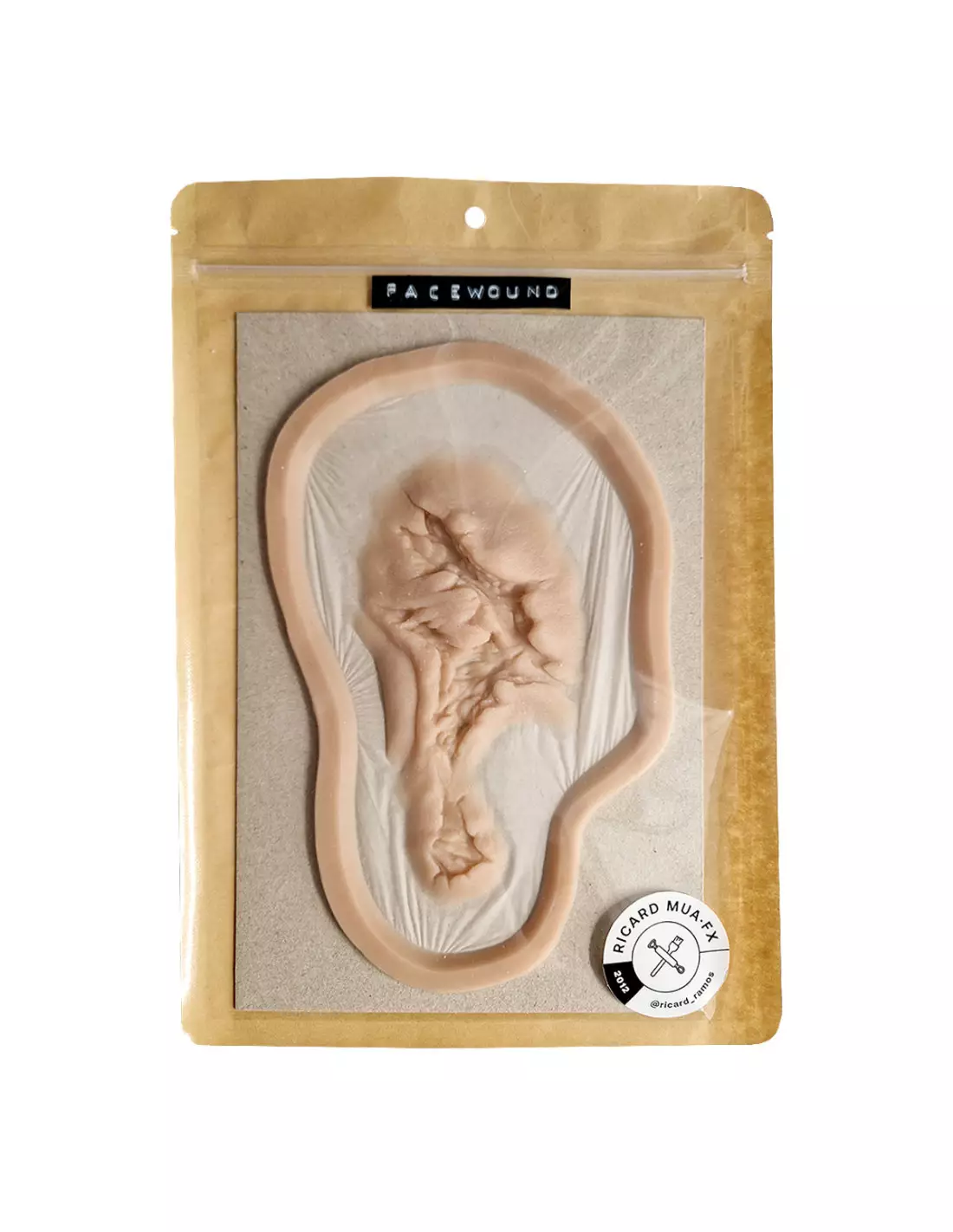
Prosthesis Facewound
221000400
Temporarily out of stock
€35.00
42,35 € Tax incl.
42,35 € Tax incl.
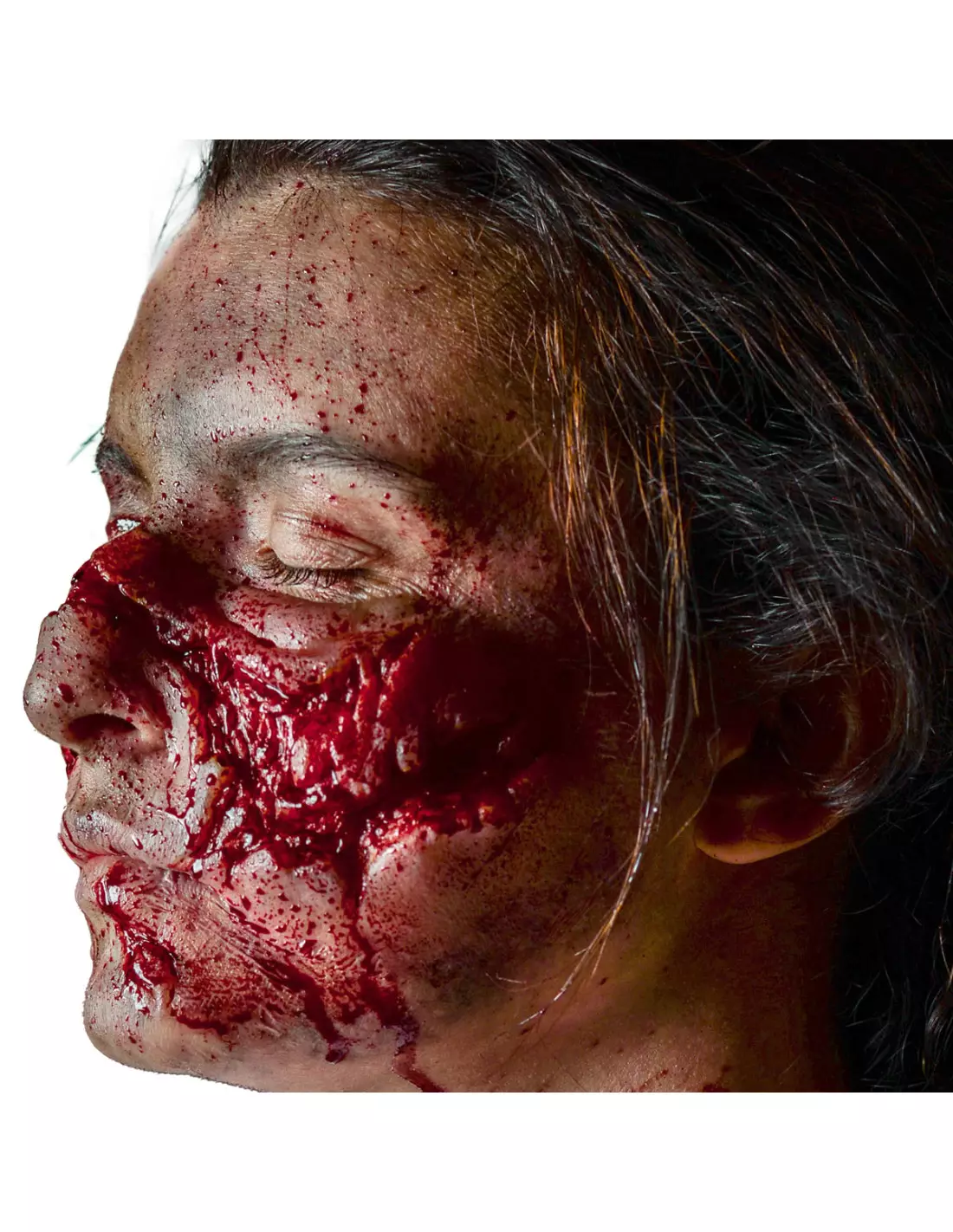
Platinum silicone facial prosthesis with integrated bald cap. Simulates a severe wound on half the face. Designed by Ricard MUA FX for professional SFX.
The Facewound Prosthesis is a special effects makeup (SFX) piece designed by Ricard MUA FX that simulates a deep, realistic wound covering half the face. Made from platinum silicone and encapsulated with an acetone bald cap, it blends naturally with the skin and delivers professional-level results on film sets, live performances and photo shoots.
Technical specifications
| Feature | Detail |
|---|---|
| Base material | Platinum silicone (addition cure) |
| Encapsulation | Acetone bald cap |
| Application area | Half face |
| Effect type | Realistic deep wound |
| Designer | Ricard MUA FX |
| Reusable | Yes, with proper care |
| Application | Silicone-compatible skin adhesive |
| Recommended use | Film, television, theatre, photography, Halloween |
What it is used for
The Facewound is designed for any context where a believable, visually impactful facial wound is required. The acetone bald cap encapsulation ensures that the edges of the prosthesis blend seamlessly into the actor's or model's skin with no visible step, which is essential when the camera is up close or the audience is in the front row.
- Special effects makeup on film and television productions
- Theatre productions and horror or drama shows
- Themed photo shoots and dark fashion or post-apocalyptic editorials
- Halloween and high-demand themed events
- Training and demonstrations at SFX makeup schools
- Cosplay projects and fantasy or sci-fi conventions
How to use it
- Prepare the skin: clean and degrease the half-face area where you will apply the prosthesis. The skin must be free of creams, oils or moisturisers.
- Dry fit: place the prosthesis dry to check that it covers the desired area correctly and to mark the limits of the encapsulation.
- Apply the adhesive: use a silicone-compatible skin adhesive (medical grade or specifically designed for silicone prosthetics). Apply it to both the skin and the back of the encapsulated edge and allow it to activate according to the adhesive's instructions.
- Position and press: carefully place the prosthesis starting from the centre and working towards the edges. Press firmly to ensure adhesion of the encapsulation to the skin.
- Blend the edges: use alcohol or acetone with a fine brush to soften and blend the bald cap edge onto the skin, eliminating any visible step.
- Paint and characterise: apply alcohol-activated paints or silicone-compatible pigments to match the prosthesis tone to the performer's skin. Add blood, bruising or dirt effects as required. You can use PTM Light Flesh or PTM Clear to adjust the surface tone and texture.
- Remove with care: when finished, peel the prosthesis from the edges towards the centre, using adhesive remover if necessary. Clean the silicone with warm water and mild soap before reusing it.
Important notice — Platinum silicone inhibition: The Facewound is made from platinum silicone. If during production, storage or application the prosthesis comes into prolonged contact with sulphur-containing materials (sulphur-based clays, certain latex products, some cyanoacrylate adhesives or powder-free latex gloves), surface inhibition may occur. Although the prosthesis is already cured, avoid storing it in direct contact with these materials to prevent degradation of the silicone surface. Always use nitrile or vinyl gloves when handling it.
Usage tips
Skin preparation and adhesion
The success of any encapsulated prosthesis depends largely on skin preparation. Clean, slightly matte skin free of any greasy product ensures the adhesive grips from the first attempt. If the performer sweats easily, apply a thin layer of mattifying primer before the adhesive. In areas with facial hair, consider whether to shave or not depending on the character, as hair can hinder adhesion at the edges.
Edge blending with the bald cap
The bald cap encapsulation is the most technically delicate step. Work with a fine-tipped brush soaked in acetone or high-concentration isopropyl alcohol, softening the edge in small sections. Do not apply too much acetone at once: you would dissolve the material and lose the seal. Once the edge is blended and dry, apply a first coat of paint before moving on to the full tone matching — this way you will detect any imperfections before they are covered by makeup.
Storage and reuse
Platinum silicone is durable, but requires careful storage. After each use, clean the prosthesis with water and neutral soap and allow it to air dry. Store it in a fabric bag or a box lined with sulphur-free foam, kept separate from any latex pieces or sulphur-containing materials. Avoid folding it or stacking weight on top of it so it retains its shape. With proper care, it can be reused across multiple productions.
Frequently asked questions
How is this type of prosthesis attached to the skin?
The Facewound is adhered using a silicone-compatible skin adhesive, applied to both the back of the encapsulated edge and the skin. The acetone bald cap encapsulation allows the edges to be blended with solvent so that the transition between the prosthesis and the skin is virtually invisible.
Is it suitable for sensitive skin or prolonged use?
Platinum silicone is one of the most biocompatible materials used in special effects, and it is the standard choice on productions where actors wear prosthetics for hours. However, tolerance depends on the adhesive used and the individual's skin. Always perform a patch test with the chosen adhesive before prolonged use.
Can this prosthesis be painted with any paint?
No. Platinum silicone has low adhesion to most conventional paints. You must use paints formulated specifically for silicone (silicone-compatible alcohol pigments or intrinsic silicone paints). Products from the PTM range are compatible for surface tone adjustments.
How many times can a silicone prosthesis be reused?
It depends on how well it is cared for. A well-maintained platinum silicone prosthesis can last between 5 and 20 uses or more. The key is to clean it gently after each use, store it correctly and avoid forcing the edges when removing it. The bald cap encapsulation is the most vulnerable area: avoid using aggressive solvents on it unnecessarily.
Can this type of prosthesis be used over a beard or facial hair?
It is possible, although facial hair makes adhesion at the edges more difficult and can make the transition more visible. On productions where the character has a beard, makeup artists typically use higher-tack adhesives and style the hair to conceal the edges of the prosthesis. For theatre or events, the aesthetic tolerance is greater and this is usually not an issue.
How do you remove the prosthesis without damaging it or the skin?
Gently lift one end of the edge and apply adhesive remover underneath with a cotton swab or brush, working slowly from the edges towards the centre. Never pull the prosthesis with force. Once removed, clean both the skin and the prosthesis with warm water and neutral soap.
Do you need prior experience to apply this prosthesis?
The Facewound is designed for professionals and advanced SFX makeup enthusiasts. The bald cap encapsulation makes edge blending easier, but application requires practice and familiarity with skin adhesives, solvents and silicone painting techniques. If this is your first encapsulated prosthesis, practise edge blending on a mannequin before applying it to a person.
What is the difference between an encapsulated prosthesis and a foam latex prosthesis?
Platinum silicone encapsulated prosthetics offer far superior translucency and softness compared to foam latex, making them especially realistic in close-up and under intense lighting. Foam latex is lighter and more affordable, but ages over time and does not handle heat as well. Silicone is also more durable and does not degrade with the skin's natural oils.
No reviews
Tap to zoom