
Shopping Cart

Molds for props: tin silicones
To capture the geometry of a master before reproducing it in resin or foam, condensation silicones offer an excellent price-to-quality ratio. They reproduce fine textures, don't require release agent on most surfaces and are compatible with polyurethane resins, plaster and foams.
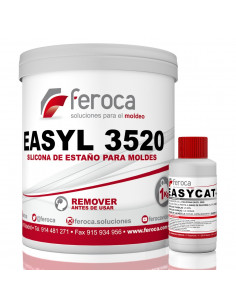 EASYL 3520
Shore A20, great elasticity for complex geometries.
EASYL 3520
Shore A20, great elasticity for complex geometries.
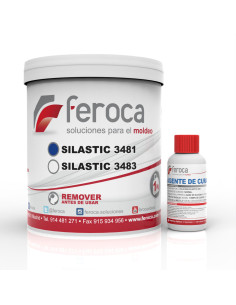 Silastic 3481
Shore A21, 90 min working time, high tear resistance.
Silastic 3481
Shore A21, 90 min working time, high tear resistance.
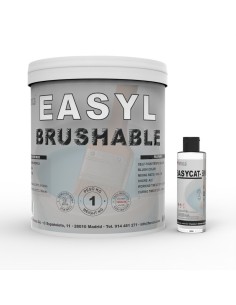 EASYL Brushable
Thixotropic, brush application on large pieces.
EASYL Brushable
Thixotropic, brush application on large pieces.
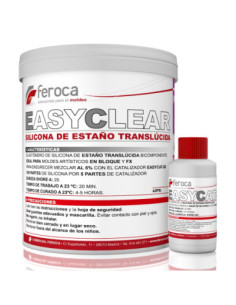 EASYCLEAR
Translucent Shore A20, ideal for seeing the interior casting.
EASYCLEAR
Translucent Shore A20, ideal for seeing the interior casting.
Molds for props: platinum silicones
Platinum silicones provide greater dimensional stability, no inhibition issues and a longer mold life. They are the usual choice when the prop requires many reproductions or when working with fast-curing epoxy or polyurethane resins. Some formulations also allow you to simulate soft materials — skin, flesh, fabrics — directly in the final piece.
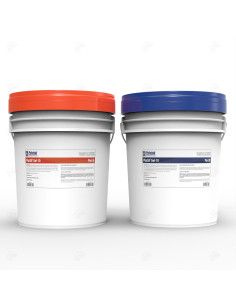 PlatSil Gel-10
Shore A10, translucent, ideal for prosthetics and soft props.
PlatSil Gel-10
Shore A10, translucent, ideal for prosthetics and soft props.
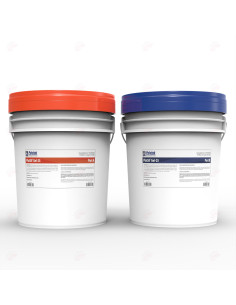 PlatSil Gel-25
Shore A25, translucent, 1:1 mix by weight and volume.
PlatSil Gel-25
Shore A25, translucent, 1:1 mix by weight and volume.
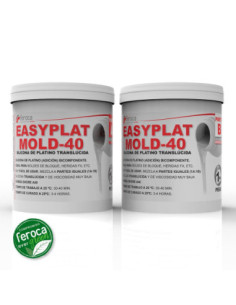 EASYPLAT MOLD-40
Shore A40, 30 min working time, high-production molds.
EASYPLAT MOLD-40
Shore A40, 30 min working time, high-production molds.
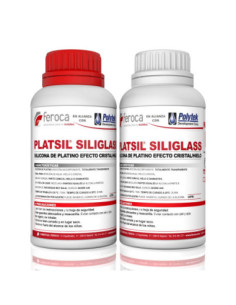 PlatSil SiliGlass
Simulates water, ice or glass with complete transparency.
PlatSil SiliGlass
Simulates water, ice or glass with complete transparency.
Polyurethane resins for rigid props
Once the mold is ready, polyurethane resin is the material that gives the prop its body. Choose the formulation based on the weight you can afford, the resistance you need and the working time available. Low-viscosity resins replicate very fine textures and semi-rigid ones withstand impacts without chipping, making them perfect for armor and prop weapons.
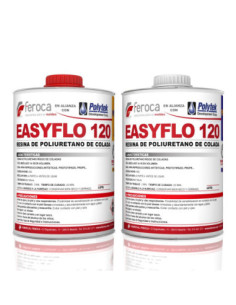 EasyFlo 120
Semi-rigid, ideal for rotocasting and prop armor.
EasyFlo 120
Semi-rigid, ideal for rotocasting and prop armor.
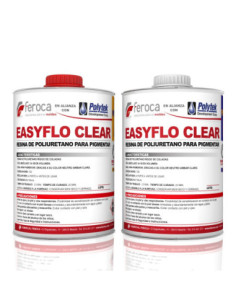 EasyFlo Clear
Translucent amber, pigmentable, Shore 72D.
EasyFlo Clear
Translucent amber, pigmentable, Shore 72D.
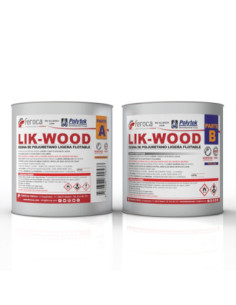 Lik-Wood
Lightweight resin that floats: ultra-light props for the stage.
Lik-Wood
Lightweight resin that floats: ultra-light props for the stage.
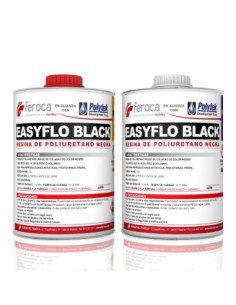 EasyFlo Black
Black, Shore 70D, dark finish straight out of the mold.
EasyFlo Black
Black, Shore 70D, dark finish straight out of the mold.
Polyurethane foams: lightweight props and fillings

Polyurethane foams let you make props with a very low weight without sacrificing surface rigidity or detail. High-density rigid foam is perfect for pieces that appear in close-up, while flexible foam is ideal for filling the interior of articulated figures or puppets. Integral skin foam combines a firm exterior with a spongy interior — a very efficient solution for props that need to withstand impacts on set.
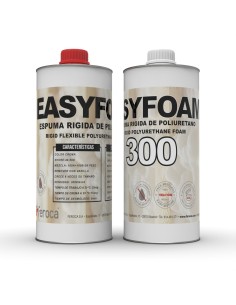 EASYFOAM 300
Rigid 300 kg/m³, high detail for close-up props.
EASYFOAM 300
Rigid 300 kg/m³, high detail for close-up props.
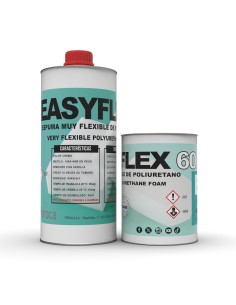 EASYFLEX 60
Flexible, filling for figures, animatronics and puppets.
EASYFLEX 60
Flexible, filling for figures, animatronics and puppets.
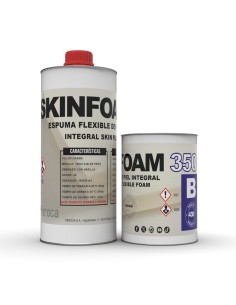 SKINFOAM 350
Integral skin Shore A45, firm exterior, soft interior.
SKINFOAM 350
Integral skin Shore A45, firm exterior, soft interior.
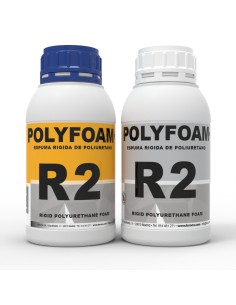 PolyFoam R2
Free-rise rigid foam, ideal for large volumes.
PolyFoam R2
Free-rise rigid foam, ideal for large volumes.
High-density EVA foam for armor and props
High-density EVA foam is the go-to material for building armor, weapons and lightweight prop accessories. It can be cut with a craft knife, thermoformed with a heat gun, bonded with contact adhesive and accepts any type of paint or finishing vinyl. Available in sheets of various thicknesses and colors, and in Foam Clay format for adding details and fillings by hand.
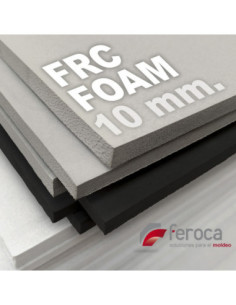 FRC FOAM GRIS 10mm
Grey sheet 10 mm, structural base for armor and props.
FRC FOAM GRIS 10mm
Grey sheet 10 mm, structural base for armor and props.
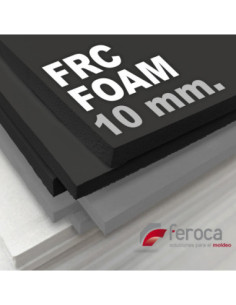 FRC FOAM NEGRA 10mm
Black 10 mm, dark finish ready to paint or varnish.
FRC FOAM NEGRA 10mm
Black 10 mm, dark finish ready to paint or varnish.
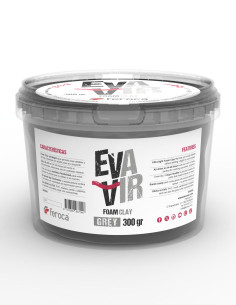 EVA AIR Gris
Moldable Foam Clay, air-dries, can be sanded and painted.
EVA AIR Gris
Moldable Foam Clay, air-dries, can be sanded and painted.
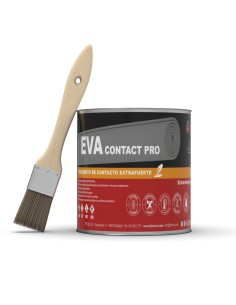 EVA Contact Pro
Professional contact adhesive for EVA, toluene-free.
EVA Contact Pro
Professional contact adhesive for EVA, toluene-free.
EVA profiles and accessories for detailing
Pre-made EVA profiles simplify adding ribs, trims, pipes and edges without needing to cut and glue strips. Combined with magnetic clasps, they let you build modular armor that the wearer can put on and take off quickly on set or on the runway.
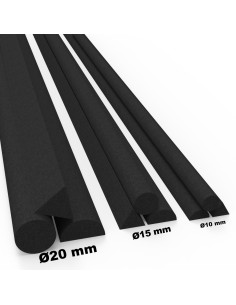 Kit de Perfiles EVA 1 metro
9 profiles (round, half-round, triangular) in one kit.
Kit de Perfiles EVA 1 metro
9 profiles (round, half-round, triangular) in one kit.
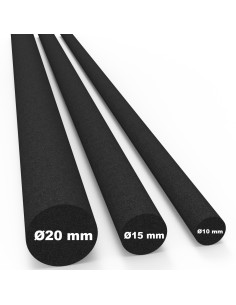 Perfil EVA Redondo 1 metro
Thermoformable trim and fake pipes in one metre.
Perfil EVA Redondo 1 metro
Thermoformable trim and fake pipes in one metre.
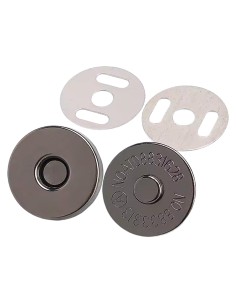 Corchetes imantados Cosplay
14 mm magnetic closure for modular detachable armor.
Corchetes imantados Cosplay
14 mm magnetic closure for modular detachable armor.
Worbla thermoplastics for detailing and structures
Thermoplastics in the Worbla range are activated with heat, shaped by hand in seconds and harden as they cool with no catalysts or molds needed. They are reusable, self-adhesive between layers and can be painted directly after priming. They are the ideal complement to EVA foam for adding relief, inlays and fine details to high-resolution props.
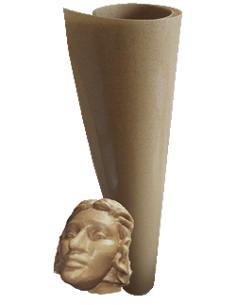 Worbla's Finest Art
The reference thermoplastic, activated at 90 °C.
Worbla's Finest Art
The reference thermoplastic, activated at 90 °C.
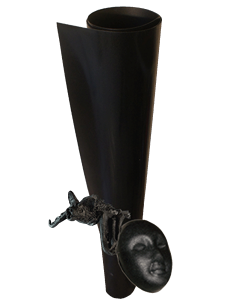 Worbla's Black Art
Black, self-adhesive, dark finish directly on the prop.
Worbla's Black Art
Black, self-adhesive, dark finish directly on the prop.
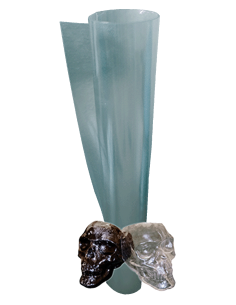 Worbla's Transpa Art
Transparent, for gems, visors and light effects.
Worbla's Transpa Art
Transparent, for gems, visors and light effects.
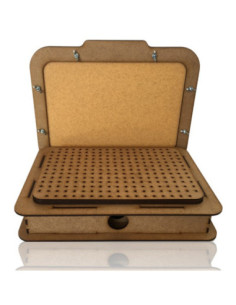 Termoconformadora A4 para Worbla
A4-size vacuum former for runs of identical pieces.
Termoconformadora A4 para Worbla
A4-size vacuum former for runs of identical pieces.
Finishes and paints for props
The surface finish determines whether the prop convinces on camera. Liquid vinyl in a spray can adheres to EVA, Worbla and resin without cracking, and can be peeled off for repainting. Silicone paint lets you color prosthetics and soft pieces with a result that moves and stretches along with the base material.
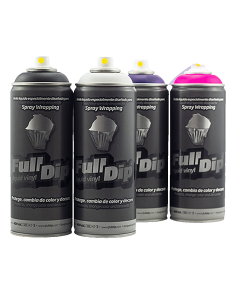 FullDip Liquid Vinyl - Colores Solidos
Flexible vinyl spray, matte, UV-resistant, peelable.
FullDip Liquid Vinyl - Colores Solidos
Flexible vinyl spray, matte, UV-resistant, peelable.
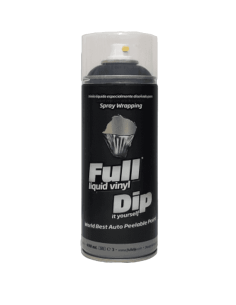 FullDip Liquid Vinyl - Metalizados
Flexible metallic finish, no cracking on EVA or resin.
FullDip Liquid Vinyl - Metalizados
Flexible metallic finish, no cracking on EVA or resin.
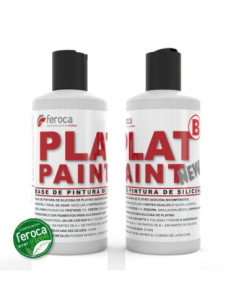 Plat-Paint New - Base de Pintura de Silicona
Silicone paint for prosthetics and soft FX pieces.
Plat-Paint New - Base de Pintura de Silicona
Silicone paint for prosthetics and soft FX pieces.
Silicones for special effects and soft pieces
Props that need to imitate skin, flesh or organic tissue require platinum silicones specially formulated to reproduce the texture and movement of the original material. Combined with the right deadener, they let you fine-tune the hardness of the final piece very precisely.
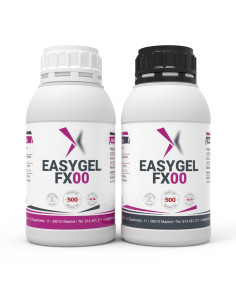 EasyGel FX00
Shore 00-30, synthetic skin and ultra-soft organic props.
EasyGel FX00
Shore 00-30, synthetic skin and ultra-soft organic props.
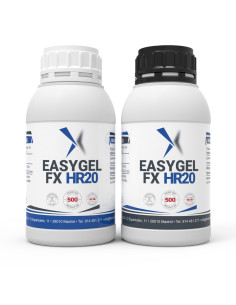 EasyGel FX HR20
Shore A20, cures in 25 min, high tear resistance.
EasyGel FX HR20
Shore A20, cures in 25 min, high tear resistance.
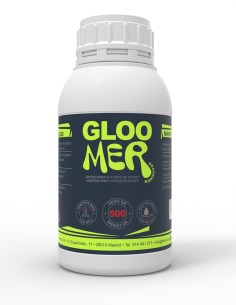 Gloomer Deadener para Silicona
Softens EasyGel FX silicones to fine-tune hardness.
Gloomer Deadener para Silicona
Softens EasyGel FX silicones to fine-tune hardness.
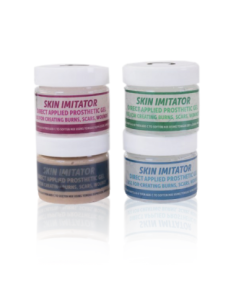 Skin Imitator
Adhesive silicone suitable for skin, cures in 5–7 min.
Skin Imitator
Adhesive silicone suitable for skin, cures in 5–7 min.
Not sure which material to use? Get in touch with the Feroca technical team before you place your order. We'll analyze your project and recommend the best combination of materials for the result you're looking for.
Quick material guide by prop type
| Prop type | Recommended mold | Casting material / structure | Finish |
|---|---|---|---|
| Rigid weapon (sword, axe, gun) | EASYL 3520 or PlatSil Gel-25 | EasyFlo 120 (rotocasting) + PolyFoam R2 (fill) | FullDip Metalizados or Colores Sólidos |
| Lightweight armor | — | FRC FOAM GRIS/NEGRA 5–10 mm + Worbla's Finest Art (details) | FullDip + EVA Contact Pro |
| Soft organic prop (flesh, tentacle) | EASYPLAT MOLD-40 | EasyGel FX00 + Gloomer Deadener | Plat-Paint New - Base de Pintura de Silicona |
| Glass or water prop | — | PlatSil SiliGlass or Easy Crystal | No additional finish needed |
| Decorative figure (sculpture, mask) | Silastic 3481 or EASYL Brushable | EASYFOAM 300 (rigid) or EasyFlo 60 (white) | Acrylic paint + FullDip Brillo y Especiales |
Frequently asked questions about props and set dressing
Which silicone is best for making a mold of a prop with lots of undercuts?
For geometries with pronounced undercuts — handles, raised details, organic shapes — you need a very soft and elastic silicone that can be demolded without tearing. EASYL 3520 (Shore A20) and PlatSil Gel-10 (Shore A10) are the most suitable options. If the piece is also large and you need to brush the silicone on in several layers, EASYL Brushable (thixotropic) prevents the material from running before it cures.
Which resin should I use if I want a lightweight prop that can take hits on set?
The most common combination is rotocasting with EasyFlo 120 — which cures semi-rigid and absorbs impacts without chipping — followed by an interior fill with PolyFoam R2 or EASYFOAM 300 to add volume without adding weight. If the prop needs to float or weight is critical, Lik-Wood is a very low-density alternative.
Can I use EVA foam without a mold?
Yes. High-density FRC FOAM EVA foam is worked directly with a craft knife, heat gun and sander. No mold needed: you cut the shape, heat it to curve it and join it with EVA Contact Pro. For adding fine details by hand, EVA AIR Foam Clay can be modeled like clay, air-dries in 24–48 h and can be sanded and painted without cracking.
How do I paint an EVA or Worbla prop to make it look like metal?
First apply a spray primer (acrylic or rubber-based) to seal the foam's pores. Then use FullDip Liquid Vinyl - Metalizados in several thin coats. The vinyl stays flexible, doesn't crack when the piece bends and, if you need to change the color, you simply peel it off and repaint. For special effects like chameleon or candy finishes, apply the FullDip Camaleón or FullDip Candy ranges over a black base coat.
Which silicone should I use for a prop that needs to imitate human skin?
The silicones in the EasyGel FX range are specifically formulated for this purpose. EasyGel FX00 (Shore 00-30) is the softest and best reproduces the movement of skin. You can soften it further with Gloomer Deadener for particularly soft areas. To color the result, use Plat-Paint New - Base de Pintura de Silicona, which stretches with the piece without cracking.
Are Worbla thermoplastics compatible with EVA foam?
Yes. Worbla bonds directly to EVA foam when both materials are warm. The usual technique is to heat the Worbla with a heat gun and press it onto the EVA surface: the thermoplastic's natural adhesive creates a solid bond without needing any glue. It's the fastest way to add relief work, runes, decorative hinges or any three-dimensional detail to an EVA armor piece.