Shopping Cart



Polymer Blood - The Monster Makers
204434025
€9.00
10,89 € Tax incl.
10,89 € Tax incl.
High-flexibility, high-gloss polymer blood coating for latex masks and accessories. Fast drying, permanent effect, water and UV resistant.
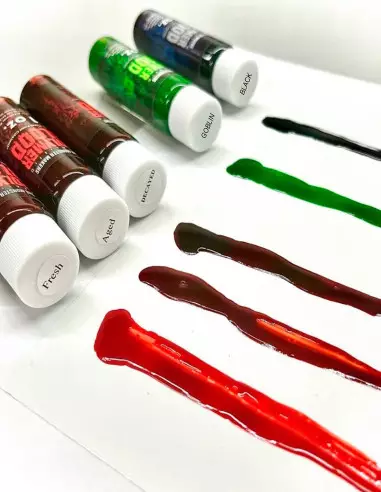
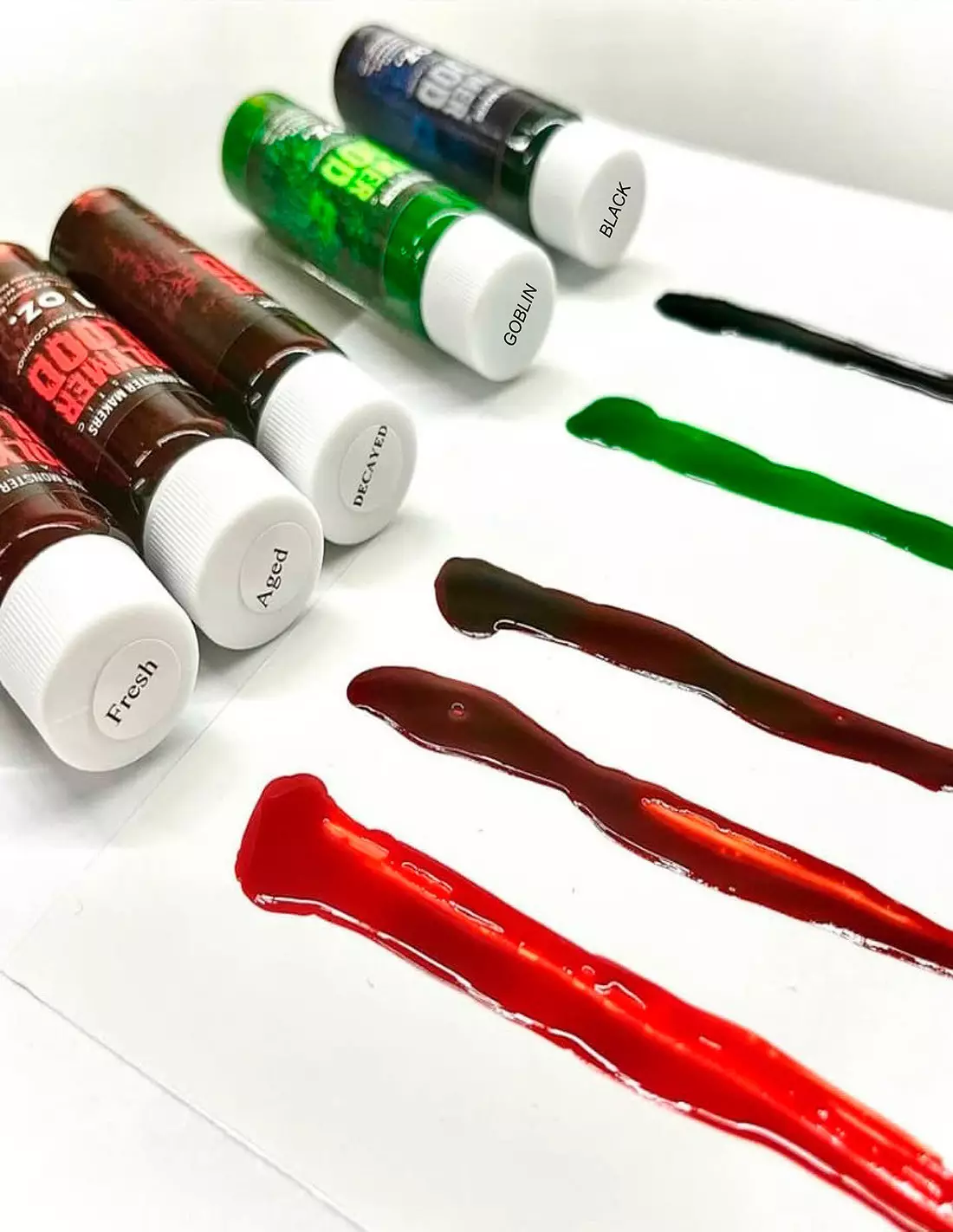
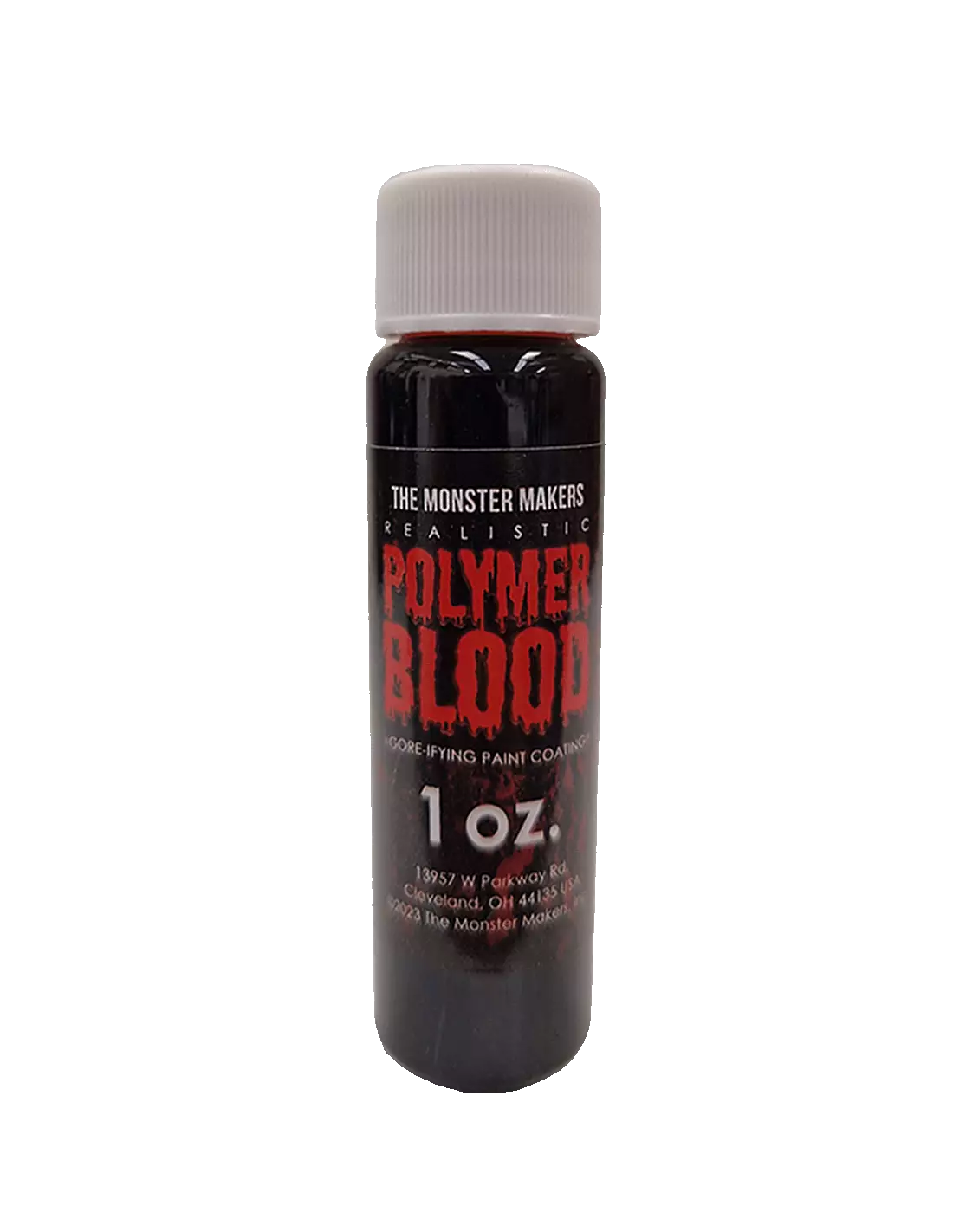
Polymer Blood by The Monster Makers is a synthetic blood coating specifically formulated for latex masks and accessories. It dries fast, remains flexible and tack-free, with a high-gloss finish that mimics the real appearance of blood. Available in two variants: Fresh (Arterial Blood), with a bright red tone and fresh appearance, and Aged (Veinous Blood), with a dark, oxidised venous tone.
Technical specifications
| Feature | Detail |
|---|---|
| Product type | Polymer blood (coating) |
| Available variants | Fresh / Arterial Blood (bright red) · Aged / Veinous Blood (dark oxidised red) |
| Finish | High gloss |
| Flexibility | Elastic once dry |
| Dry feel | Tack-free |
| Viscosity | Slightly viscous (controlled flow, not too runny) |
| Resistances | Water · UV · Abrasion |
| Effect | Permanent |
| Primary substrate | Latex (masks and accessories) |
| Additional compatibility | Adheres well to various surfaces |
What it's used for
Polymer Blood is designed for special effects makeup and professional character work. Its polymer formulation makes it ideal in any context where fake blood must stay intact for hours, survive movement and resist contact with water or sweat.
- Coating latex masks with wounds, cuts or gore details
- Finishing latex accessories and prosthetics for film, television and theatre
- Special effects in long-duration character makeups
- Applications on semi-rigid surfaces where flexibility is required
- Props and models that need a durable, glossy blood effect
- Animatronic pieces or puppets where the material must withstand continuous handling
How to use it
- Prepare the surface: make sure the latex mask or accessory is clean, dry and free of dust or grease. If the latex has a very smooth finish, you can lightly abrade it to improve adhesion.
- Shake the product well before opening to homogenise the pigment with the polymer base.
- Apply with a brush, spatula or directly from the container depending on the effect you are going for. The controlled viscosity allows natural drips without the product spreading too much.
- Shape the flow while still wet if you want to create clots, drips or pools with more volume. For clots, apply a thicker layer and let it settle before drying.
- Air dry until the surface is dry to the touch and flexible. Do not apply forced heat on the first layer.
- Add additional layers if you need more colour intensity or more gloss. Each layer dries independently.
- Combine with SFX makeup — the Skin Illustrator Flesh Tone palettes or the Skin Illustrator Complexion Palette allow you to blend the wound or blood effect into the skin naturally.
Usage tips
Choose the variant based on the narrative effect
Fresh (Arterial Blood) is the option for simulating recent blood — bright, vivid and fresh-looking: fresh cuts, active bleeding or immediate violence effects. Aged (Veinous Blood) has a darker, more muted tone, ideal for old wounds, clotted blood or post-mortem effects. Combining both on the same piece adds depth and realism to the final result.
Work in layers to control gloss and volume
A single thin layer gives the effect of a dry stain or surface blood. Several accumulated layers, left to dry between applications, create volume and increase the gloss. If you want to simulate a three-dimensional clot, apply a thick layer without spreading it and let it flow naturally before drying. To blend the effect with dark skin tone makeup, work the base makeup first and apply Polymer Blood on top as the final layer.
Storage and cleaning
Close the container tightly after each use to prevent the polymer base from drying out. Clean brushes with water before the product cures completely. Once dry on the substrate, the coating is water-resistant, so removal from latex requires a suitable solvent or careful mechanical peeling. Store the product at room temperature, away from direct heat sources.
Frequently asked questions
Does it work on surfaces other than latex?
Yes. Although Polymer Blood is specially formulated for latex, it adheres well to other surfaces such as flexible foam, painted silicone, plastics, fabric and some thermoformed materials. It is advisable to carry out an adhesion test on a small area before applying it to the entire piece.
Can it be used directly on skin?
Polymer Blood is a coating designed for masks and accessories — it is not formulated as a dermal makeup product. For blood effects directly on skin, we recommend products from the Fleet Street Drying Blood range, specifically designed for skin application.
How long does it take to dry?
Drying time depends on the thickness of the applied layer and environmental conditions (temperature and humidity). In thin layers at normal room temperature, a dry touch is reached within a few minutes. Thick layers or cold, humid environments may require more time. It is not recommended to apply forced heat during the initial drying stage.
Does it resist mask movement without cracking?
Yes. Polymer Blood's polymer formulation is designed to be elastic once cured, making it compatible with flexible surfaces such as latex. It adapts to movement without cracking or peeling off, provided the applied layer is not excessively thick in areas of maximum deformation.
Is it resistant to water and sweat?
Yes. Once dry, Polymer Blood offers resistance to water, UV rays and abrasion. This makes it suitable for long-duration makeups on film sets, live performances or events where sweat and handling are factors to consider.
Can the two variants be mixed to obtain an intermediate tone?
Yes. Fresh and Aged are compatible bases and can be mixed together to obtain intermediate tones or to customise the degree of ageing in the effect. You can also apply one variant over the other in layers to create more natural colour transitions.
How does it integrate with SFX makeup?
Polymer Blood is used as a final layer over already-applied makeup. The Skin Illustrator palettes allow you to work the wound contours, shadows and skin tones before applying the polymer blood, which sits on top providing the characteristic gloss and liquid texture. Do not mix the product directly with alcohol-based makeup, as it may alter the consistency of both.
How is it removed from the latex mask?
Once cured, the coating is water-resistant and will not come off with water alone. On latex surfaces, it can be carefully peeled off mechanically if it needs to be redone. Check with the latex manufacturer for the most suitable solvent to avoid damaging the base surface.
No reviews
Tap to zoom