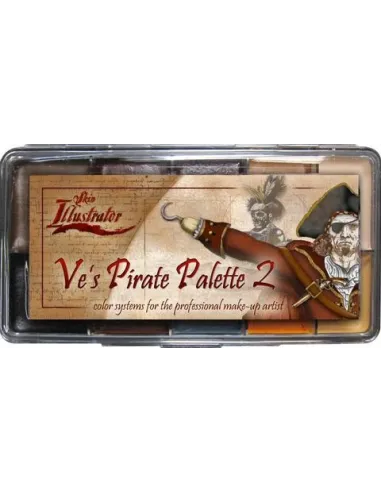
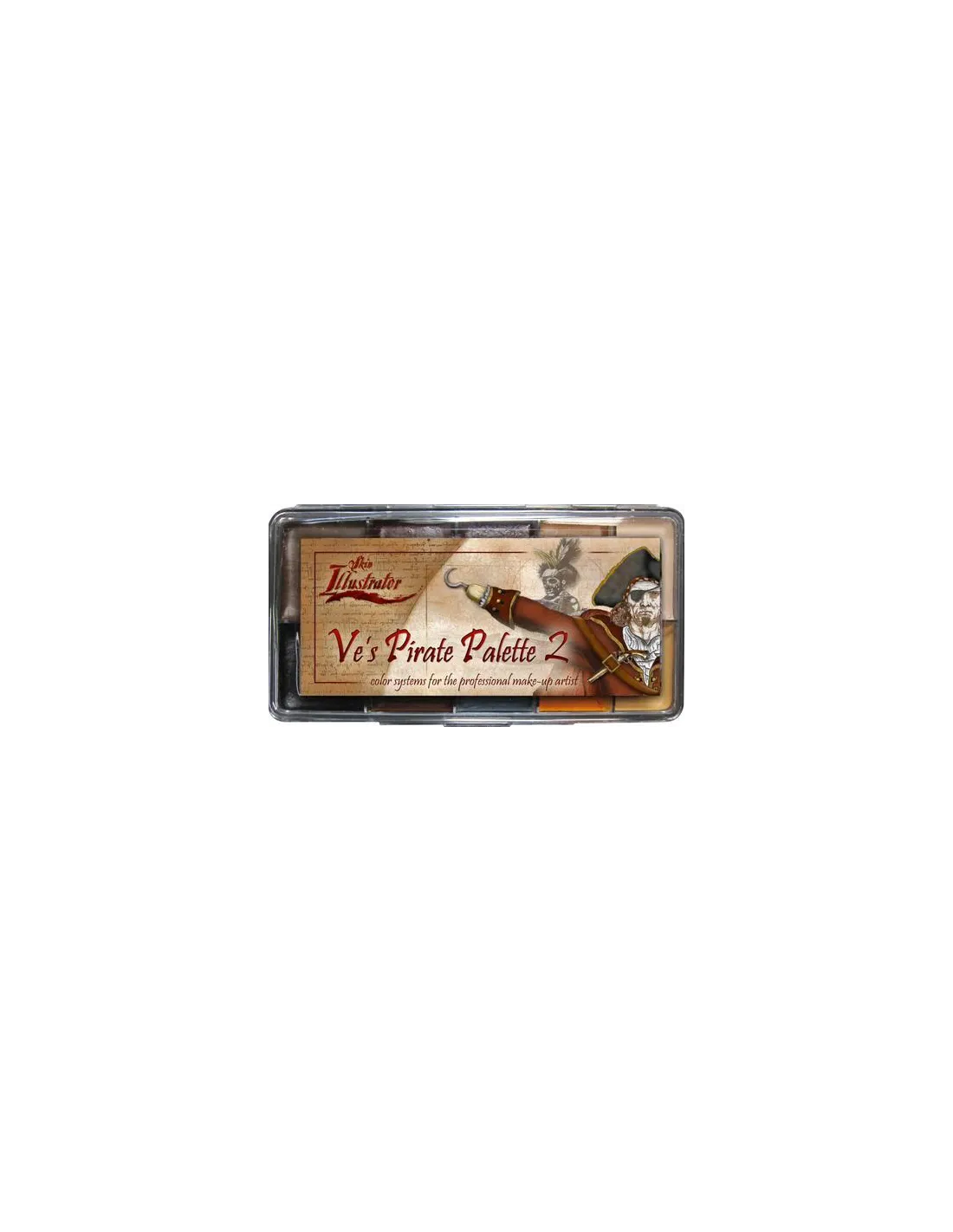
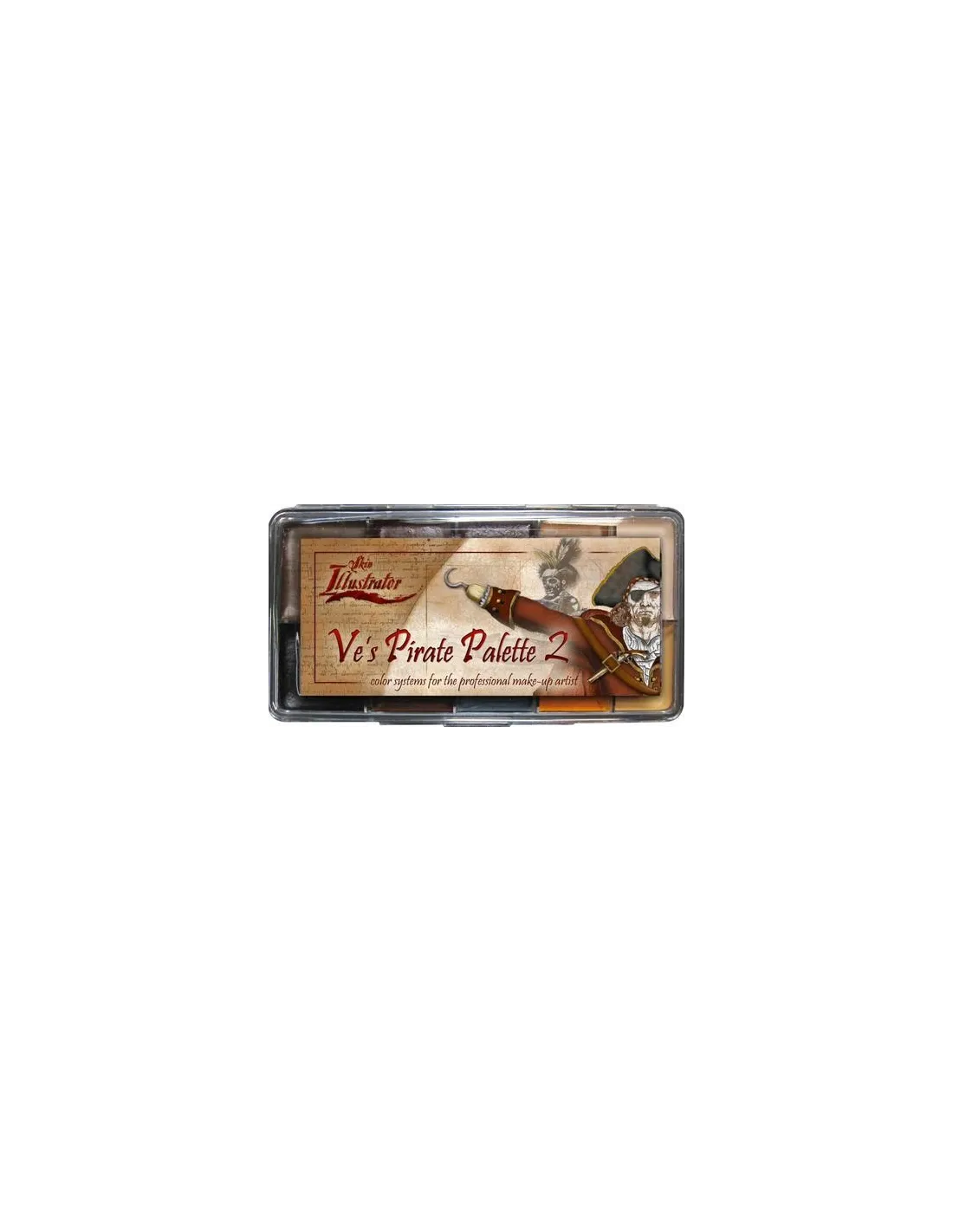
The Ve's Pirate 2 palette by Skin Illustrator is a collection of 10 alcohol-activated inks originally designed by Ve Neill for the film "Pirates of the Caribbean: Dead Man's Chest". It offers exceptional coverage and superior durability on skin, silicone and latex, with a specific colour range for fantasy makeups, ageing and extreme wear effects.
Technical specifications
| Feature | Detail |
|---|
| Product type | Alcohol makeup palette (alcohol-activated) |
| Number of colours | 10 |
| Compatible surfaces | Skin, silicone, latex |
| Recommended activator | Skin Illustrator Activator or Skin Illustrator Slow Activator |
| Alternative activator | 99% isopropyl alcohol |
| Removal | Telesis Super Solv or Telesis Makeup Remover |
| Origin | Special edition palette created for film production |
What it's used for
This palette is aimed at special effects makeup artists and character designers who need intense, durable colouration with an aged or dirty appearance. The colours in the Pirate 2 range are selected for dark fantasy work, period characters and skin deterioration effects.
- Fantasy character makeups, pirates and creatures
- Ageing, dirt and extreme wear effects
- Direct painting on platinum silicone prosthetics
- Colouring over latex and foam latex applications
- Continuity touch-ups on long shooting days
- Full body makeup with high sweat resistance
- Theatrical and circus special effects
How to use it
- Prepare the surface: skin must be clean, dry and free of oils; silicone or latex prosthetics must be properly adhered and free of any release agent residue.
- Activate the colour: dampen a brush or sponge with 99% isopropyl alcohol, Skin Illustrator Activator or Skin Illustrator Slow Activator. The Slow Activator provides more working time for blending and gradients.
- Load the brush sparingly: lightly touch the surface of the ink. Too much activator over-dilutes the pigment and reduces coverage.
- Apply in thin layers: work in several thin coats and allow the alcohol to evaporate between each layer. This improves adhesion and the final finish.
- Blend directly on the surface: you can combine the palette colours directly on the skin or prosthetic to create transitions and texture effects.
- Set if necessary: on skin, once the alcohol has dried the ink is set. In cases of heavy sweating or intense friction, apply a compatible setting spray.
- Remove the makeup with Telesis Super Solv or Telesis Makeup Remover, applied with gauze or cotton. Do not use water or acetone.
Important — activators and solvents: always activate with
99% isopropyl alcohol or the specific Skin Illustrator activators. Never use 70° alcohol, MEK, acetone or water: these solvents do not correctly activate the inks, alter the colour and can damage prosthetics. To remove the product, use Telesis removers exclusively.
Usage tips
Consistency control according to the desired effect
The amount of activator determines the result: with little activator you get a dense, opaque coverage, ideal for areas where you need a lot of colour; with more activator you achieve translucent glazes perfect for simulating veins, subtle shadows or aged skin effects. Practise the ratio on the back of your hand before applying to the final prosthetic.
Working on silicone: layers and temperature
On platinum silicone prosthetics, the adhesion of alcohol inks depends in part on the ambient temperature. In cold environments the alcohol evaporates more slowly and you have more working time; in warm outdoor settings, work in very thin layers to prevent the colour from drying before it integrates. If the silicone has a very smooth finish, light surface abrasion with a fine sponge improves colour retention.
Application order for complex makeups
For makeups combining several palettes, start with the lightest base tones and work towards the darkest. The Pirate 2 range colours work very well as a top layer of wear and grime over a base established with the Skin Illustrator Flesh Tone Palette or the Skin Illustrator Dark Fleshtone Palette. Reserve the darkest tones of the Pirate 2 for the final detail and texture passes.
Frequently asked questions
What activates these inks?
Skin Illustrator inks are activated with Skin Illustrator Activator, Skin Illustrator Slow Activator or 99% isopropyl alcohol. The Slow Activator is recommended when you need more working time for complex blending. Never use 70° alcohol, MEK, acetone or water.
Can these inks be used directly on skin?
Yes. The Ve's Pirate 2 palette is formulated for direct application on skin, as well as on silicone and latex. Skin Illustrator inks are developed specifically for cosmetic use in professional film and theatrical productions.
How is alcohol makeup removed from skin or a prosthetic?
It is removed with Telesis Super Solv or Telesis Makeup Remover applied with gauze or cotton. Do not use water or acetone, as they do not properly dissolve these inks and can deteriorate the prosthetic.
Are these inks compatible with platinum silicone prosthetics?
Yes, Skin Illustrator inks adhere perfectly to addition (platinum) silicone surfaces, which is the standard material in high-end film and theatrical prosthetics. Make sure the silicone is clean and free of release agent before applying.
Can this palette be mixed with other palettes from the same brand?
Yes. All Skin Illustrator palettes are fully compatible with each other. It is common to combine the Ve's Pirate 2 with flesh-tone palettes such as the Flesh Tone Palette or the Complexion Palette to build complete makeups.
How long does the makeup last once applied?
Once the alcohol has fully evaporated, Skin Illustrator inks offer very high resistance to sweat, friction and handling. They are used in film productions precisely because of their durability during long shooting days.
Is a setting spray needed on top?
Under normal conditions, alcohol inks do not require an additional setting product once dry. In situations of very heavy sweating, water exposure or continuous friction, you can apply a makeup setting spray compatible with alcohol inks for extra security.
What is the difference between the Activator and the Slow Activator?
The standard Activator evaporates quickly, ideal for direct coverage work and fast applications. The Slow Activator has a slower evaporation rate, giving more time to blend colours, create gradients and work over large areas without the colour drying before it integrates. For complex blending or in warm environments, the Slow Activator is the best option.