Shopping Cart


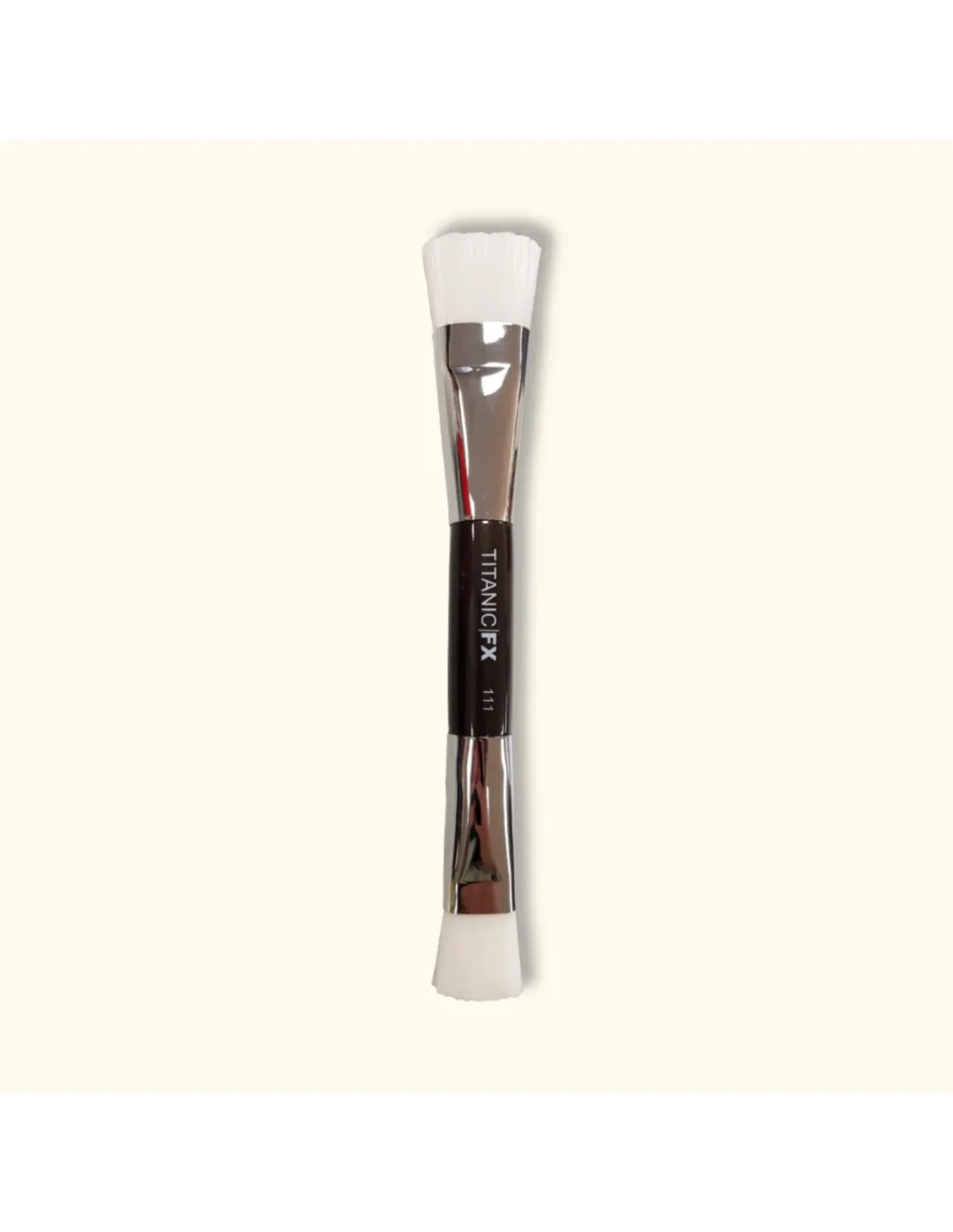
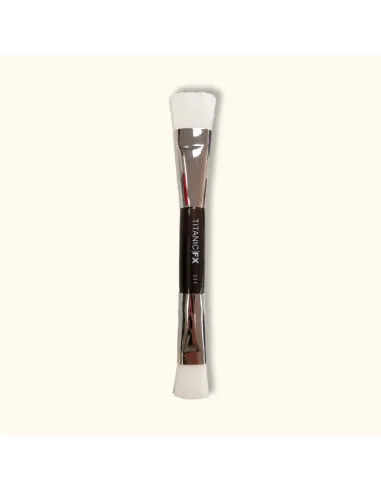
TITANIC PRO-FX BRUSH 111 -Double Point Splatter-
615011000
€30.00
36,30 € Tax incl.
36,30 € Tax incl.
Double-ended brush (large and small tip) with stiff synthetic bristles for the splatter technique in FX makeup. Vegan and solvent resistant.
The Titanic Pro-FX Brush 111 is a professional double-ended brush designed specifically for the splatter technique in special effects makeup. Its two stiff synthetic bristle heads —one large and one small— allow you to create controlled splatter textures on prosthetics, skin and surfaces. Made with sustainable materials and vegan bristles that withstand solvent use, it is a reference tool in professional FX workshops.
Technical specifications
| Feature | Detail |
|---|---|
| Brush type | Double-ended (large head + small head) |
| Bristle type | Stiff synthetic (vegan) |
| Main technique | Splatter |
| Solvent resistance | Yes |
| Glue adhesive | Solvent resistant |
| Handle material | Ethically sustainable materials |
| Intended use | FX makeup, prosthetics, colour effects |
What it is used for
The Brush 111 is designed for FX makeup artists and prosthetics technicians who need to create splatter effects —blood stains, dirt, pore texture, ageing— on skin, silicone prosthetics, latex or foam latex. The double end allows you to alternate between fine and coarse splatter without changing tools.
- Splatter technique to simulate blood, mud or fluid spatters
- Creating irregular textures on silicone and foam latex prosthetics
- Application of solvent-activated paints (alcohol-activated, silicone paints)
- Ageing and damaged skin effects in theatrical and film character makeup
- Painting prosthetics before and after application
- Texture finishes on resin or latex pieces
- Working with silicone adhesives on the perimeter edge of prosthetics
How to use it
- Prepare the paint or pigment at the right consistency for the splatter effect you want: thinner for fine, dispersed drops, thicker for large stains.
- Load the bristles of the chosen end (large or small depending on the effect) with a moderate amount of paint. Do not oversaturate the brush.
- Position the brush at the desired distance from the surface (between 5 and 20 cm depending on the splatter size).
- Bend the bristles back with your finger or a spatula and release them sharply to project the paint onto the surface.
- Repeat the process varying the distance, paint load and tip used to achieve a natural, non-uniform texture.
- Clean the brush immediately after use with the appropriate solvent for the type of paint used (isopropyl alcohol, acetone or water depending on the product).
- Leave to dry in a horizontal position or with the bristles facing downward to protect the shape of the tips.
Usage tips
Splatter control
Distance and paint load are the two factors that most influence the result. The greater the distance, the wider the dispersion and the smaller the drops. For more controlled spatters, work close to the surface and use the small tip. Always practise on paper before applying to the prosthetic or the actor.
Cleaning and maintenance
The adhesive that secures the bristles withstands solvents, but aggressive and prolonged cleaning can damage the brush over time. Clean after each use with the minimum solvent necessary, squeeze out thoroughly and never leave the brush soaking. Store with the bristles protected to maintain their original stiffness and shape.
Combining with other FX brushes
The Brush 111 works best in combination with fine detail brushes for subsequent touch-ups. Once the splatter has been applied, use the Titanic Pro-FX Brush 101 fine liner to define edges, add capillaries or correct specific areas without redoing the whole effect.
Frequently asked questions
What types of paint work best with a splatter brush?
The Brush 111 is compatible with alcohol-activated paints, silicone paints, acrylics and any formulation fluid enough to project when the bristles are released. Very thick paints require prior dilution; overly thin paints may result in loss of splatter control. Adjust viscosity according to the desired effect.
How do you clean a brush after using solvent-based paints?
Clean immediately after use with the solvent corresponding to the paint used (isopropyl alcohol for alcohol-activated paints, silicone solvent for silicone paints). Gently rub the bristles on a clean cloth, repeat until no colour remains, squeeze out and leave to dry horizontally. The bristle adhesive in the Brush 111 is formulated to withstand this type of cleaning without the fibres coming loose.
What is the advantage of a double-ended brush over having two separate brushes?
The double end allows you to alternate between spatters of different sizes without changing tools or interrupting your workflow. In on-set FX makeup, where time is critical, having both heads available in a single brush speeds up application and reduces the risk of grabbing the wrong tool mid-makeup.
Are synthetic bristles as effective as natural ones for this technique?
For the splatter technique, the stiff synthetic bristles of the Brush 111 are superior to natural ones: their uniform stiffness produces a more consistent and controlled projection, and their solvent resistance makes them essential when working with chemically activated paints. Natural bristles absorb more product and deteriorate with strong solvents.
Can this brush be used to apply or remove prosthetics?
The Brush 111 is optimised for colour and texture effects, not for applying or removing prosthetics. For gluing prosthetic edges with silicone adhesive or for dissolving the adhesive during removal, a flat soft-bristle brush is more suitable. The Brush 111 is, however, ideal for painting the prosthetic once it has been applied.
How do you achieve a natural-looking rather than artificial splatter effect?
The key is irregularity: vary the distance, the amount of paint loaded and the tip used with each projection. Work in layers, alternating large and small spatters, and rotate the brush angle. A real spatter is never uniform or symmetrical; the more variables you introduce, the more convincing the result will be.
Can it be used on cured silicone without prior preparation?
Paint adhesion on cured silicone depends on the type of paint and the surface finish, not on the brush. For painting silicone prosthetics it is recommended to use paints formulated specifically for silicone or activated with silicone solvent. The Brush 111 applies any of these formulations without issue.
No reviews
Tap to zoom