Shopping Cart


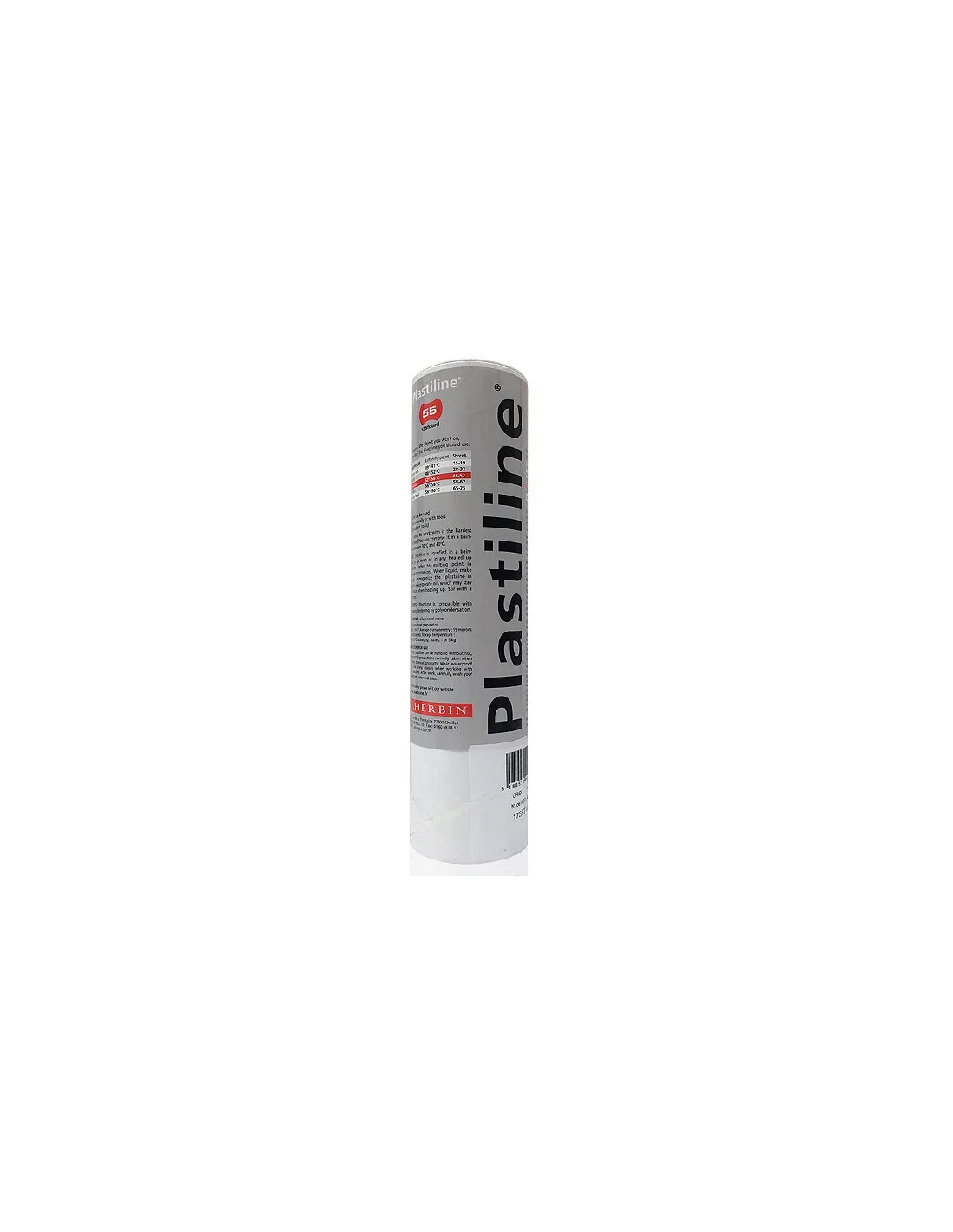
J. HERBIN Hardness 55 -Professional Modeling Plastiline-
204303601
€22.00
26,62 € Tax incl.
26,62 € Tax incl.
Professional J. Herbin Hardness 55 modelling clay, dark grey. Oil-based, reusable, compatible with condensation silicones. Ideal for sculpture and FX.
J. Herbin Hardness 55 modelling clay is a professional oil-based sculpting material designed for precision sculpture, special effects and prototype Mold-Making. It does not dry, does not polymerise and can be softened with heat, giving you full control of the process at all times. It is compatible with condensation (tin) silicones and is ideal for medium-sized pieces with a good level of detail.
Technical specifications
| Property | Value |
|---|---|
| Nominal hardness | 55 |
| Colour | Dark grey |
| Chemical base | Oil-based (does not dry, does not polymerise) |
| Working states | Solid / Softened (body heat or moderate heat) / Liquid (double boiler or oven) |
| Compatibility with condensation (tin) silicones | Yes |
| Compatibility with addition (platinum) silicones | No |
| Reusable | Yes, indefinitely |
What it is used for
J. Herbin Hardness 55 is designed for professionals and semi-professionals who need a stable, reusable sculpting material compatible with subsequent moulding processes. Its medium-low hardness allows medium-sized pieces to be worked with a good level of detail without excessive effort and without requiring intensive heating to handle.
- Figurative and conceptual sculpture of medium size
- Prototyping of shapes intended for moulding in condensation silicone
- Special effects (FX): prosthetics, masks, creatures and anatomical details
- Stop motion: character fabrication and replacement parts
- Scale modelling and industrial modelling of intermediate parts
- Training and professional sculpture workshops
How to use it
- Prepare the material: at room temperature the clay presents its standard hardness (55). If you need greater plasticity, warm it slightly between your hands or with a hairdryer on a low setting.
- Sculpt your piece: work with spatulas, sculpting tools and modelling tools. Hardness 55 allows medium details to be sculpted with fine tools without the material yielding excessively.
- Apply controlled heat to refine: to smooth joins, blend seams or apply fine textures, use a hairdryer or a double boiler. Control the temperature to avoid liquefying the whole piece.
- Liquefy if you need to pour or fill: when heated in a double boiler or oven at a moderate temperature, the clay flows and can be poured into cavities, used as a fill material or to create negative textures.
- Prepare the piece for moulding: make sure the surface is clean and free of residues from other materials that are incompatible with the silicone you intend to use.
- Mould in condensation silicone: apply the condensation silicone directly onto the finished model. Do not apply platinum silicones in contact with this clay.
- Recover and reuse the material: after demoulding, collect the clay, remove any silicone residue and reuse it without limitations.
Warning — Platinum silicone inhibition: this clay contains compounds that inhibit the curing of addition (platinum) silicones. If you apply a platinum silicone directly onto this material, the contact area will remain uncured or poorly cured. Use only condensation (tin) silicones in direct contact with this clay. If you need to mould with platinum silicone, seal the surface completely with a barrier lacquer or shellac and carry out a cure test before pouring the full mould.
Usage tips
Temperature control for each working phase
Temperature is your main control tool with this clay. At room temperature the material is in its firmest state, ideal for detail work with tools. With body heat or a hairdryer held at a moderate distance, the clay becomes more pliable and allows clean joins. To liquefy it completely and pour it, use a double boiler or an oven at a low, controlled temperature (never direct flame). Avoid overheating: the clay can lose cohesion if the working temperature is exceeded by too much.
Silicone compatibility: choose carefully before moulding
Before moving on to moulding, be clear about which silicone you are going to use. Condensation silicones are compatible with no additional preparation. If your process requires platinum silicone, seal the clay surface with at least two coats of shellac or barrier lacquer and wait for it to dry completely. Always perform a cure test on a small area before pouring the full mould: it saves time and material.
Reuse and material maintenance
One of the key advantages of this clay is that it does not expire or harden over time if stored correctly. Keep it in a sealed container or wrapped in cling film when not in use, away from dust and dirt. When recovering it after moulding, carefully remove any silicone residue or external material. If the material has accumulated surface contamination, separate that layer and work with the clean core. The clay can be recycled and remelted without losing its properties.
Frequently asked questions
What is the difference between hardness 55 and a higher hardness for sculpting?
Hardness determines how much effort you need to deform the material and what level of detail you can retain. A hardness of 55 like that of this J. Herbin clay is a medium-low hardness: it yields with relative ease, making it comfortable for medium-sized pieces and moderate details. Higher hardnesses, such as those of the Chavant Hard, retain fine detail better but require more pre-heating to be workable. Choose according to the size of your piece and the level of detail you need.
Why can I not use platinum silicone directly on this clay?
Addition (platinum) silicones are sensitive to certain compounds that act as cure inhibitors. This J. Herbin Hardness 55 clay contains oily compounds that inhibit the reaction of platinum silicones, leaving the contact area uncured. If you need to mould with platinum silicone, first seal the piece with shellac or a barrier lacquer, allow it to dry completely and carry out a cure test on a small area before pouring the full mould.
How do you correctly heat a professional oil-based clay?
The safest method is gradual heat: start with body heat or a hairdryer held at a distance to soften the material without losing its structure. For filling or pouring work, use a double boiler or an oven at a low temperature, ensuring the clay does not overheat. Never use direct flame: it can damage the material and generate fumes. J. Herbin Hardness 55 clay flows in a controlled manner once the appropriate temperature is reached.
Does this clay dry or harden on its own over time?
No. J. Herbin Hardness 55 clay is oil-based, which means it does not polymerise or dry in air. It retains its properties indefinitely if stored correctly in a sealed container or wrapped in cling film, away from dust and dirt. This makes it completely reusable with no limit on uses.
Is it suitable for sculpting large pieces such as heads or busts?
Yes. Hardness 55 is suitable for medium to large pieces, such as heads or partial busts. Its relative ease of handling makes it comfortable for building up volume quickly and working general forms before refining details. For very large-format pieces where maximum structural rigidity is needed, you can combine it with an internal wire or mesh Armature.
Can I mix this clay with other hardnesses in the same range?
Yes. Professional oil-based clays from the same family are compatible with each other. You can mix Hardness 55 with a higher hardness, such as the Chavant Medium, to obtain an intermediate working point suited to your needs. Warm both materials slightly before mixing them to achieve a homogeneous blend.
Do I need a Release agent to mould over this clay?
In most cases, condensation silicones do not require a Release agent over clay, as the silicone does not adhere to the oil base. However, if your process includes subsequent casting materials (resins, plaster) over the mould, apply the appropriate Release agent to the mould, not to the clay.
Is it suitable for special effects (FX) work and stop motion?
Yes. J. Herbin Hardness 55 clay is a common choice in FX workshops for sculpting prosthetic prototypes, creatures and anatomical details, as well as in the stop motion industry for character fabrication and replacement parts. Its stability, reusability and compatibility with condensation silicones integrate it seamlessly into professional FX workflows.
No reviews
Tap to zoom