Shopping Cart


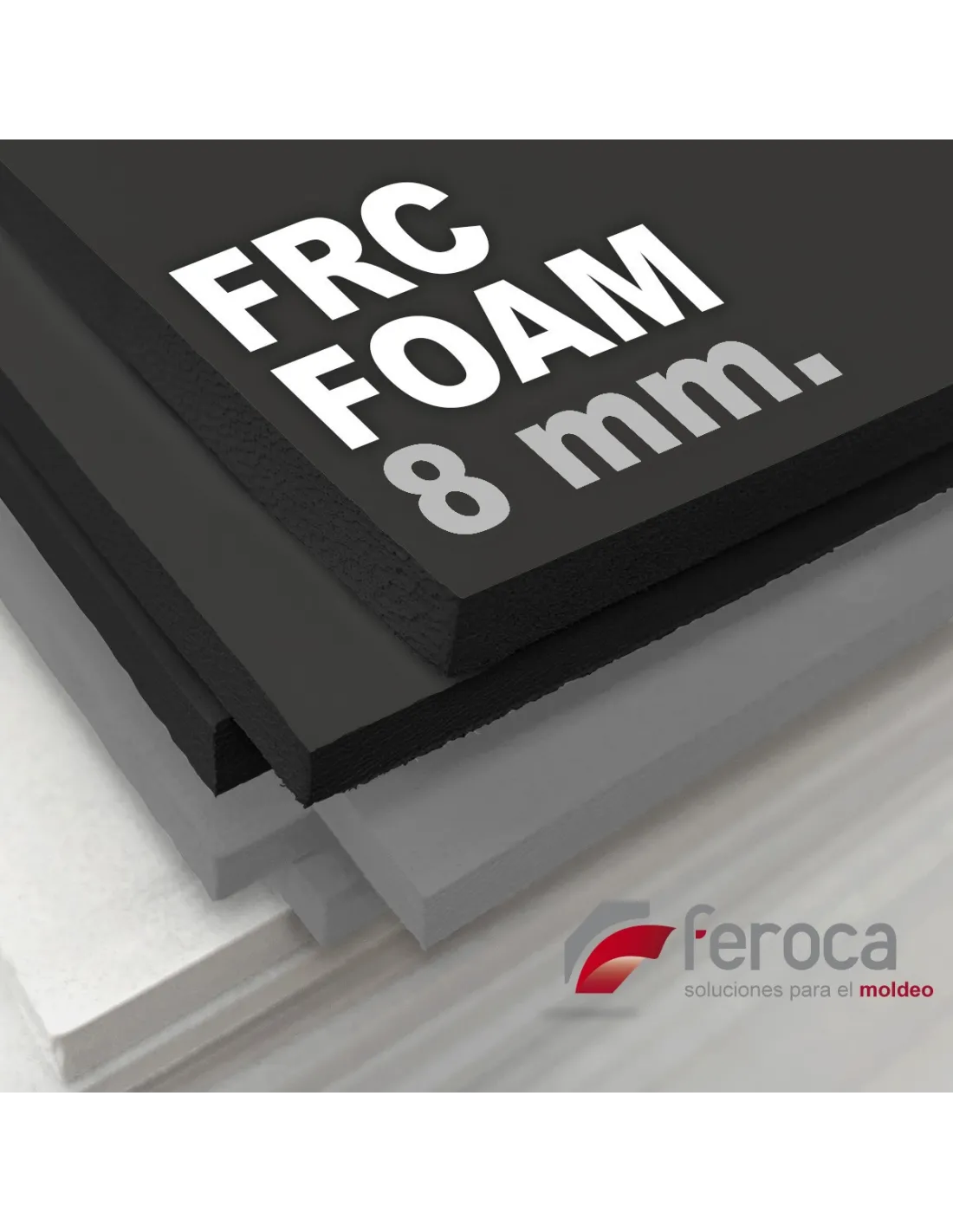
FRC FOAM BLACK 8mm -High Density EVA Rubber-
208250401
€16.50
19,97 € Tax incl.
19,97 € Tax incl.
High-density black EVA rubber sheet (156 kg/m³), 8 mm thick. Cuttable with a craft knife, thermoformable and paintable. Sheet format 55 x 94 cm.
FRC FOAM Black 8 mm is a high-density EVA rubber (ethylene-vinyl acetate) sheet designed for building parts that need more body than the 5 mm version but more bending capacity than the 10 mm. It cuts with a craft knife, thermoforms with a heat gun, and accepts acrylic paint directly on the surface with no primer needed.
Technical specifications
| Material | High-density EVA rubber (ethylene-vinyl acetate) |
|---|---|
| Color | Black |
| Thickness | 8 mm |
| Density | 156 kg/m³ |
| Hardness | 30 – 35 Shore A |
| Format | Rolled sheet, S size: approx. 55 × 94 cm |
| Presentation | Rolled (for safe transport without creases or damage) |
What it is used for
The 8 mm thickness makes it the sweet spot of the FRC FOAM range: enough rigidity to structure large pieces, enough flexibility to shape tight curves. It is the go-to choice when 5 mm is too thin to provide body and 10 mm is too thick to bend without creasing.
- Armatures and breastplates for cosplay and LARP
- Pauldrons, elbow guards and greaves with raised detail
- Scenography props and theatrical set dressing
- Helmets and masks with intermediate structure
- Shield bases and large-surface decorative elements
- Quick prototypes and three-dimensional scale models
- Fillers and intermediate layers in multilayer EVA builds
How to use it
- Design and pattern: draw the pattern on paper and transfer it to the sheet with a marker or ballpoint pen.
- Cut: use a sharp craft knife and a metal ruler for straight cuts; for curves, use long-bladed scissors or a fine-point craft knife. A blunt blade deforms the edge, so change the blade frequently.
- Thermoform: apply heat with a heat gun at about 10–15 cm distance, moving continuously. When the material softens and loses rigidity, shape it over the desired form or against your body with gloves. Hold the pressure until it cools.
- Bond the pieces: apply EVA Contact Pro to both surfaces, allow to dry 2–3 minutes until touch-dry and press firmly together. The bond is immediate and very strong.
- Add detail: add textures with a hot tool (soldering iron, rounded-tip Dremel, stamps), or glue profiles with the EVA Profiles Kit for rivets, tubes and ornaments. For fine sculptural details use EVA AIR Negra, the hand-mouldable foam clay.
- Paint: apply acrylic paint directly. For elastic and durable finishes, use paints specifically formulated for foam. No primer is required, although a coat of diluted PVA glue can improve adhesion on pieces that will receive heavy wear.
Usage tips
Temperature and thermoforming
High-density EVA needs more heat than standard low-density EVA to soften fully. Heat the piece evenly on both sides if you want a deep curve. If you only heat one side, the material will tend to curve towards the heated side, which can sometimes be used to advantage for predictable bends. Do not overheat a fixed spot: the material may bubble or deform irreversibly.
Clean cuts without distortion
For bevel cuts (45° angles or similar), tilt the craft knife to the desired angle and guide it in a single continuous pass. Multiple passes with variable pressure create steps on the edge. If the cut will be visible on the finished piece, lightly sand the edge with fine-grit sandpaper or run the heat gun over it at a distance to seal it and give a cleaner finish.
Combining with other thicknesses
FRC FOAM 8 mm fits perfectly in multilayer builds. Use it as the structural layer and overlay FRC FOAM 5 mm for raised details or FRC FOAM 2 mm for thin laminates and surface textures. The same density across all thicknesses ensures that the contact adhesive performs consistently across all joints.
Frequently asked questions
What is the difference between the various high-density EVA thicknesses?
Density (156 kg/m³) and hardness (30–35 Shore A) are identical across the entire FRC FOAM range. What changes is the thickness and, therefore, the rigidity and bending capacity. The 2 mm is ideal for thin laminates and textures; the 5 mm balances lightness and body; the 8 mm adds structure without sacrificing mouldability; and the 10 mm offers maximum rigidity for thick, bulky pieces.
Can EVA rubber be painted without primer?
Yes. FRC FOAM accepts acrylic paint directly on the surface with no primer needed. On pieces that will receive heavy wear or friction, a thin coat of diluted PVA glue (50/50 with water) applied before painting improves adhesion and flexibility of the final finish.
How do you bond two pieces of EVA rubber together?
The most solid method is contact adhesive: apply EVA Contact Pro to both surfaces, allow the solvent to evaporate for 2–3 minutes until touch-dry, and press the pieces firmly together. The bond is instant and very strong. For temporary or positioning bonds, a hot glue gun also works, though with lower mechanical strength.
Can EVA rubber be sanded and textured?
Yes. Sanding with medium-fine grit sandpaper smooths edges and removes cut marks. To texture the surface (scales, leather, stone…) you can use hot tools such as engraving tips, heated silicone stamps or texture rollers applied with heat. The high density of FRC FOAM retains texture detail better than low-density foams.
Do the sheets arrive rolled or flat?
Sheets are shipped rolled to protect them during transport and reduce the risk of permanent creases. When you receive them, unroll carefully and let them rest flat for a few minutes; if they remain slightly curved, apply gentle heat with a heat gun on the concave side while pressing on a flat surface and the material will return to flat.
Can it be thermoformed cold, or is heat always required?
High-density FRC FOAM requires heat to thermoform permanently. Cold, the material has elastic memory and will return to its original shape. With a heat gun or similar, the EVA softens, is shaped and locks into the new form as it cools. Without heat you will only achieve temporary curves that the material will recover over time.
How do you make a mask or helmet from EVA rubber?
The basic process is: design the pattern on paper by developing curved surfaces flat; cut the FRC FOAM 8 mm pieces; thermoform each piece with a heat gun shaping it over a reference form (mannequin head, bowl, etc.); bond the panels with EVA Contact Pro; add details with EVA AIR or profiles from the EVA Profiles Kit; and paint with acrylics. For pieces requiring finer surface detail, combine with an outer layer of FRC FOAM 5 mm.
What are the exact dimensions of the sheet?
The S size measures approximately 55 × 94 cm. These are indicative dimensions as cutting is done at the factory and minor variations may occur. If you need to cover larger surfaces, work with several panels bonded with contact adhesive, planning the seams in less visible areas of the piece.
No reviews
Tap to zoom