Shopping Cart



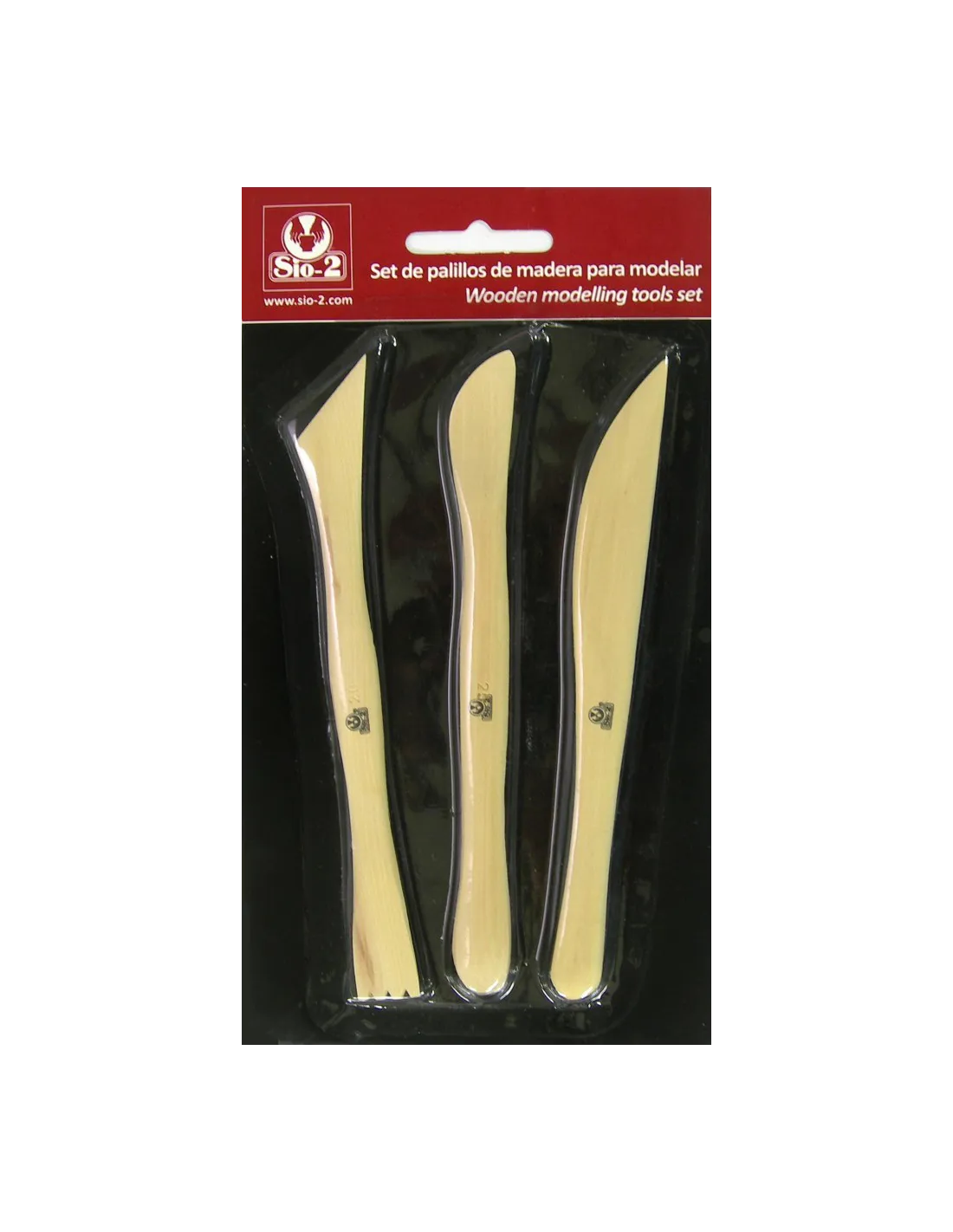
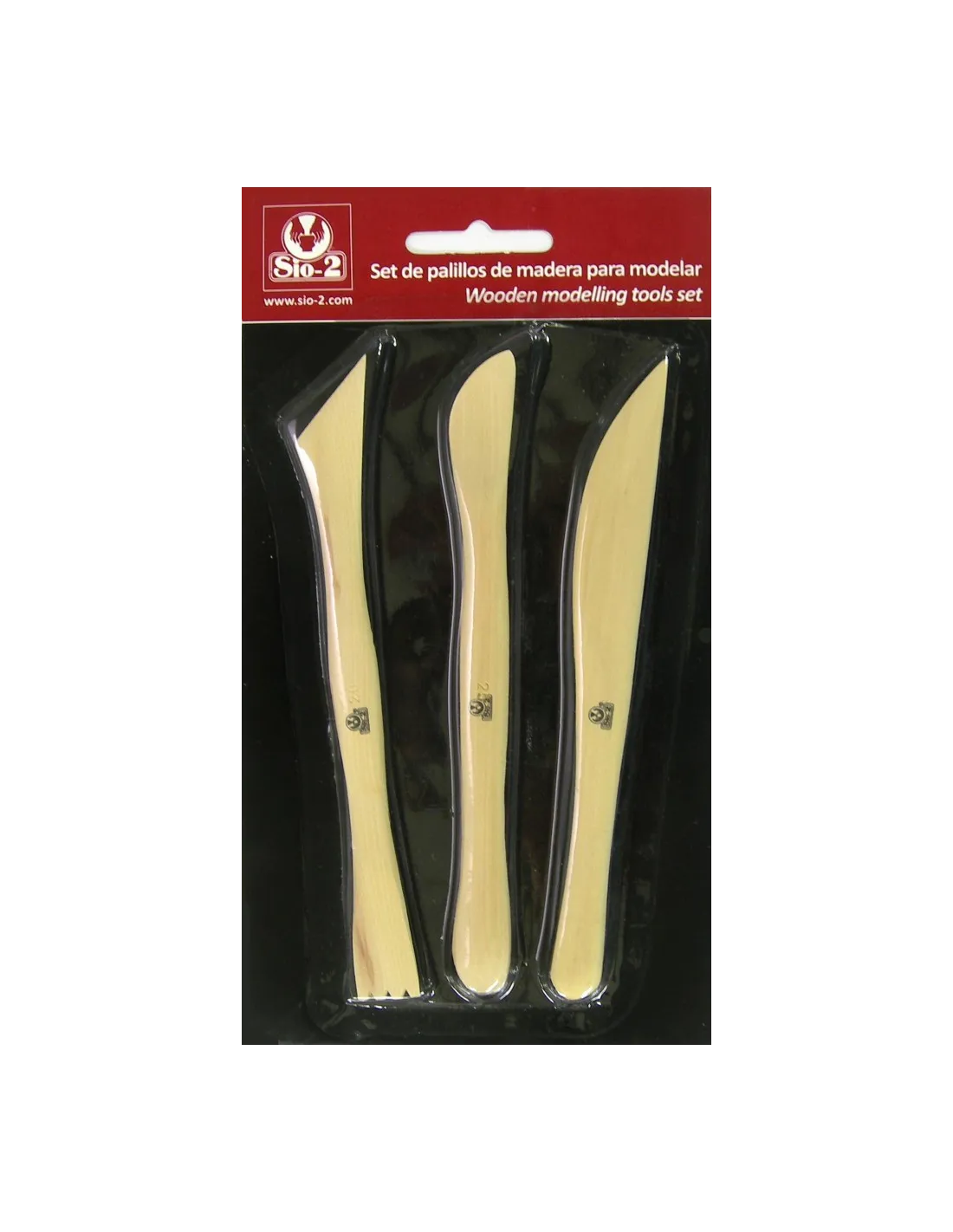
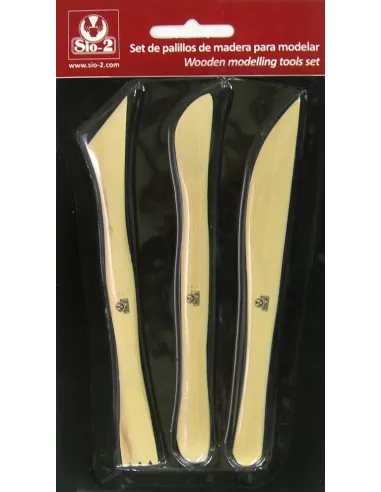
Set of Wooden Sticks SIO-2
206801110
€4.00
4,84 € Tax incl.
4,84 € Tax incl.
Set of 3 boxwood modeling tools for professional use. High strength and durability. Natural product.
SIO-2 wooden modeling tools are handcrafted sculpting tools made from boxwood, one of the hardest and densest woods available, making them a reliable and durable option for working with clays, modeling compounds and similar materials. The set includes 3 tools with different profiles to cover the most common workshop needs.
Technical specifications
| Material | Boxwood |
|---|---|
| Set contents | 3 tools with different profiles |
| Origin | Natural product |
What it is used for
These tools are designed for fine modeling work with clays, professional plastelines and hot or cold modeling compounds. Their natural wood profile allows smooth gliding over the surface without pulling material away, ideal for both figurative sculpture and technical prototyping work.
- Modeling and refining surfaces in clay and professional plastelines such as Castilene Medium or Castilene Hard
- Opening and defining fine details (eyes, folds, textures, edges)
- Adding or removing small portions of material in hard-to-reach areas
- Smoothing seams and transitions between planes
- Sculpting maquettes, prototypes and pieces for special effects
- Working with air-dry clays and polymer clays
How to use it
- Select the tool with the most suitable profile for the task: rounded ends for smoothing, pointed ends for defining details and flat ends for cleaning edges.
- If working with a hot compound such as Castilene Soft, make sure the material is at the correct working temperature before modeling.
- Apply gentle, controlled pressure, letting the shape of the tool do the work. Do not force it in cold or very hard areas to avoid splintering the wood.
- Clean the tool between uses with a dry or slightly damp cloth. Avoid submerging it in water to preserve the wood.
- For areas with hardened material build-up, gently scrape with the tip of the tool or use a solvent compatible with the modeling material.
Usage tips
Care for the wood to extend its working life
Boxwood is a very hard-wearing wood, but it is not waterproof. Avoid leaving the tools in prolonged contact with strong solvents or soaking them. If you notice the wood starting to splinter at the ends, sand gently with fine-grit sandpaper to restore the working profile.
Temperature and material hardness
With hot modeling compounds, always work with the material within its optimal temperature range. A material that is too cold and hard forces excessive pressure on the tool, which can deform or splinter it. A well-tempered material responds with much less force and the result is cleaner.
Combining with other tools
Wooden modeling tools are ideal for volume work and general smoothing. For very fine details or engraving, combine them with metal scribes. For laminating or applying resins, keep a special laminating roller or a metal degassing roller on hand to complement the sculpting work.
Frequently asked questions
What type of clay are these tools suitable for?
They are compatible with most clays and modeling compounds: air-dry clays, polymer clays, professional hot and cold plastelines, and modeling waxes. The SIO-2 tool set works especially well with compounds such as Castilene in its various hardnesses.
Are they suitable for professional use or only for hobbyists?
They are professional-grade tools. Boxwood is the traditional material of the finest sculpting tool sets due to its hardness, density and wear resistance. They are used in special effects workshops, sculpture, prototyping and industrial modeling.
How many tools are included in the set and what profiles do they have?
The set includes 3 boxwood tools. Each one has a different profile to cover the most common modeling operations: smoothing, defining details and working on edges or hard-to-reach areas.
How are they cleaned and maintained?
Clean the tools with a dry cloth after each use. If material has adhered, use a slightly damp cloth or a solvent compatible with the material used, but never submerge them in water or leave them to soak. Store them in a dry, protected place.
Can I use these tools with resins or silicones?
That is not their primary use. For mixing or applying resins and silicones there are more suitable tools such as plastic spatulas or the casting ladle. Wooden modeling tools are optimised for solid or semi-solid modeling materials.
Does boxwood have any advantage over plastic or metal tools?
Yes. Boxwood offers a strength and feel that plastic cannot match, and unlike metal, it does not scratch or mark the modeling material as easily. Furthermore, its natural origin and the way it transfers pressure make it highly valued for detailed sculpture work.
Where can I get technical assistance on modeling materials?
You can contact Feroca's technical team by calling 914 481 271, writing to [email protected] or through Feroca's social media channels. They will advise you on which tools and materials are best suited for your project.
No reviews
Tap to zoom