Shopping Cart



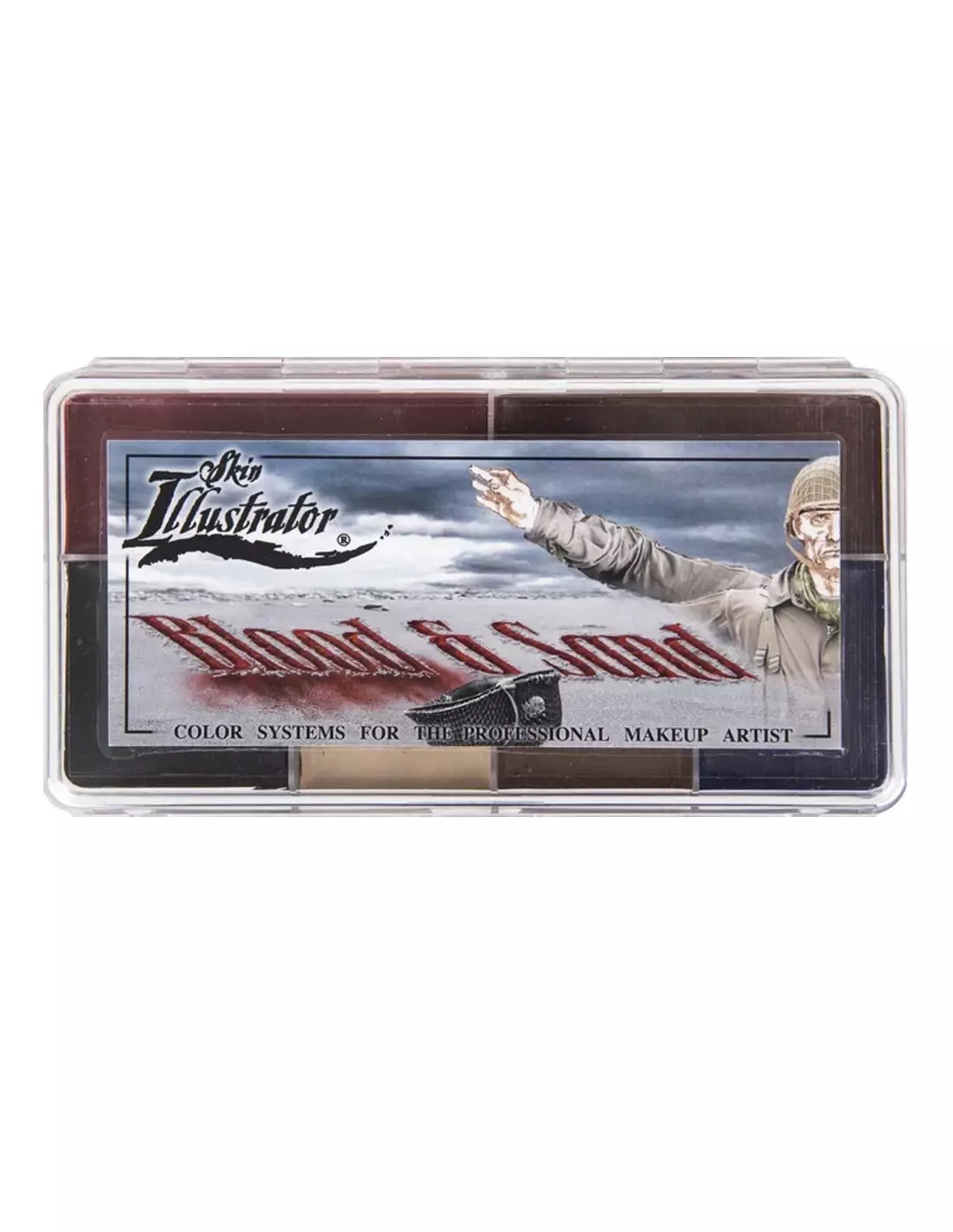
Skin Illustrator Blood and Sand
270015018
€95.00
114,95 € Tax incl.
114,95 € Tax incl.
Skin Illustrator Blood and Sand alcohol-activated makeup palette. 6 colours for blood and dirt effects on skin, silicone and latex.
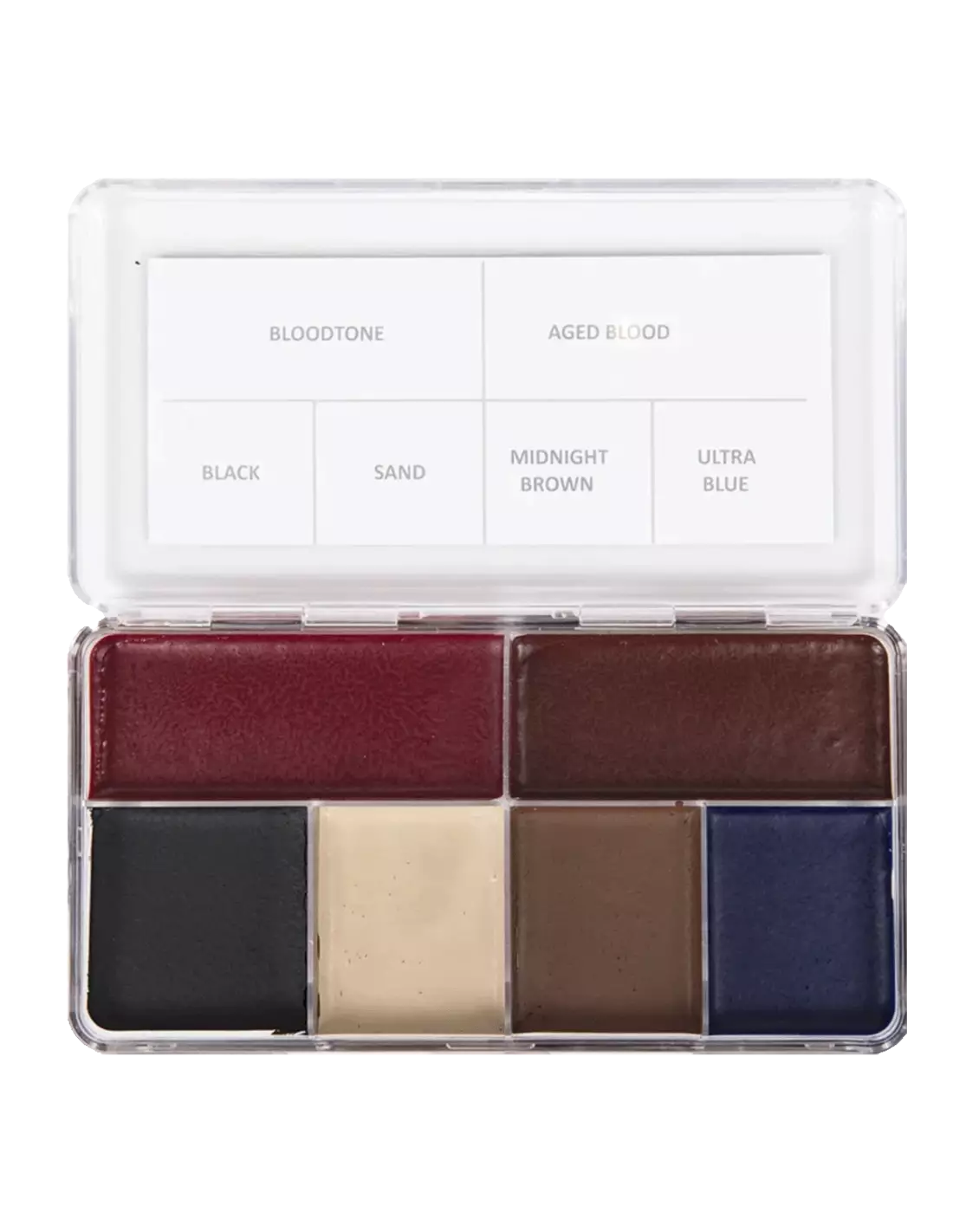
Skin Illustrator Blood and Sand is a high-coverage alcohol-activated makeup palette, specifically designed to recreate realistic blood and dirt combinations for special effects in film, television and theatre. Its 6 colours —Blood Tone, Aged Blood, Black, Sand, Midnight-Brown and Ultra Blue— deliver exceptional durability and staying power on skin, silicone and latex.
Technical specifications
| Product type | Alcohol-activated makeup palette |
|---|---|
| Number of colours | 6 (Blood Tone, Aged Blood, Black, Sand, Midnight-Brown, Ultra Blue) |
| Main colours | Blood Tone and Aged Blood |
| Activator | isopropyl alcohol 99% (IPA), Skin Illustrator Activator or Slow Activator |
| Compatible surfaces | Skin, silicone, latex |
| Removal | Telesis Super Solv or compatible solvent |
What it's used for
This palette is designed for special effects makeup artists and FX artists who need to recreate action, combat, war, accident or any scene combining bleeding wounds with dirt and dust. The combination of aged reddish tones, blacks and earthy colours makes it a versatile tool for building high-impact looks on set and on stage.
- Fresh bleeding wounds and dried aged blood
- Dirt, dust and mud on skin and prosthetics
- War, battle and combat effects
- Bruises and contusions with dark tones
- Direct painting on silicone prosthetics or latex pieces
- Characterisation of survivors, zombies or battered characters
- Film, television, theatre and special effects photography
How to use it
- Prepare the surface: make sure the skin is clean and grease-free, or that the silicone or latex prosthetic is dry and free of any release agent residue.
- Activate the colour: load a brush or sponge with 99% isopropyl alcohol activator or with the specific Skin Illustrator activator (Activator or Slow Activator). Run the damp brush over the colour in the palette.
- Apply in thin layers: work the colour in thin, overlapping layers to build depth and realism. Do not apply a thick coat all at once.
- Combine colours: mix Blood Tone with Aged Blood to simulate blood at different stages of coagulation. Add Sand or Midnight-Brown to incorporate dirt and dust.
- Blend and texture: use a dry sponge or fan brush to blend edges and create natural transitions.
- Allow to dry: the colour sets as the alcohol evaporates. Do not touch the area until completely dry.
- Remove the makeup: use Telesis Super Solv or a compatible remover to clean the area without damaging the skin or prosthetic.
Important: Always activate the colours with 99% isopropyl alcohol (IPA) or with the specific Skin Illustrator activator. Do not use 70° alcohol, water, acetone or MEK: these solvents do not correctly activate the formula and can ruin the result. If working on silicone, verify that the piece is fully cured and clean before painting.
Usage tips
Layers and colour depth
The secret to a convincing blood effect lies in layering. Start with Aged Blood as a dark base and add Blood Tone at the points of greatest intensity. Finish with a touch of Ultra Blue in the shadow areas to add depth and coolness to the overall look. Thin layers dry in seconds, allowing you to build the effect with precision and without waiting.
Working on silicone and latex prosthetics
Skin Illustrator Blood and Sand adheres perfectly to silicone and latex pieces already applied to the actor. If the prosthetic has been previously painted with another palette from the same range —such as the Skin Illustrator FX Palette— you can apply Blood and Sand colours on top without any issue, as the alcohol base is fully compatible. Avoid applying over oily surfaces or surfaces with adhesive residue that has not been properly cleaned.
Slow Activator for longer working time
If you need more time to blend or work over large areas, use the Slow Activator instead of standard IPA. This activator slows down alcohol evaporation and allows you to create smoother transitions between colours. It is especially useful when combining Blood and Sand with other palettes such as the Skin Illustrator Complexion Palette to integrate healthy skin with damaged areas.
Frequently asked questions
What activates these colours?
Skin Illustrator Blood and Sand colours are activated with 99% isopropyl alcohol (IPA), with the Skin Illustrator Activator or with the Skin Illustrator Slow Activator. Never use 70° alcohol, water, acetone or MEK, as they do not activate the formula and can deteriorate the finish.
Can it be used directly on the actor's skin?
Yes. Skin Illustrator Blood and Sand is formulated for direct use on skin. It is a professional line widely used in film and television. As with any professional cosmetic product, a sensitivity test is recommended before use on set.
Does it work on silicone and latex prosthetics?
Yes. This palette is compatible with silicone and latex surfaces, making it ideal for painting directly onto already-applied prosthetics. Make sure the surface is clean and free of grease or release agent residue before applying colour.
How is alcohol makeup removed?
Skin Illustrator makeup is removed with Telesis Super Solv or a professional remover compatible with alcohol makeup. Apply the remover with a gauze pad or cotton, leave it to act for a few seconds and remove gently. Avoid rubbing dry to prevent skin irritation.
How long does the makeup last once applied?
The Skin Illustrator formula offers very high durability and staying power once the alcohol has evaporated. The makeup holds up well against sweat and movement, making it suitable for long shooting days. Excessive heat or contact with oils may require touch-ups.
Can it be mixed with other palettes in the same range?
Yes. All Skin Illustrator palettes are compatible with each other as they share the same alcohol base. You can combine Blood and Sand with the FX Palette for more complex wound effects, or with the Complexion Palette to blend damaged areas with the actor's healthy skin.
What brushes or tools are most suitable?
For detailed applications (veins, cuts, clots) use fine synthetic-hair brushes. For large areas or gradients, use latex sponges or makeup sponges. A fan brush is very useful for blending and creating dust or dirt effects with the sand and brown tones of the palette.
Is there a difference between Blood Tone and Aged Blood?
Yes. Blood Tone is a vivid red that simulates fresh, bright blood. Aged Blood is a darker, more muted red that mimics coagulated or dried blood. Used together they allow you to create wound effects at different stages of evolution, adding much more realism to the final result.
No reviews
Tap to zoom