Shopping Cart



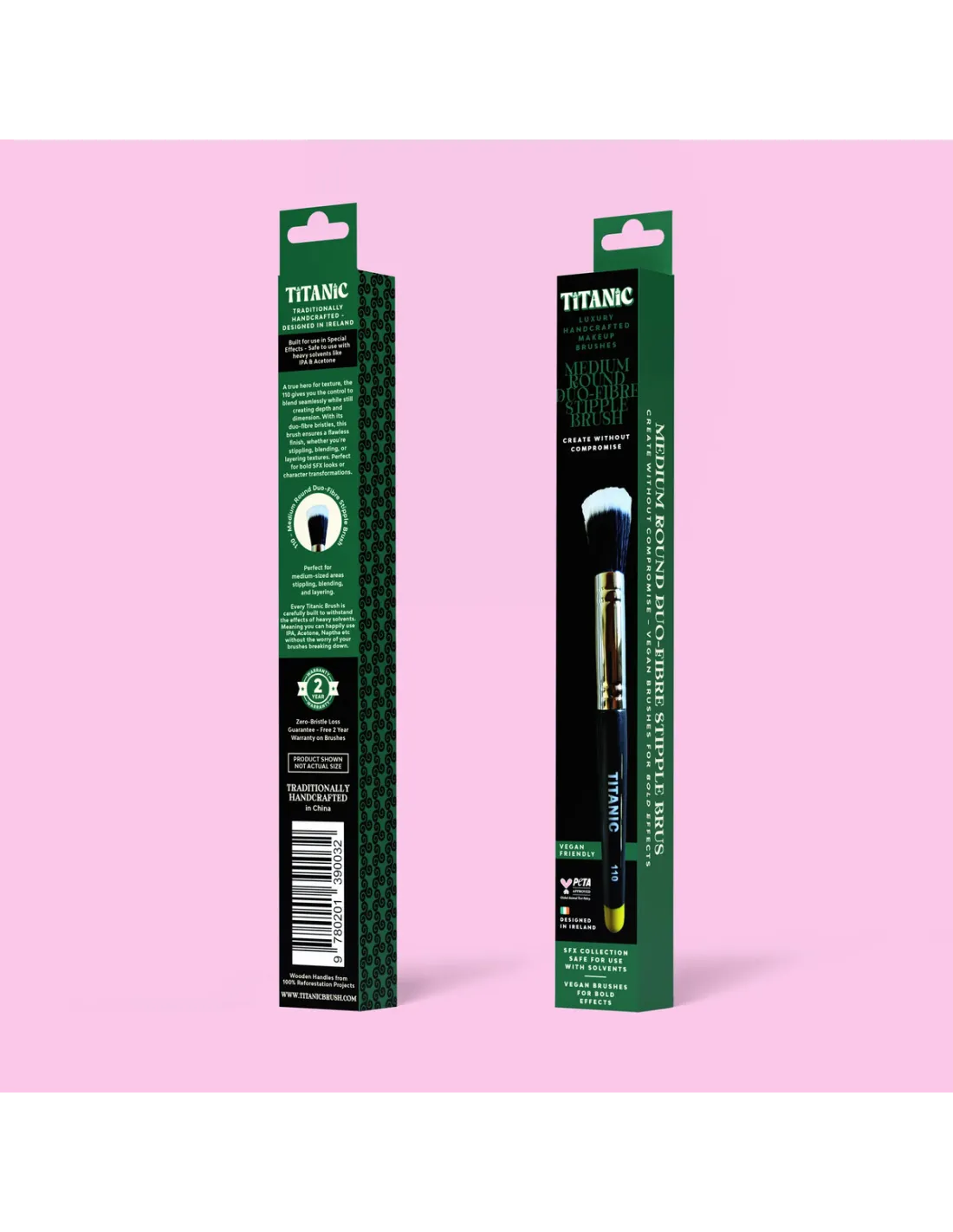
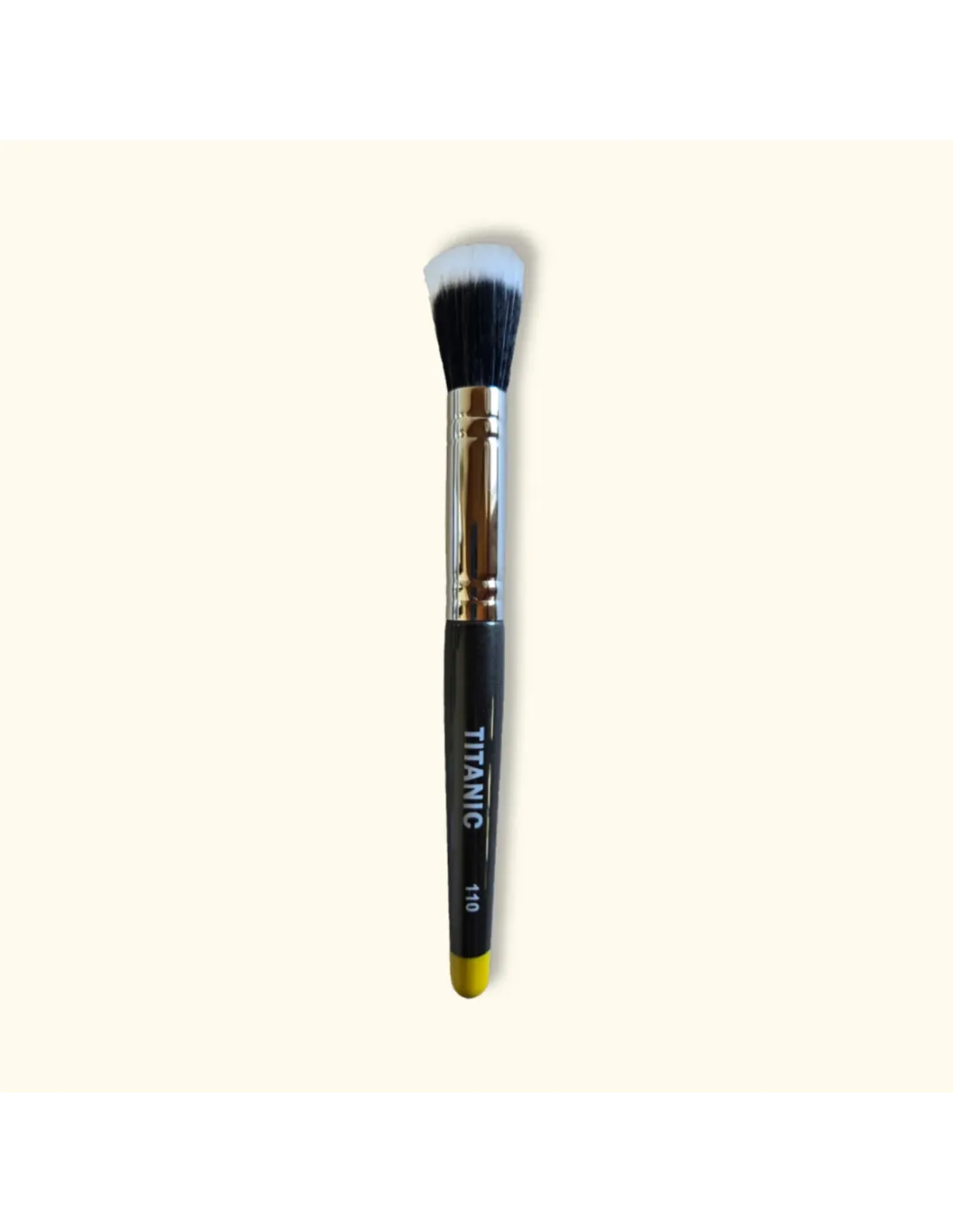
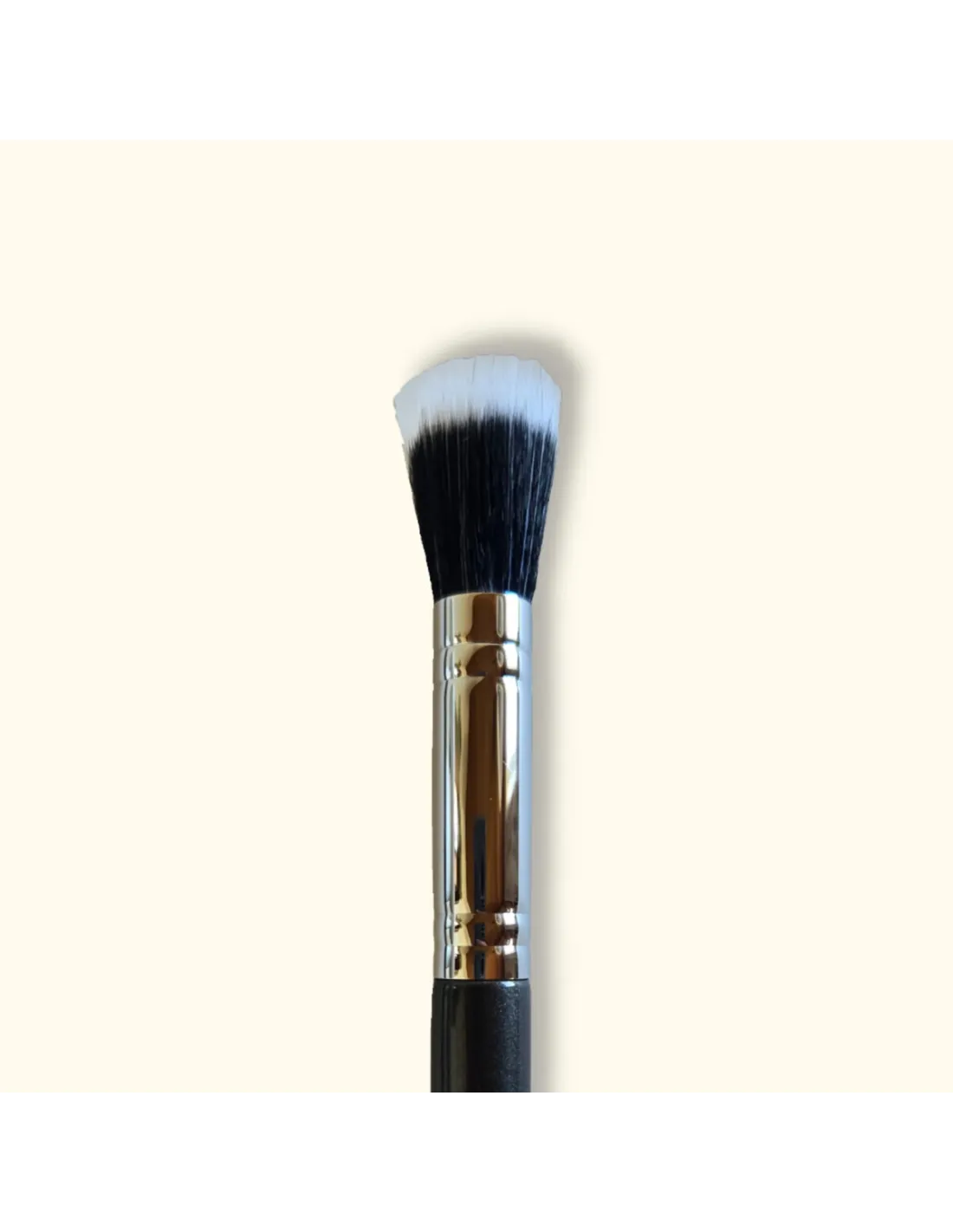
TITANIC PRO-FX BRUSH 110 -Long circular stipple-
615010000
Temporarily out of stock
€16.00
19,36 € Tax incl.
19,36 € Tax incl.
Long circular stipple brush for professional FX makeup. Solvent-resistant synthetic vegan bristles, sustainable handle.
The Titanic Pro-FX Brush 110 is a long-tip circular stipple brush designed specifically for special effects makeup and prosthetics. Its dual-fibre synthetic vegan bristles withstand contact with solvents and FX makeup products, while the ferrule adhesive ensures the bristles do not loosen during work. If you are looking for a brush that delivers realistic textures and holds up to the pace of a professional workshop, this is your tool.
Technical specifications
| Feature | Detail |
|---|---|
| Reference | Titanic Pro-FX Brush 110 |
| Tip type | Long circular stipple |
| Fibre | Dual-fibre synthetic vegan bristles |
| Resistance | Solvent-resistant |
| Ferrule | Solvent-resistant adhesive |
| Materials | Ethically sustainable materials |
| Main use | FX makeup, prosthetics application and painting |
What it is used for
The Brush 110 is designed to create stipple textures — that is, spattering and dotting — on skin, silicone prosthetics, latex and foam latex. The long circular tip allows you to work with a greater volume of product in each application, making it ideal for covering large areas with organic textures.
- Stippling and colour dotting on silicone prosthetics to create realistic skin textures
- Application of intrinsic and extrinsic silicone paints
- Creating pore, capillary and skin blemish effects
- Painting wounds, bruises and gore effects in FX makeup
- Application of pigments on foam latex and gelatine prosthetics
- Texturing in theatrical and film makeup
- Removal and manipulation of fine prosthetic edges using cleaning products
How to use it
- Clean the brush before first use by gently passing it over a dry cloth to remove any factory residue.
- Load the tip with a small amount of paint or pigment mixed with the appropriate medium (alcohol, silicone or acrylic base depending on the product you are using).
- Remove excess product on paper or a cloth to control the density of the stipple.
- Apply the brush to the surface with a vertical pressing motion — not a brushstroke — to generate the characteristic dotting or spattering effect.
- Repeat the application in thin layers, allowing each layer to dry or set before continuing, to progressively build up colour depth and texture.
- For gradient effects, reduce the load on the brush and work from the centre of the area outwards towards the edges.
- When finished, clean the brush immediately with the appropriate solvent for the product used, rinse with warm water and mild soap, and leave to dry horizontally or with the tip facing down.
Usage tips
Texture control
The length of the Brush 110's circular tip allows you to vary the texture simply by changing pressure and angle. With more pressure you get a dense, marked stipple; with minimal pressure and the brush almost perpendicular to the surface you achieve a subtle effect, ideal for simulating fine pores. Practise on a silicone template or paper before working directly on the prosthetic.
Compatibility with FX painting products
The Brush 110's synthetic bristles are compatible with alcohol-based paints, intrinsic and extrinsic silicone paints, and diluted acrylic pigments. Avoid leaving the brush soaking for extended periods in aggressive solvents: although the ferrule resists the solvents commonly used in FX makeup, prolonged soaking can deteriorate the handle over time. Always clean immediately after each session.
Maintenance and service life
A well-maintained brush lasts much longer and retains the shape of its tip, which is critical for stippling. After cleaning with solvent, use brush soap or neutral soap to remove any remaining pigment at the base of the bristles. Reshape the tip with your fingers while still damp and leave to dry horizontally. Store brushes in a case or with a tip protector to prevent them from losing their shape.
Frequently asked questions
What is the difference between a circular stipple brush and a flat brush for FX effects?
A circular stipple brush like the Brush 110 has its bristles grouped into a round tip that, when pressed onto the surface, generates an irregular and organic dot pattern, very similar to the real texture of skin. A flat brush applies product in stripes or gradients, but does not generate that characteristic spattering effect. For simulating pores, capillaries or skin blemishes, the circular stipple is the right tool.
Can I use this brush with alcohol-based paints?
Yes. The Brush 110's synthetic vegan bristles are resistant to the solvents commonly used in FX makeup, including alcohol-activated paints. It is important to clean the brush immediately after each use to extend its service life.
Is it suitable for use with silicone paints?
Yes. The Brush 110 works well with both intrinsic silicone paints (mixed during casting) and extrinsic paints applied onto the cured surface of the prosthetic. The synthetic fibre does not absorb silicone pigment the way natural bristles would, which makes cleaning easier and keeps the colour precise in each application.
How often should I replace the brush?
With proper maintenance — immediate cleaning, horizontal drying and correct storage — a professional-quality brush like the Brush 110 can last for years. The sign that it is time to replace it is when the bristles lose their circular shape and no longer recover the tip, which directly affects stipple precision.
Is it necessary to use a specific medium for stippling?
It depends on the type of paint you are using. Alcohol-based paints do not require an additional medium; silicone paints do need their specific thinner to adjust viscosity. In any case, it is essential to remove excess product from the brush before applying it: too much load saturates the texture and loses the stipple effect.
Can I use this brush to remove prosthetics?
Yes. The Brush 110 is also suitable for applying prosthetic solvent to the edges to facilitate controlled removal without damaging the skin or the piece. The long circular tip allows precise work in thin-edge areas.
Are synthetic vegan bristles worse than natural ones for FX makeup?
No. For FX makeup, synthetic bristles offer clear advantages over natural ones: they do not absorb product excessively, are easier to clean with solvents, do not deteriorate with the use of chemical products, and maintain their shape more consistently. The Brush 110 is designed specifically for the demands of special effects makeup, not for conventional fine art.
What other brushes from the same range complement the Brush 110?
For a complete FX makeup workflow, the Brush 110 is complemented by the Titanic Pro-FX Brush 101 (fine liner) for precise details and edges, and the Titanic Pro-FX Brush 102 (angle liner) for angled lines and contours. Each brush in the range is optimised for a specific technique.
No reviews
Tap to zoom