Shopping Cart



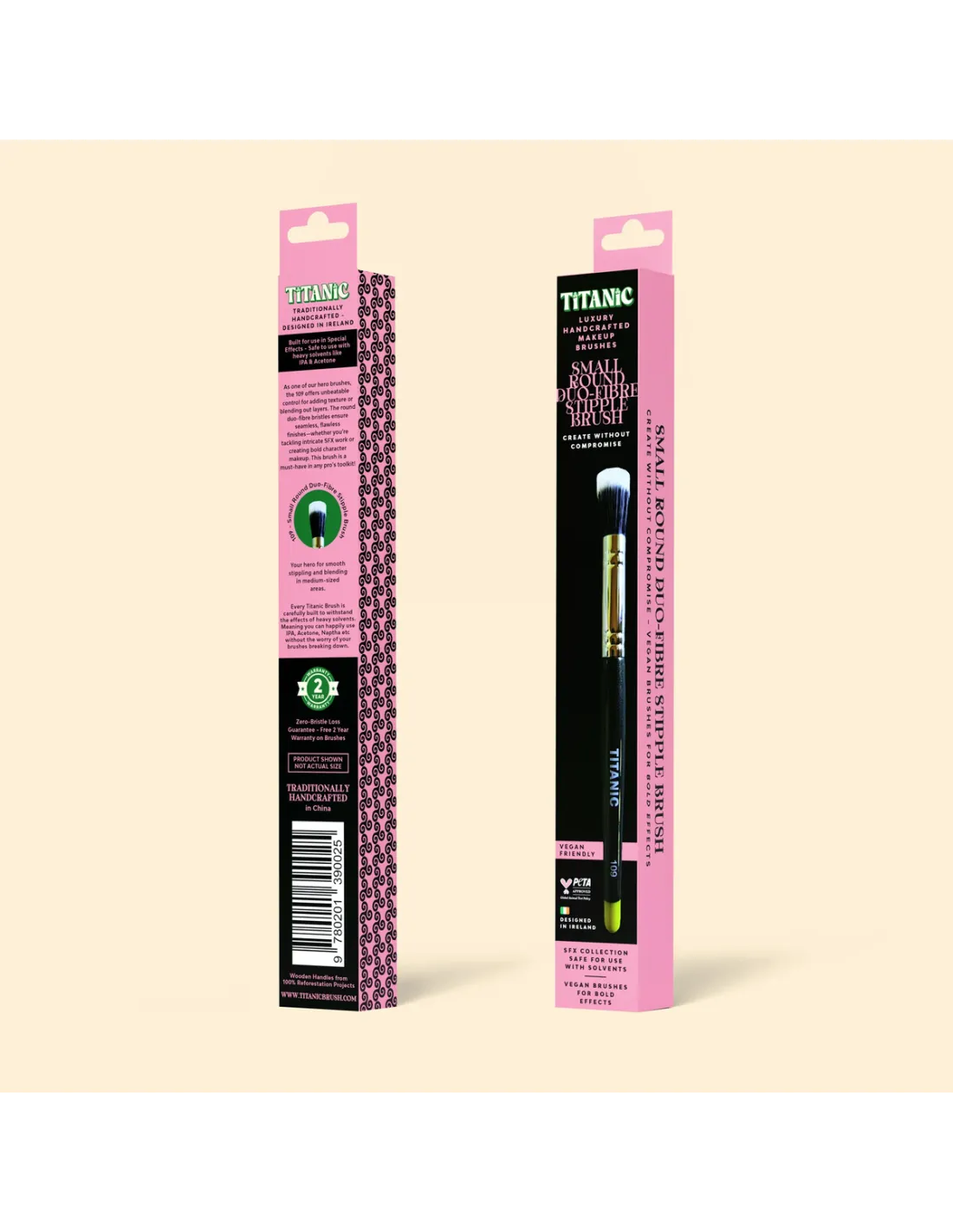
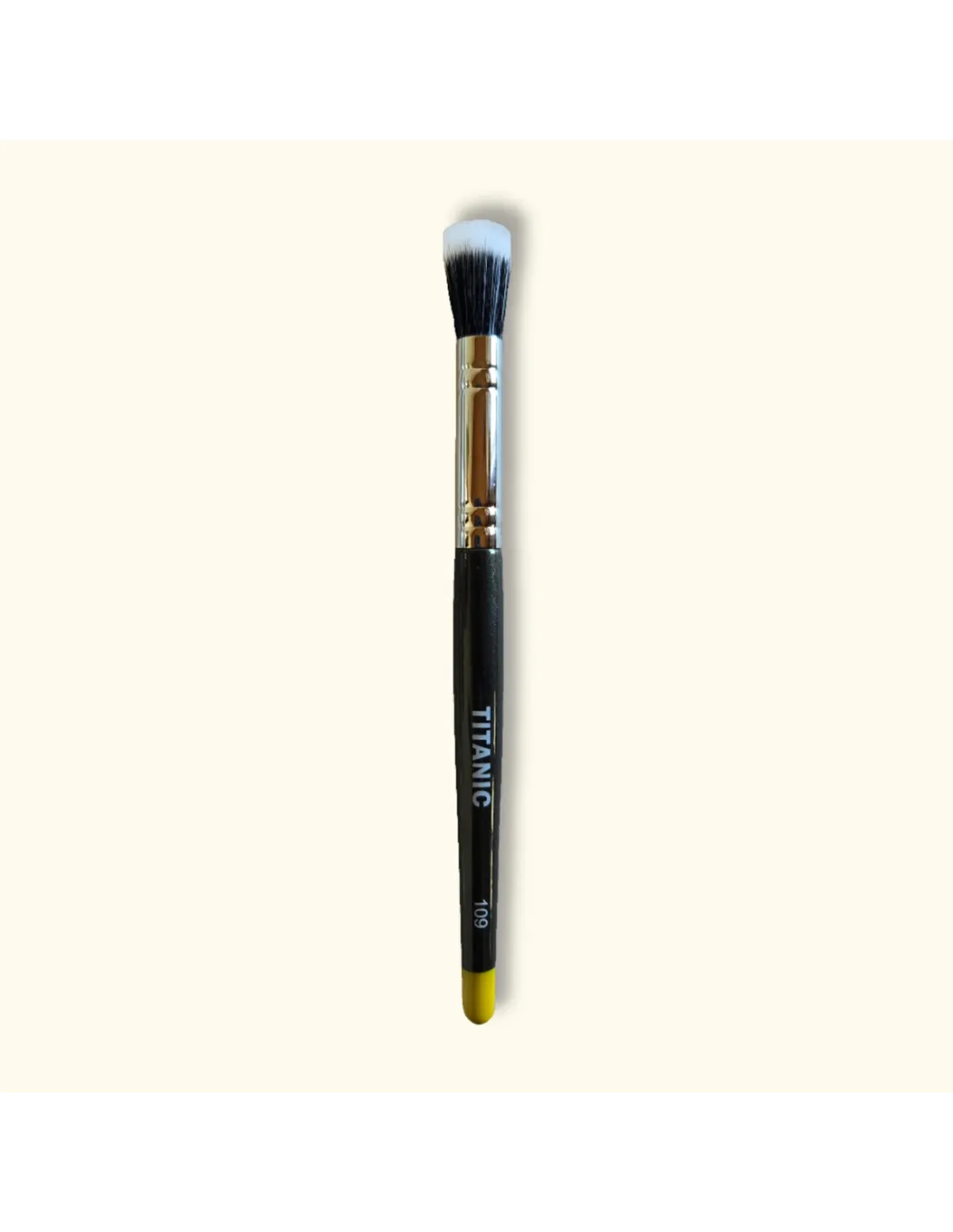
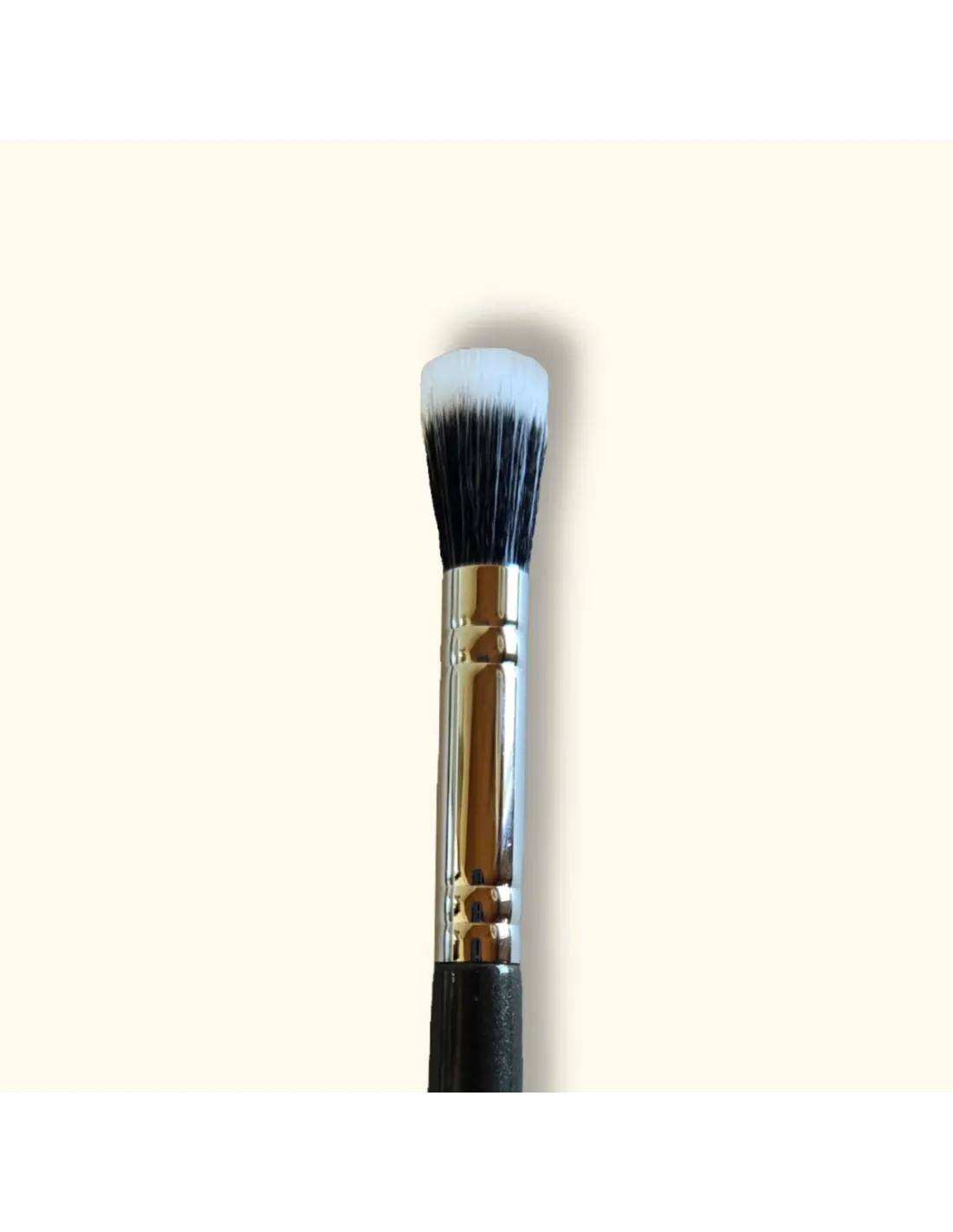
TITANIC PRO-FX BRUSH 109 -Medium rounded stipple-
615009000
€16.00
19,36 € Tax incl.
19,36 € Tax incl.
Medium rounded stipple brush for FX makeup. Solvent-resistant synthetic vegan bristles, sustainable handle.
The Titanic Pro-FX Brush 109 is a medium-sized rounded stipple brush with dual fibre, designed specifically for special effects makeup techniques. Its synthetic vegan bristles withstand contact with solvents and prosthetic adhesives, and the hair-to-handle bonding is reinforced to endure the most demanding studio and set work.
Technical specifications
| Reference | Pro-FX Brush 109 |
|---|---|
| Tip type | Medium rounded (stipple) |
| Fibre type | Dual synthetic vegan fibre |
| Solvent resistance | Yes |
| Bonding adhesive | Solvent-resistant |
| Handle materials | Sustainable / ethical |
| Range | Titanic FX Pro-FX Brush |
What it is used for
The Brush 109 is designed for the stipple technique, which consists of applying short taps with the brush tip to create irregular textures, simulate pores, veins, bruises or five o'clock shadow. Its medium rounded tip allows working on both broad areas and intermediate-sized details on real skin or on silicone and latex prosthetics.
- Stippling pigments and paints on skin for bruise, burn or ageing effects
- Texturing silicone prosthetics before application
- Applying and blending prosthetic adhesives on edges and joining areas
- Integrating prosthetic edges with skin using the stipple technique
- Painting colour layers on silicone or foam prosthetics
- Removing excess adhesive or sealants with solvent
- Applying liquid latex in layers for worn skin effects
How to use it
- Prepare the working surface: clean the skin or prosthetic and make sure it is dry before applying any product.
- Load the brush with a moderate amount of product (paint, adhesive or latex). Remove the excess on the rim of the container.
- Apply using short, perpendicular taps to the surface, without dragging the brush. The dual fibre creates a naturally irregular texture.
- Layer applications if you need greater intensity, allowing partial drying or curing between coats.
- For prosthetic edges, work with an almost dry brush using stippling motions to blend the edge into the skin.
- Clean the brush immediately after use with the appropriate solvent for the product applied (water for acrylics, specific solvent for adhesives or alcohol-based paints).
- Leave to dry horizontally or with the bristles facing downwards to preserve the tip shape.
Usage tips
Control brush loading
Stippling works best with a small amount of product. An overloaded brush creates blotches instead of texture. Always test the stippling on the back of your hand or a cloth before applying to the final piece. The dual fibre of the Brush 109 retains product more evenly than a conventional brush, so the load can be less than you are used to.
Cleaning and maintenance
The synthetic bristles withstand solvents, but immediate cleaning extends the life of the brush. Avoid leaving product dried between the fibres: if you work with neoprene adhesives or alcohol-based paints, clean with the corresponding solvent right after the session. Do not boil or submerge the handle in water for extended periods to preserve the integrity of the bonding adhesive.
Combining with other brushes in the range
The Brush 109 works especially well combined with fine-line brushes for detail finishing. Use the Titanic Pro-FX Brush 101 (fine liner) for veins, seams or expression lines over areas you have previously textured with the 109. For angles and hard-to-reach areas, the Brush 102 (angle liner) perfectly complements the work.
Frequently asked questions
What is the difference between a stipple brush and a conventional flat brush?
A flat brush is used by sliding the bristles to cover surfaces. A stipple brush like the Brush 109 is applied with perpendicular taps to the surface, generating a porous, irregular texture that mimics skin or simulates ageing, bruising and burn effects. The dual fibre of the 109 enhances that effect by leaving non-uniform marks with each tap.
Can this type of brush be used with platinum silicone?
Yes, as long as the brush is clean and free of contaminants. Addition-cure (platinum) silicones are sensitive to inhibition from contact with sulphur, tin or other agents. If the brush has been used with sulphur-based clays, cyanoacrylate adhesives or latex without thorough cleaning, it may become contaminated and transfer that inhibition to the silicone. Always clean thoroughly before switching materials.
Can these brushes be used with liquid latex?
Yes. The synthetic vegan bristles of the Brush 109 are compatible with liquid latex. It is important to clean the brush before the latex dries completely in the fibres, as once vulcanised it is very difficult to remove without damaging the bristles.
Which solvents can be used to clean these brushes?
The synthetic bristles and the bonding adhesive of the Brush 109 are formulated to resist common FX solvents: isopropyl alcohol, diluted acetone and neoprene adhesive solvents. Always check the product data sheet for the product you are using to choose the appropriate solvent. Avoid submerging the handle for extended periods.
How long does this type of brush last with professional use?
It depends on maintenance. With proper cleaning after each use, Titanic FX Pro-Brush brushes are designed to withstand intensive professional use. The critical point is usually the hair-to-ferrule bonding: the reinforced adhesive of the Brush 109 is specifically chosen to resist the solvent-cleaning cycles typical of FX work.
Is the medium size suitable for working on the full face?
The medium size of the Brush 109 is versatile: it covers areas such as cheeks, forehead and neck efficiently, and also allows working on intermediate-sized areas such as eyelids or lips. For very fine details (corners of the mouth, expression lines) it is best combined with a fine-line brush such as the Brush 101.
Are these brushes suitable for use with prosthetic adhesives?
Yes. Both applying and removing prosthetic adhesives is one of the main uses of the Titanic FX Pro-Brush range. The synthetic bristles are not damaged by neoprene or acrylic-based adhesives commonly used in prosthetics, and the ferrule bonding adhesive withstands the necessary cleaning cycles.
What advantage do synthetic vegan bristles have over natural ones in FX?
Natural bristles absorb products excessively, deteriorate with solvents and can react with some adhesives and alcohol-based paints. The synthetic vegan bristles of the Brush 109 are non-porous, easy to clean, resistant to common FX solvents and maintain their shape more consistently between sessions.
No reviews
Tap to zoom