Shopping Cart



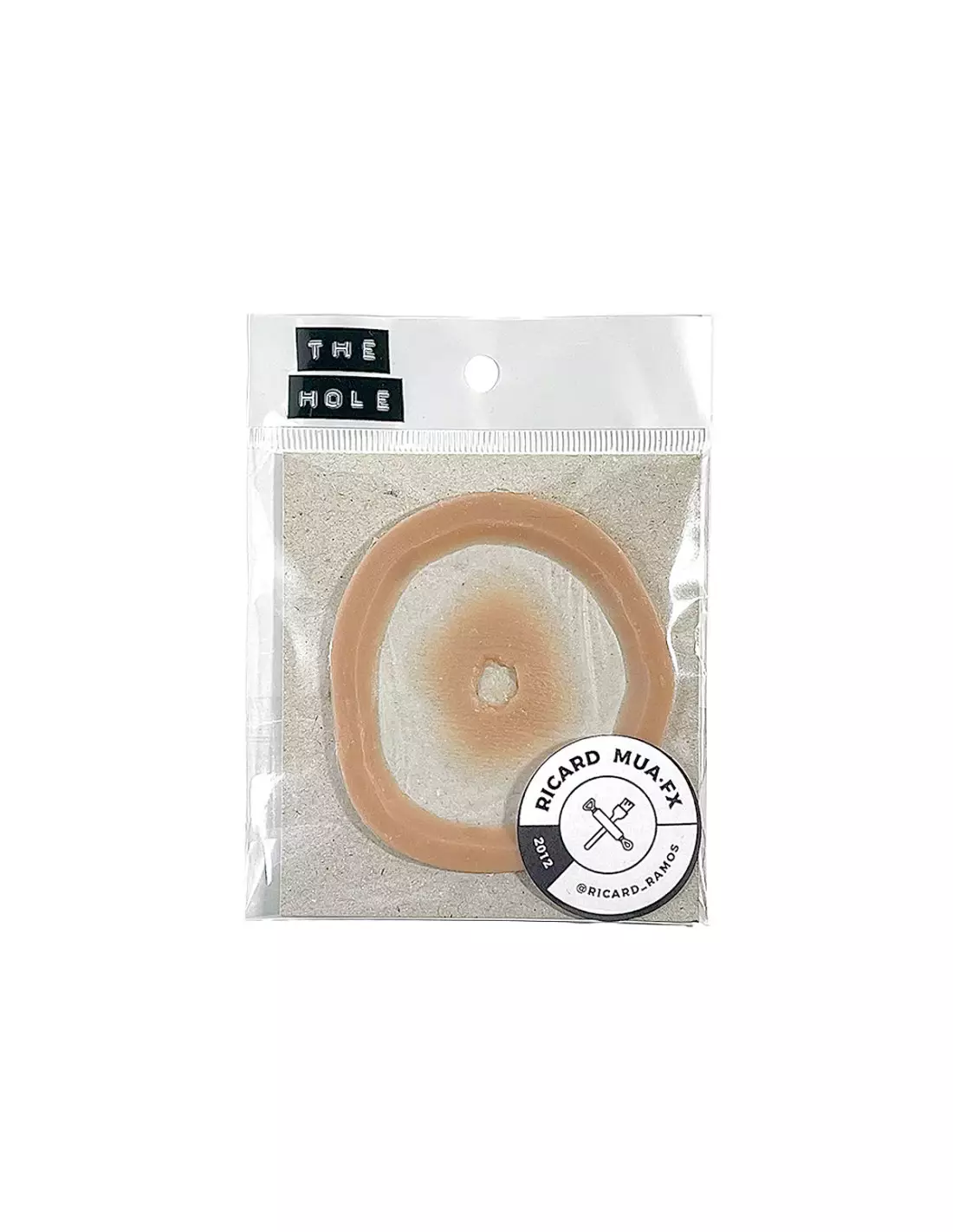
Prosthesis The Hole
221000500
€18.00
21,78 € Tax incl.
21,78 € Tax incl.
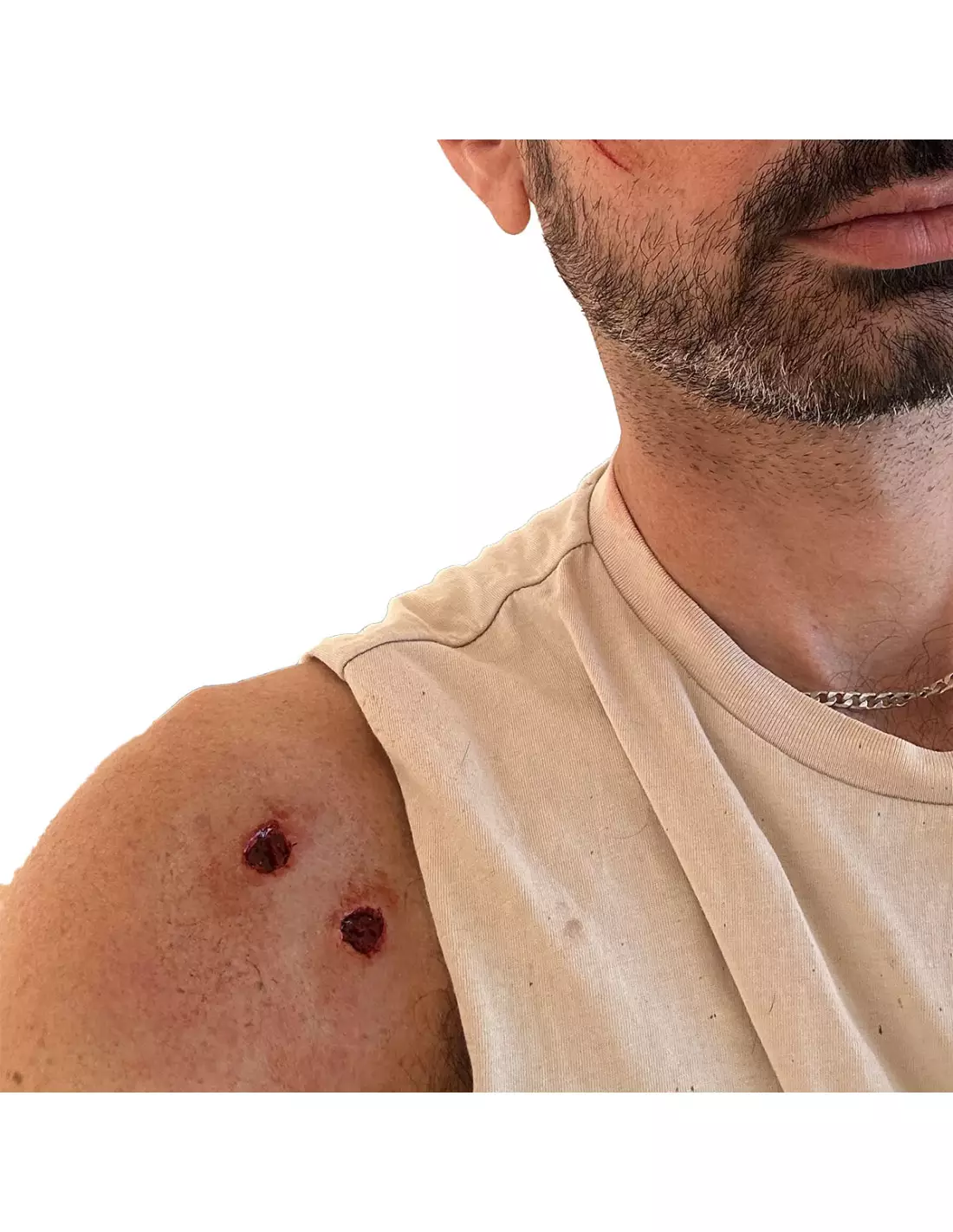
The Hole platinum silicone prosthetic for simulating bullet entry wounds or holes on face and body. Ready to apply and customise with SFX paints.
The Hole is a platinum silicone prosthetic designed for professional special effects makeup. It simulates a bullet entry wound or open hole in the skin with hard-to-match anatomical realism, and can be applied to both face and body. If you're looking for an immediate impact effect with production-quality finish, this prosthetic is the straightforward choice.
Technical specifications
| Feature | Detail |
|---|---|
| Material | Platinum silicone (addition cure) |
| Edge finish | Bald cap dissolved in acetone for ultra-thin transition |
| Application areas | Face and body |
| Intended use | Special effects makeup (SFX), film, theatre, photography |
| Delivery condition | Finished prosthetic, ready to apply and paint |
What it's used for
The Hole is designed for professional and advanced hobbyist special effects makeup artists who need a hole or impact-in-skin effect quickly, convincingly and reusably. Its most common applications are:
- Simulating bullet entry wounds in film, TV series and music video shoots
- Piercing or impact effects for dark fashion, horror or editorial photography
- Zombie, monster or creature characterisations with open wounds
- Theatre productions and live shows requiring wounds visible from the audience
- Practice and training at SFX makeup schools
- Supporting simulated objects (nails, fragments, pieces) inserted into the prosthetic to create the visual trick
How to use it
- Prepare the skin: Clean and degrease the area where you will apply the prosthetic. The skin must be dry and free of creams or oils.
- Dry placement test: Place the prosthetic dry to check positioning and mentally mark the edges.
- Apply the adhesive: Use a medical-grade adhesive suitable for silicone prosthetics (Pros-Aide, silicone skin adhesive or other compatible product) on the back of the prosthetic and allow it to tack for a few seconds.
- Stick and press: Place the prosthetic on the skin and press gently from the centre outwards to the edges to avoid air bubbles.
- Blend the edges: The bald cap edges can be dissolved with a small amount of acetone applied with a fine brush to achieve an invisible transition with the skin.
- Paint and characterise: Use alcohol paints or silicone-specific paints to match the skin tone and add blood, dirt or any other effect. You can use PTM Clear or PTM Light Flesh to add a base flesh tone to the prosthetic before further detailing.
- Remove carefully: To remove it, gently lift the edges and apply release agent or baby oil to detach the adhesive without damaging the silicone or the skin.
Warning — Platinum silicone inhibition: Although The Hole is a finished prosthetic, if your workflow involves using platinum silicone to create similar prosthetics or for repairs, bear in mind that this type of silicone can have its cure inhibited upon contact with: sulphur-based clays, latex, cyanoacrylate adhesives, latex gloves, certain metals and tin residues. Always perform a compatibility test before using any new material in contact with uncured platinum silicone.
Usage tips
Invisible edges: the key to realism
The bald cap edge is the element that makes the difference between a prosthetic that looks "stuck on" and one that is truly integrated into the skin. Apply the acetone with a fine-tipped brush using short strokes, working from the edge towards the skin — never towards the interior of the prosthetic. The amount must be minimal: just enough to dissolve the material without softening the coloured area of the prosthetic.
Painting and skin finish
For the effect to be convincing on camera or on stage, the key is matching the base tone before adding blood or dirt. Work in thin layers using alcohol paints or acrylics formulated for skin. If you need to transfer pore or vein textures, the Tattoo and PTM Transfer paper can help you add detail to areas adjacent to the prosthetic.
Storage and reuse
Platinum silicone is durable when handled with care. Store the prosthetic in an airtight bag, away from direct light and heat. Clean off any adhesive residue with mineral oil or a mild solvent before storing. With proper maintenance, a single prosthetic can be used across multiple productions.
Frequently asked questions
What adhesive should be used to apply a silicone prosthetic to the skin?
Platinum silicone prosthetics like The Hole require specific adhesives compatible with silicone, such as medical-grade acrylic adhesives (Pros-Aide type or equivalents) or adhesives formulated for silicone. Conventional adhesives do not guarantee adhesion or dermal safety. Apply the adhesive to the back of the prosthetic, allow it to tack, and press onto clean skin.
Can a silicone prosthetic be painted directly?
Yes, but compatible paints must be used: alcohol-activated paints, silicone-suspended pigments or acrylics formulated for synthetic skin. Conventional water-based paints do not adhere well to silicone. For a quick base tone, PTM Light Flesh or PTM Clear are direct options from the Feroca catalogue.
How long will a prosthetic stay adhered during a production?
With a properly applied medical-grade adhesive and correctly prepared skin (clean, dry and degreased), a silicone prosthetic can remain fixed throughout a full shooting day. Sweat and skin oils are the main enemies of adhesion, so in hot conditions or during high physical activity it is worth checking and reinforcing the edges during breaks.
Is it safe to use a silicone prosthetic on sensitive skin?
Cured platinum silicone is biocompatible and does not usually cause allergic reactions. The greater risk generally comes from the adhesive used, not the prosthetic itself. Always perform a patch test with the adhesive on a small area of skin 24 hours before use, especially if the actor or model has atopic or sensitive skin.
Can the prosthetic be reused after being applied?
Yes. Platinum silicone is a resilient material. To reuse The Hole, carefully remove adhesive residue from the back using mineral oil or a mild solvent, clean the surface and store it correctly. Avoid folding it excessively during storage to prevent distorting the thin edges.
Can the prosthetic be modified to add simulated objects inside it?
Yes, The Hole is specifically designed for this purpose. You can insert simulated projectile fragments, resin crystals, foam nails or other scenic elements into the hole. To fix them temporarily without damaging the prosthetic, use makeup wax or temporary-tack silicone. For a permanent effect on a single-use prosthetic, a small amount of silicone adhesive is sufficient.
What is the difference between a foam latex prosthetic and a platinum silicone one?
Platinum silicone offers greater translucency, movement and organic appearance than foam latex, resulting in greater realism on camera, especially in close-ups. Silicone is also hypoallergenic, more durable and accepts thin-layer painting better. Foam latex remains useful for very large prosthetic bodies due to its lighter weight, but for detail effects like The Hole, silicone is the professional standard choice.
Is a skin sealer needed before painting the applied prosthetic?
It depends on the type of paint you use. If working with alcohol paints, no prior sealer is needed. If using an airbrush with thinned acrylic paint, a very thin layer of silicone-compatible sealer can improve colour adhesion. At the end of the makeup, a matte finish sealer helps unify the sheen between the prosthetic and the surrounding skin.
No reviews
Tap to zoom