Shopping Cart


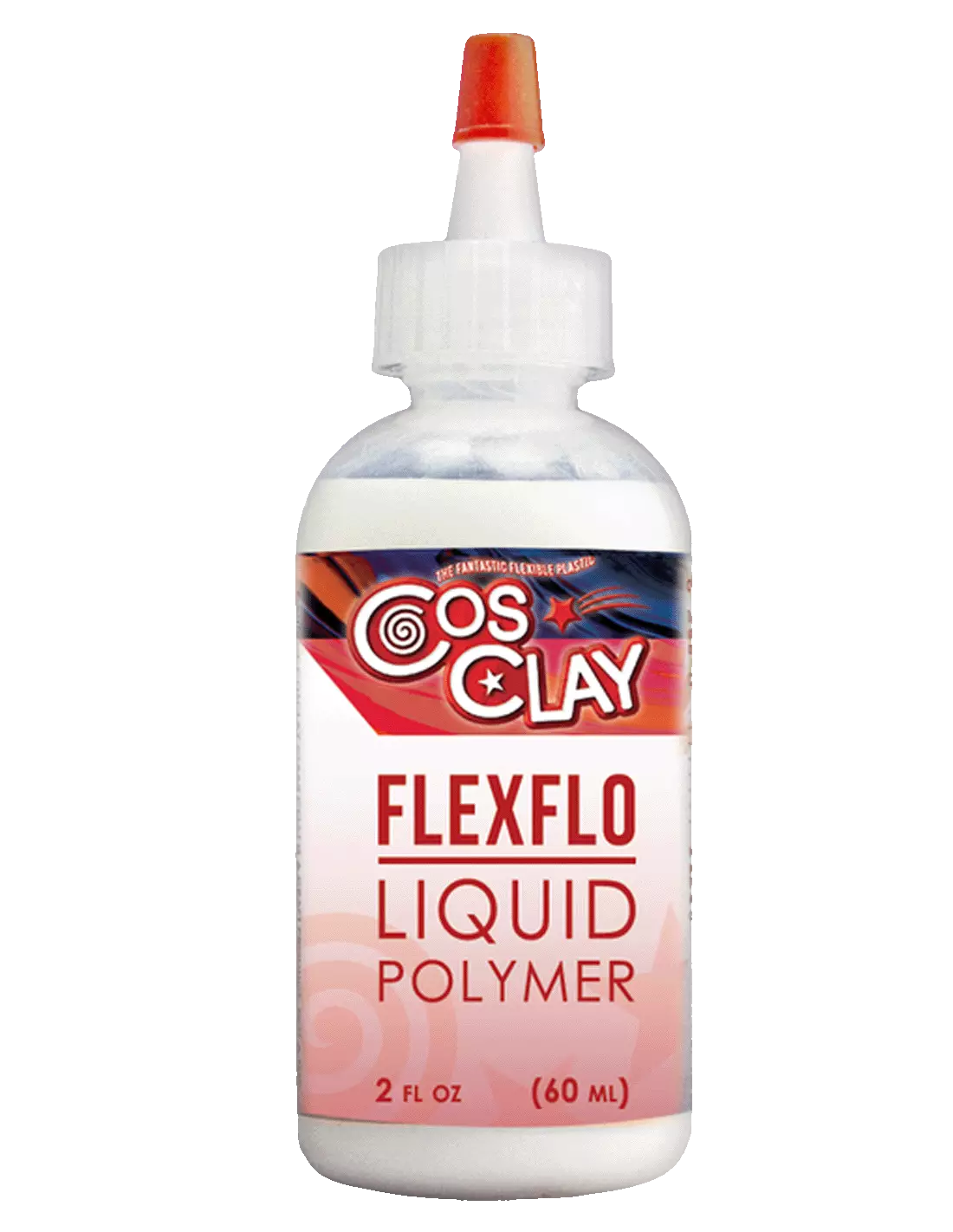
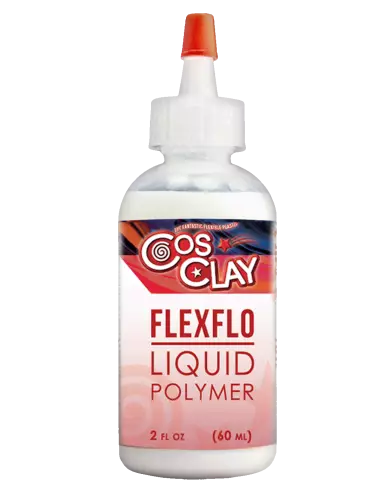
CosClay Liquids
204362000
€12.00
14,52 € Tax incl.
14,52 € Tax incl.
Flexible liquid polymer clay CosClay Liquids in 3 variants (FlexFlo, Stretch FX, Firm FX). Oven-cure. 60 ml bottles.
CosClay Liquids is the liquid version of the flexible polymer clay CosClay, available in three hardness variants to suit every technique and outcome. It cures in the oven just like solid clay, accepts pigmentation before curing, and can be used for mold casting, surface coating, detail layers, or as a painting medium. An essential tool for professional sculpture, special effects, and the production of flexible ornamental pieces.
Technical specifications
| Feature | FlexFlo | Stretch FX | Firm FX |
|---|---|---|---|
| State | Unpigmented liquid | Unpigmented liquid | Unpigmented liquid |
| Finish after curing | Semi-opaque | Translucent | Opaque |
| Flexibility after curing | Similar to cured CosClay | Very elastic (more flexible than cured CosClay) | Firmer than cured CosClay |
| Curing method | Oven | Oven | Oven |
| Size | 60 ml | 60 ml | 60 ml |
| Presentation | Individual or pack of all three variants | ||
| Pigmentation | Compatible with alcohol inks, mica powders, glitters, pastels and oil-based pigments | ||
| Compatibility | Mixable between CosClay Liquids variants. Do not mix with water-based clays | ||
What it's used for
All three variants share the same core applications, differing only in the final result in terms of rigidity and translucency. They are ideal for work requiring precise detail combined with flexibility in the finished piece:
- Mold casting to create high-definition flexible ornamental pieces
- Coating of sculptural surfaces to unify textures or add colour layers
- Detail enhancement on pieces already sculpted in solid polymer clay (CosClay Sculpt)
- Painting medium mixed with pigments to apply translucent layers or skin tones
- Repairs and joins between polymer clay pieces before curing
- Special effects: skins, membranes, flexible organic textures
- Filling silicone molds to obtain soft, detailed replicas
- Making cosplay accessories and props that require deformation or movement
How to use it
- Choose the right variant: FlexFlo for general use and standard casting, Stretch FX if you need maximum elasticity, Firm FX for pieces with greater structural rigidity.
- Pigment if needed: add alcohol inks, mica powders or oil-based pigments directly to the bottle and mix well before use. The proportion depends on the desired colour intensity.
- Apply or pour: for casting, pour into the mold (preferably silicone) and remove bubbles with a cocktail stick or by gently swirling. For surface finishes, apply with a brush, spatula or precision syringe.
- Degas if needed: for work requiring maximum definition, you can use a vacuum chamber before curing to eliminate micro-bubbles.
- Cure in the oven: follow the manufacturer's temperature and time instructions for polymer clay (typically between 110–130 °C depending on piece thickness). Do not exceed the recommended temperature.
- Demold and finish: once cured and cool, remove the piece from the mold. It can be sanded, painted with acrylics or compatible finishes, or combined with other polymer clay pieces.
Tips and tricks
Mixing variants to adjust hardness
All three CosClay Liquids variants are compatible with each other. If you need an intermediate rigidity between FlexFlo and Firm FX, mix them directly in the bottle or in an auxiliary container before applying. Always test the mix on a small amount before working with the full batch, as the exact ratio depends on the visual and tactile result you are looking for.
Pigmentation: how much is enough
Pigments and mica powders disperse well in the liquid base, but in excess they can alter the curing or the final flexibility. As a starting point, add a small amount (a spatula tip per 10–15 ml of product) and gradually increase until you reach the desired tone. Alcohol inks are particularly effective for achieving saturated, translucent colours in Stretch FX. Avoid water-based pigments: they can interfere with curing and the homogeneity of the mix.
Compatibility with solid polymer clays
CosClay Liquids adheres perfectly to uncured pieces of CosClay Sculpt and to similar solid polymer clays such as Super Sculpey or Super Sculpey Firm. Apply a thin layer over the uncured piece, cure both materials together, and you will get a solid bond. For already-cured pieces, adhesion is lower and may require light sanding of the surface beforehand.
Frequently asked questions
Can I use this material directly on an already-cured polymer clay piece?
Yes, but with some caveats. CosClay Liquids adheres better to uncured polymer clay. On already-cured surfaces, adhesion is lower; it is recommended to lightly sand the contact area before applying the liquid and re-cure in the oven to ensure the bond.
Can it be used in silicone molds without a release agent?
In general, CosClay Liquids does not adhere to cured silicone molds and can be demolded without a release agent. However, with highly detailed molds or those with undercuts, applying a thin layer of release agent makes extraction easier without damaging the piece.
At what temperature and for how long should it be baked?
CosClay Liquids follows the same curing guidelines as solid CosClay polymer clay: typically between 110 and 130 °C. Time depends on the thickness of the layer or piece. For thin layers (1–3 mm), 15–20 minutes is usually sufficient. For thicker castings, increase the time gradually. Never exceed the recommended temperature to avoid burning or discolouration.
Can I mix the three variants together?
Yes. FlexFlo, Stretch FX and Firm FX are fully compatible and can be mixed in any proportion to achieve intermediate hardnesses. Do not mix CosClay Liquids with water-based clays or other incompatible modelling materials, as this can alter the curing and mechanical properties of the result.
Is it suitable for creating skin-contact pieces (prosthetics, FX special effects)?
CosClay Liquids is a liquid polymer clay designed for sculpture, props and the production of ornamental pieces. It is not certified as a material for prolonged dermal contact. For FX prosthetics used directly on skin, it is recommended to work with skin-safe grade platinum silicones specifically formulated for that purpose.
Which pigments are compatible and which should I avoid?
Compatible pigments include alcohol inks, mica powders, decorative glitters, powder pastels and oil-based pigments. Avoid water-based pigments, liquid acrylic dyes and any additive that introduces moisture into the mix, as this can interfere with curing and cause inhomogeneities or bubbles.
Can I apply it with a brush or do I need special tools?
You can apply it with a synthetic bristle brush, silicone spatula, precision syringe, or simply by pouring it into the mold. For very thin, even layers, the brush is the most versatile option. For casting, pour slowly from one edge of the mold to minimise air incorporation.
Can a finished piece be re-cured if I need to add more material?
Yes. You can add additional layers of CosClay Liquids over already-cured pieces and re-bake. This allows you to build up details across multiple work sessions. Adhesion between cured layers is good, especially if the contact surface is clean and has been lightly sanded.
No reviews
Tap to zoom