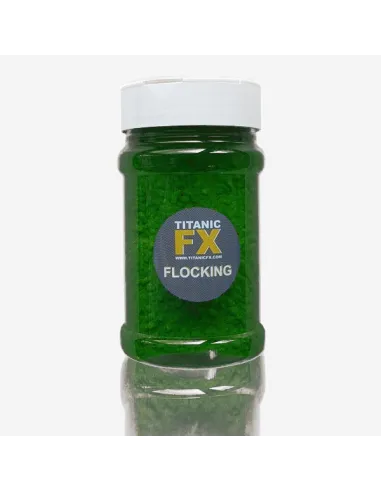
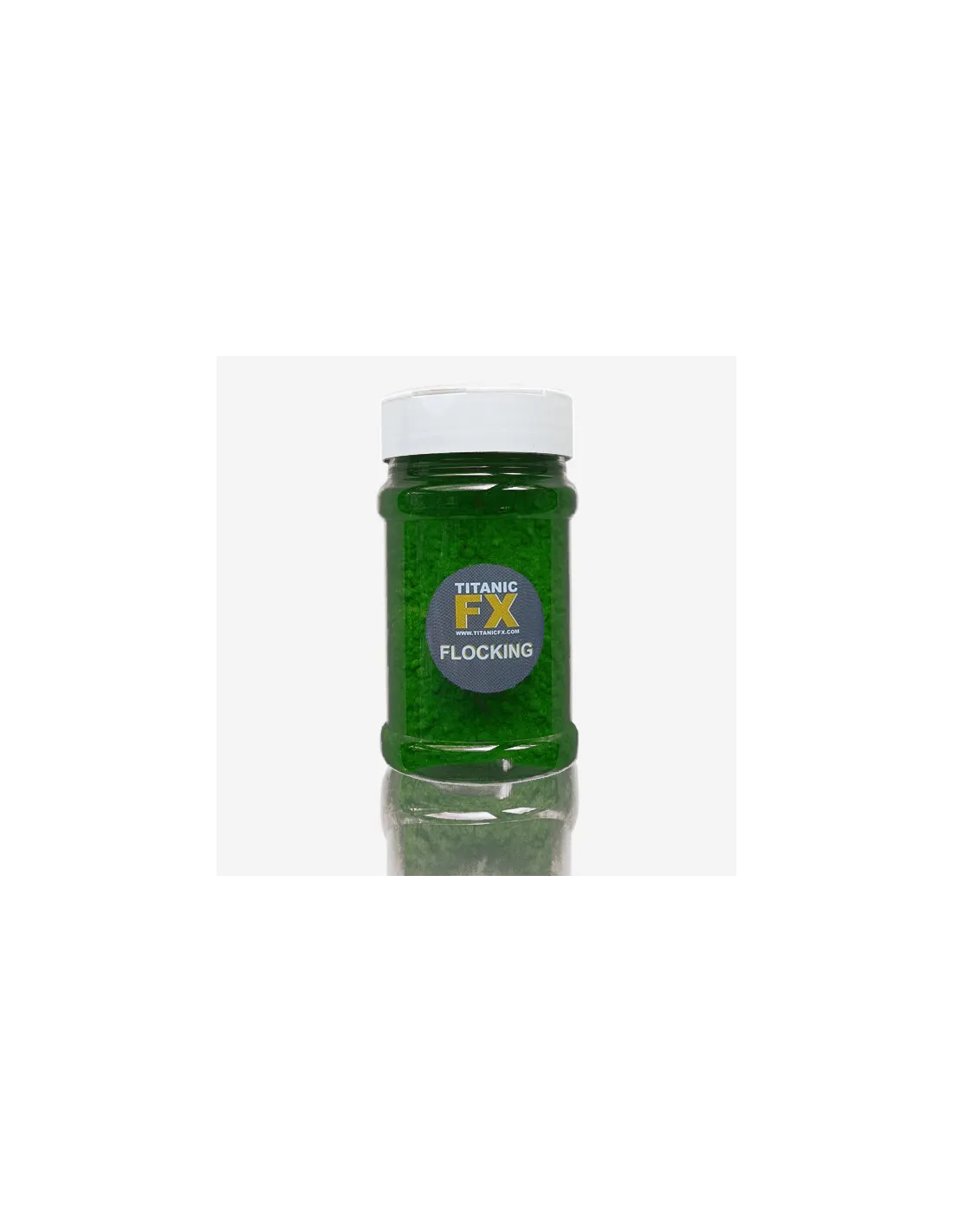
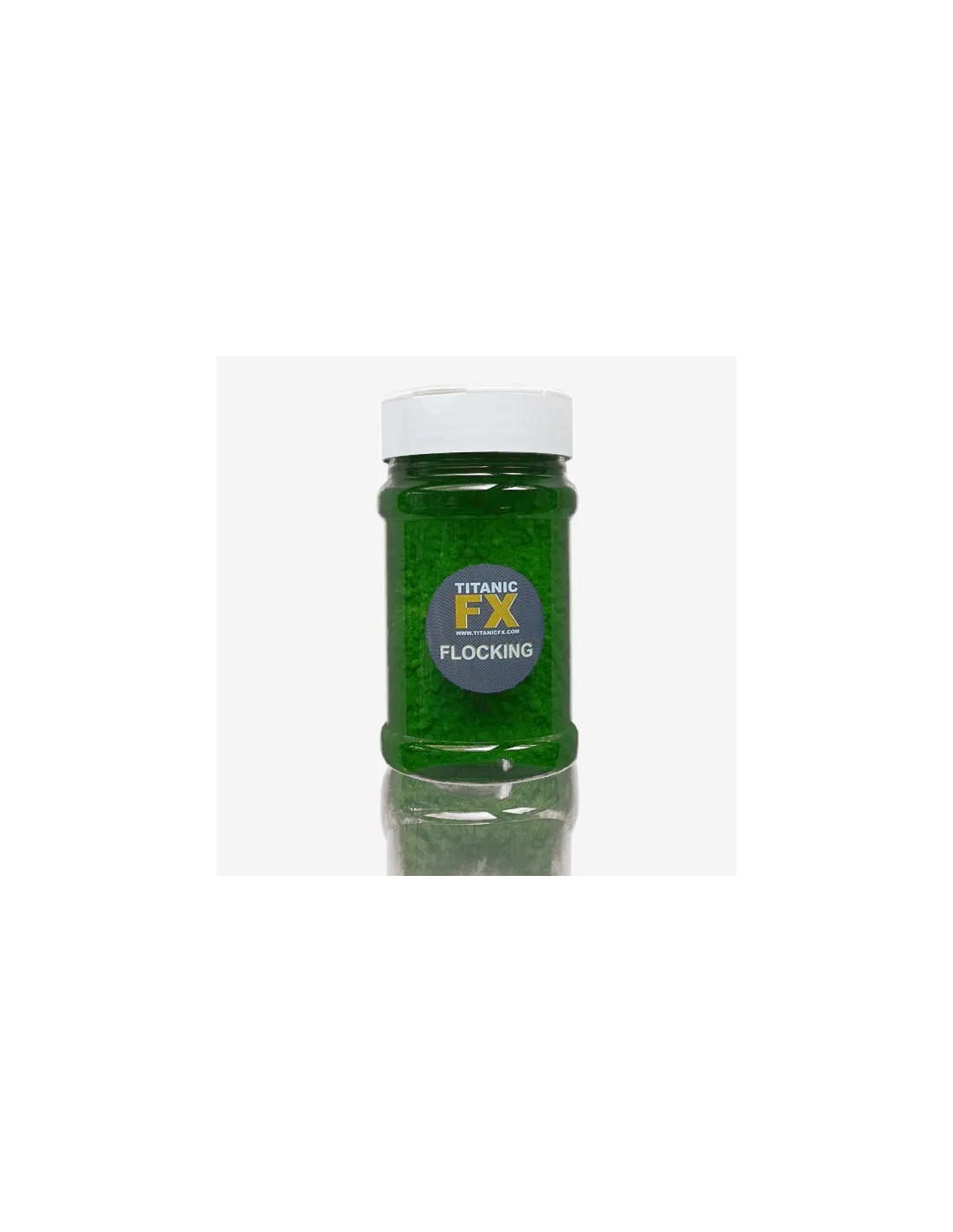
Titanic Fx Flocking in green is a micro-fibre pigment designed specifically for colouring silicones, gelatines and similar materials used in prosthetics and special effects. Unlike conventional paste or liquid pigments, the microscopic fibres float within the mix and provide a colour depth that far more faithfully replicates the look of real skin. It is an extremely lightweight filler that does not settle, making it easy to handle and store.
Technical specifications
| Feature |
Detail |
| Pigment type |
Flocking micro-fibres |
| Colour |
Green |
| Compatibility |
Silicones, gelatines and similar materials |
| Behaviour in mix |
Does not settle, very lightweight filler |
| Application method |
By hand or with a flocking machine |
| Packaging |
Airtight container with dual-speed dispensing safety cap |
| Brand |
Titanic Fx (distributed in Spain by Feroca) |
What it is used for
Titanic Fx green Flocking is a complement designed for special effects artists, SFX make-up artists and prosthetists who need to achieve skin and tissue colours with a three-dimensional, realistic appearance. The micro-fibres create an optical depth effect that flat pigments cannot match.
- Pigmenting platinum silicone prosthetics for film, television and theatre
- Colouring special effects gelatines
- Mixing with other pigments to achieve custom skin tones
- Simulating biological tissues with a translucent and deep appearance
- Creating wound effects, creatures and fantasy character designs
- Direct application with a flocking machine onto surfaces
How to use it
- Prepare the silicone or gelatine following the manufacturer's instructions. For platinum silicones such as PlatSil Gel-00 or PlatSil Gel-10, mix components A and B in the indicated ratio.
- Add a small amount of green Flocking to the mix before completing the stir. Start with low proportions (1–3% by weight) and increase until the desired shade is achieved.
- Stir carefully to distribute the fibres evenly without introducing air bubbles.
- If you need greater viscosity for layer applications or intrinsic painting, you can combine with Thixo Additive to thicken the mix without affecting the cure.
- Pour or apply the pigmented mix into the mould, making sure it has been properly released with Ferosil V 32 or another suitable release agent.
- Allow to cure for the time indicated by the base material manufacturer. Flocking does not alter cure times.
- Demould carefully and evaluate the shade achieved. Adjust the amount in the next batch if necessary.
Warning — Inhibition in platinum (addition) silicones: If you use this Flocking with platinum silicones, bear in mind that these silicones are sensitive to cure inhibition through contact with certain materials: sulphur, tin compounds, sulphur-containing plasticines, latex, some cyanoacrylate adhesives or latex gloves. Make sure that the Flocking and any other additive you incorporate are compatible with addition silicones before using them in production. Always carry out a small cure test before proceeding with the full piece.
Usage tips
Colour mixing for realistic skin tones
Green, in small proportions, is a key tone for neutralising redness and achieving more natural skin tones. Combine it with flesh, red and yellow flocking tones to build up complex colour layers. Work with intrinsic layers within the silicone to simulate the translucency of real skin: fibres at different depths create an optical effect that is hard to achieve with flat pigments.
Proportions and tone control
Always start with small amounts: a pinch goes a long way in silicone or gelatine mixes. Record the exact weight of Flocking relative to the total weight of the mix so you can reproduce the tone in future batches. The container has a dual-speed dispensing cap precisely to make this control easier: use the small opening to add small amounts with precision.
Storage and preservation
Always seal the container tightly after each use to prevent ambient moisture from clumping the fibres. Store the product in a cool, dry place away from direct sunlight. Gently shake the container before use if it has been stored for some time to ensure the fibres are loose and evenly distributed.
Frequently asked questions
Does flocking alter the cure time of silicone?
No. Titanic Fx Flocking is an inert filler that does not interfere with the curing process. The cure time of your silicone or gelatine will be exactly the same as without the additive, provided the Flocking does not contain contaminants that could inhibit the catalyst.
Can this type of pigment be used with gelatines as well as silicone?
Yes. Titanic Fx Flocking is compatible with both silicones and special effects gelatines. It is incorporated in the same way, by adding it to the mix in liquid form before the material gels or cures.
How much micro-fibre needs to be added for pigmentation?
It depends on the desired colour intensity, but generally very low proportions are used, between 1% and 3% by weight relative to the total mix. It is recommended to start with a little, evaluate the result after curing and adjust in the next batch. The depth effect is cumulative: several layers with a little Flocking give more natural results than a single layer with a lot.
Do the fibres settle in the mix over time?
No. One of the main advantages of Titanic Fx Flocking is that, being a very lightweight filler, the micro-fibres remain in suspension within the mix without settling. This facilitates a homogeneous colour distribution without the need for constant agitation.
Can it be applied with a flocking machine as well as by hand?
Yes. Titanic Fx Flocking can be applied both by manually mixing it into the material mass and by using a flocking machine for direct application onto surfaces. This second option is particularly useful for creating velvety surface textures or highly detailed skin effects.
Is it compatible with condensation (tin) silicones as well as platinum silicones?
Yes. Titanic Fx Flocking can be used with condensation silicones without any special restrictions. For platinum (addition) silicones, make sure the Flocking does not contain any inhibiting contaminants and always carry out a cure test beforehand.
Can it be mixed with conventional paste or liquid pigments?
Yes, and in fact it is common practice in special effects. Combining Titanic Fx Flocking with conventional pigments allows you to build complex tones: the pigments provide the base colour and the micro-fibres add the depth and optical texture that imitates skin or biological tissues.
How do you clean tools that have been in contact with flocking?
The micro-fibres are very lightweight and can adhere to surfaces. Clean tools immediately after use with a dry or slightly damp cloth before the base material cures. Dry fibres with no material attached can be removed with soap and water or compressed air.