Shopping Cart


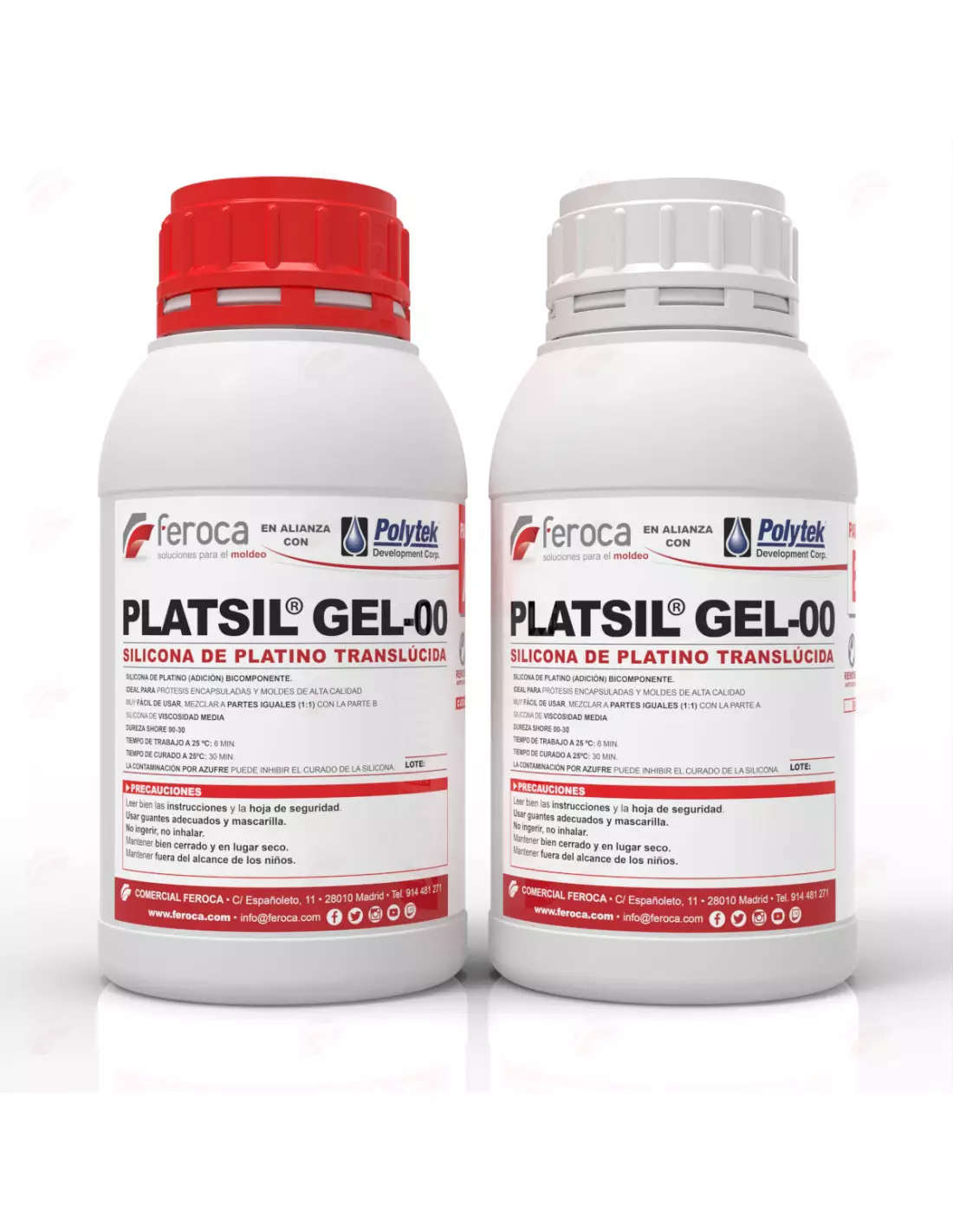
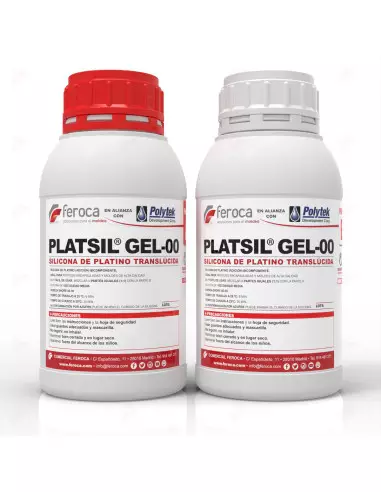
PlatSil Gel-00 -Platinum Silicone-
290005101
€42.00
50,82 € Tax incl.
50,82 € Tax incl.
Translucent platinum silicone Shore 00-30. 1A:1B mix, 6 min working time, 30 min cure. Ideal for encapsulated prosthetics and special effects.
PlatSil Gel-00 is a two-part platinum (addition) silicone with Shore 00-30 hardness, extremely soft and translucent, formulated by Polytek for hyperrealism applications, encapsulated prosthetics and special effects. Its equal-parts mix (1A:1B) and fast cure make it one of the reference silicones for FX makeup professionals and animatronics.
Technical specifications
| Parameter | Value |
|---|---|
| Type | Platinum (addition) silicone |
| Colour | Translucent |
| Shore Hardness | 00-30 |
| Mix ratio by weight | 100A : 100B |
| Mix ratio by volume | 100A : 100B |
| Working time (25 °C) | 6 min |
| Cure time (25 °C) | 30 min |
What it is used for
Thanks to its extremely low hardness and translucent tone, PlatSil Gel-00 is the preferred choice when you need to replicate the texture and appearance of skin or flesh with maximum realism. Combined with the appropriate additives, it covers a wide range of professional applications:
- Encapsulated prosthetics for film, television and theatre (with Skin Imitator or a suitable encapsulant)
- Skins and coverings for animatronics and hyperrealistic puppets
- FX masks and character pieces
- Soft tissue reproductions for anaplastology and external prosthetics
- Reborn babies and hyperrealistic collectible figures
- Moulds for complex geometry parts requiring extreme flexibility for demoulding
- Props and set dressing pieces with a skin or organic tissue appearance
How to use it
- Prepare the mould or positive surface, ensuring it is free of cure-inhibiting contaminants (sulphur, tin, latex, vinyl, uncured epoxies). Apply a release agent if necessary.
- Weigh or measure parts A and B in a 100:100 ratio (by weight or volume). Given the working time of only 6 minutes, prepare only the amount you will use immediately.
- Mix both parts vigorously for at least 60 seconds, thoroughly scraping the sides and bottom of the container to ensure a homogeneous mix.
- If you are adding Flocking pigments or other colorants specific to platinum silicone, incorporate them at this step and mix until the colour is uniform.
- If the application is for an encapsulated prosthetic, add PlatSil Deadener LV or Smith's Prosthetics Deadener. The indicative ratio for prosthetics is 1A : 1B : 180-200% Deadener.
- Pour or apply the mix onto the mould. For a bubble-free application, pour in a thin stream from a height or use a vacuum chamber if available.
- Allow to cure at room temperature (25 °C) for 30 minutes before demoulding. At lower temperatures the cure will slow down.
- Demould carefully. The cured silicone is very soft; handle it gently to avoid tearing.
Warning — Platinum silicone inhibition: PlatSil Gel-00 is a platinum (addition) silicone and its cure can be inhibited by contact with certain materials. It must not come into contact with: sulphur-containing plasticines or clays, tin (condensation) silicones, latex, vinyl, petroleum jelly, uncured polyester or epoxy resins, urethane rubbers and some metals. The result of inhibition is a silicone that remains tacky, soft or completely uncured. When in doubt, always perform a small test on a limited area before proceeding with the full piece.
Usage tips
Manage your working time carefully
With only 6 minutes of working time, advance preparation is key. Have the mould ready, pigments weighed out and accessories to hand before starting to mix. If you need more handling time, you can use PlatSil Retarder 71/73 R, but do not exceed the maximum percentage recommended by the manufacturer or you risk compromising the cure. Working in a cool environment (below 25 °C) also slightly extends the working time.
Pigmentation and skin tone
The translucent tone of PlatSil Gel-00 is an advantage: it allows you to start from scratch with colouring without the material's base colour interfering. Use only pigments specifically formulated for platinum silicone, such as Titanic Fx Flocking, to ensure compatibility and avoid inhibition. Mix the pigment into part A before adding part B to make it easier to achieve a uniform colour.
Thickening and brush application
If you need to apply PlatSil Gel-00 in layers over a vertical mould or one with undercuts, use PlatThix to thixotrope the mix and prevent it from running. Apply a detail coat first with a brush and allow it to gel before adding fill layers. For surfaces with fine textures, ensure the first coat penetrates all the recesses thoroughly before it begins to gel.
Frequently asked questions
What materials inhibit the cure of a platinum silicone?
Platinum silicones such as PlatSil Gel-00 are sensitive to inhibition by contact with: sulphur-containing plasticines and clays, tin (condensation) silicones, latex, vinyl, petroleum jelly, uncured polyester or epoxy resins, urethane rubbers and certain metals. If the silicone remains tacky or uncured after the indicated time, contact with one of these materials is most likely the cause. Always perform a small test before working on the final piece.
Can I use tin silicone moulds to cast this platinum silicone?
No. Platinum silicone does not cure over tin silicone: it becomes inhibited and remains tacky or uncured. If your moulds are made of condensation (tin) silicone, they are not compatible with PlatSil Gel-00. To work with platinum silicones you need moulds made from non-inhibiting materials: polyurethane, properly cured epoxy resin, sealed plaster or platinum silicone.
How much deadener do I need to make encapsulated prosthetics?
For prosthetic applications with PlatSil Gel-00, the standard working ratio is 1A : 1B : 180-200% Deadener. Since PlatSil Gel-00 is already very soft (Shore 00-30), you need a notably smaller amount of Deadener than with other silicones in the PlatSil range. Adjust the quantity according to the feel and mobility required by the piece, and always carry out prior tests.
Is it necessary to use an encapsulant on silicone prosthetics?
The use of an encapsulant is recommended so that the edges of silicone prosthetics can be blended into the actor's or patient's skin, making subsequent makeup easier and improving the final result. Without an encapsulant, the edges of the prosthetic are more visible and harder to integrate with real skin.
Can I slow down the cure time if I need more working time?
Yes. PlatSil Gel-00 is compatible with PlatSil Retarder 71/73 R. However, do not exceed the maximum percentage recommended by the manufacturer; adding too much retarder can compromise the full cure of the silicone. Working in an environment below 25 °C also naturally extends the working time slightly.
How can I apply this silicone in layers over a vertical mould without it running?
Add PlatThix to the mix to thixotrope it. The thickener turns the silicone into a paste that does not flow, allowing it to be brush-applied on vertical surfaces or those with undercuts without running. The cure time remains the same; the thixotropic agent only affects viscosity, not the curing process.
Can this silicone be used to make moulds as well as cast pieces?
Yes. PlatSil Gel-00 can be used to make moulds for complex geometry pieces or sharp undercuts where extreme flexibility is needed for demoulding. Bear in mind that, being very soft, the resulting mould can deform easily and generally requires a rigid support shell (mother mould) to maintain the geometry during the casting of the reproduction material.
Which pigments are compatible with platinum silicones?
You should only use pigments specifically formulated for platinum (addition) silicones. Conventional pigments may contain inhibitors or may not disperse correctly. For PlatSil Gel-00, Titanic Fx Flocking and Flocking Aditivo de Color are compatible, available at Feroca in various colours.
Video tutorials
🔬✨ "TutoReel with Feroca: Create your Medical Simulation Pads with Silicone!" 💉🚀
Platinum Silicone PlatSil Gel
🩸😲 TutoReel Feroca: How to make an FX Wound Prosthetic with your Own Mould 🧪🎭
- Color
- Translucent
- Working Time
- 6min
- Curing Time
- 30min
- Shore Hardness
- 00-30
- Volume Mixing Ratio
- 100A:100B
- Mixed Weight Ratio
- 100A:100B
No reviews
Tap to zoom