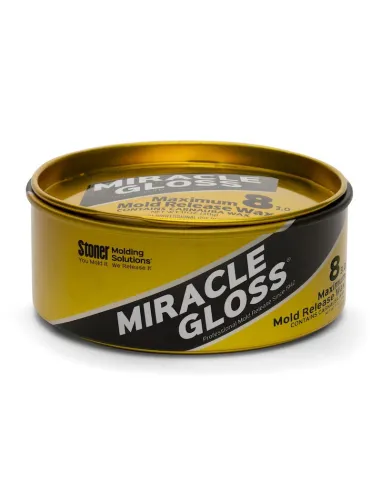
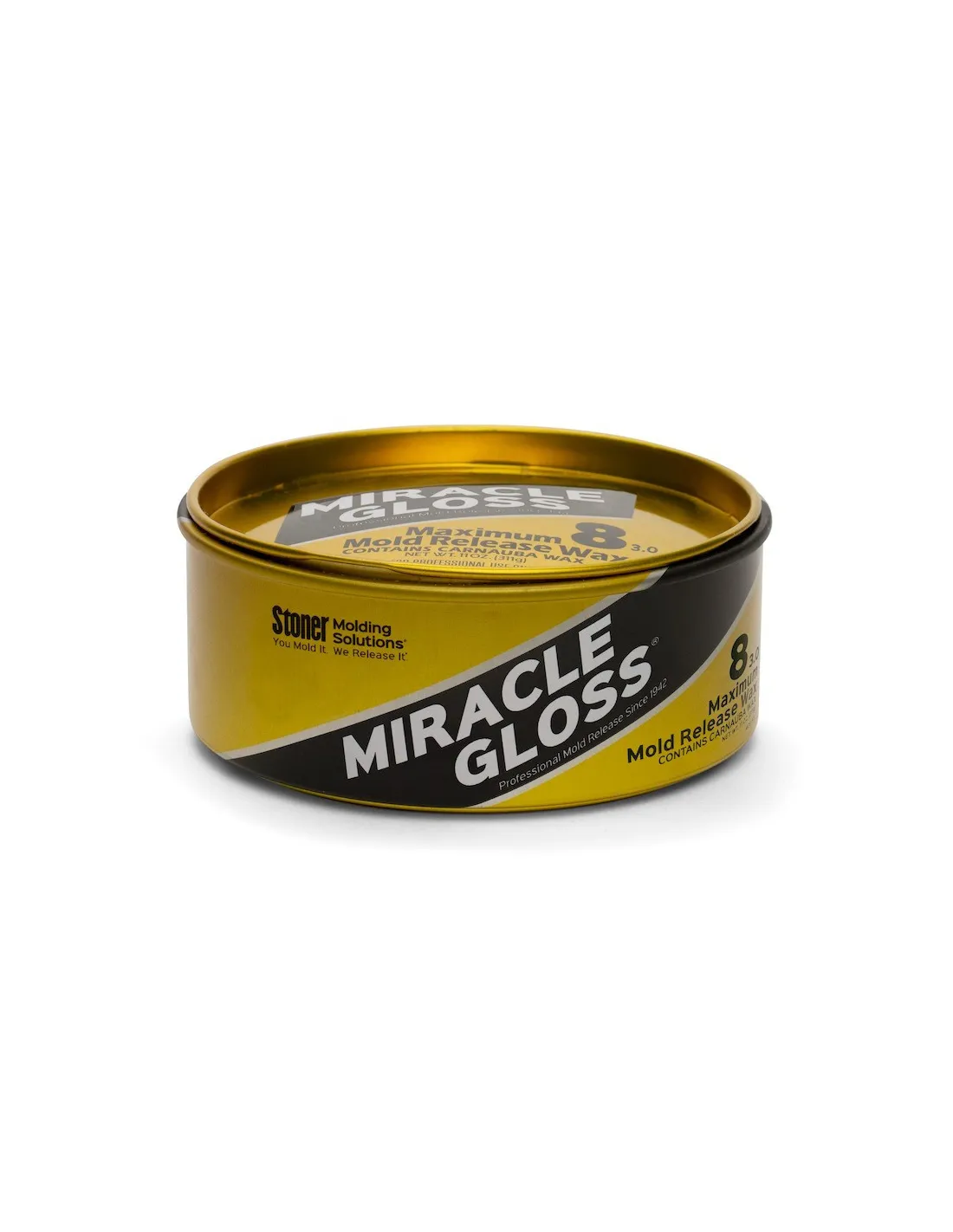
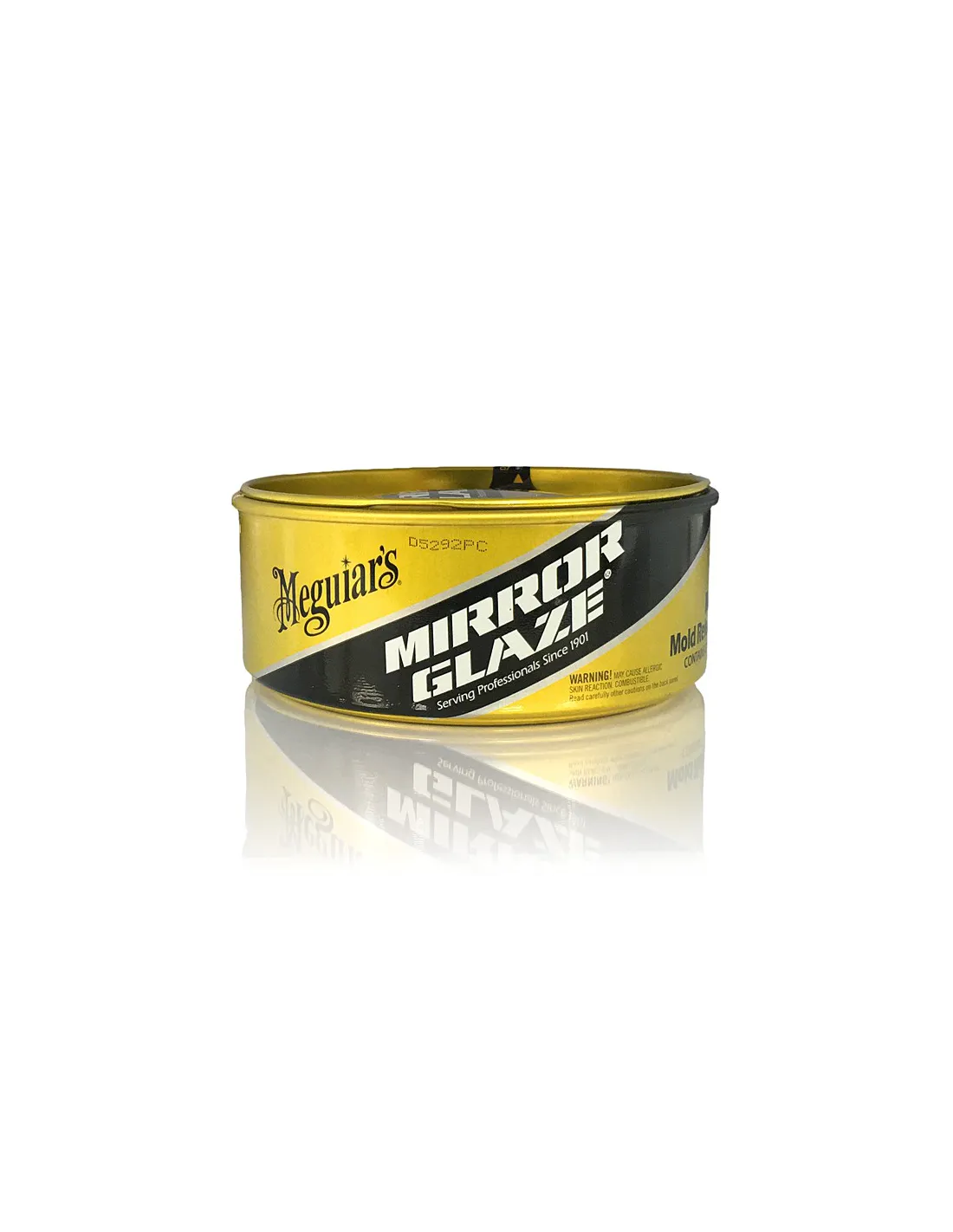
Maximum Mold Release Wax No. 8 2.0 – Miracle Gloss is a paste release wax formulated with a selection of high-quality imported waxes, designed to deliver the maximum number of releases per application. It is the updated and improved version of the classic Mirror Glaze M0811, especially suited for fiberglass work and for conditioning new molds, with both polyester and epoxy resin.
Technical specifications
| Property |
Data |
| Format |
Paste (solid wax) |
| Net weight |
311 g |
| Product type |
Paste wax release agent |
| Main application |
Fiberglass molds (polyester and epoxy) |
| Suitable for new molds |
Yes — requires initial preparation (minimum 3 coats) |
| Finish |
Miracle Gloss shine |
What it is used for
This paste release agent is designed to protect the mold surface and facilitate part release in repetitive production runs. Its wax formulation provides a continuous, long-lasting film that withstands multiple cycles without needing to be reapplied on every part.
- Release of fiberglass laminates with polyester resin
- Protection and preparation of new molds before first use
- Series production with polyester or epoxy molds
- Parts with gel coat where a high-gloss finish and clean release are required
- Periodic mold maintenance to extend its service life
- Composite applications with epoxy laminating resin
How to use it
- Clean and dry the mold thoroughly. For new molds, make sure the surface is fully cured and free of dust or contaminants.
- Apply a thin, even coat of wax with a clean, dry cotton cloth, using circular motions to cover the entire surface.
- Allow to dry for 5 to 10 minutes until the wax loses its sheen and turns matte.
- Buff with a clean, soft cloth until a mirror finish is achieved.
- For new molds, repeat the process a minimum of 3 times before first use, allowing the wax to dry thoroughly between each coat.
- For molds in production, reapply periodically depending on the release frequency and the condition of the surface.
Usage tips
New mold preparation
A new mold requires careful preparation before the first lamination. Apply a minimum of 3 coats of wax, allowing each one to dry and buffing between applications. This saturates the surface porosity of the mold and ensures the first part releases cleanly. Do not skip this step: poor initial conditioning can render the mold unusable.
Production maintenance
Once the mold is in production, it is not necessary to apply wax on every cycle. The reapplication frequency depends on the type of resin, the temperature, and the number of parts produced. As a practical reference, observe whether water still beads up on the mold surface (lotus effect): when it stops doing so, it is time to reapply. Before each maintenance coat, wipe the mold with a dry cloth to remove any residual liquid release agent or contaminants.
Compatibility with liquid release agents
In high-volume production runs or with complex geometries, you can combine this wax with polyvinyl alcohol (PVA) as a liquid release agent. Apply the wax first, let it cure, then spread a thin coat of PVA over the surface. This combination provides a very effective release barrier, especially for polyester resin parts. Never apply PVA onto the laminate — only onto the prepared mold.
Frequently asked questions
How many coats of wax should be applied before the first use of the mold?
For new molds, a minimum of 3 coats of Maximum Mold Release Wax No. 8 2.0 is recommended, allowing the wax to dry and buffing thoroughly between each application. This is essential to saturate the surface and ensure the first part releases without issues.
How often should the release agent be reapplied on molds in production?
It depends on the production rate and the type of resin. A practical indicator: when the mold surface no longer repels water with a beading effect (lotus effect), it is time to reapply. In intensive production runs this may be necessary every 10–20 parts; in occasional production, much less frequently.
Can this release agent be used with epoxy resin as well as polyester?
Can I use this release agent on silicone or polyurethane molds?
This is not its primary application. This product is optimised for fiberglass molds (polyester and epoxy). Silicone molds generally do not require a release agent, as silicone has natural non-stick properties. For other substrates, please consult the Feroca technical team.
What happens if I do not apply enough coats during the initial conditioning?
If a new mold is not properly saturated with wax, the resin may adhere to the surface during the first release and damage both the part and the mold. Proper initial conditioning is the most cost-effective investment you can make to extend the service life of your mold.
Can it be combined with a liquid release agent?
Yes. A common workshop practice is to apply the wax first and, once buffed, add a coat of polyvinyl alcohol (PVA) as an additional barrier. This combination is especially useful in high-volume production runs or for parts with complex geometries.
Does the release agent affect the finish of the part?
When applied correctly, no. The wax stays on the mold and imparts a glossy finish to the part. If applied in excess or not buffed properly, marks may appear on the part surface. Always buff thoroughly with a clean cloth before laminating.
What type of fiberglass is this release agent suitable for?
It is compatible with the most common fiberglass types used in lamination: 300 g/m² chopped strand mat, fiberglass woven fabric, and combinations of both. The release agent acts on the mold, not on the fiberglass, so the type of reinforcement does not affect its effectiveness.