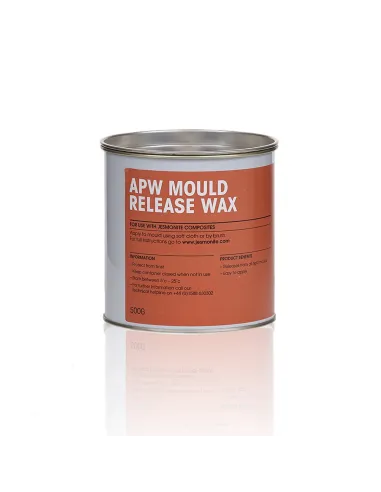
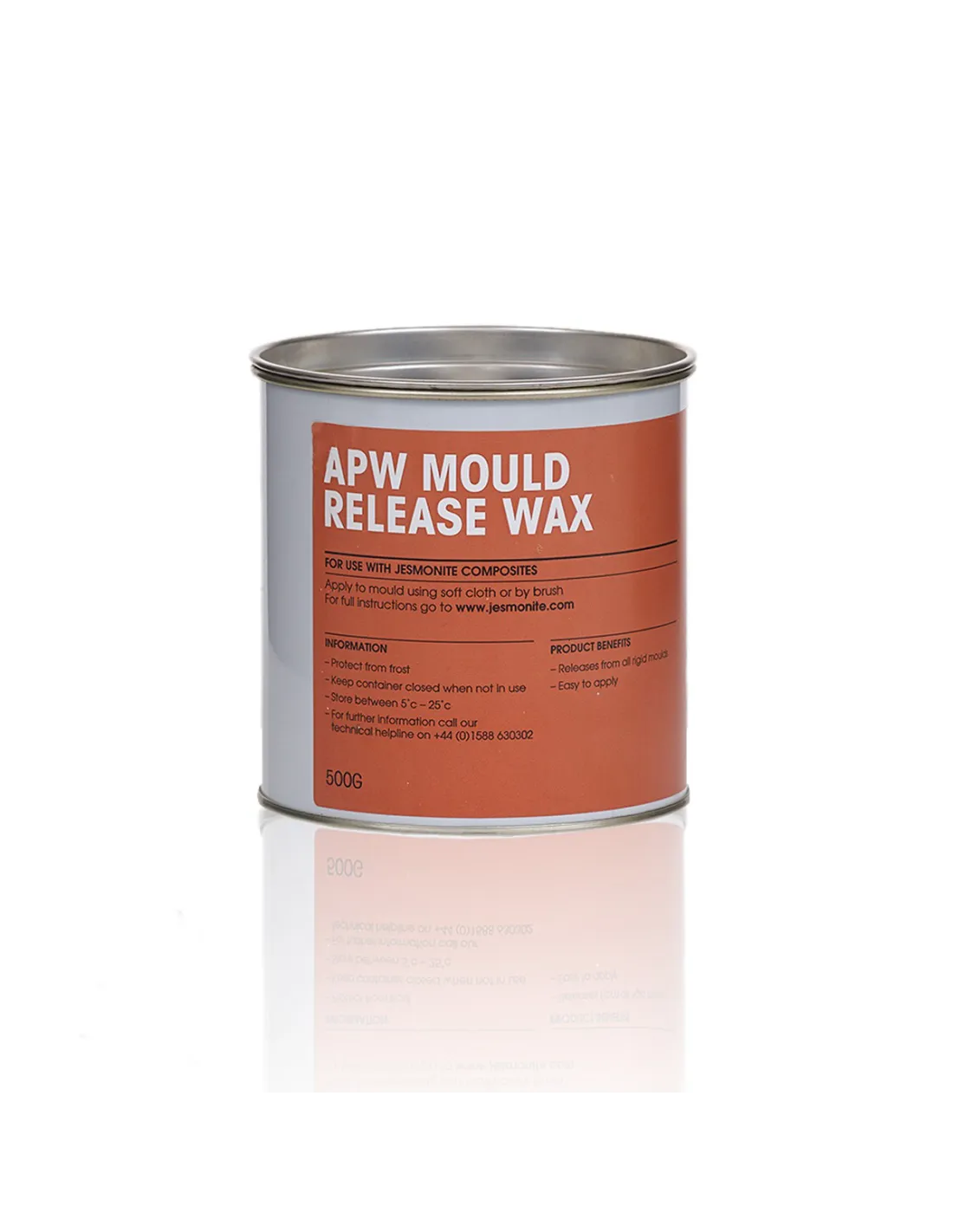
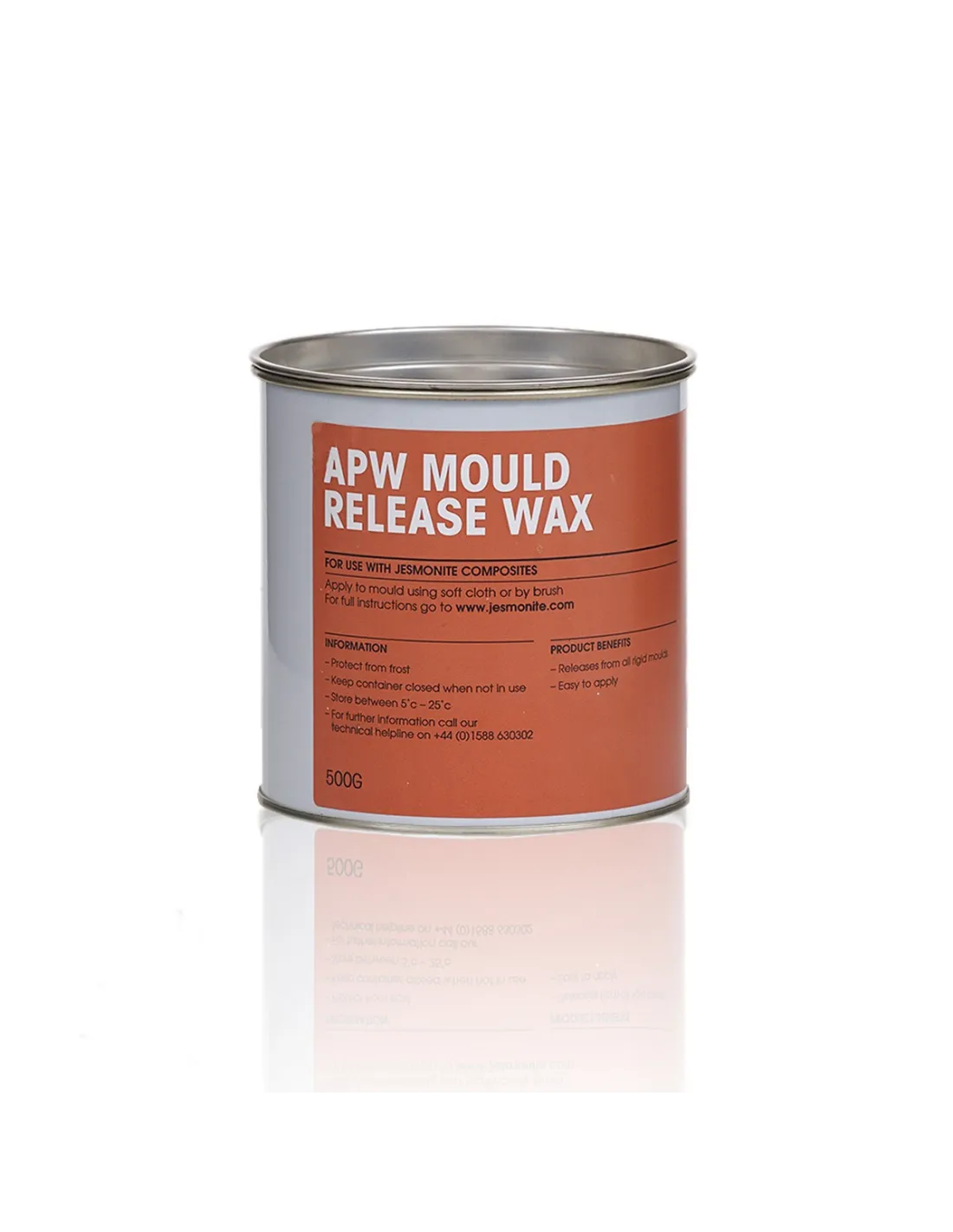
APM WAX is a universal paste wax release agent, formulated to ensure clean and effective release on rigid moulds made of plaster, GRP, wood, metal and glass. It is the go-to release agent for working with acrylic systems such as Jesmonite AC100 or Acrystal Prima, and also works as a cleaning agent for moulding tables and equipment.
Technical specifications
| Parameter |
Value |
| Product type |
Wax-based release agent |
| Format |
Paste |
| Presentation |
500 g tin |
| Compatibility |
Plaster, GRP, metal, wood, glass, acrylic systems |
| Additional use |
Cleaning of production tables and machinery |
What it's used for
APM WAX is designed to facilitate release on a wide variety of rigid substrates. Its paste formulation allows for precise application, leaving a uniform protective film that prevents the piece from sticking to the mould. It is also effective in production environments for keeping moulding tables and work equipment clean.
- Releasing parts cast with Jesmonite AC100 from rigid moulds
- Releasing parts made with Acrystal Prima in plaster or GRP moulds
- Plaster moulds for ceramics, decorative plasterwork and part reproduction
- GRP (fibreglass) moulds in composite manufacturing
- Wood, metal or glass moulds and templates
- Maintenance and cleaning of moulding tables and production equipment
- Protection of rigid surfaces against adhesion of casting materials
How to use it
- Make sure the mould is clean, dry and free of residue from previous castings.
- Apply a small amount of APM WAX with a soft cloth or sponge, using circular movements to cover the entire mould surface evenly.
- Allow to sit for a few minutes until the wax develops a slightly matte appearance on the surface.
- Buff with a clean, dry cloth until you achieve a thin, glossy layer with no excess.
- Repeat the process at least 3–4 times on new or highly porous moulds before the first casting.
- For already conditioned moulds, apply a maintenance coat between successive castings.
- Proceed with casting or laminating using your acrylic system, composite or plaster.
Usage tips
Condition new moulds properly
Freshly made plaster or GRP moulds are especially porous and absorb the release agent quickly. Apply 3 to 5 successive coats on first use, allowing each one to dry and buffing between applications. This initial conditioning is key to ensuring clean release from the very first piece.
The right amount — no excess
A thin, well-buffed coat is more effective than a thick, unevenly distributed one. Excess wax can leave marks on the surface of the released piece or affect the surface finish, especially with acrylic systems like Jesmonite AC100. Less is more.
Maintenance between production runs
In continuous production, apply a maintenance coat of APM WAX every 5–10 castings to keep release performance effective. You can also use the wax to clean accumulated residue from work tables and equipment, then wipe off with a dry cloth.
Frequently asked questions
Is a release agent necessary even if the mould is made of silicone?
Silicone moulds have natural release properties and do not require APM WAX. This paste wax release agent is intended for rigid moulds: plaster, GRP, wood, metal and glass. On silicone, the use of waxes can actually interfere with the surface finish of the cast pieces.
How many coats should be applied before the first casting?
On new or highly porous moulds, 3 to 5 coats are recommended, allowing each one to dry and buffing between applications. This initial conditioning ensures the mould pores are sealed and the piece releases cleanly without sticking. On already conditioned moulds, a single maintenance coat is sufficient.
Can this release agent be used with any acrylic resin?
Does APM WAX affect the surface finish of the piece?
When applied correctly — in thin, well-buffed coats — APM WAX does not affect the finish of the piece. Excess wax that is unevenly distributed can leave marks. It is important to buff well after each application to avoid unwanted transfer onto the cast surface.
Can it also be used to clean the mould after casting?
Yes. APM WAX has a secondary function as a cleaning agent. Applied to residue on moulding tables or production equipment, it makes removal easier with a dry cloth. It is a practical solution for workshop maintenance.
How often should the release agent be reapplied in continuous production?
In production runs, it is recommended to apply a maintenance coat every 5–10 castings, depending on the type of mould and the material being cast. Plaster moulds require more frequent application than GRP or metal ones, as they are more porous.
Is it compatible with untreated wood moulds?
Yes, although untreated wood is especially porous and requires more initial conditioning coats. It is recommended to apply 4 to 6 coats before the first casting, buffing well between each one, to seal the wood grain and ensure effective release.
Can I use APM WAX on metal or glass moulds?
Yes. APM WAX is compatible with metal and glass surfaces. These substrates, being less porous, typically require fewer conditioning coats and deliver very clean releases with just one or two applications.
How much product do I need?Calculate the exact amount before buying and avoid wasting material.
Go to the calculator →