Shopping Cart



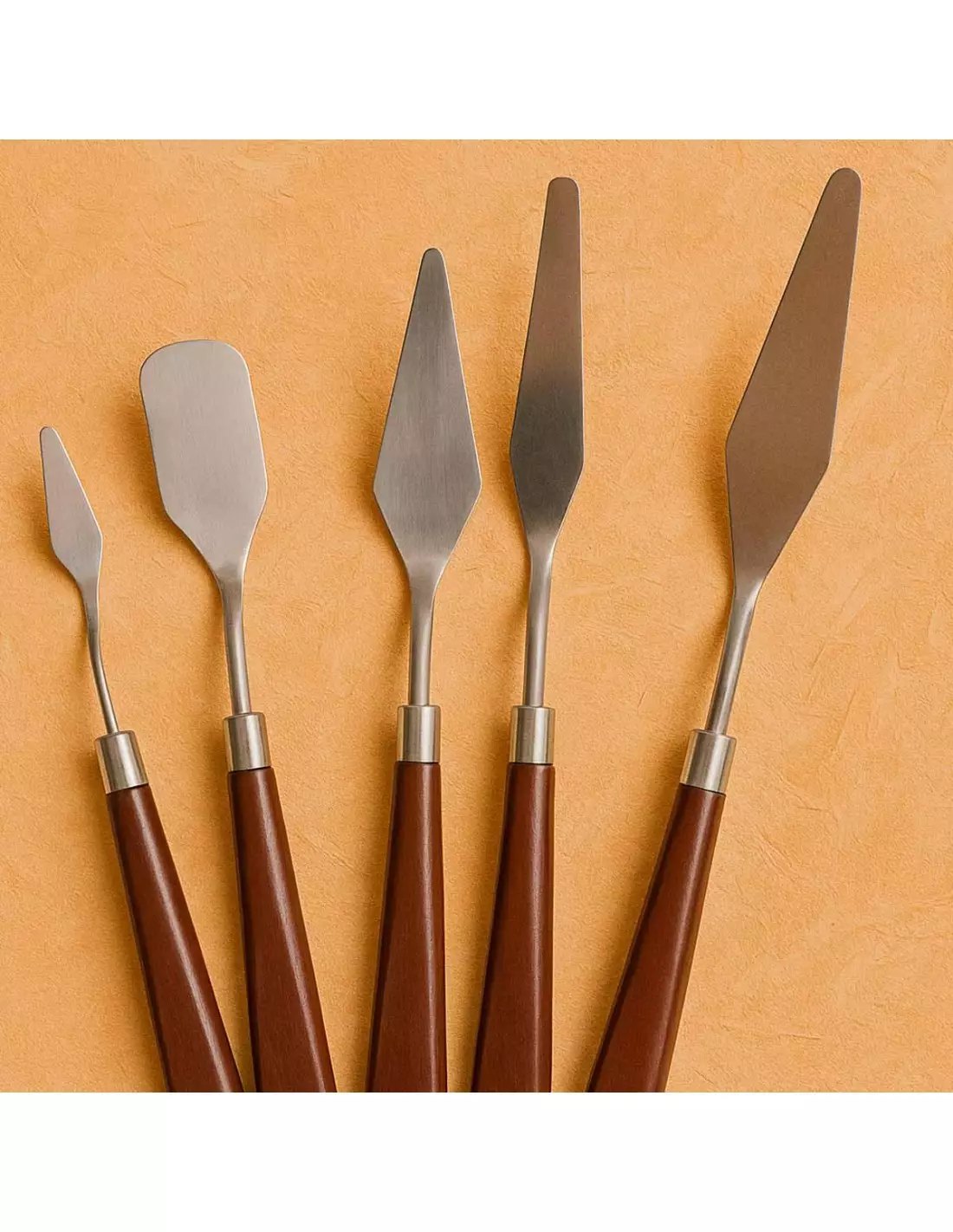
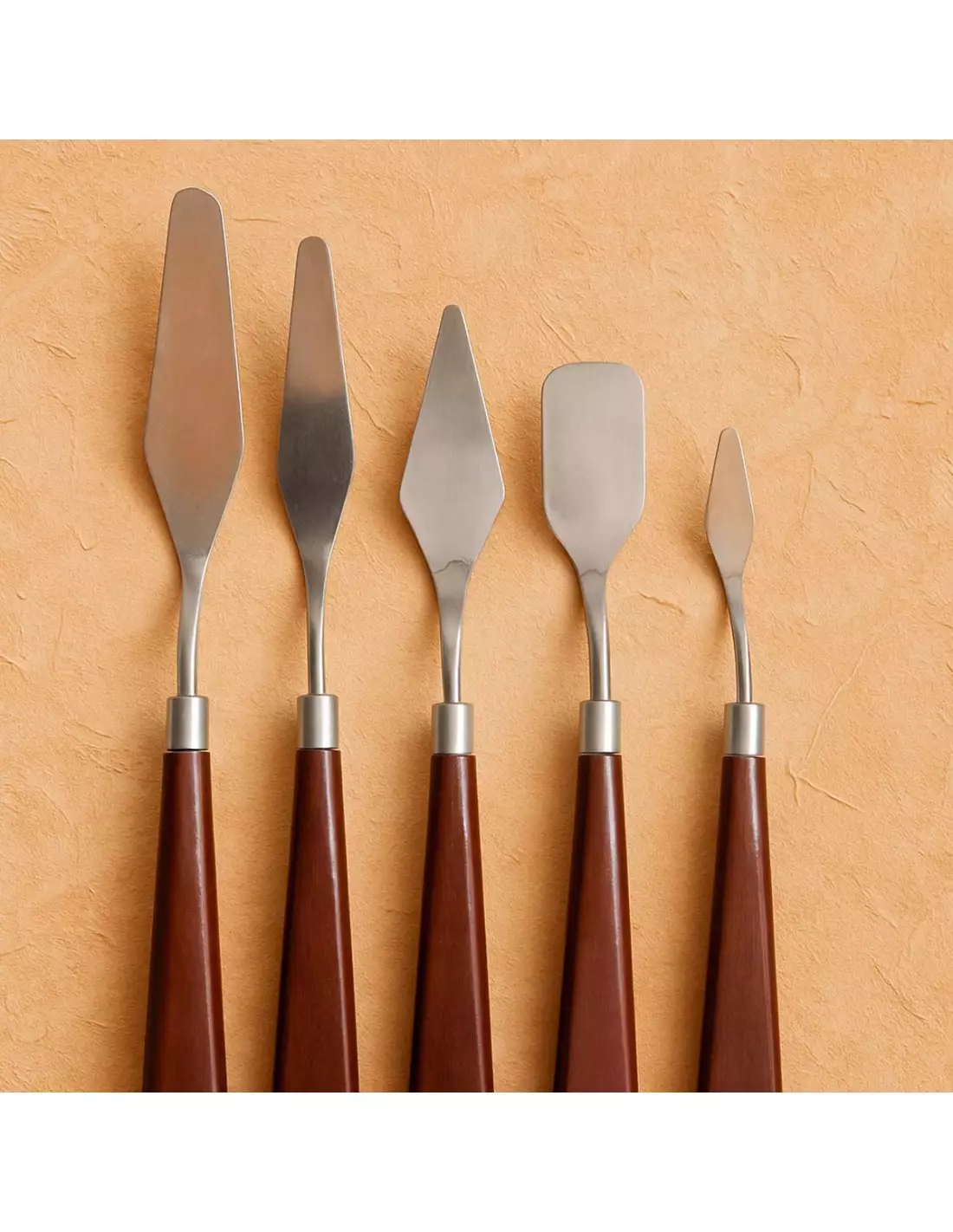
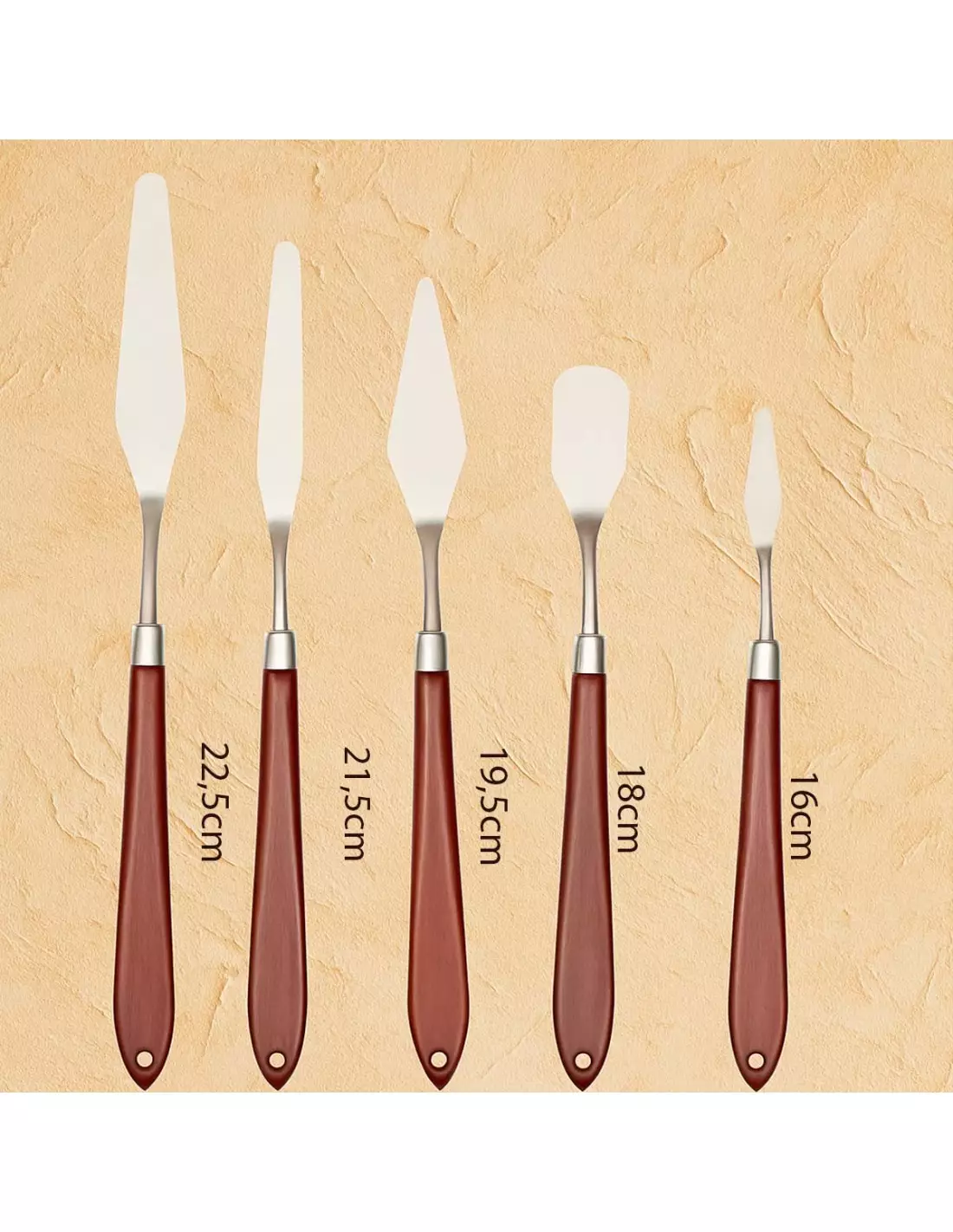
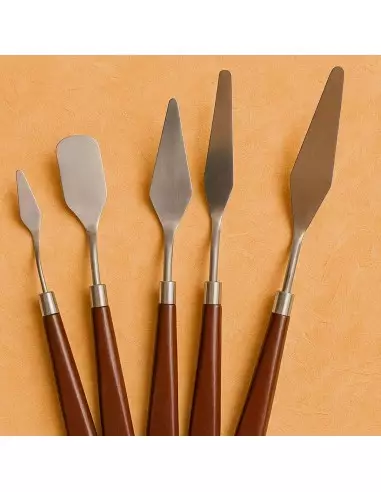
Artistic spatulas - Set of 5
206801302
€7.00
8,47 € Tax incl.
8,47 € Tax incl.
Set of 5 flexible steel palette knives with wooden handles. Different shapes and sizes for oil, acrylic and plaster.
A complete set of five flexible steel palette knives with ergonomic wooden handles, designed for working with oil, acrylic, plaster and workshop materials that require manual application, mixing or texturing. The variety of shapes — flat, angled and rounded — covers most needs of an artist or professional in a single kit.
Technical specifications
| Composition | Flexible steel blade + wooden handle |
|---|---|
| Units per set | 5 palette knives |
| Available shapes | Flat, angled, rounded (assorted) |
| Sizes | Different sizes in the same set |
| Working materials | Oil, acrylic, plaster, modelling pastes |
What it's used for
These palette knives are a versatile tool for any artistic or technical workshop. Their flexible blade allows you to adapt pressure and angle to the technique and material. Some specific uses:
- Mixing oil or acrylic colours on the palette
- Applying thick layers of paint or modelling paste to create textures and relief
- Working with plaster: pouring, levelling and texturing surfaces
- Spreading and smoothing fillers, pastes or low-viscosity resins
- Creating impasto effects in paint on canvas or board
- Scraping and cleaning work surfaces between applications
- Complementing work with modelling tools on fine-detail pieces
How to use it
- Select the right palette knife for the task: flat for spreading and mixing, angled for applying to specific areas, rounded for modelling curves.
- Prepare the material to work with (oil, acrylic, plaster, paste) at the desired consistency.
- Apply the material with controlled movements, varying the blade angle to achieve different texture or thickness effects.
- To mix colours, work on the palette with back-and-forth movements until you achieve a uniform tone.
- Clean the palette knife between uses with a cloth or appropriate solvent depending on the material used, to avoid contamination of colours or materials.
- Dry the blade thoroughly after each session to prevent the steel from rusting.
Usage tips
Care for the steel to extend its lifespan
After each use, clean the blade thoroughly with solvent or water (depending on the material worked) and dry it completely before storing. Steel can rust if stored damp. A light coat of mineral oil applied with a cloth before storing the set during prolonged periods of inactivity keeps the metal in perfect condition.
Make the most of the blade's flexibility
The flexible blade is not only for spreading: the more you tilt it relative to the surface, the more aggressive the scraping will be and the less material will remain. At a lower angle, more material is deposited and the finish is softer. Experiment with different angles to master the result without changing tools.
Combine with modelling tools for detail work
Palette knives are ideal for large surfaces and general volumes, but in detail areas — profiles, recesses, corners — it is recommended to complement them with fine-tip modelling tools or ball-tip modelling tools for a more precise finish.
Frequently asked questions
What workshop materials are these palette knives suitable for?
They are suitable for oil, acrylic, plaster, modelling pastes, fillers and low-viscosity resins. The flexible steel blade handles contact well with most common workshop materials. For highly exothermic resins or very abrasive materials, it is recommended to clean the blade immediately after use.
Can they be used to mix resins or silicones?
Yes, they can be used to mix small quantities of resin or silicone in open containers, and to spread thin layers. For deep-container mixing or larger quantities, palette mixers or stiffer spatulas are more comfortable. In any case, clean the blade with an appropriate solvent immediately after use.
How do I prevent the steel blade from rusting?
Clean and dry the palette knife thoroughly after each session. If the set is going to be unused for a period of time, apply a small amount of mineral oil to the blade with a cloth and store it in a dry place. Avoid leaving it in contact with water or aggressive solvents for extended periods.
Can I use these palette knives to work with plaster?
Yes, it is one of their main uses. The flat blade allows you to level and smooth freshly poured plaster, and the angled one makes it easier to work on the edges and corners of moulds. Clean the blade before the plaster hardens completely to make cleaning easier.
What is the difference between using a flat and an angled palette knife?
The flat palette knife is ideal for spreading material over wide surfaces, mixing on the palette and applying even layers. The angled one allows access to specific areas, working on relief and applying material with greater precision in small areas without the handle interfering with the surface.
How do I choose the right palette knife within the set?
It depends on the task: use the largest and flattest for mixing and covering wide surfaces; the medium angled one for hard-to-reach areas or for creating defined edges; the smallest or rounded one for modelling, adding detail or working in small areas. Trying different blades on the same job is the best way to learn which one gives you the result you're looking for.
Can they be cleaned with strong solvents?
The steel blade tolerates most solvents well. However, take care with the wooden handle: avoid submerging it in solvents or water for extended periods, as it may swell or deteriorate. Always clean the blade and dry the handle immediately.
Where can I get technical advice on which tools to use for my project?
You can contact Feroca's technical team by calling 914 481 271 or writing to [email protected]. They will guide you on the most suitable tool depending on the material and technique of your project.
No reviews
Tap to zoom