Shopping Cart



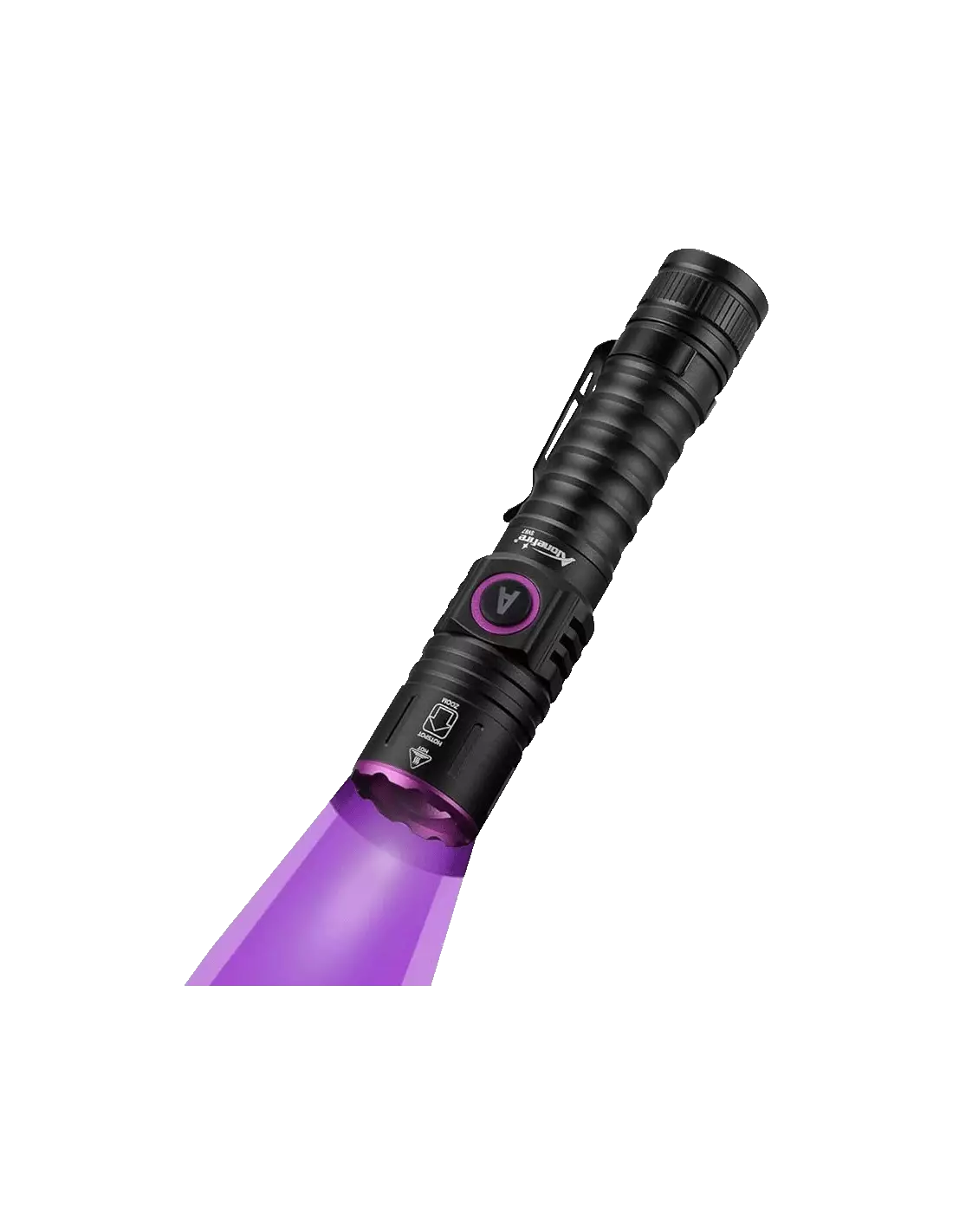
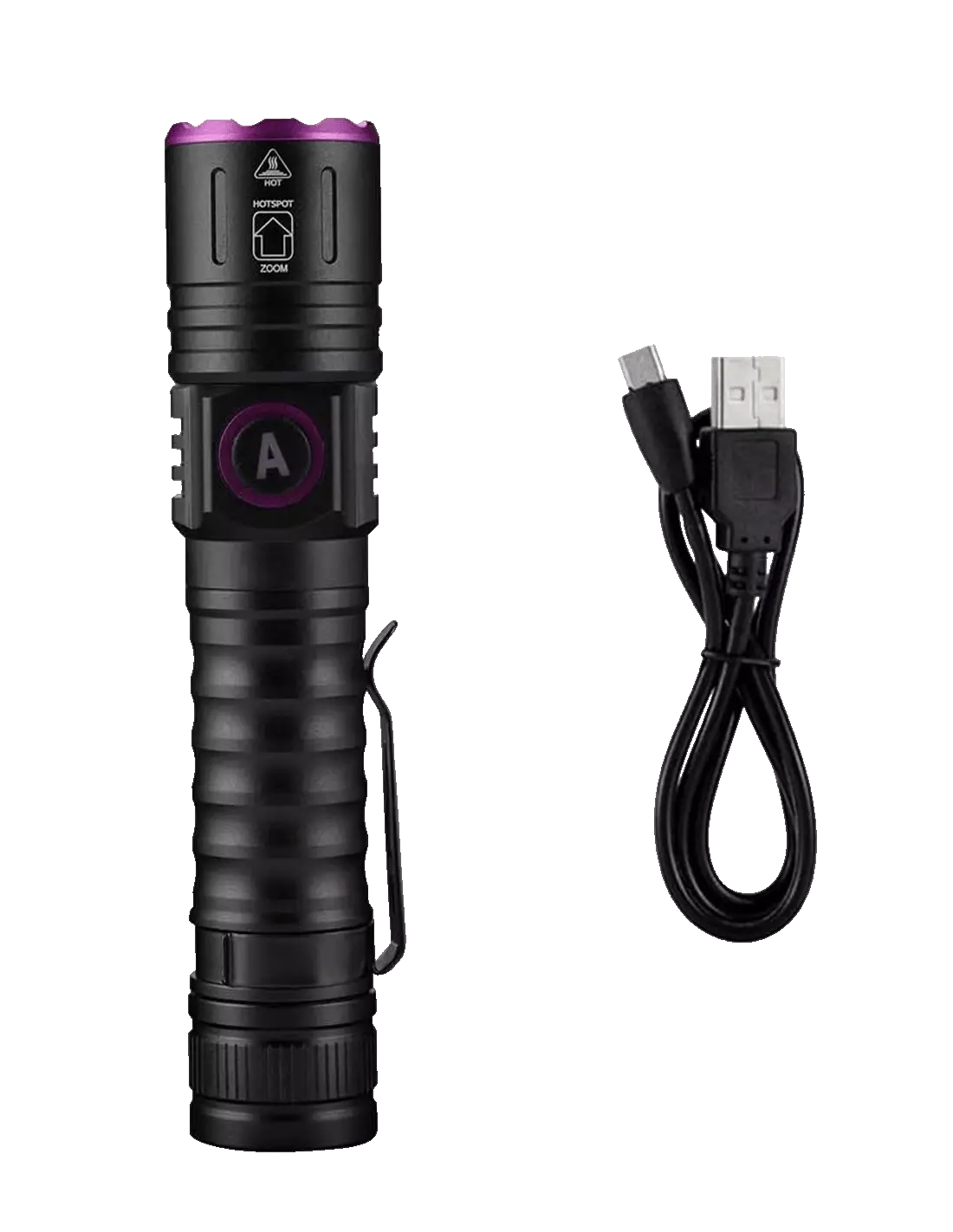
Rechargeable UV Flashlight
615022021
€24.00
29,04 € Tax incl.
29,04 € Tax incl.
Rechargeable 365 nm UV LED flashlight with aluminium body. Ideal for curing photosensitive resins and UV inspection in the workshop.
The 365 nm Rechargeable UV Flashlight is a compact and powerful workshop tool designed for spot curing of photosensitive resins, UV adhesives, and post-processing of 3D printed parts. Its aluminium alloy body, optical zoom, and included rechargeable battery make it a portable and durable solution for continuous professional use.
Technical specifications
| Feature | Detail |
|---|---|
| Wavelength | 365 nm (UV-A) |
| Light source | High-power LED |
| Body | Aluminium alloy |
| Optical zoom | Yes |
| Rechargeable | Yes — cable included |
| Battery | Included |
What it's used for
This flashlight covers every situation where you need long-wave UV (365 nm) in a localised and controlled manner. The 365 nm wavelength is particularly effective with resins and UV adhesives that require long-wave energy, unlike 395 nm models which may not penetrate certain photosensitive materials as effectively.
- Spot curing of UV adhesives and photosensitive resins in hard-to-reach areas
- Post-processing of resin 3D printed parts (SLA, MSLA, DLP) to harden uncured zones
- Fluorescence inspection: detection of defects, porosity, or contaminants in moulded parts
- Curing of UV inks and varnishes in surface finishing work
- Verification of security marks, invisible inks, and documents
- Special effects applications: activation of fluorescent paints and pigments
How to use it
- Fully charge the battery using the included USB cable before first use.
- Place the part or area to be cured on a stable surface, preferably in a low ambient light environment to maximise UV effectiveness.
- Adjust the optical zoom according to the area you want to cover: narrow focus for specific points, wide focus for larger surfaces.
- Aim the flashlight perpendicularly to the surface at a distance of 2 to 10 cm depending on the thickness of the resin or adhesive layer.
- Maintain exposure for as long as necessary until the material is fully cured. Consult the cure times specified by the manufacturer of the material you are using.
- Switch off the flashlight when finished and store it protected from dust.
Safety warning: UV-A radiation at 365 nm is invisible to the human eye and can cause irreversible eye damage from direct or reflected exposure. Always wear certified UV protective eyewear when handling it. Do not aim the flashlight at people or animals. Keep out of reach of children.
Usage tips
Distance and exposure time
The closer you position the flashlight to the surface, the higher the UV intensity and the shorter the time required. For thin layers of UV adhesive, 5–10 seconds at 3 cm is usually sufficient. For resins in larger volumes or thicker layers, increase the time or make several overlapping passes. Always check that the material has fully cured before handling the part.
Optical zoom: when to use it
The narrow zoom concentrates UV energy on a small point, which is ideal for curing adhesive in precision assemblies or repairing specific areas of printed parts. The wide zoom distributes light more evenly and is more efficient for sweeping flat surfaces or medium-sized parts. Practise with both settings before working on final pieces.
Maintenance and battery life
To prolong battery life, recharge before it is completely drained. If you are not going to use the flashlight for several weeks, store it with the battery at half charge. Clean the lens with a soft, dry cloth; avoid solvents that could degrade the optical coating. The aluminium body handles workshop environments well, but protect the lens from direct impacts.
Frequently asked questions
What is the difference between a 365 nm and a 395 nm UV flashlight?
The 365 nm wavelength corresponds to deep UV-A and is more effective for activating resins and adhesives specifically formulated for that band. 395 nm models emit at the UV/visible boundary and may be insufficient for certain photosensitive materials. This 365 nm flashlight offers more reliable curing in demanding workshop applications.
Can I use it to cure any UV resin?
It depends on the photoinitiator of each resin. Most UV resins and adhesives for workshop use, 3D printing (SLA, MSLA, DLP), and jewellery respond well to 365 nm. Always check the TECHNICAL DATA SHEET of the material you use to confirm the recommended activation wavelength.
How long does the battery take to charge?
Charging time depends on the capacity of the included battery and the current of the USB charger used. As a typical reference for flashlights of this type, a full charge takes between 2 and 4 hours. For any specific queries, contact Feroca at [email protected].
Is the UV light from this flashlight dangerous?
Yes, if proper precautions are not taken. UV-A radiation at 365 nm can damage the retina and skin with prolonged or direct exposure. Always use certified UV protective eyewear and avoid pointing the flashlight at people, animals, or reflective surfaces that could redirect the beam towards the eyes.
What is the optical zoom on a UV flashlight used for?
The zoom allows you to concentrate or disperse the UV beam according to the needs of the job. With the zoom set to narrow focus you can cure specific points at high intensity. With wide focus, you cover larger surfaces in fewer passes. It is especially useful when working with parts of irregular geometry or precision assemblies.
Does it work for detecting fluorescence in moulded parts?
Yes. The 365 nm wavelength is the standard for exciting fluorescent materials. You can use this flashlight to detect surface defects, check the distribution of fluorescent pigments, or verify invisible marks on special effects or production parts.
Can I use it on large parts?
The flashlight is a spot curing tool, not a UV chamber. For large surface areas it is advisable to complement it with a UV curing chamber or cabinet. This flashlight is ideal for touching up uncured zones, accessing recesses, or performing localised curing on parts of any size.
Where can I get technical support for this product?
You can contact the Feroca technical team by calling 914 481 271, writing to [email protected], or through Feroca's social media channels. We will get back to you as soon as possible.
No reviews
Tap to zoom