Shopping Cart


Zinc Powder
425009250
Product available with different options
€10.00
12,10 € Tax incl.
12,10 € Tax incl.
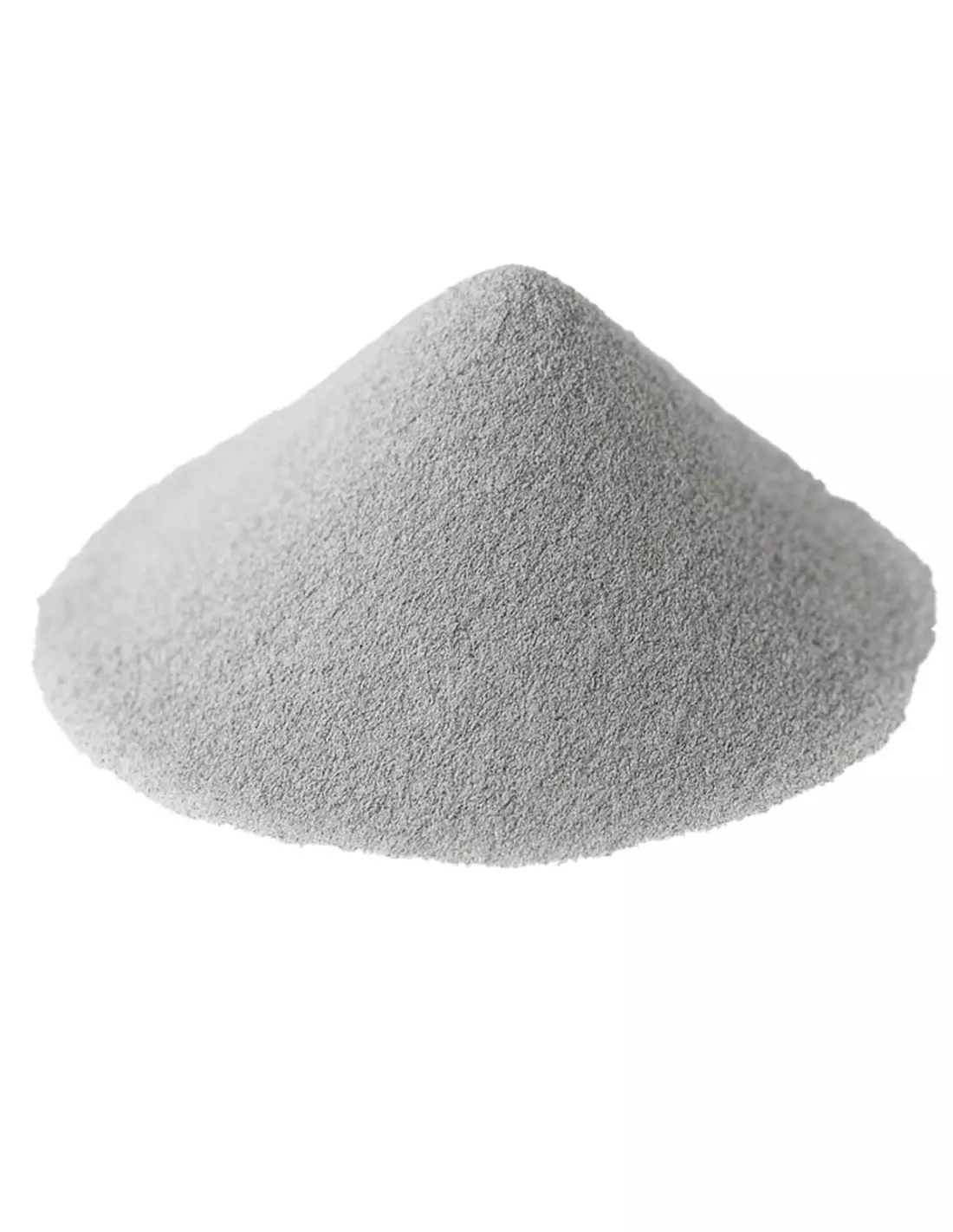
Pure Zinc powder 99.97% (Mesh 325 / 0.045 mm) in silver grey. Density 3.12 g/cm³. Ideal as a metallic filler and anti-oxidant finish.
Feroca's Zinc powder is a high-purity metallic filler (Zn 99.97%) with a fine particle size of Mesh 325 (0.045 mm) and low oxide content, ensuring consistent results in both surface finishes and industrial applications. You can mix it with resins to create parts with a real metallic effect, or apply it as a primer on moulds and surfaces to take advantage of its anti-oxidant properties.
Technical specifications
| Property | Value |
|---|---|
| Composition | Zn 99.97% |
| Particle size | Mesh 325 / 0.045 mm |
| Density | 3.12 g/cm³ |
| Colour | Silver grey |
| Oxide content | Low |
What it is used for
Zinc powder finds application in a wide variety of processes where a real metallic effect, anti-oxidant properties or functional fillers in polymer matrices are required. Its fine particle size allows homogeneous distribution and high-definition finishes.
- Metallic filler in polyurethane and epoxy resins to obtain parts with a real metallic look and feel
- Anti-oxidant primer on metal surfaces, applied by brush or spray gun
- Decorative and sculptural finishes on workshop parts, replicas and special effects
- Mixing with special galvanic protection paints
- Surface coat on moulds to transfer metallic texture to the final part
- Production of aged patinas or industrial effects on composite parts
How to use it
- Prepare the surface or base resin. If you are mixing it with resin, make sure the base is at its correct mixing ratio before adding the powder. If you are applying it as a primer, clean and degrease the target surface.
- Add the Zinc powder. Incorporate it gradually, stirring with a spatula until you obtain a homogeneous, lump-free mixture. The proportion depends on the desired effect: a higher amount gives a more metallic appearance and increases the weight of the part.
- Apply the mixture. You can brush it directly onto the mould or surface, or pour it if the viscosity allows. For the surface coat, apply a thin first layer and allow it to gel before adding the backing laminate.
- Allow to cure according to the instructions of the resin used. Zinc powder does not significantly alter the cure times of most resins.
- Demould and treat the surface. Once the part is demoulded, sand with progressive sandpaper (starting with coarse grit and finishing with fine) to reveal the metallic effect. You can polish with a polisher for a glossy finish or leave it matte for a more industrial look.
- Apply protection if necessary. For outdoor use or on parts exposed to moisture, apply a varnish or top coat compatible with the substrate.
Usage tips
Proportions and texture
The amount of Zinc powder you add to the resin determines both the final appearance and the mechanical properties of the part. Low proportions (10–20% by weight relative to the resin) provide a subtle metallic effect and barely modify the viscosity. High proportions (40–60%) produce heavier, denser parts with a finish very close to real metal, but significantly increase viscosity. Always carry out a small test before mixing large quantities.
Sanding and polishing for maximum effect
The final finish depends largely on post-processing. After demoulding, dry-sand with 120 grit to remove irregularities, progress to 240 and 400 grit wet, and finish with a polisher and polishing compound if you want an intense metallic shine. If you prefer an aged or patinated finish, stop at the fine sanding stage and apply waxes or patinas directly.
Use as an anti-oxidant primer
When mixing Zinc powder with specific paints for galvanic protection, make sure to use paints formulated for this purpose (epoxy or alkyd type with high filler content). The typical industrial proportion is around 80–90% Zinc by weight relative to the total solids. Apply in thin coats and allow to dry completely between coats to prevent cracking.
Frequently asked questions
Can I mix this metallic filler with any type of resin?
Zinc powder is compatible with most polyurethane and epoxy resins. For water-based acrylic resins, compatibility may be lower and the result less predictable, as zinc can react slightly with alkaline aqueous media. Always carry out a small-scale compatibility test before producing in series.
How much filler can I add to the resin without it losing its properties?
The amount of filler can vary depending on the project's needs. As a general rule, proportions of up to 30–40% by weight relative to the resin are manageable without excessively compromising the mechanical properties. Above that percentage, the part will gain weight and density but may become more brittle. Adjust according to the result you are looking for and always test first.
Is there a difference between using metallic powder in the surface coat or throughout the whole mass?
Yes. Applying Zinc powder only in the surface coat (gel coat or coat) is the most efficient technique: you use less material, the metallic effect is equally convincing after sanding, and the part does not become as expensive. Mixing throughout the whole mass is reserved for parts that require density, specific weight or functional properties throughout the entire cross-section.
Is it necessary to protect the finished part with some kind of finish?
For decorative indoor use it is not essential, although a final varnish protects the surface from scratches and surface oxidation. For outdoor use or in humid environments it is advisable to apply a varnish or lacquer compatible with the resin used, as exposed zinc can develop a whitish patina (zinc oxide) over time.
Can I apply it directly onto a mould to transfer the metallic effect to the part?
Yes. Mix the Zinc powder with a small amount of resin to create a paste or fluid coat, apply it with a brush onto the already released mould and allow it to gel before adding the backing laminate. When demoulding, the metallic layer remains on the visible face of the part. Sand and polish to reveal the real metallic shine.
Does Zinc powder modify the cure time of the resin?
At typical proportions it does not significantly alter the cure times of polyurethane or epoxy resins. At very high proportions it may slightly influence the exotherm by acting as a thermal mass, but this is not a critical factor under normal workshop conditions.
What safety precautions should I take when handling it?
Fine-particle Zinc powder can be inhaled easily. Always work in a ventilated space and wear a particle protection mask (FFP2 minimum). Avoid prolonged contact with skin and eyes. Consult the product's safety data sheet available in the Documentation tab on the product page at Feroca.
Where can I find the complete technical data sheet for the product?
You can download the technical data sheet and the safety data sheet directly from the product page at feroca.com, in the "Documentation" tab.
No reviews
Tap to zoom