Shopping Cart


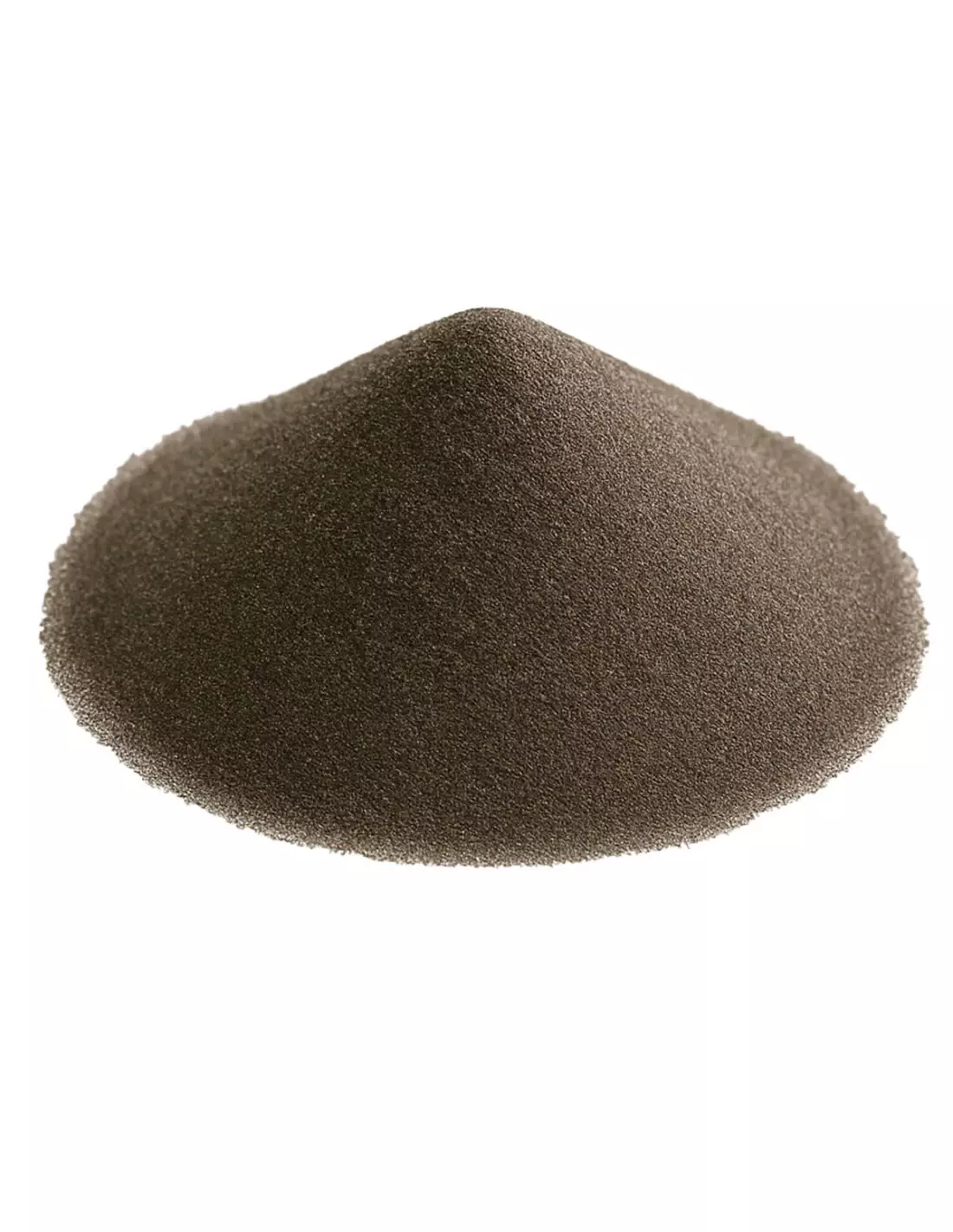
Gun Metal Bronze Powder
425003625
€19.00
22,99 € Tax incl.
22,99 € Tax incl.
Gun Metal bronze powder (Cu60% + Sn40%), 325 mesh / 0.045 mm, density 4 g/cm³. Dark grey colour, high corrosion and wear resistance.
Gun Metal bronze powder is a fine alloy of copper (60%) and tin (40%) with a particle size of 325 mesh (0.045 mm), specially designed to give authentic metallic finishes to resins, sculptures and composite parts. Its characteristic dark grey colour, density and corrosion resistance make it one of the most versatile metal fillers in the Feroca catalogue.
Technical specifications
| Parameter | Value |
|---|---|
| Composition | Cu 60% + Sn 40% |
| Particle size | 325 mesh / 0.045 mm / 45 µm |
| Density | 4.00 g/cm³ |
| Colour | Dark grey (Gun Metal) |
| Resistance | High corrosion and wear resistance |
What it's used for
This metal powder is mixed with resins, pastes or binders to achieve finishes with the appearance of real cast metal. It is ideal for both artistic production and technical applications requiring a dense, resistant filler.
- Metallic finishes on sculptures and decorative polyurethane or epoxy resin parts
- Cast metal effects in moulding and cold casting
- Resin filler to increase the density and weight of the final part
- Blends with other metal powders to achieve custom visual alloys
- Surface coatings applied by brush over cured matrices
- Composite applications where surface corrosion resistance is required
- Patination and ageing effects on model-making parts, props and special effects
How to use it
- Decide whether you will use it as a volumetric filler (mixed throughout the resin mass) or as a surface layer (applied by brush before pouring the resin).
- If mixing throughout the mass: incorporate the Gun Metal bronze powder into one of the resin components before making the two-part mix. Start with ratios between 50% and 200% by weight relative to the resin and adjust according to the desired result.
- If applying as a surface layer: mix the powder with a compatible binder (fluid epoxy resin, acrylic varnish or similar) until you obtain a homogeneous paste and apply by brush onto the mould or part.
- Stir the mixture thoroughly to avoid settling, as the density of 4 g/cm³ causes the powder to tend to sink to the bottom.
- Pour or apply according to the usual process of your resin or binder. Respect the working times of the chosen system.
- After curing, you can sand, polish or treat the surface with patination products to enhance the Gun Metal effect.
- For an oxidised or aged finish, apply diluted acids, waxes or specific patinas over the polished surface.
Usage tips
Ratios and settling
The high density of the powder (4 g/cm³) causes rapid settling in fluid mixtures. If you are working with low-viscosity resins, add a thixotropic agent such as Gel de Sílice AT2 to keep the powder in suspension during pouring and curing. With more viscous resins or pastes, settling is less of an issue.
Compatibility with resins
Gun Metal bronze powder is compatible with polyurethane, epoxy and polyester resins. Avoid mixing it directly with water-based acrylic resins, as the reaction between the metal and water can cause curing problems and alter the surface appearance. For finishes with acrylic resins, consult the metallic gel coat options available in the Feroca catalogue.
Mixing with other metal powders
You can combine this powder with other metal powders from the catalogue to achieve intermediate shades and properties. Always carry out a small-scale test before preparing large quantities, especially when combining metals with potential for chemical reaction between them. Hollow glass microspheres are a useful addition when you want to reduce the final density of the mixture without losing the surface metallic effect.
Frequently asked questions
What ratio of metal powder should be added to the resin?
There is no fixed ratio: it depends on the effect you want and the viscosity of your resin. As a starting point, try between 50% and 200% by weight relative to the total resin. With Gun Metal bronze powder, high ratios give more weight and metallic appearance, but may make pouring more difficult. Adjust based on your tests.
Can it be applied to the surface without mixing with resin?
Yes. You can mix the Gun Metal bronze powder with a compatible binder (fluid epoxy, varnish, wax) and apply it by brush as a surface layer. This method is very common in cold casting techniques to achieve the maximum metallic effect on the visible face of the part.
Can the finish be oxidised or patinated once cured?
Yes, and it is one of its strongest points. Once the part is cured and polished, you can apply diluted acids, saline solutions or chemical patinas to achieve realistic ageing, verdigris or oxidised effects. The copper content (60%) promotes these surface reactions.
Is it necessary to sand or polish the part after curing?
It is not mandatory, but it is recommended if you want to enhance the metallic sheen. Start with fine-grit sandpaper (400–600) and finish with polishing compounds or fine steel wool. The more polished the surface, the more authentic the metal effect.
What is the difference between using it as a volumetric filler and as a surface layer?
As a volumetric filler it is mixed throughout the entire resin mass: the part has more weight and density, but the surface metallic effect is less intense. As a surface layer it is applied only to the visible face of the mould before pouring the backing resin: the metallic effect is at its maximum on the surface using less powder.
Does the metal powder affect the curing time of the resin?
In general, inert metal powders do not significantly alter the curing time of polyurethane or epoxy resins. However, very high filler loads can act as heat sinks in exothermic reactions, slightly slowing down curing. Always carry out a preliminary test if you are working with very high ratios.
How do I prevent the powder from settling to the bottom during curing?
Use a thixotropic agent such as Gel de Sílice AT2 to increase the viscosity of the mixture and keep the particles in suspension. You can also work with higher-viscosity resins or reduce working time by choosing fast-curing systems.
Can it be combined with other metal powders from the catalogue?
Yes. Gun Metal bronze powder can be mixed with other metal powders to achieve intermediate shades and properties. Always carry out small-scale tests before preparing large quantities to verify the chemical stability and visual result of the mixture.
No reviews
Tap to zoom