
Shopping Cart

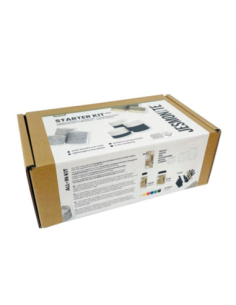 Jesmonite AC100 Starter Kit Candle Holder
Why use platinum silicone for candles and soaps?
Choosing the right elastomer isn't just a matter of convenience — it directly affects the safety and quality of the finished product. Here are the technical reasons that make platinum silicone essential for this application:
- Real thermal resistance: paraffin or soy wax is poured at between 65 and 90 °C. Platinum silicone continuously withstands temperatures above 200 °C without deforming or degrading.
- Total chemical inertness: addition curing generates no by-products. Platinum silicone releases no acids or volatile compounds that could migrate into the soap or wax.
- FDA food-safe certification available: several references in the range meet FDA regulations, guaranteeing compatibility with cosmetic-use soaps and decorative indoor candle waxes.
- Clean demoulding without release agent: the surface of platinum silicone is naturally non-stick, allowing soft soaps or finely detailed candles to be demoulded without damaging the piece.
- Excellent detail reproduction: textures, raised lettering, flowers and complex geometries are captured perfectly in the mould.
Technical note: Tin silicones (condensation) are not suitable for soap moulds. During curing they release acetic acid, which can contaminate the soap mass, alter its pH and cause skin irritation. For candles the risk is lower, but condensation silicones have inferior thermal resistance and the mould ages faster. Always use platinum silicone.
Platinum silicones for candle and soap moulds
These are the most widely used references for candle and soap production. All are addition (platinum) silicones — inert, heat-resistant and with low shrinkage — guaranteeing that every piece comes out with the exact dimensions of the original.
FDA food-safe silicones — maximum safety
If you make cosmetic-use soaps or candles for environments with safety requirements, choose an FDA-certified reference. These silicones have been specifically formulated for contact with food and personal-use materials, and are the most appropriate when the soap will be in prolonged contact with the mould during curing.
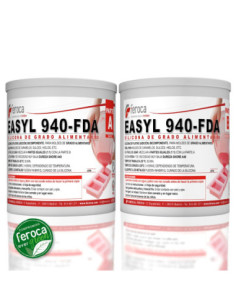 Easyl 940-FDA Pink
FDA food-safe, Shore A40, 1:1 mix. Firm, long-lasting moulds.
Easyl 940-FDA Pink
FDA food-safe, Shore A40, 1:1 mix. Firm, long-lasting moulds.
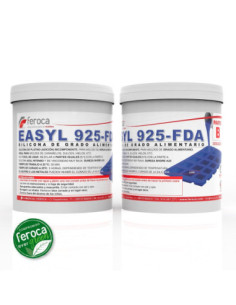 Easyl 925-FDA Blue
FDA food-safe, Shore A25, more flexible for complex relief designs.
Easyl 925-FDA Blue
FDA food-safe, Shore A25, more flexible for complex relief designs.
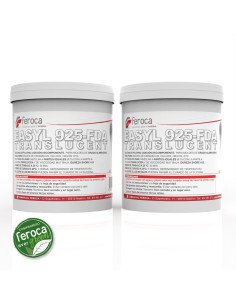 Easyl 925-FDA Translucent
FDA food-safe, translucent, Shore A25. See the soap without demoulding.
Easyl 925-FDA Translucent
FDA food-safe, translucent, Shore A25. See the soap without demoulding.
General-purpose platinum silicones — great versatility
For candle production, decorative soaps and medium-sized runs, general-purpose platinum silicones offer an excellent balance of price, mould life and ease of use. Their thermal resistance comfortably covers wax pouring temperatures.
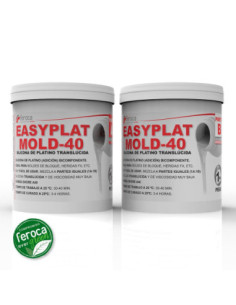 EASYPLAT MOLD-40
Shore A40, translucent, 1:1 mix. Rigid, long-lasting moulds.
EASYPLAT MOLD-40
Shore A40, translucent, 1:1 mix. Rigid, long-lasting moulds.
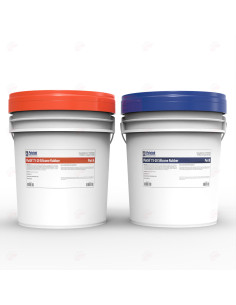 PlatSil 73-20
Shore A22, 1:1 mix, translucent. Balance between flexibility and body.
PlatSil 73-20
Shore A22, 1:1 mix, translucent. Balance between flexibility and body.
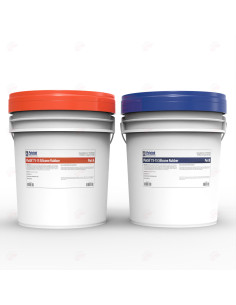 PlatSil 73-15
Shore A15, soft, for geometries with deep undercuts.
PlatSil 73-15
Shore A15, soft, for geometries with deep undercuts.
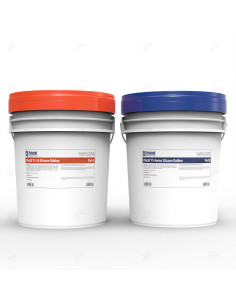 PlatSil FS-20
Shore A20, 1:1 mix, cold cure. Easy for beginners.
PlatSil FS-20
Shore A20, 1:1 mix, cold cure. Easy for beginners.
Which Shore hardness should you choose?
The hardness of the mould determines how the piece demoulds and how long it lasts in continuous production. This table helps you choose the right reference based on the type of piece:
| Type of piece | Recommended hardness | Suggested references |
|---|---|---|
| Plain cylindrical or cubic candles | Shore A35–A40 | EASYPLAT MOLD-40, Easyl 940-FDA Pink |
| Soaps with flowers or medium relief | Shore A20–A25 | PlatSil 73-20, Easyl 925-FDA Blue, Easyl 925-FDA Translucent |
| Candles or soaps with undercuts and fine details | Shore A15 or lower | PlatSil 73-15, PlatSil FS-20 |
| Very delicate pieces, raised lettering, veining | Shore A20 translucent FDA | Easyl 925-FDA Translucent |
Pigmenting your silicone mould
Although the mould colour doesn't transfer to the soap or candle, pigmenting the silicone has practical advantages: it visually identifies different moulds during production, makes it easier to spot bubbles before curing and helps control layers in two-part moulds. DYE PLAT pigments are compatible with all platinum silicones in the catalogue.
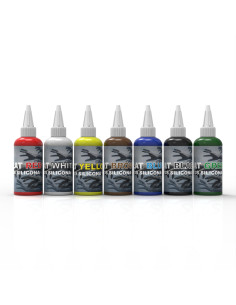 DYE PLAT - FX
Concentrated liquid pigments, compatible with platinum and tin silicones.
DYE PLAT - FX
Concentrated liquid pigments, compatible with platinum and tin silicones.
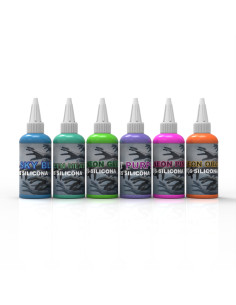 DYE PLAT FANTASY
Vibrant colours and special effects for identifying moulds.
DYE PLAT FANTASY
Vibrant colours and special effects for identifying moulds.
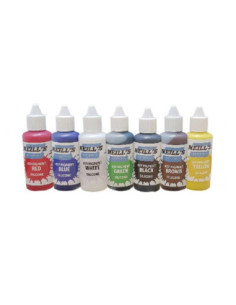 Pigmentos de Silicona
High concentration, great yield. For platinum and condensation silicones.
Pigmentos de Silicona
High concentration, great yield. For platinum and condensation silicones.
Step-by-step process: silicone mould for soaps or candles
- Prepare the original: clean the piece you want to reproduce thoroughly (prototype soap, candle, clay sculpture). Make sure it contains no sulphur or residues from sulphur-containing clay, as these inhibit the curing of platinum silicone.
- Build the mould box: use wood, laminated cardboard or LEGO to contain the silicone. Seal the joints with cartridge silicone or wax to prevent leaks.
- Choose and mix the silicone: weigh parts A and B in a 1:1 ratio (by weight or volume, depending on the reference). Mix for at least 3 minutes using slow, folding movements to avoid incorporating bubbles.
- Degas if you can: if you have a vacuum chamber, apply vacuum for 2–3 minutes before pouring. If not, pour the silicone in a thin stream from a height so bubbles escape on their own.
- Pour and allow to cure: pour the silicone over the original inside the box. Allow to cure at room temperature according to the time stated in the technical datasheet (generally 3–5 hours until demoulding, 24 h for heavy use).
- Demould carefully: remove the box and separate the mould from the original with gentle movements. Platinum silicone requires no release agent on most surfaces.
- First test pour: before producing in series, carry out a test pour with wax or soap to verify there are no leaks and that demoulding works correctly.
Frequently asked questions about candle and soap moulds
Can I use tin silicone to make soap moulds?
It's not recommended. Condensation (tin) silicones release acetic acid as a by-product of curing. This acid can contaminate the soap mass, alter its pH and cause skin irritation. For soaps — especially cosmetic-use ones — you should use platinum silicone exclusively, preferably with FDA certification.
What temperature does platinum silicone withstand? Can it handle molten wax?
Yes. Paraffin wax is typically poured at between 65 and 85 °C, and soy wax between 60 and 75 °C. The platinum silicones in the Feroca catalogue continuously withstand temperatures above 200 °C, so the wax pouring temperature poses no problem at all for the integrity of the mould.
Do I need a release agent with platinum silicone?
In most cases, no. Platinum silicone has a naturally non-stick surface that allows soaps and candles to be demoulded without any additional product. The exception is when the original you're moulding is also silicone — in that case you do need a specific release agent for silicone on silicone.
How many pours can a platinum silicone mould handle?
It depends on the hardness of the mould and the care taken during demoulding, but it's common to get between 50 and 200 uses with good maintenance. Harder references (Shore A35–A40) tend to have a longer service life in continuous production. Clean the mould with water and mild soap after each use and store it away from direct light and heat sources.
Which silicone should I choose if my soap has lots of raised detail?
For fine reliefs, flowers, lettering or veining, choose a low-Shore silicone (A15–A25). Easyl 925-FDA Translucent or PlatSil 73-15 are great options: their softness allows you to flex the mould slightly when demoulding without damaging the detail. If you also need food-safe certification, the Easyl FDA range is the direct choice.
Is platinum silicone suitable for beeswax candles?
Yes. Beeswax is worked at temperatures similar to paraffin (between 62 and 82 °C) and contains no components that inhibit the curing of platinum silicone. The mould will work perfectly and demoulding will be just as straightforward.
Can I add dye to the soap before pouring it into the silicone mould?
Yes, as long as you use dyes compatible with soap (powder or liquid dyes specifically for cosmetics). The platinum silicone mould is inert and does not react with the dyes commonly used in artisan soap making.