
Shopping Cart

Molds for ornaments and architectural elements

Tin silicone for casting molds
Condensation silicone is the classic choice for reproducing plaster, polyester resin or polyurethane ornaments. It reproduces detail faithfully, requires no release agent on most stone or plaster surfaces, and handles repeated castings perfectly. For pieces with complex geometry or many undercuts, choose the lowest available hardness; for large-format moldings where you need a firmer mold, go up to Shore A27–A30.
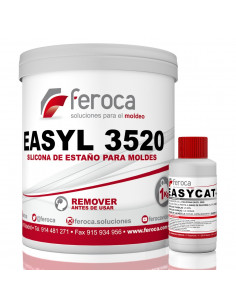 EASYL 3520
Shore A20, great elasticity and excellent value for money. Ideal for casting molds of capitals, moldings and reliefs with undercuts.
EASYL 3520
Shore A20, great elasticity and excellent value for money. Ideal for casting molds of capitals, moldings and reliefs with undercuts.
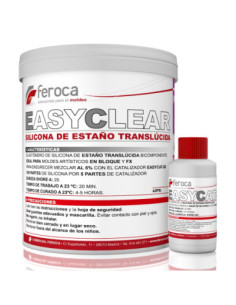 EASYCLEAR
Translucent Shore A20 silicone. Lets you see the piece through the mold, very useful for controlling the fill in block molds for statues and figures.
EASYCLEAR
Translucent Shore A20 silicone. Lets you see the piece through the mold, very useful for controlling the fill in block molds for statues and figures.
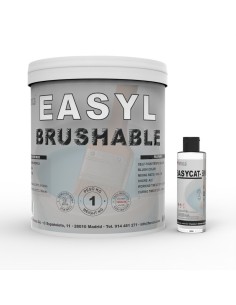 EASYL Brushable
Self-thixotropic Shore A27. Does not sag on vertical surfaces. Perfect for brush application on cornices and facades where it's not possible to build a mold box.
EASYL Brushable
Self-thixotropic Shore A27. Does not sag on vertical surfaces. Perfect for brush application on cornices and facades where it's not possible to build a mold box.
Urethane rubber for high-production molds
When you need a mold that can withstand long production runs, on-site conditions or castings with abrasive fillers (sands, decorative aggregates), polyurethane rubbers outperform silicone in tear and abrasion resistance. They are sensitive to moisture during mixing, so the original must be perfectly dry and a release agent is recommended. For thin pieces with a lot of relief, the Polygel 35 brushable is the most convenient to apply in layers.
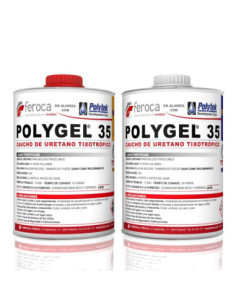 Polygel® 35
Brushable thixotropic urethane rubber Shore A35. Apply in layers over the original without building a box. Ideal for cornices, friezes and large-format moldings.
Polygel® 35
Brushable thixotropic urethane rubber Shore A35. Apply in layers over the original without building a box. Ideal for cornices, friezes and large-format moldings.
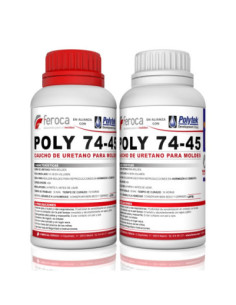 Poly 74-45
Shore A45 for medium-high hardness casting molds. 30 min working time and cured in 16 h. Handles long production runs of plaster and polyurethane resin.
Poly 74-45
Shore A45 for medium-high hardness casting molds. 30 min working time and cured in 16 h. Handles long production runs of plaster and polyurethane resin.
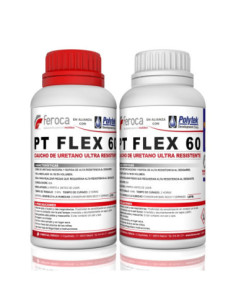 PT Flex 60
Shore A60, extraordinary tear and abrasion resistance. For production molds of decorative pieces with aggregates or mineral fillers.
PT Flex 60
Shore A60, extraordinary tear and abrasion resistance. For production molds of decorative pieces with aggregates or mineral fillers.
Release agents for molds on stone and facade surfaces
Before applying any elastomer to a site surface — natural stone, concrete, terracotta or ceramic — protect the original with a suitable release agent. Ease-Demold 305 is compatible with all the systems above; SIKA Desencofrante D is the reference product for work on timber formwork and concrete surfaces.
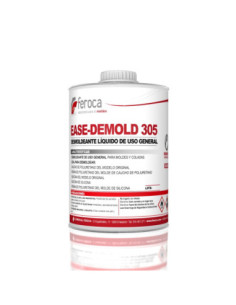 Ease-Demold 305
Universal liquid release agent. Compatible with silicone, polyurethane, polyester and epoxy. Fast drying with no visible residue on the original.
Ease-Demold 305
Universal liquid release agent. Compatible with silicone, polyurethane, polyester and epoxy. Fast drying with no visible residue on the original.
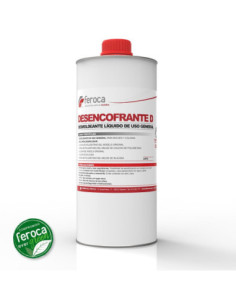 SIKA Desencofrante D
Water-soluble release oil for formwork and site molds. The reference product in facade restoration and concrete element reproduction.
SIKA Desencofrante D
Water-soluble release oil for formwork and site molds. The reference product in facade restoration and concrete element reproduction.
Reproductions in high-strength plaster
Plaster remains the reference material for reproducing interior ornaments — moldings, rosettes, capitals, friezes — thanks to its compatibility with historical originals, its ease of finishing and its low cost per piece. The difference between conventional plaster and a high-hardness plaster is decisive for elements that will be handled, fixed at height or used to reproduce fine details: the higher the Brinell hardness, the lower the risk of breakage at edges and thin reliefs.
 ALADUR 9
Plaster for high-detail reproductions. Brinell hardness 650 kg/cm². Mix ratio 2:1 powder/water, sets in 10–12 min. Ideal for interior ornaments and decorative figures.
ALADUR 9
Plaster for high-detail reproductions. Brinell hardness 650 kg/cm². Mix ratio 2:1 powder/water, sets in 10–12 min. Ideal for interior ornaments and decorative figures.
 EXADURO · Plaster for Molds and Counter-Molds
High-strength plaster for molds and counter-molds. Brinell hardness 1300 kg/cm², sets in 8–10 min. For shell counter-molds that must withstand repeated castings.
EXADURO · Plaster for Molds and Counter-Molds
High-strength plaster for molds and counter-molds. Brinell hardness 1300 kg/cm², sets in 8–10 min. For shell counter-molds that must withstand repeated castings.
 Arquero
Superior hardness and very low expansion. Ideal for master prototypes and matrices requiring dimensional accuracy in heritage restorations.
Arquero
Superior hardness and very low expansion. Ideal for master prototypes and matrices requiring dimensional accuracy in heritage restorations.
Plaster reinforcement with burlap
For large pieces — cornices, friezes, ceiling panels — reinforce the plaster casting with impregnated jute burlap. The fabric adds flexural strength and prevents breakage during transport and installation. We stock burlap in rolls and pre-cut formats to suit your production size.
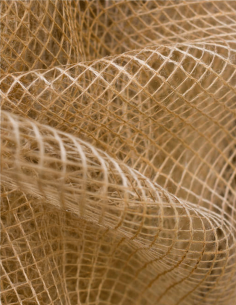 Arpillera
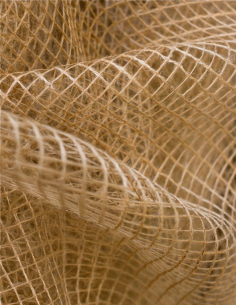
Natural jute fabric 82 g/m², 4 mm weave, 160 cm wide. Cut to the required size and impregnate with plaster to reinforce large-format moldings and panels.
Arpillera
Natural jute fabric 82 g/m², 4 mm weave, 160 cm wide. Cut to the required size and impregnate with plaster to reinforce large-format moldings and panels.
 Arpillera Precortada
Same 100% natural jute burlap in pre-cut formats ready to use. Saves time in the workshop when producing runs of reinforced moldings.
Arpillera Precortada
Same 100% natural jute burlap in pre-cut formats ready to use. Saves time in the workshop when producing runs of reinforced moldings.
Reproductions in polyurethane resin
When the reproduced piece is going to be installed outdoors, will be subject to impact or needs to be lighter than plaster, rigid polyurethane resin is the right alternative. EasyFlo and Feropur white resins reproduce mold detail faithfully, demold quickly and accept water-based paints and patinas. They are especially useful for decorative pieces in facade rehabilitation where weight is a limiting factor.
 EasyFlo 60
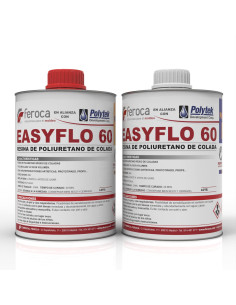
Bright white polyurethane, 1:1 mix by volume, 2.5 min working time, 65D hardness. For lightweight reproductions of interior and exterior ornaments.
EasyFlo 60
Bright white polyurethane, 1:1 mix by volume, 2.5 min working time, 65D hardness. For lightweight reproductions of interior and exterior ornaments.
 Feropur PR55 WHITE
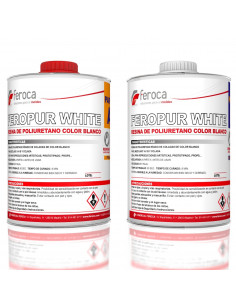
White rigid polyurethane 1:1 by weight, 2 min working time, cured in 10 min. Smooth finish ready to paint. Ideal for production runs of facade decorative pieces.
Feropur PR55 WHITE
White rigid polyurethane 1:1 by weight, 2 min working time, cured in 10 min. Smooth finish ready to paint. Ideal for production runs of facade decorative pieces.
 EasyFlo 90
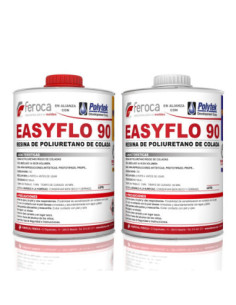
Low viscosity and 5 min working time. Fills molds with complex geometry without bubbles. For mid-size capitals and statues where you need filling time.
EasyFlo 90
Low viscosity and 5 min working time. Fills molds with complex geometry without bubbles. For mid-size capitals and statues where you need filling time.
Reproductions in acrylic resin with stone and cement effect
For reproductions that need to imitate the appearance of stone, exposed concrete or terrazzo, water-based acrylic resins are the most sustainable and safe solution: no solvents, no VOCs and finishes that accept aggregates, pigments and metallic powders. Jesmonite AC730 is the reference system in heritage restoration for its mineral appearance and compatibility with iron oxide pigments.
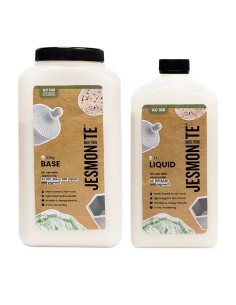 Jesmonite AC100
Solvent-free acrylic resin for casting and laminating. 2.5:1 ratio by weight, UV and weather resistant. For outdoor ornament reproductions.
Jesmonite AC100
Solvent-free acrylic resin for casting and laminating. 2.5:1 ratio by weight, UV and weather resistant. For outdoor ornament reproductions.
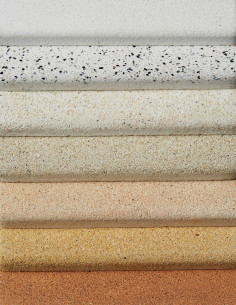 Jesmonite AC730
Acrylic cement for fiberglass laminating and decorative casting. Stone and concrete effect. Solvent-free, weather resistant. Ideal for heritage restoration.
Jesmonite AC730
Acrylic cement for fiberglass laminating and decorative casting. Stone and concrete effect. Solvent-free, weather resistant. Ideal for heritage restoration.
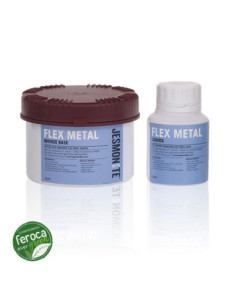 Jesmonite AC730 Flex Metal
Water-based metallic gel coat with real metal powders. Applied as the first layer in the mold, it gives bronze, iron or gold finishes to statues and ornamental pieces.
Jesmonite AC730 Flex Metal
Water-based metallic gel coat with real metal powders. Applied as the first layer in the mold, it gives bronze, iron or gold finishes to statues and ornamental pieces.
Structural laminates with fiberglass and resin
When an architectural piece must bear loads, be installed outdoors at great height or replace damaged elements in lightweight structures, fiberglass laminating with polyester or epoxy resin provides the necessary rigidity and strength at a weight far lower than concrete or stone. This is the standard process for decorative domes, facade panels, hollow columns and large sculptural reproductions like the one in the image.
Polyester resin for laminates
Ferpol 100 BSX15 DCPD resin is the reference for hand laminates with fiberglass mat and woven fabric. Low styrene content, good wet-out and controllable cure with F11 catalyst and CH8 accelerator. Always apply the surface veil on the first layer to get a smooth, fiber-free finish.
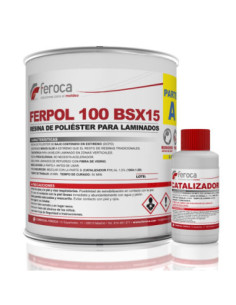 Ferpol 100 BSX15 DCPD
Pre-accelerated DCPD polyester resin for laminates. Low styrene content. Base resin for shells, facade panels and large sculptural reproductions.
Ferpol 100 BSX15 DCPD
Pre-accelerated DCPD polyester resin for laminates. Low styrene content. Base resin for shells, facade panels and large sculptural reproductions.
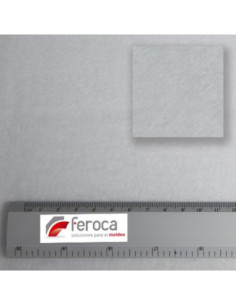 Fibra de Vidrio Velo de Superficie 34 g/m²
First layer of the laminate. Provides a smooth, fiber-free finish. Essential in laminates for architectural pieces that will be painted or patinated.
Fibra de Vidrio Velo de Superficie 34 g/m²
First layer of the laminate. Provides a smooth, fiber-free finish. Essential in laminates for architectural pieces that will be painted or patinated.
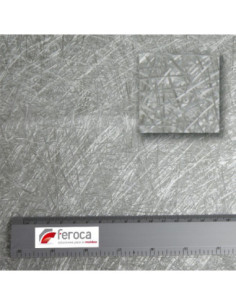 Fibra de Vidrio Mat de Refuerzo 300 g/m²
Structural reinforcement layers. Add as many layers as needed to achieve the thickness and rigidity required by the project.
Fibra de Vidrio Mat de Refuerzo 300 g/m²
Structural reinforcement layers. Add as many layers as needed to achieve the thickness and rigidity required by the project.
 Catalizador F11
Peroxide catalyst for polyester resins. Controls gel time and cure in architectural laminates and castings.
Catalizador F11
Peroxide catalyst for polyester resins. Controls gel time and cure in architectural laminates and castings.
Epoxy resin for high-strength laminates
For projects requiring greater mechanical strength, better adhesion to existing substrates or the absence of styrene, the Epofer Laminate 401 epoxy system is the alternative. With 90 minutes of working time and a 48-hour cure, it lets you laminate complex pieces at a comfortable pace. It is also the reference system for structural consolidation of historical concrete or stone elements.
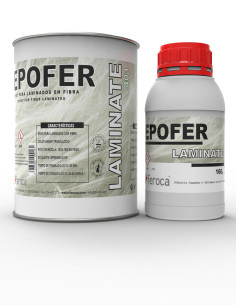 Epofer Laminate 401
Epoxy resin for hand laminates. Mix ratio 100A:16B, 90 min working time, cures in 48 h. High mechanical strength with no styrene. For structural consolidation and reinforcement.
Epofer Laminate 401
Epoxy resin for hand laminates. Mix ratio 100A:16B, 90 min working time, cures in 48 h. High mechanical strength with no styrene. For structural consolidation and reinforcement.
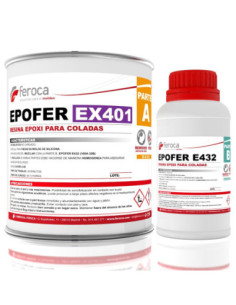 Epofer EX401+E432
Epoxy for castings with ratio 100A:32B. High chemical and mechanical resistance. For anchors, structural fills and precision casting of architectural elements.
Epofer EX401+E432
Epoxy for castings with ratio 100A:32B. High chemical and mechanical resistance. For anchors, structural fills and precision casting of architectural elements.
Material comparison table by application
| Application | Recommended material | Reason |
|---|---|---|
| Capital or cornice mold on site | EASYL Brushable / Polygel 35 | Thixotropic, does not sag on vertical surfaces |
| Mold for statue or complex figure | EASYL 3520 / EASYCLEAR | Low hardness, demolds undercuts without damaging the original |
| Interior molding reproduction | ALADUR 9 + Arpillera | High detail, finish compatible with historical originals |
| Lightweight facade ornament | EasyFlo 60 / Feropur PR55 WHITE | Rigid polyurethane, low weight, accepts exterior paint |
| Piece with stone or cement appearance | Jesmonite AC730 | Mineral effect, solvent-free, compatible with aggregates |
| Facade panel or laminated dome | Ferpol 100 BSX15 + Mat 300 g/m² | Lightweight and rigid laminate, low cost per m² |
| Structural reinforcement or anchor | Epofer Laminate 401 / EX401 | High mechanical strength, no styrene, excellent adhesion |
| Rigid shell counter-mold | EXADURO / Axson F40 | High hardness to withstand elastomer pressure in production runs |
Compatibility note: Polyurethane rubbers are sensitive to moisture and to certain inhibitors present in natural materials (wood, fresh plaster, clay). When the original is made of these materials, always apply a release agent and let the substrate cure completely before molding. Tin silicone, on the other hand, is compatible with most surfaces without prior treatment.
Frequently asked questions about materials for architecture and restoration
Which silicone is best for molding a limestone capital directly on site?
The most practical option is EASYL Brushable, as its self-thixotropic formula allows you to brush it on in successive layers over vertical and inclined surfaces without the material sagging. Apply a thin detail layer first and let it gel before adding the body layers. If you can build a box around the element, EASYL 3520 poured into the box is also valid and more economical. In both cases, apply Ease-Demold 305 to the stone to aid demolding.
How many layers of fiberglass do I need for a facade panel?
For a decorative facade panel with no structural load, the standard sequence is: 1 layer of surface veil 34 g/m² + 2–3 layers of mat 300 g/m², giving an approximate thickness of 3–4 mm with good rigidity. If the panel exceeds 1 m² or will be fixed at height with point anchors, add an extra layer of mat or insert a foam core to increase stiffness without adding weight. Use Ferpol 100 BSX15 DCPD as the laminating resin and Catalizador F11 to control the cure time according to ambient temperature.
Can I use ALADUR 9 plaster outdoors?
Plaster is not suitable for continuous outdoor use without protection, as calcium sulphate is water-soluble and degrades with moisture and freeze-thaw cycles. For facade or outdoor ornaments, choose polyurethane resins such as EasyFlo 60 or acrylic systems such as Jesmonite AC100, which are weather resistant. ALADUR 9 plaster is the right choice for interiors: ceiling moldings, rosettes, friezes and decorative elements sheltered from rain.
What is the difference between using polyester or epoxy resin to laminate an architectural piece?
Polyester resin (Ferpol 100 BSX15 DCPD) is more economical, more widely used in workshops and sufficient for most decorative facade pieces. It contains styrene as a reactive diluent, so ventilation and standard personal protective equipment are required. Epoxy resin (Epofer Laminate 401) contains no styrene, has better mechanical and chemical resistance, adheres better to existing substrates and is the right choice when the piece will bear loads, when laminating onto original concrete or stone as structural reinforcement, or when working in spaces with limited ventilation.
How do I achieve a stone or bronze effect finish on a resin reproduction?
The simplest method is to apply a first layer of Jesmonite AC730 Flex Metal inside the clean mold (with release agent), let it gel and complete the laminate or casting with Jesmonite AC730. Once the piece is demolded, you can patinate the metallic surface with waxes or oxidizing liquids to achieve aged bronze, oxidized iron or verdigris copper finishes. Alternatively, you can add iron oxide pigments directly to Jesmonite AC100 in the casting to achieve sandstone, slate or granite tones.
Which urethane rubber do you recommend for producing long runs of moldings in the workshop?
For production runs, Poly 74-45 offers the best balance of hardness, elasticity and cost. With Shore A45 and 30 minutes of working time, it lets you fill complex molds without rushing and handles runs of dozens of castings in plaster or polyurethane resin without deforming. If the pieces contain abrasive fillers or aggregates in the mix, move up to PT Flex 60 (Shore A60) for greater mold wear resistance.