Shopping Cart


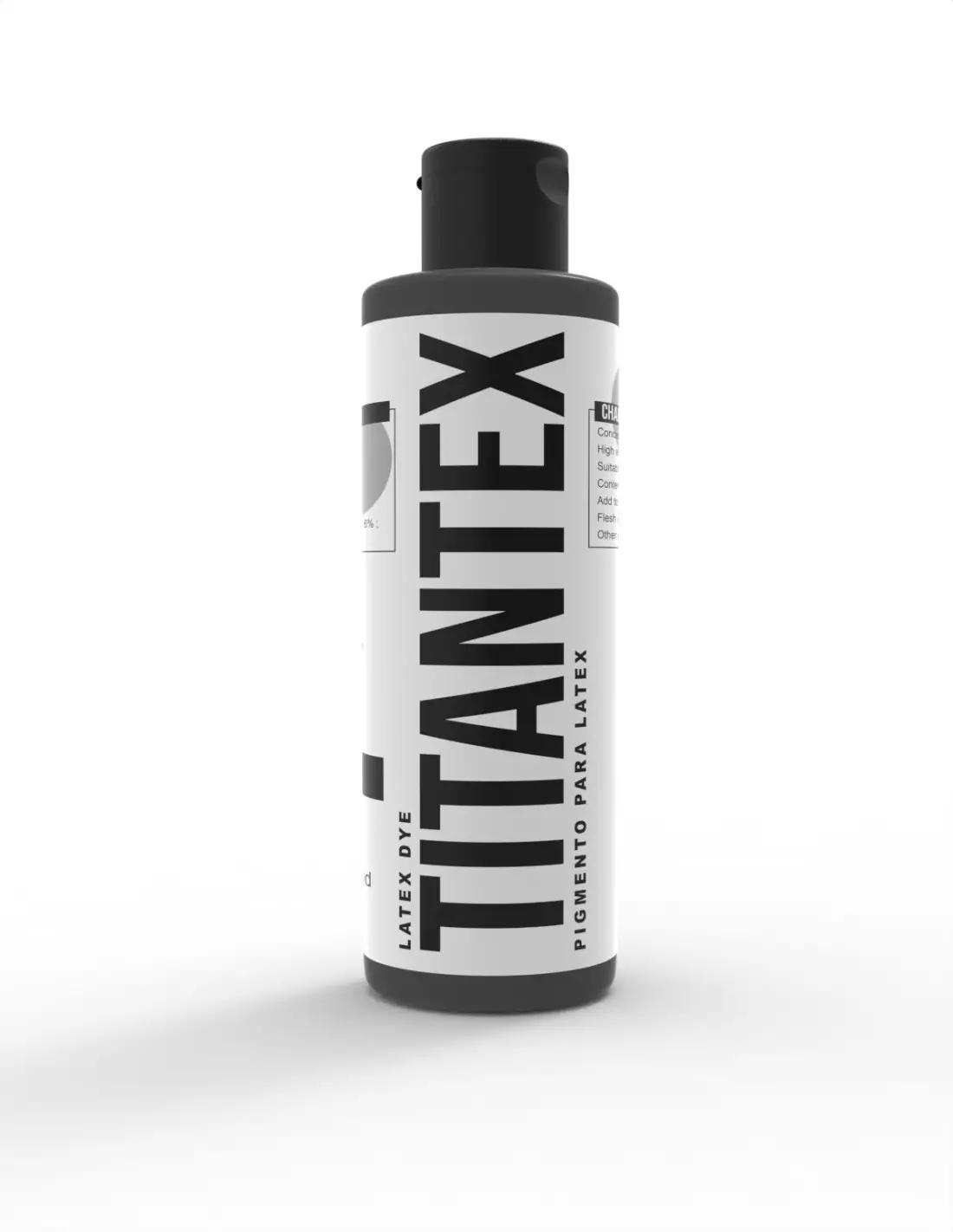
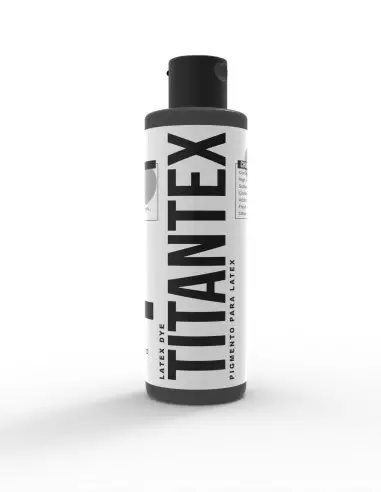
TITANTEX - Latex Pigments
204309401
€8.00
9,68 € Tax incl.
9,68 € Tax incl.
Concentrated pigment for latex. High elasticity, no cracking. Add between 1% and 6% depending on colour. 100 ml bottle.
TITANTEX is a concentrated pigment formulated specifically for mixing with latex, mastics and similar compounds. It provides colour homogeneously and stably, with full elasticity once dry, without cracking or peeling. If you work with latex in prosthetics, scenography or special effects, this is the direct solution for colouring your base material.
Technical specifications
| Format | 100 ml |
|---|---|
| Type | Concentrated pigment for latex |
| Compatibility | All types of latex, mastics and latex-based compounds |
| Dosage — Flesh tones and white | 4% of total mix weight |
| Dosage — Silver | 6% of total mix weight |
| Dosage — Other colours | 1% to 3% until desired shade is reached |
| Behaviour after drying | Pigmented latex lightens one shade upon drying |
| Colour mixing | Yes, mixable with each other to obtain custom shades |
What it is used for
TITANTEX is designed for colouring liquid latex before application or casting. It is the standard resource in special effects workshops, scenography, character makeup and plastic arts where precise control of the material's shade is needed from the base mix.
- Colouring latex for prosthetics and character makeup special effects
- Pigmenting masks and latex pieces for theatre and scenography
- Customising the shade of latex figures, dolls and replicas
- Dyeing mastics and latex-based compounds in crafts and plastic arts projects
- Creating custom flesh tones for facial and body prosthetics
- Mixing colours to obtain intermediate shades not available as standard
How to use it
- Shake the TITANTEX bottle well before use to homogenise the pigment.
- Weigh or measure the amount of latex you are going to pigment.
- Calculate the dose: between 1% and 3% for most colours, 4% for white and flesh tones, 6% for silver.
- Add the pigment to the latex and mix slowly and steadily until a completely uniform colour is obtained, with no streaks.
- Bear in mind that latex lightens one shade upon drying; adjust the wet shade slightly darker than desired.
- If you need an intermediate shade, mix two or more TITANTEX colours together before adding them to the latex.
- Apply the pigmented latex using your usual method: brush, spray gun or casting into a mould.
Usage tips
Compensate for lightening upon drying
Latex always lightens as it loses moisture. When preparing a flesh tone or any reference colour, run a small test: apply a thin layer on paper, let it dry and compare with the target. Adjust the pigment proportion before working on the final piece.
Mix by weight, not by eye
Dosage proportions (1%–6%) refer to the weight of pigment relative to the total weight of the mix. Using a precision scale ensures repeatability if you need to prepare several batches of the same shade for a large project.
Colour compatibility and blending
TITANTEX colours are mixable with each other without restriction. Always start from lighter colours and add the dark pigment gradually until the desired shade is reached; it is much easier to darken than to lighten an already prepared mix. If you need to apply a surface paint layer over the cured piece, Mask Paint by Monster Makers is the reference product for detailed finishes on latex.
Frequently asked questions
How much pigment should be added to latex?
It depends on the colour. With TITANTEX, the standard dosage is 1% to 3% for most shades. Flesh tones and white require 4%, and silver requires 6%. Always calculated on the total weight of the latex mix. Start with the minimum proportion and increase until the desired wet shade is reached, bearing in mind that it lightens upon drying.
Does the pigment affect the elasticity of the latex?
No. TITANTEX is specifically formulated for latex and maintains the material's characteristic elasticity. Pigmented pieces do not crack or lose flexibility under normal use.
Why does the colour change upon drying?
Latex contains water in suspension. As it evaporates during drying, the material becomes more transparent and the perceived shade lightens by one degree. This is an inherent behaviour of all latex, not a defect of the pigment. The solution is to adjust the wet colour one shade darker than desired in the dry state.
Can several colours be mixed together?
Yes. All TITANTEX colours are compatible with each other and can be mixed freely to obtain intermediate or custom shades. The workshop recommendation is to start from the lightest colour and add the darker one gradually for greater control over the final result.
Is it suitable for any type of latex?
Yes. TITANTEX is compatible with all types of latex: moulding latex, foam latex, character makeup latex and latex-based mastics. It can also be used in other water-based compounds compatible with water-based pigments.
Can I add the pigment to already applied latex, or only before mixing?
TITANTEX is designed to be added to liquid latex before application, mixing until a uniform colour is obtained. It is not formulated to be applied over already cured or dry latex as if it were a paint. To paint over already dry latex surfaces, the appropriate product is a latex-specific paint such as Mask Paint by Monster Makers.
How far does a 100 ml bottle go?
At a 2% dosage, a 100 ml bottle of TITANTEX is enough to pigment up to 5 kg of latex. For shades requiring a higher pigment quantity (flesh, white or silver), the yield is proportionally lower. For large projects, it is advisable to calculate the required amount beforehand to avoid shade differences between batches.
Do I need to use a release agent when casting pigmented latex into a mould?
The pigment does not affect the demoulding behaviour of the latex. If your usual process requires a release agent, continue using the one appropriate for your mould type. TITANTEX pigment does not modify the adhesion or shrinkage properties of the latex.
No reviews
Tap to zoom