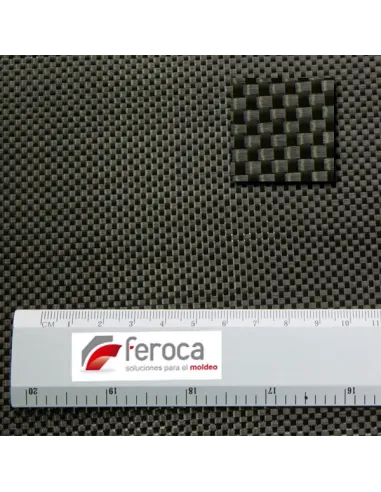
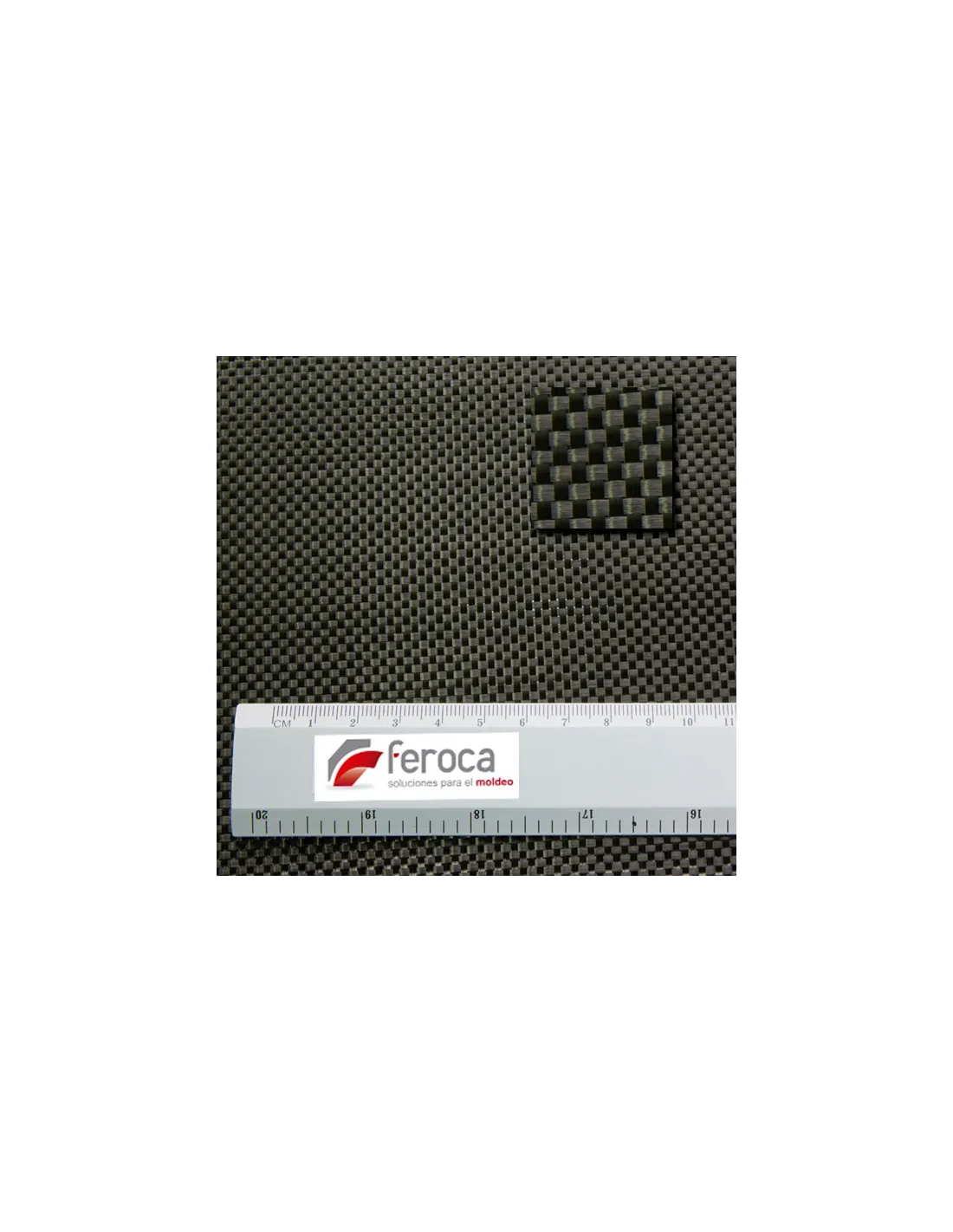
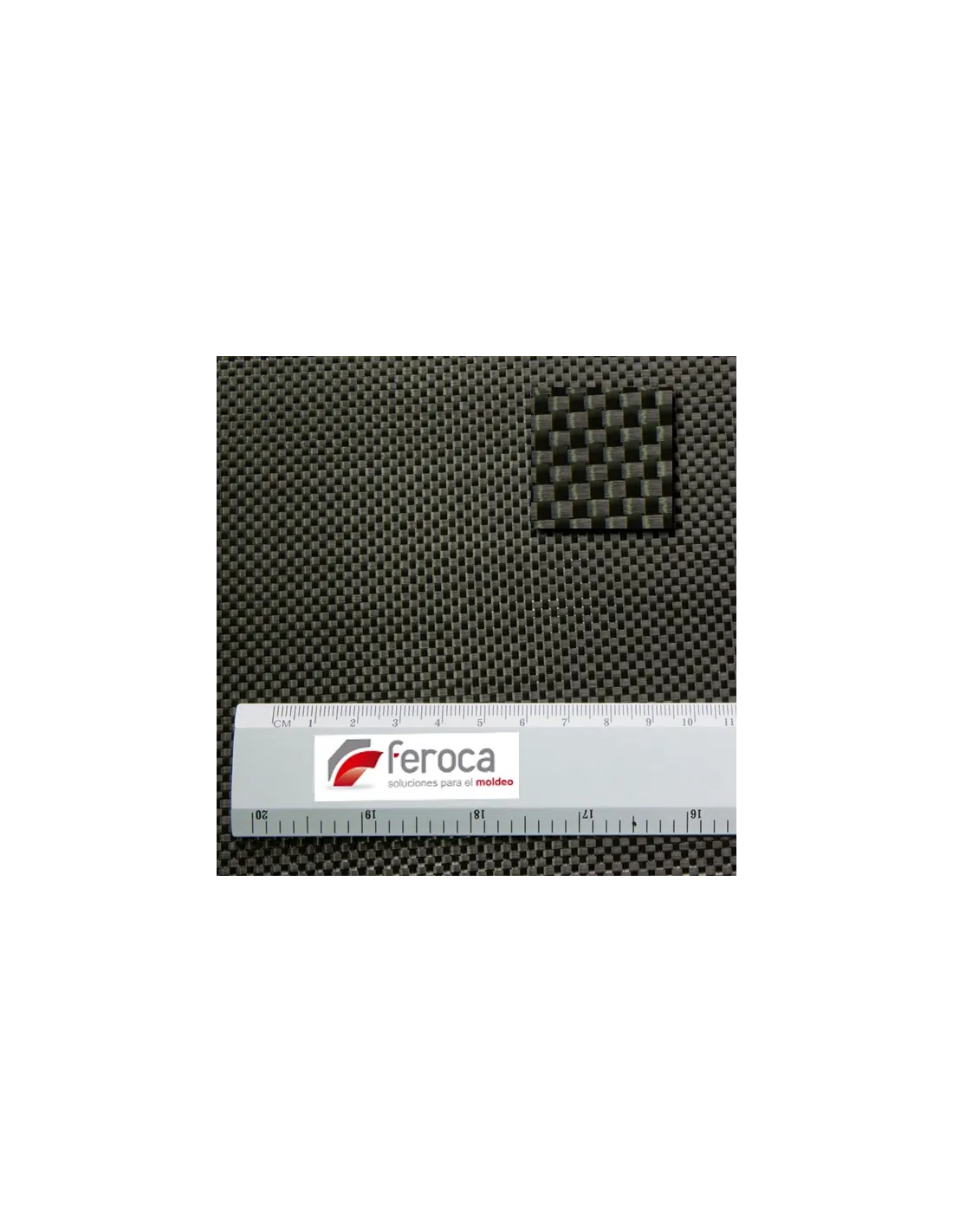
The 200 g/m² plain weave carbon fibre fabric is the go-to structural reinforcement for high-strength, lightweight laminates. At 100 cm wide and with a plain (taffeta) weave, it wet out easily with epoxy resins and delivers the characteristic visual finish of carbon on both technical and decorative parts.
Technical specifications
| Weight | 200 g/m² |
|---|
| Width | 100 cm |
|---|
| Material | Carbon fibre |
|---|
| Weave type | Plain (taffeta) |
|---|
| Recommended use | Hand lamination, infusion, prepreg |
|---|
What it's used for
This carbon fabric is suitable for any application demanding high stiffness, mechanical strength and weight reduction compared to steel or fibreglass. It is a versatile reinforcement for both structural parts and high-quality visual surface finishes.
- Automotive parts: spoilers, diffusers, engine covers, interiors
- Aeronautical components and drones: fuselages, wings, frames
- Marine materials: hulls, decks, rudders
- Sports and leisure: bicycle frames, rackets, golf clubs, surfboards
- Robotics and engineering: mechanical arms, lightweight chassis
- Decorative laminates with exposed carbon finish, protected with epoxy top coat
- Localised reinforcement of existing fibreglass or wood parts
How to use it
- Prepare the mould or substrate: apply release agent if you plan to demould the part. Make sure the surface is clean, dry and dust-free.
- Cut the fabric: use composite scissors or a sharp craft knife with a metal ruler. Plain weave does not fray excessively, but precise cutting helps avoid waste.
- Mix the epoxy resin: use an epoxy resin formulated for carbon fibre or a laminating epoxy. Always follow the mix ratio specified by the manufacturer.
- Apply the first resin coat: wet out the mould or substrate with a brush or laminating roller.
- Lay the fabric: place the cloth onto the resin and smooth it with a gloved hand or a hard roller to remove wrinkles and air bubbles.
- Wet out the fabric: apply resin on top until the fabric becomes translucent (complete wet-out), without excess resin.
- Add additional plies if needed: repeat steps 4–6 according to the required thickness and strength.
- Apply Peel Ply (optional): place a layer of peel ply over the laminate to obtain a clean surface ready for bonding or painting without sanding.
- Cure: allow the laminate to gel and cure following the temperature cycle specified for the resin. A post-cure at elevated temperature maximises mechanical properties.
- Demould and finish: remove the peel ply if used, demould the part and apply an epoxy top coat if you want to protect the exposed finish. Polish with fine polishing compound for a high-gloss result.
Usage tips
Wet-out control and bubble prevention
Carbon fabric is less transparent than fibreglass during wet-out, making dry spots harder to detect. Work under good lighting and watch the texture: properly impregnated fabric loses its matte appearance and shows a uniform sheen. Use a serrated laminating roller to purge air effectively without over-saturating the laminate with resin.
Fibre orientation
Plain weave fabric has fibres at 0°/90°. If your part requires diagonal strength, cut the fabric at 45° or combine plies with different orientations. For symmetrical parts, alternate plies in a mirrored orientation on either side of the neutral axis to prevent warping during cure.
Temperature and working conditions
Always work above 18 °C. At lower temperatures, resin viscosity increases and wet-out becomes more difficult, promoting porosity. If the workshop is cold, gently pre-warm the resin components (never the fabric) to improve flow. Avoid high humidity, especially with epoxy resins sensitive to amine blush.
Frequently asked questions
Which resin should I use with this fabric?
Epoxy resin is the optimum choice for carbon fibre: it offers the best fibre adhesion, low cure shrinkage and excellent mechanical properties. For hand lamination, Epofer Carbon 402 is specifically formulated for carbon. Epofer Laminate 401 is also an excellent alternative for general laminates. Polyester and vinylester resins are not recommended with carbon fibre, as adhesion and final properties are considerably inferior.
How many plies do I need for a strong part?
It depends on the application. For decorative or semi-structural parts (covers, housings), 2–3 plies of 200 g/m² are usually sufficient. For structural components under load, 4 to 8 plies are recommended, or you can combine with a core (foam, balsa) to increase stiffness without adding weight. Always consult a structural engineer if safety is critical.
Can I use this fabric for vacuum infusion?
Yes. The 200 g/m² plain weave is compatible with vacuum infusion (VARTM) and vacuum bagging. For infusion, using flow media and adjusting resin viscosity is recommended. Place peel ply between the laminate and the flow media to facilitate release of the consumable.
How do I cut it without fraying?
Use fabric scissors or long-blade composite shears. For straight cuts, a new craft knife with a metal ruler on a cutting mat gives clean results. For complex curved shapes, trace the outline with masking tape before cutting: the tape holds the fibres and reduces fraying. You can also apply a thin line of uncured resin along the cut edge and let it gel before handling.
How do I achieve a high-quality exposed finish?
For a high-quality exposed carbon finish: work with a well-polished and waxed mould, ensure complete wet-out without bubbles and, once the part has cured, apply several coats of clear epoxy top coat. Sand progressively (400, 800, 1500, 2000 grit) and finish with fine polishing compound to restore the deep gloss of the fabric.
Is this fabric suitable for beginners?
If this is your first time working with carbon fibre, we recommend starting with the Carbon/Epoxy Laminating Kit, which includes everything you need with the ratios already set. Plain weave is more manageable than unidirectional fabrics, but it takes practice to achieve a bubble-free, wrinkle-free wet-out.
Is carbon fibre electrically conductive?
Yes. Carbon fibre is electrically conductive, unlike fibreglass or Kevlar. This can be an advantage (electromagnetic shielding) or a drawback (short circuits if the part is in contact with electrical circuits). Bear this in mind during design, especially in electronics or automotive applications.
How do I store unused fabric?
Roll the fabric onto a rigid tube, avoiding folds that could damage the fibres. Store it in a dry place at room temperature, away from direct light. Do not compress it under other materials. Under these conditions, carbon fibre fabric retains its properties indefinitely.