Shopping Cart


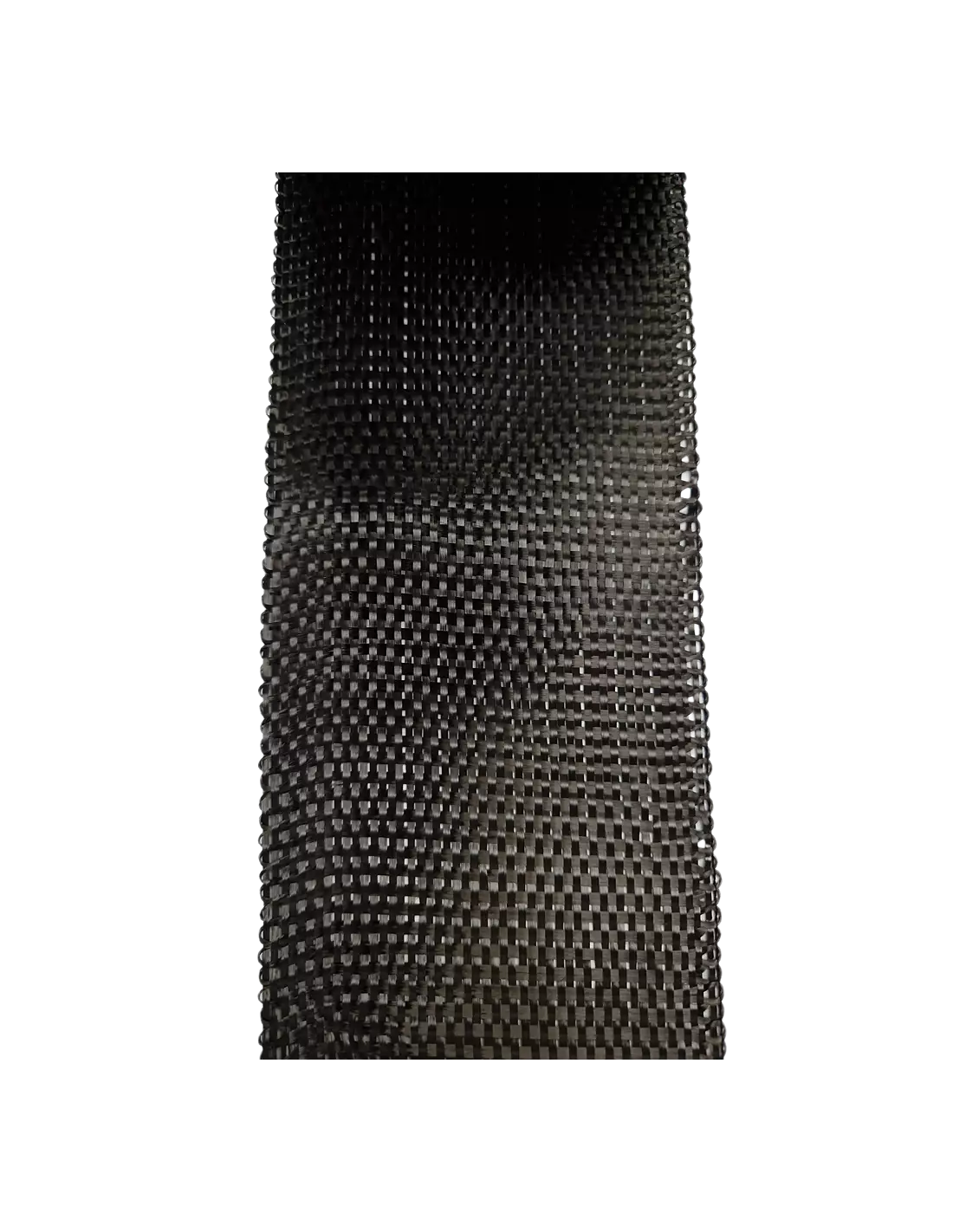
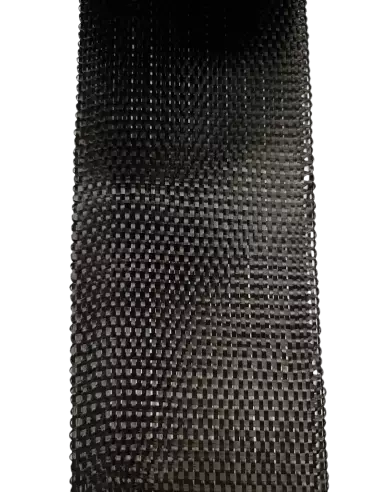
Plain 3K Carbon Tape - 200g x 100mm
103203001
€13.00
15,73 € Tax incl.
15,73 € Tax incl.
Plain 3K carbon tape, 200 g/m², 100 mm wide. Warp and weft 5.0 ends/cm. Ideal for structural reinforcement and high-performance composites.
The Plain 3K carbon tape, 200 g/m² and 100 mm wide, is a plain weave carbon fibre fabric with 3,000 filaments per tow. Its balance between weave density and specific weight makes it an efficient option for localised structural reinforcement, thin laminates and applications where real strength is needed without adding unnecessary mass.
Technical specifications
| Parameter | Value |
|---|---|
| Weave type | Plain |
| Filament count | 3K (3,000 filaments per tow) |
| Weight | 200 g/m² |
| Width | 100 mm |
| Warp | 5.0 ends/cm — 3K 200 tex |
| Weft | 5.0 ends/cm — 3K 200 tex |
What it is used for
This tape is designed for applications where you need spot or continuous reinforcement in specific areas of a part. The 100 mm width makes it especially practical for edges, corners, structural ribs and repairs without needing to cut fabric from a wide roll. It laminates with epoxy, polyester and vinyl ester resins.
- Reinforcement of spars, tubes and profiles in lightweight structures
- Localised repair and reinforcement of existing carbon parts
- Manufacturing of sports components: bicycle frames, sticks, rackets, poles
- Edge and corner reinforcement in composite moulds and tooling
- Lightweight boat building: reinforcement of internal stringers and hulls
- Automotive and motorsport: reinforcement of panels, spoilers and body parts
- Prototypes and technical parts in 3D printing reinforced with external lamination
How to use it
- Prepare the surface to be laminated: clean, degrease and apply the appropriate release agent or primer according to the chosen resin system.
- Mix the epoxy resin (or other compatible matrix system) in the exact ratio indicated by the manufacturer.
- Apply a thin layer of resin to the surface or mould using a brush or roller.
- Place the carbon tape over the wet resin, aligning the fibre direction according to the structural design.
- Wet out the tape with additional resin and remove air bubbles using a stipple roller or brush, working from the centre towards the edges.
- Repeat the process if the design requires multiple layers, alternating orientations as needed.
- Apply vacuum (vacuum bag) or mechanical pressure if required by the process, to maximise compaction and reduce resin content.
- Allow to cure according to the resin cycle: room temperature or oven cure depending on the system.
- Demould, trim the excess and carry out the final finish (sanding, lacquering, clear epoxy varnish).
Usage tips
Fibre direction and strength
The plain weave has equal density in warp and weft (5.0 ends/cm in both), giving it in-plane isotropic behaviour. If your design demands maximum strength in a single direction, consider combining this tape with the unidirectional carbon tape, orienting the UD fibres in the primary load direction.
Resin/fibre ratio and surface finish
For high-performance laminates, the recommended fibre volume content is between 50 and 60%. Excess resin reduces mechanical properties and adds unnecessary weight. If working by hand (hand lay-up), use the minimum resin that guarantees full wet-out, and apply a vacuum bag to extract the surplus. For parts where visual finish matters, use a higher-weight carbon fabric such as 200 g carbon fabric in a 100 cm roll as the outer layer and reserve this tape for the internal structural plies.
Storage and handling
Store the tape rolled up, in a dry place away from direct sunlight. Carbon fibres are electrically conductive: avoid contact with exposed electronic components during handling. When cutting, use scissors or a craft knife with a new blade and work on a hard surface; loose fibres are irritating to skin and mucous membranes, so wear gloves and a fine particle mask.
Frequently asked questions
What resins is this fabric compatible with?
This carbon tape is compatible with epoxy, polyester and vinyl ester resins. For structural and high-performance applications, epoxy resin is the preferred option because it offers better fibre adhesion, lower shrinkage and superior mechanical properties. Polyester and vinyl ester resins are suitable for less demanding applications or where cost is a determining factor.
How many layers do I need for a strong part?
It depends on the application and expected loads. As a general reference, a laminate of 2–3 plies of 200 g/m² (approximately 0.4–0.6 mm) is adequate for secondary reinforcements and low-load parts. For structural components subject to bending or impact, a load analysis is recommended, or at least start with 4–6 ply laminates and validate the result. The orientation of each ply influences the outcome as much as the number of plies.
Can I use this tape to repair an existing carbon part?
Yes. This is one of the most common uses for narrow tapes. Sand the damaged area until all compromised material is removed, taper the edges of the sound laminate at about 20–30 mm per repair ply, wet out the tape with compatible epoxy resin and laminate successive plies following the original orientation. The 100 mm width makes it easy to work in areas with limited access without needing to cut from a wide roll.
What is the difference between plain and twill weave?
Plain weave has the tightest interlacing: each yarn passes alternately over and under the perpendicular yarn. This gives it greater dimensional stability and makes it less prone to fraying when cut. Twill weave has a more open interlacing (diagonal pattern), which gives it greater drapeability and makes it easier to conform to complex curved geometries, though with slightly less stiffness at the same weight. If your part has pronounced curvatures, the Carbon Twill fabric 160g 2/2 may be more suitable.
Is 3K carbon better than 6K or 12K?
It is not a matter of better or worse, but of application. 3K (3,000 filaments per tow) produces a finer fabric with a better surface finish, ideal when aesthetics and the visible weave detail are important. 6K and 12K have thicker tows, which speeds up the lamination process on large parts but gives a coarser appearance. For 100 mm tapes used in reinforcements and repairs, 3K is the standard choice.
Do I need a release agent if I use this tape on a mould?
Yes, whenever you intend to demould the finished part. Epoxy resin bonds strongly to almost any surface, including fibreglass, aluminium or wooden moulds. Apply a release agent compatible with your chosen resin system before starting the lamination. If you are working directly on an existing part to reinforce it (without demoulding), it is not necessary.
Can it be used outdoors or with UV exposure?
Carbon fibre itself is stable against UV, but most epoxy resins yellow with prolonged sun exposure. If the part will be continuously exposed to sunlight, apply a final coat of UV-protective varnish or gel coat, or use a resin specifically formulated for outdoor use. In applications where visual finish does not matter (inside structures, covered areas), this is not a relevant concern.
Can I combine this tape with fibreglass?
Yes, hybrid carbon/glass laminates are common. Glass provides greater impact toughness and reduces the overall cost of the laminate. A common strategy is to use carbon plies on the outer faces (where bending loads are highest) and glass plies in the core. Bear in mind that carbon has a much higher elastic modulus than glass, so the carbon carries most of the load; the stack design must account for this.
No reviews
Tap to zoom