Shopping Cart


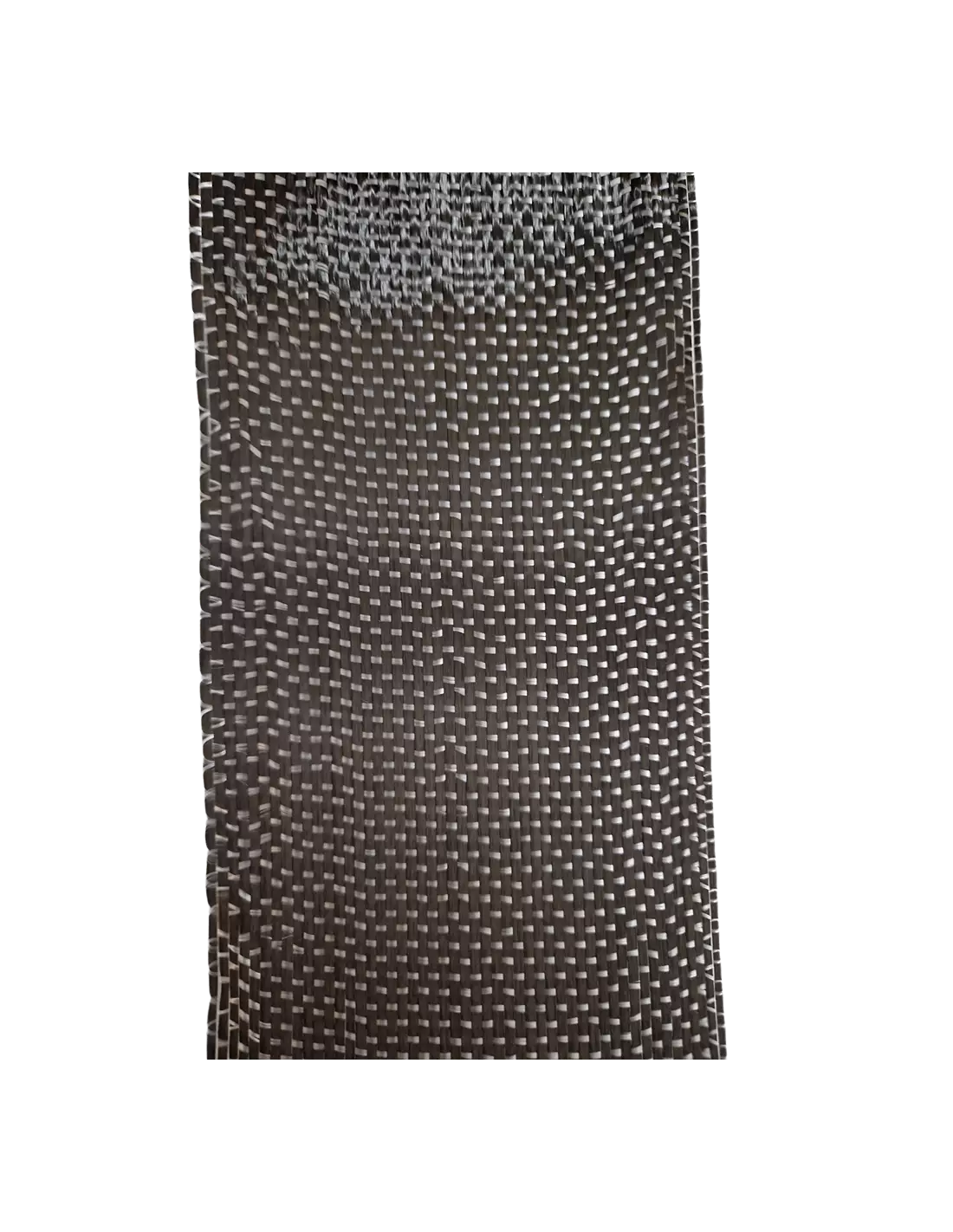
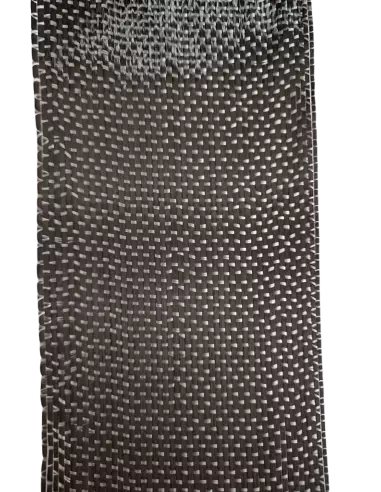
Unidirectional Carbon Woven Tape - 225g x 100mm
103202001
€12.00
14,52 € Tax incl.
14,52 € Tax incl.
Unidirectional carbon fibre tape 225 g/m², 100 mm wide. 6K-400 tex warp, EC9-34 weft. High directional strength and stiffness.
The 225 g/m² unidirectional carbon fibre tape, 100 mm wide, concentrates all fibres in a single direction, maximising strength and stiffness along the load axis. The EC9-34 fibreglass weft yarn maintains geometry without penalising weight, making it the most efficient option when the load path is clearly defined by design.
Technical specifications
| Parameter | Value |
|---|---|
| Fabric type | Unidirectional (UD) |
| Areal weight | 225 g/m² |
| Width | 100 mm |
| Weft yarn | EC9-34 (fibreglass) |
| Warp | 5.0 ends/cm — 6K filament, 400 tex |
| Weft | 3.5 × 2 ends/cm — EC9-34 tex |
| Reinforcement direction | 0° (longitudinal) |
What it is used for
This tape is designed to reinforce linear structural elements or to manufacture parts where the principal load acts in a single direction. Its 100 mm tape format enables localised lamination without wasting material.
- Localised reinforcement of spars, beams and profiles in aerospace and automotive applications
- Manufacture of tubes, blades and brackets using filament winding or flat lamination techniques
- High-performance sports equipment: bicycle frames, sticks, poles and rackets
- Structural reinforcement in repairs of damaged composite parts
- Prototypes and industrial design parts where the stiffness-to-weight ratio is critical
- Lamination of snowboard, kiteboard and other sliding-sport equipment
- Reinforcement of timber, steel or aluminium elements in hybrid structures
How to use it
- Choose a compatible resin: this tape is suitable for epoxy, polyester and vinyl ester resins. Epoxy offers the best adhesion and final mechanical properties.
- Prepare the surface: clean and sand the substrate. If working with a mould, apply a suitable Release agent to ensure demoulding without damaging the part.
- Cut the tape: use scissors or a cutter with a metal ruler, always cutting dry. Plan the layers and orientation before wetting out.
- Wet out the tape: apply the catalysed resin to the surface or directly onto the tape with a roller or brush. Make sure all fibres are fully saturated with no excess resin.
- Place and compact: position the tape on the substrate, aligning the fibres with the load direction. Use a bubble roller to remove trapped air and ensure contact.
- Add layers if needed: if the design requires multiple layers, repeat the process, orienting each tape according to the laminate schedule. For multiaxial loads, combine layers at 0°, 45° or 90° with bidirectional carbon fabric.
- Cure the part: follow the cure cycle specified by the resin manufacturer. A post-cure at elevated temperature significantly improves mechanical properties.
- Demould and finish: after full cure, demould carefully and carry out the required surface finishing (sanding, painting, varnishing).
Usage tips
Fibre orientation: the most critical factor
In a unidirectional fabric, strength is concentrated 100% in the direction of the carbon fibres (0°). If the load in your part is not purely axial, combine layers of this tape with carbon twill fabric or with ±45° layers to gain resistance to torsion and shear. A pure UD laminate in a multiaxial application can fail unexpectedly.
Resin-to-fibre ratio and surface finish
Excess resin does not improve strength — it reduces it. Aim for a weight ratio of approximately 35–45% resin relative to the total laminate weight. Work with a bubble roller and, if possible, apply vacuum with a vacuum bag to compact the laminate, eliminate interstitial air and achieve a higher fibre volume fraction. The result is a stiffer, lighter part with a better surface finish.
Storage and handling
Store the tape rolled up in a dry place away from direct light. Carbon fibres are electrically conductive: prevent off-cuts from coming into contact with sensitive electronic equipment. Wear a dust mask and gloves when cutting dry, as the microfibres are irritating to skin and the respiratory tract.
Frequently asked questions
What is the difference between a unidirectional and a bidirectional fabric?
In a unidirectional fabric all load-bearing fibres run in the same direction (0°), so strength and stiffness are concentrated on that axis. A bidirectional fabric (plain, twill) distributes fibres at 0° and 90°, offering resistance in both directions at the cost of slightly more weight per unit of performance on a specific axis. This 225 g/m² tape is the right choice when the principal load is clearly defined; for combined loads, pair it with bidirectional fabric.
Which resins are compatible with this carbon tape?
It is compatible with epoxy, polyester and vinyl ester resins. Epoxy is the most recommended because it offers better adhesion to carbon fibre, lower cure shrinkage and superior mechanical properties. Polyester and vinyl ester resins are valid for less demanding applications and are lower in cost.
How many layers do I need to obtain a rigid part?
It depends on the areal weight, geometry, resin and expected load. As a rough guide, 2–3 layers of this 225 g/m² tape with epoxy are sufficient for linear reinforcement of thin elements. For primary structural parts, a laminate calculation or a prototype with testing is advisable. Cured ply thickness is approximately 0.2–0.25 mm under hand-lamination conditions.
Can I use this tape with vacuum infusion?
Yes. Unidirectional carbon fabrics are compatible with vacuum infusion (light RTM, VARTM). Permeability in the fibre direction is high, which facilitates longitudinal resin flow. Transverse permeability is much lower, so resin inlet points and vacuum lines must be carefully planned to ensure complete wet-out.
What is the difference between 3K and 6K filament?
The number indicates filaments per tow: 3K means 3,000 filaments and 6K means 6,000. This tape uses a 6K tow (400 tex), resulting in thicker tows, higher areal weight per ply and a slightly more textured surface. 3K tows produce a finer finish and are used more in aesthetic applications. For structural reinforcement, 6K offers excellent cost-to-performance ratio.
How do I cut the tape without it fraying?
Always cut with sharp scissors or a cutter on a hard surface. If the cut is not perpendicular to the fibres (diagonal or angled cuts), the tape can fray easily because the fibreglass weft yarn is very fine. For oblique cuts, apply a strip of masking tape along the cut line before cutting and remove it afterwards. You can also apply a small amount of resin to the cut edge to consolidate it.
Can I combine this tape with fibreglass in the same laminate?
Yes, hybrid carbon-glass laminates are common. Carbon is usually placed in the outer plies (where bending stresses are highest) and fibreglass in the core or as the inner layer. This reduces cost without excessive loss of stiffness. Bear in mind that the elastic modulus of carbon is much higher than that of glass, so the carbon absorbs most of the load.
Do I need personal protective equipment when working with carbon fibre?
Yes. Carbon microfibres are irritating to skin, eyes and the respiratory tract. Wear nitrile gloves, safety glasses and an FFP2 dust mask when cutting or sanding. Work in a well-ventilated space and avoid dispersing off-cuts; collect them with a HEPA-filtered vacuum cleaner, not with compressed air.
No reviews
Tap to zoom