Shopping Cart



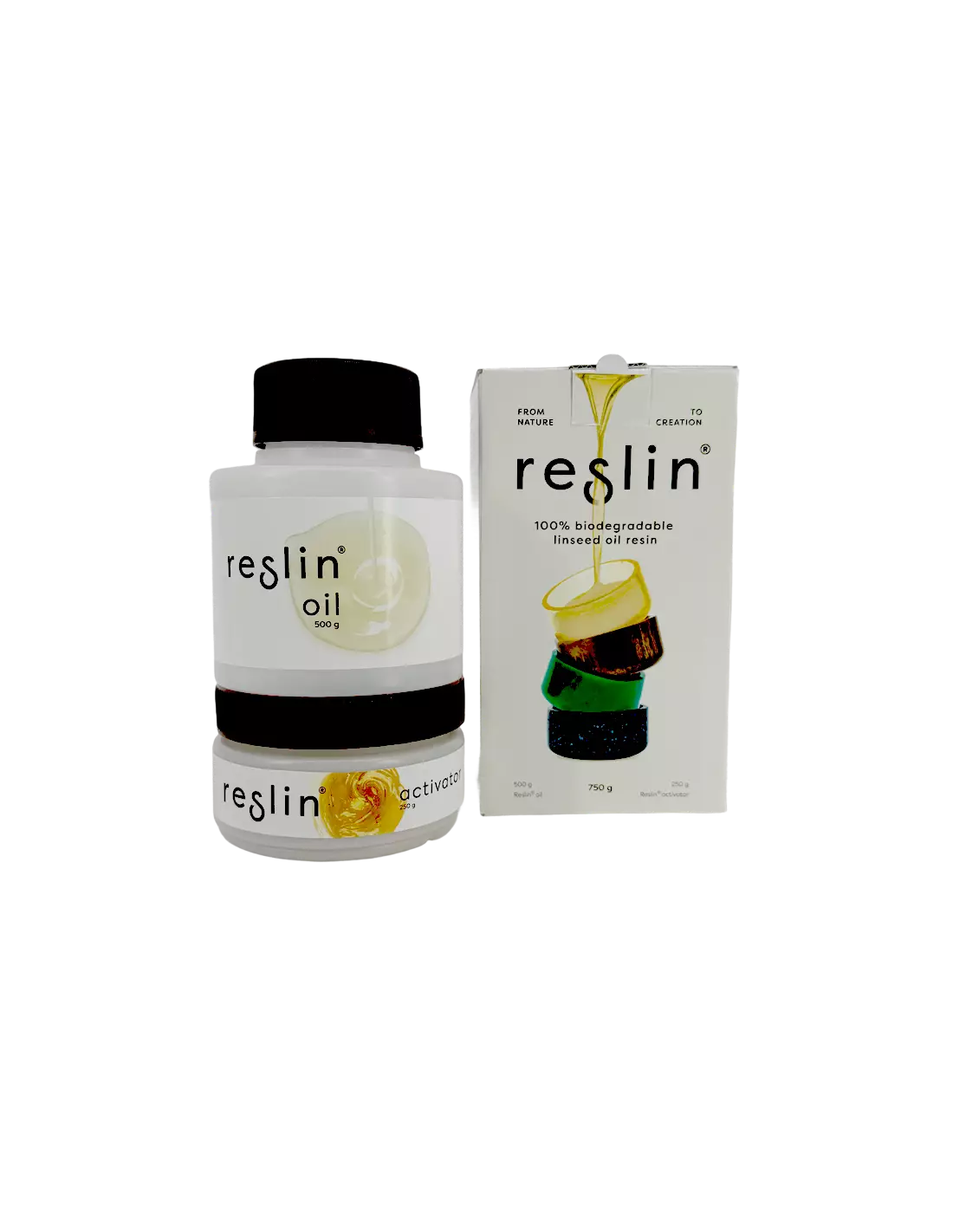
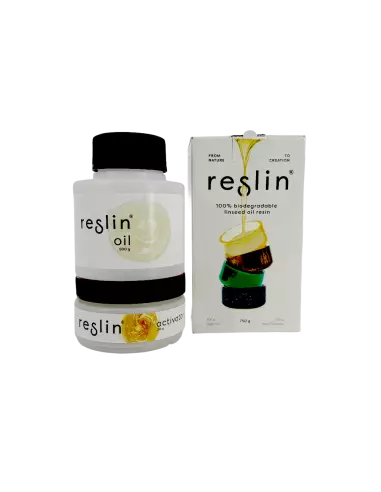
Reslin - 100% biodegradable resin of vegetable origin
444001000
€42.00
50,82 € Tax incl.
50,82 € Tax incl.
100% biodegradable plant-based resin made from linseed oil. 2:1 mix ratio, oven-cured at 120 °C. 750 g kit (500 g A + 250 g B). No harmful substances.
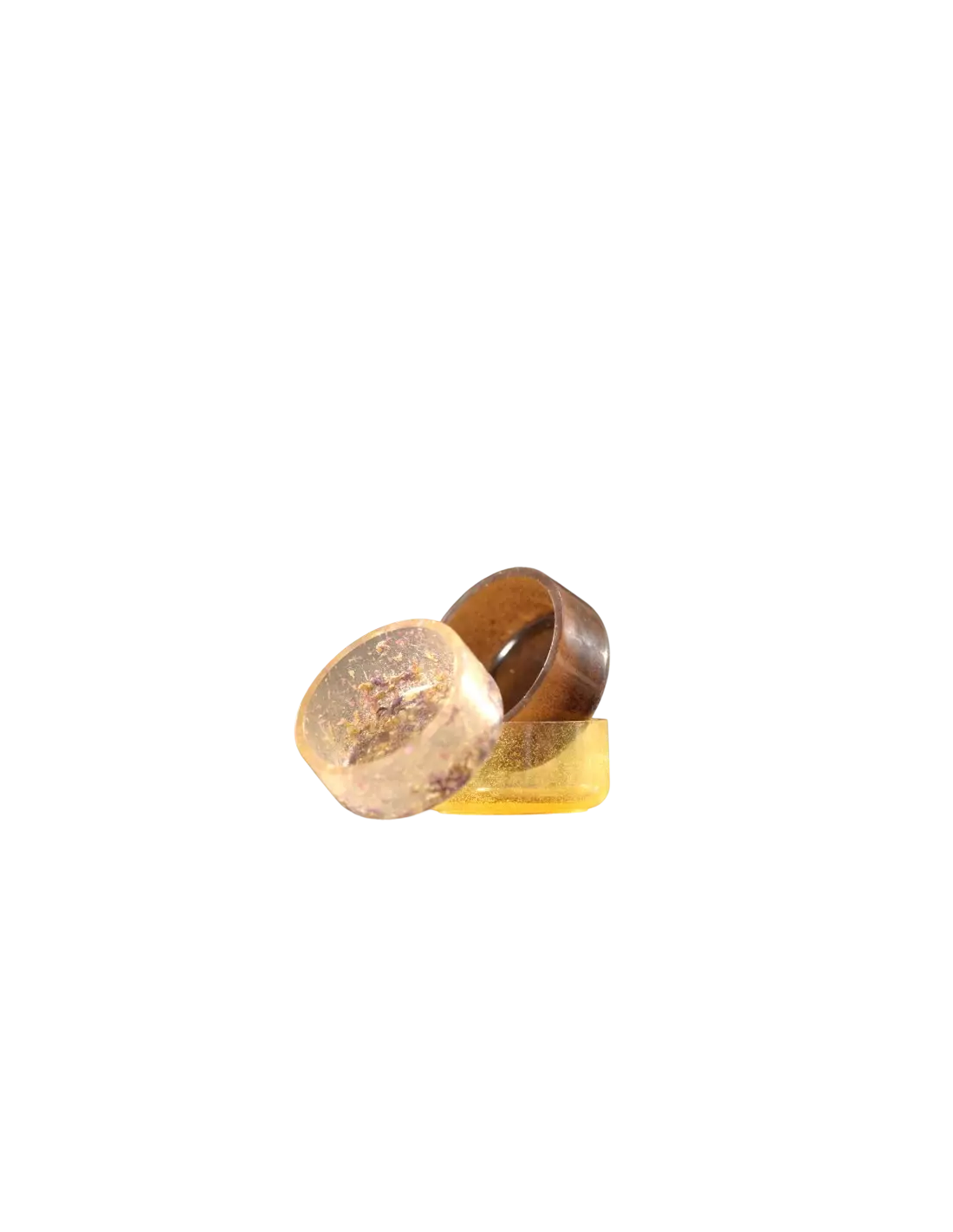
Reslin is the first 100% plant-based and biodegradable resin on the market: a combination of linseed oil and a natural activator derived from sugar beet molasses. No harmful substances, with a soft and flexible translucent amber finish, and an oven-curing process accessible to any workshop or creative studio.
Technical specifications
| Parameter | Value |
|---|---|
| Origin | 100% plant-based (linseed oil + sugar beet molasses activator) |
| Mix ratio | 2:1 (2 parts oil : 1 part activator, by weight) |
| Kit contents | 750 g (500 g component A + 250 g component B) |
| Colour | Translucent amber |
| Finish | Soft and flexible |
| Curing method | Convection oven (two phases) |
| Temperature — Phase 1 | 90 °C for 20 minutes |
| Temperature — Phase 2 | 120 °C for 20 minutes |
| Rest before baking | 20 minutes in mould before placing in the oven |
| Total process time | Approx. 60 minutes from mould filling |
| Harmful substances | None |
| Biodegradable | Yes, 100% |
What it is used for
Reslin is designed for those looking for a sustainable and safe alternative to conventional resins. Its oven-based process, free of harmful emissions, makes it particularly suitable for workspaces without industrial extraction. It is ideal for:
- Decorative objects: figurines, trophies, interior design elements
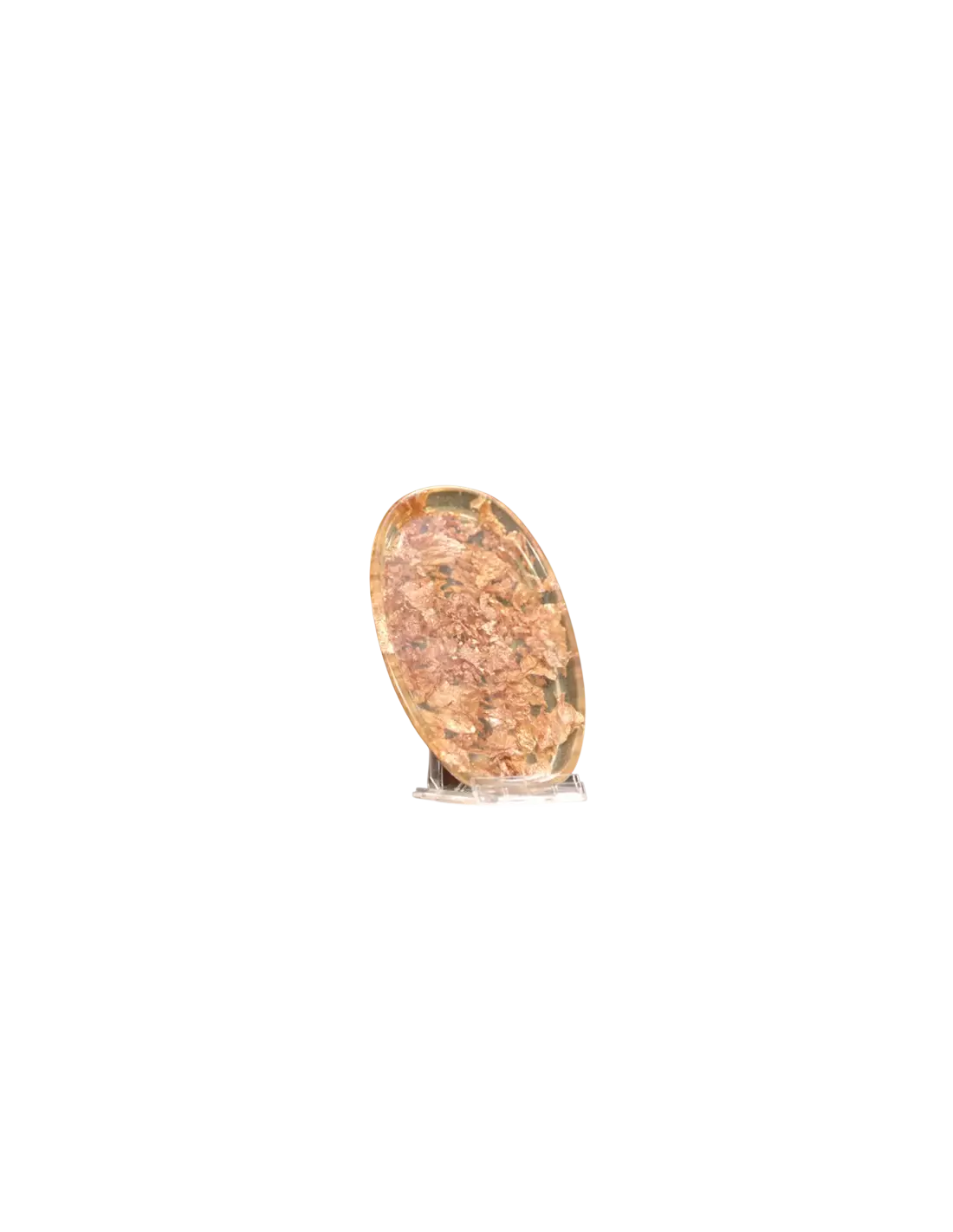
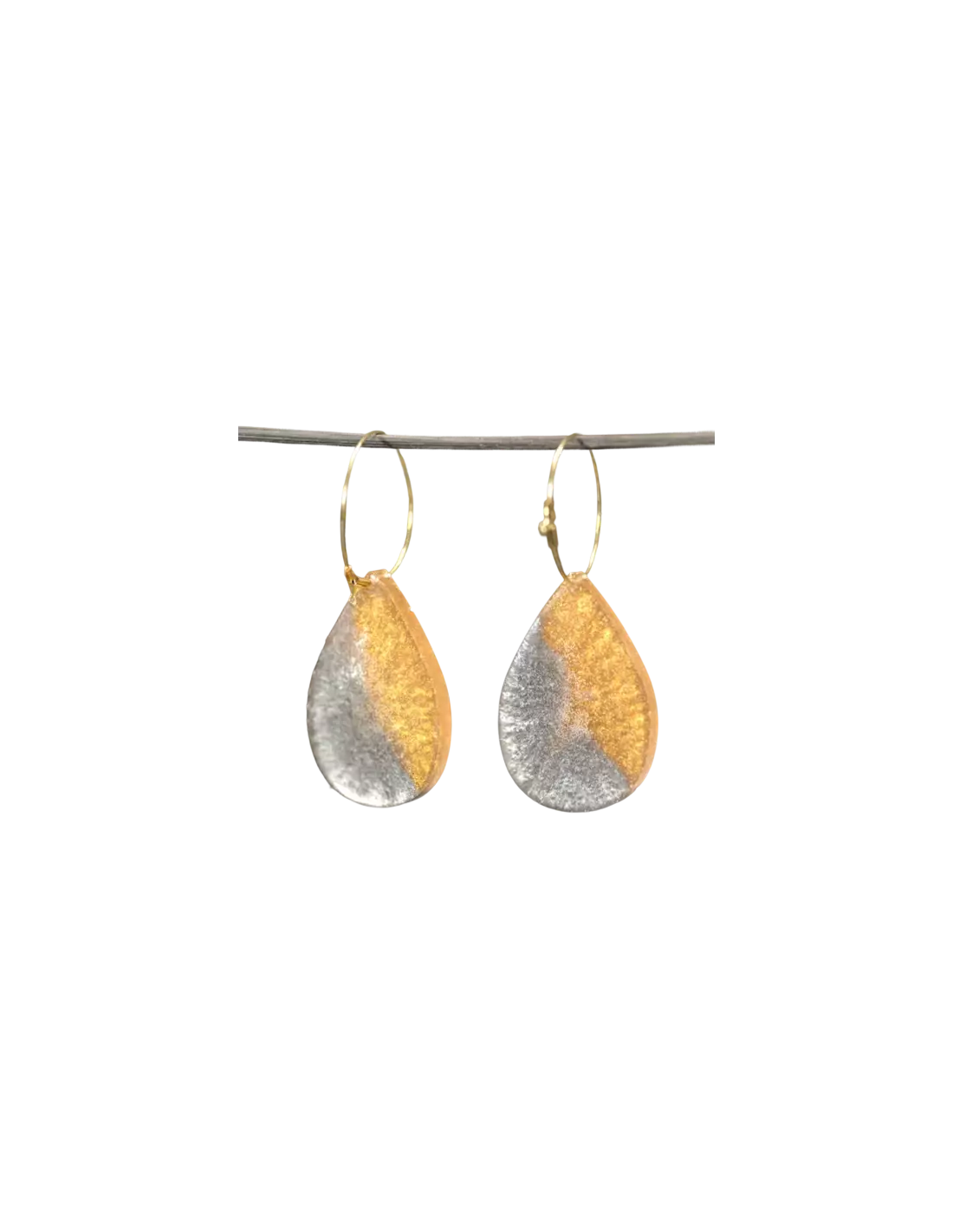
- Jewellery and accessories with decorative additives (micas, pigments, glitters)
- Art pieces and creative crafts
- Prototypes and small-format utilitarian objects
- Production in school workshops, design studios or creative spaces where resins with isocyanates or styrene are avoided
- casting in silicone moulds, with easy demoulding thanks to the flexibility of the cured material
How to use it
- Weigh the components: Use a precision scale. Mix 2 parts of Reslin oil (component A) to 1 part of activator (component B), always by weight.
- Pre-heat the components: Place both containers separately in the oven at 60 °C for 20 minutes. This step reduces viscosity and makes mixing easier.
- Mix carefully: Pour the activator onto the oil and stir slowly for several minutes until a homogeneous mixture is obtained. This is the moment to add additives: micas, natural pigments or other compatible decoratives.
- Fill the mould: Pour the mixture into the mould (silicone recommended) and leave to rest for 20 minutes at room temperature to settle before baking.
- Bake in two phases:
- Phase 1: 90 °C for 20 minutes in a convection oven.
- Phase 2: raise to 120 °C and hold for another 20 minutes.
- Cool and demould: Right after Phase 2 is complete, you can cool the piece in air or by submerging it in cold water. Once cold, demould carefully.
Usage tips
Temperature and mixing precision
Pre-heating to 60 °C is essential: without it, the components are too viscous and the mixture will not be homogeneous. Always use a scale — never measure by volume, as the density of the two components differs. An incorrectly proportioned mix can result in incomplete curing or a brittle piece.
Mould choice and release agent
Silicone moulds are the first choice for their flexibility and because Reslin does not adhere to them. If you use rigid moulds, apply a suitable Release agent before casting. Avoid polystyrene (expanded foam) moulds as the oven heat will deform them. Given Reslin's flexible finish, complex pieces or those with undercuts demould easily.
Adding pigments and decoratives
Always incorporate decorative additives after mixing the two components and before the rest period, during the stirring phase. Micas and mineral pigments are fully compatible. Avoid wet additives or those with a high water content, as they can interfere with curing. If you use liquid dyes, keep the amount to the minimum necessary so as not to alter the mix ratio.
Frequently asked questions
Can I cure this resin without an oven, at room temperature?
No. Reslin requires heat to polymerise correctly. Without the two baking phases (90 °C and 120 °C), the piece will not cure and will remain sticky or without mechanical strength. It is not suitable for room-temperature casting.
Is it safe for use in enclosed spaces without industrial ventilation?
Yes. Reslin contains no isocyanates, styrene or other aggressive volatile compounds. Its formulation based on linseed oil and plant-based activator makes it suitable for home and educational workshops, always with standard basic ventilation. This is one of its main advantages over conventional resins.
What type of mould is most suitable?
Silicone moulds are the best option: they perfectly withstand the process temperatures (up to 120 °C) and allow clean demoulding without the need for a Release agent. Metal moulds are also valid if a Release agent is applied. Avoid moulds made from heat-sensitive plastics such as polystyrene.
Is the finish rigid or flexible once cured?
Reslin's finish is soft and flexible, not brittle. This sets it apart from epoxy or polyester resins, which cure hard and brittle. It is particularly useful for decorative pieces or jewellery that require a degree of elasticity.
Can it be used in projects with children or in educational environments?
Yes, with adult supervision for oven handling. As it contains no harmful substances, Reslin is one of the safest resins on the market for educational environments. The oven process must always be carried out by an adult, but preparation and mould casting can be integrated into activities aimed at young people.
What happens if I get the mix ratio wrong?
An incorrect ratio (for example, excess activator) can cause defective curing: sticky, soft pieces or areas that have not cured. Always use a scale and strictly follow the 2:1 ratio by weight. If the mixture does not appear homogeneous before casting, it is better to discard it and start again.
Can it be pigmented with the same dyes I use for other resins?
It depends on the type of dye. Micas and mineral-based powder pigments are fully compatible. Avoid water-based dyes or those with a high moisture content, as they can interfere with curing. For predictable results, use additives specifically designed for resins, such as the pigments and micas available in the Feroca catalogue.
Is it really biodegradable? How is it handled at end of life?
Yes. Reslin is formulated 100% from plant-based raw materials (linseed oil and sugar beet derivatives), which gives it biodegradable properties. Even so, as with any cured material, it is recommended to consult local waste regulations for proper disposal.
No reviews
Tap to zoom