Shopping Cart



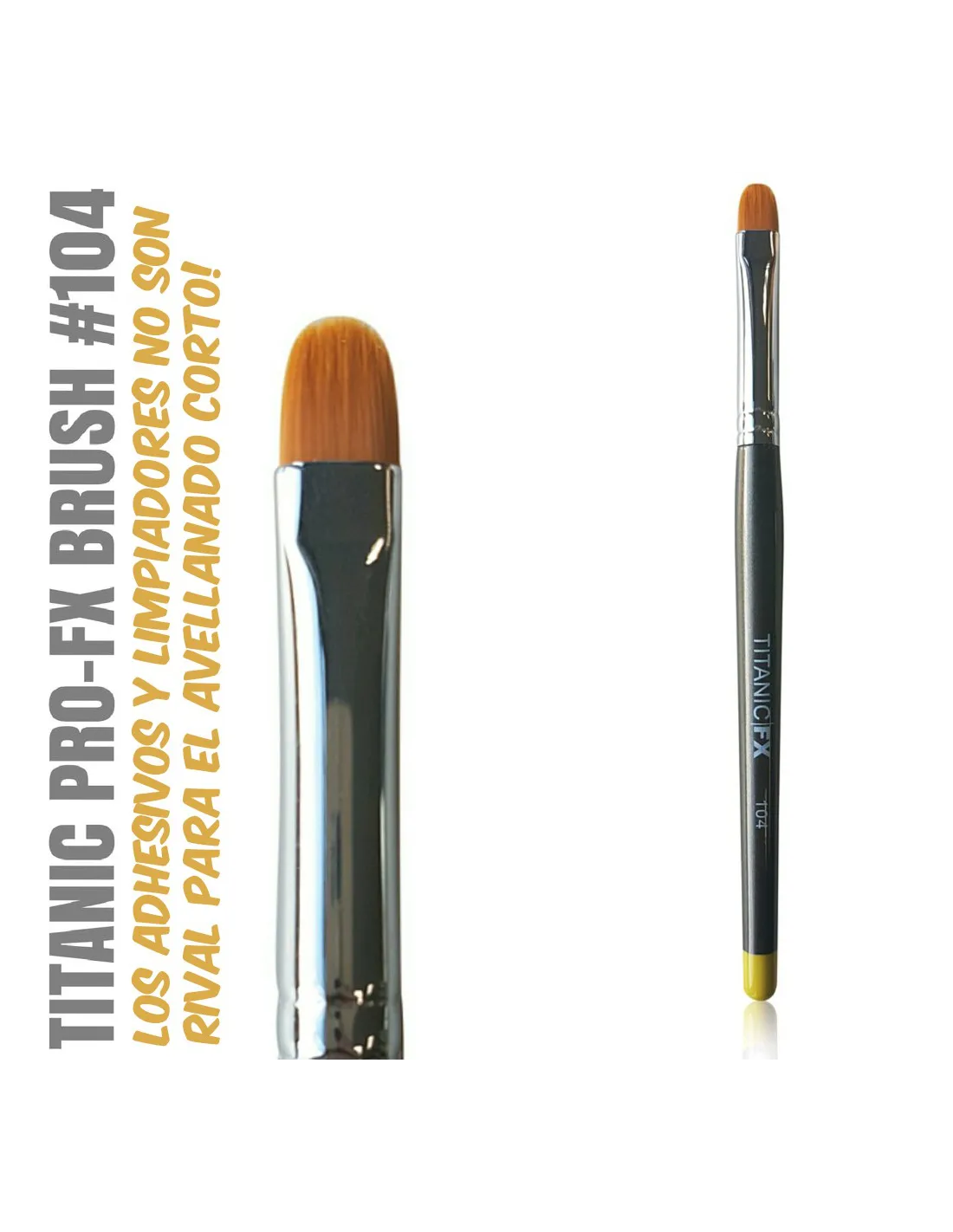
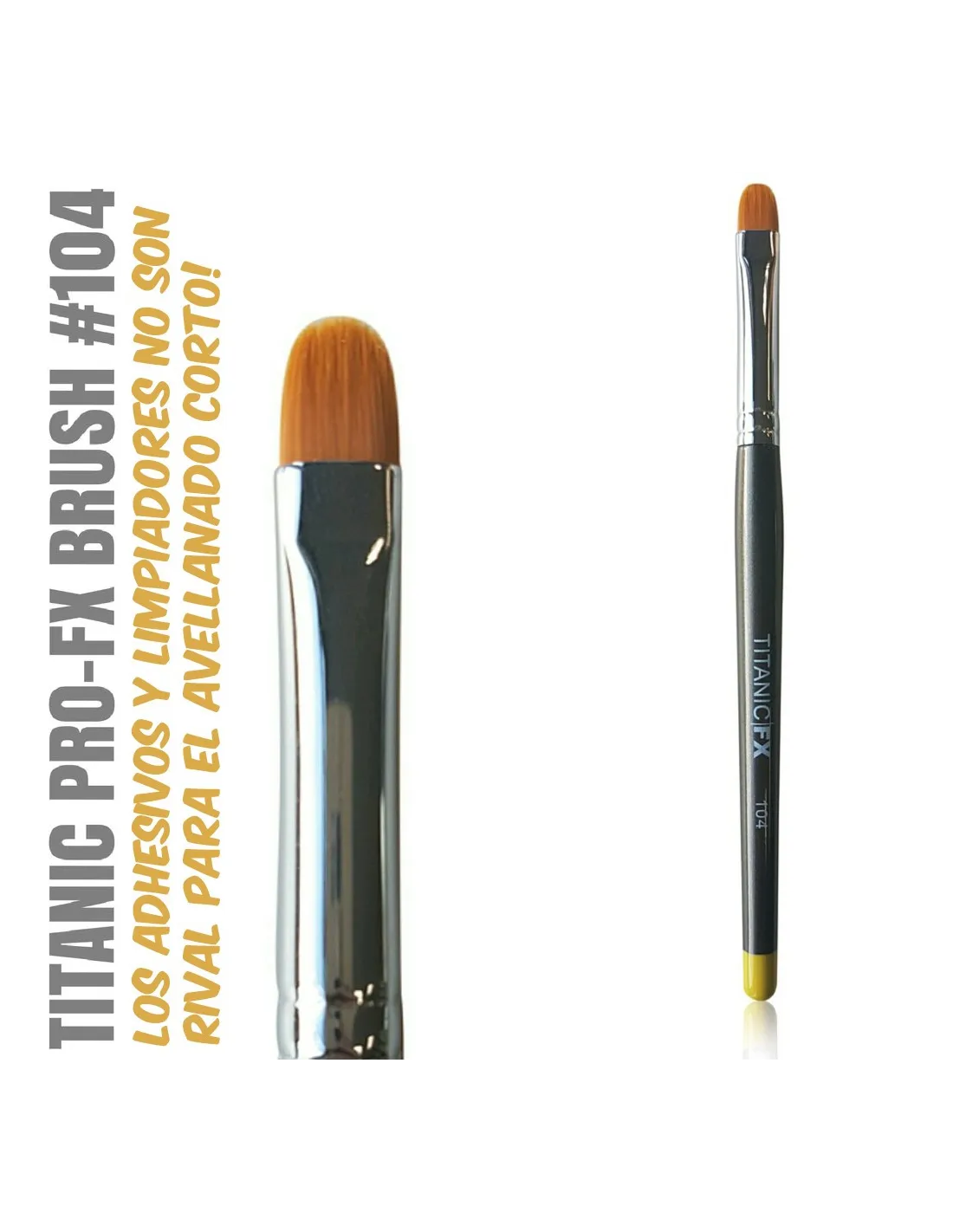
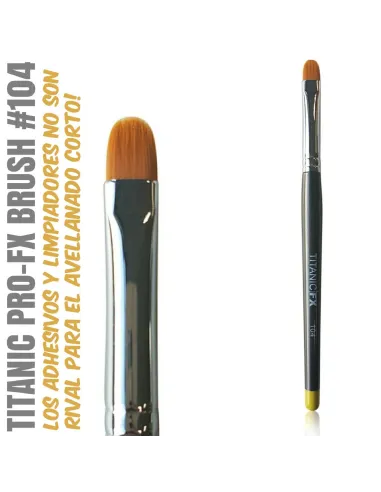
TITANIC PRO-FX BRUSH 104 -Short Countersunk-
615004000
€12.00
14,52 € Tax incl.
14,52 € Tax incl.
Short synthetic vegan bristle flat brush for applying adhesives in FX makeup and prosthetics. Solvent resistant.
The Titanic PRO-FX Brush 104 is a short flat brush with a bevelled cut, designed specifically for special effects makeup work. Its angled trimmed shape allows adhesives and prosthetic products to be applied with precision and without wasting material, and its synthetic vegan bristles have no problem withstanding the solvents commonly used in the workshop.
Technical specifications
| Feature | Detail |
|---|---|
| Brush type | Short bevelled |
| Bristles | Synthetic vegan |
| Solvent resistance | Yes |
| Bonding adhesive | Solvent resistant |
| Materials | Sustainable and ethically sourced |
| Main use | Adhesive application on FX prosthetics |
| Range | Titanic PRO-FX Brush |
What it is used for
This brush is designed for FX makeup professionals, character artists and special effects technicians working with prosthetics and prosthetic materials. Its short bevelled cut makes it especially useful when you need to deposit adhesive in a controlled manner on edges, rims and irregular surfaces without smearing adjacent areas.
- Applying prosthetic adhesives on edges and contact zones of silicone or foam latex prosthetics
- Spreading and distributing medical or FX-grade adhesives on the skin or the prosthetic
- Helping to detach and remove prosthetics using specific solvents
- Working with inks, intrinsic paints and colour layers on silicone prosthetics
- Applying sealers and finishing products on detail areas
- Use on film sets, theatrical performances and audiovisual productions
How to use it
- Clean the brush before first use with a dry cloth to remove any residue from storage.
- Load the brush with a moderate amount of adhesive or other product: the short bristles already limit the amount picked up, take advantage of this for precise control.
- Apply the product with taps or short strokes over the area of the prosthetic or the skin where you need adhesion or colour.
- If you are applying adhesive, wait the open time indicated by the adhesive manufacturer before pressing the prosthetic onto the skin.
- To remove the prosthetic, lightly soak the bristles with the appropriate solvent and work along the edges to gradually break down the adhesion.
- When finished, clean the brush with the solvent appropriate for the product used and leave it to air dry with the bristles facing up or in a horizontal position.
Usage tips
Take care of the bristle bonding adhesive
Although the bristle bond resists the solvents commonly used in FX, avoid leaving the brush to soak for prolonged periods. Always clean after each use and do not leave it submerged in containers with solvent: brief, occasional contact is not a problem, but prolonged soaking can end up loosening the bond over time.
The short bevelled cut is your ally on difficult edges
The angled trimmed shape allows you to reach fine edges of prosthetics with a minimal margin of excess adhesive. If you are working on the edge of a prosthetic ear or along the outline of a scar, rotate the brush taking advantage of the angle to deposit exactly where you need, without the rest of the bristles touching areas that are already clean.
Keep several clean brushes in rotation
In long character makeup sessions, having two or three brushes of this model ready and clean saves you time. While you use one, you can have another cleaning. Store them protected, with a cap or in a hard case, so the bristles do not deform between sessions.
Frequently asked questions
Do synthetic bristles work the same as natural ones for applying adhesives?
For applying prosthetic adhesives, synthetic bristles are actually more recommendable than natural ones. They do not absorb too much product, are easier to clean and perfectly resist the solvents used in FX makeup. The Titanic PRO-FX Brush 104 is formulated exactly for this type of work.
Can I use this brush to apply alcohol-based or silicone paints?
Yes. The synthetic vegan bristles of the Brush 104 withstand both alcohol-based paints and intrinsic paints for silicone. It is a versatile brush within the FX field, although its strong point is adhesive application thanks to its short bevelled cut.
What solvent should I use to clean the brush after using it with adhesive?
The appropriate solvent depends on the adhesive used. In general, contact adhesives and rubber-based adhesives are cleaned with acetone or a specific solvent; silicone adhesives require silicone solvents. Always check the instructions of the adhesive you are using. The important thing is to clean the brush right after each use, before the adhesive cures on the bristles.
Do the bristles fall out with solvent use?
Not with normal workshop use. The adhesive that bonds the bristles to the handle of the Brush 104 is specifically selected to resist solvents. Avoid soaking the brush for long periods and clean it properly after each session, and the bristles will remain firmly held.
What is the difference between this brush and the other models in the Titanic PRO-FX range?
The Titanic PRO-FX Brush range covers different needs within FX makeup. The Brush 101 is a fine liner for very precise strokes, the Brush 102 is an angled liner for clean lines, and the Brush 104 is the short bevelled brush specialised in applying adhesives on edges and contact zones of prosthetics. Each one is optimised for a specific task within the character makeup process.
Can it be used to apply silicone directly onto a prosthetic?
The Brush 104 is primarily designed for adhesives and finishing products. For brushing layers of silicone in moulding or prosthetics work, there are more suitable tools, such as flat brushes or denser bristle brushes. That said, on small detail areas or spot touch-ups, the Brush 104 can be useful if the silicone has the right viscosity.
Is it suitable for professional use on film sets?
Yes. The Titanic PRO-FX Brush range is designed for professional work on set, in theatre and in special effects productions. The robustness of the bristles, the resistance of the bonding adhesive and the sustainable materials make it a reliable tool for long and demanding working days.
No reviews
Tap to zoom