Shopping Cart



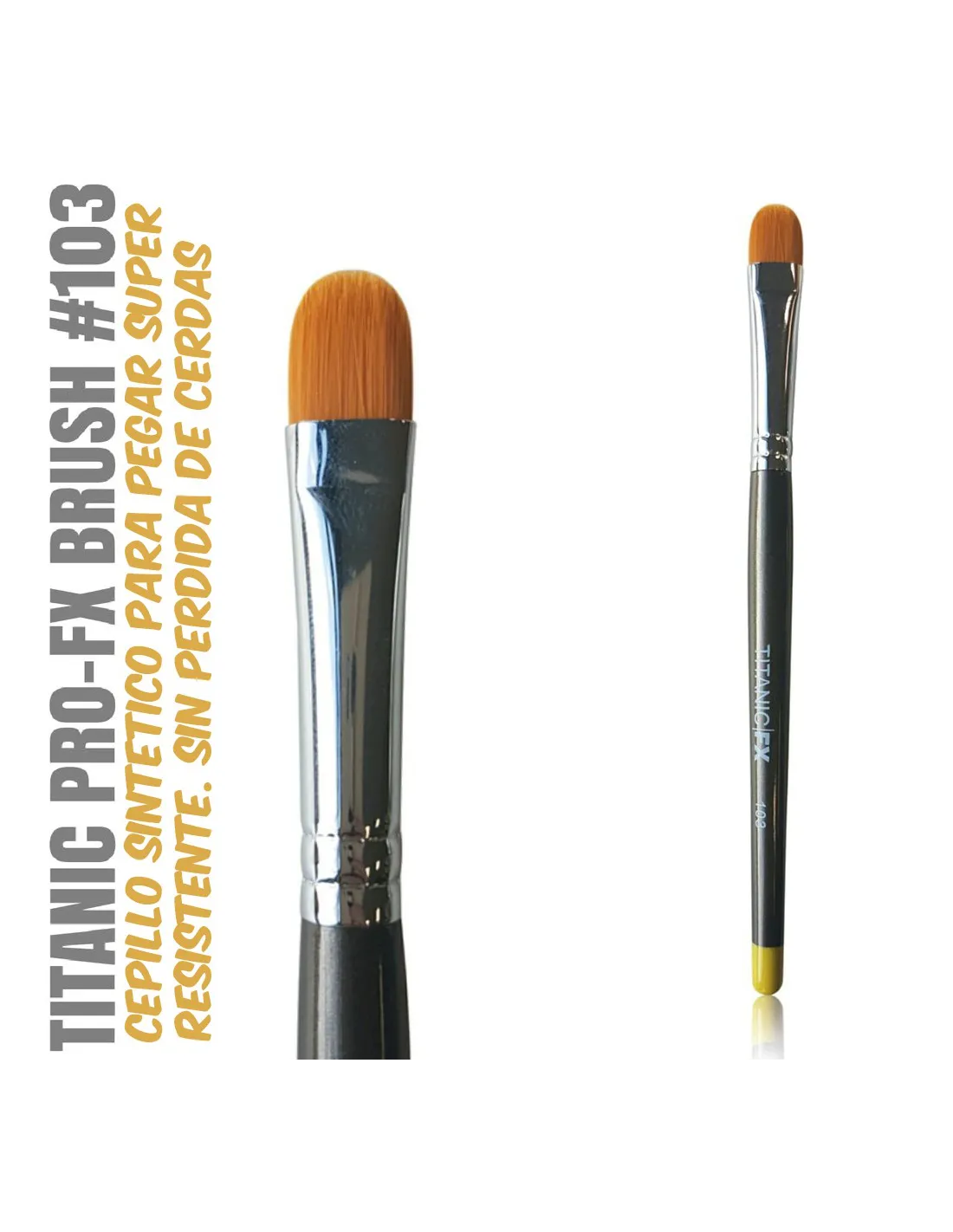
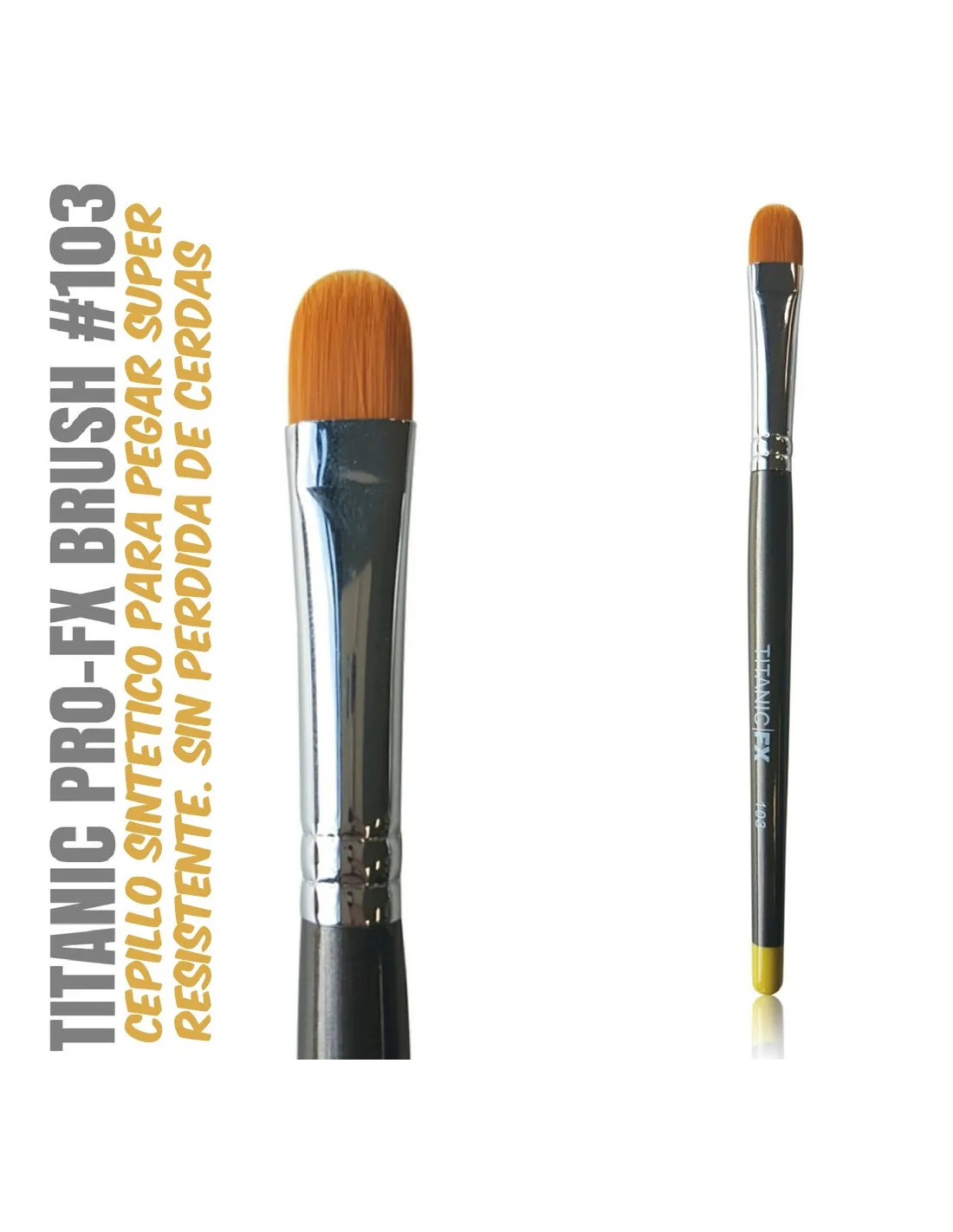
TITANIC PRO-FX BRUSH 103 -Medium countersink-
615003000
€12.00
14,52 € Tax incl.
14,52 € Tax incl.
Medium fan brush with vegan synthetic bristles. Ideal for applying adhesives on FX prosthetics without bristle loss.
The Titanic Pro-FX Brush 103 is a medium fan brush made with vegan synthetic bristles, designed specifically for professional special effects makeup work. Its fan cut allows precise application of prosthetic adhesives and encapsulating materials, withstanding contact with common FX workshop solvents without degrading.
Technical specifications
| Model | Pro-FX Brush 103 |
|---|---|
| Cut type | Medium fan |
| Bristle type | Vegan synthetic |
| Solvent resistance | Yes |
| Binding adhesive | Solvent resistant |
| Materials | Sustainable, ethical manufacturing |
| Recommended use | FX makeup, prosthetics, adhesives |
| Range | Titanic FX Pro-FX Brush |
What it's used for
The medium fan cut of the Brush 103 makes it particularly versatile for tasks requiring controlled product distribution over irregular or large surface areas. It's the go-to brush when you need to cover wide areas with adhesive or paint without losing precision at the edges.
- Application of prosthetic adhesives (encapsulants, glatino, silicone) onto skin or the prosthetic
- Distribution of solvents for prosthesis removal without damaging the skin
- Painting and pigmenting silicone or foam latex prosthetics
- Applying bases and foundations over large areas of the face or body
- Working with liquid encapsulating materials in thin, even layers
- Brushing silicones or latex in successive layers over moulds
How to use it
- Check that the brush is clean and dry before starting. If coming from a previous use, make sure you have completely removed any adhesive or solvent residue.
- Load the brush with just the right amount of product: the fan cut retains material well, so there is no need to overload the bristles.
- Apply the adhesive or material with short, controlled strokes, taking advantage of the cut's width to cover large surfaces evenly.
- For the edges of the prosthetic, rotate the brush and use the edge of the fan to work with greater precision in delicate areas.
- Once the work is finished, clean the brush immediately with the appropriate solvent for the material used (isopropyl alcohol, mild acetone or other synthetics-compatible solvents).
- Rinse with warm water and mild soap if needed, and leave to dry with the bristles facing down or horizontally to preserve the shape of the cut.
Tips
Preserve the fan cut
The fan profile is what sets this brush apart and what you should protect. Never leave it resting on the bristles or store it in a container where the bristles get bent. After cleaning, gently reshape the cut with your fingers and leave to dry horizontally or with the bristles hanging downward.
Cleaning after contact with adhesives
The bristle binding adhesive resists solvents, but that doesn't mean you should leave the brush soaking for extended periods. Always clean at the end of each session: the less time prosthetic adhesive or encapsulant remains on the bristles, the easier the cleaning and the longer the brush's service life. A common workshop trick is to keep a small container with the appropriate solvent to clean the brush between applications.
Combine it with other brushes from the range
For a complete FX workflow, the Brush 103 works best in combination with fine-line brushes for detail work. The Titanic Pro-FX Brush 101 (fine liner) and the Brush 102 (angle liner) are the natural complements to the 103, covering everything from large areas to the finest details without switching tool families.
Frequently asked questions
Do the synthetic bristles withstand contact with strong solvents?
Yes. The bristles of the Pro-FX Brush 103 are synthetic and formulated to resist common FX makeup solvents, such as isopropyl alcohol or acetone at moderate concentrations. In addition, the adhesive that binds the bristles to the handle is also solvent resistant, preventing the bristles from coming loose during work or cleaning.
How many layers can I apply with the same brush without cleaning in between?
It depends on the material. With fast-drying adhesives, the standard practice is to clean the brush between each layer to prevent hardened adhesive from affecting product distribution. If you are working with brushed silicones or slow-curing encapsulants, you can apply several consecutive layers as long as the product has not started to gel on the bristles.
What is the difference between a fan brush and a flat brush for applying adhesives?
The fan cut allows you to work on both large surfaces and areas with relief or curves, as the angled profile adapts better to anatomy. A conventional flat brush tends to deposit more material in the centre than at the edges. For prosthetic applications where uniformity and edge blending are key, the medium fan of the Brush 103 delivers better results.
What types of adhesives is this brush compatible with?
The Brush 103 is compatible with most adhesives used in special effects: alcohol-based prosthetic adhesives, glatino, silicone encapsulants and solvent-based contact adhesives. Thanks to its synthetic bristles and solvent-resistant binding adhesive, it shows no degradation with any of these materials under normal working conditions.
How do I clean the brush if the adhesive has already started to harden?
If the adhesive has begun to cure on the bristles, start with the specific solvent for the adhesive used. If you don't have access to it, 99% isopropyl alcohol usually works well as a starting point for common prosthetic adhesives. Do not force the residue off dry: let the solvent work for a few minutes, then gently work from the base of the bristles towards the tip. Avoid prolonged soaking.
How long does this type of brush last with regular professional use?
Durability depends directly on maintenance. With proper cleaning after each session, brushes in the Titanic Pro-FX range have a long service life for professional use. The usual weak point in any workshop brush is the ferrule area where bristles meet the handle: here, the solvent-resistant adhesive minimises that risk compared to conventional brushes.
Can I also use this brush to paint prosthetics with acrylic or silicone paint?
No reviews
Tap to zoom