Shopping Cart



Rooting needles -rooting needles-
615030000
€50.00
60,50 € Tax incl.
60,50 € Tax incl.
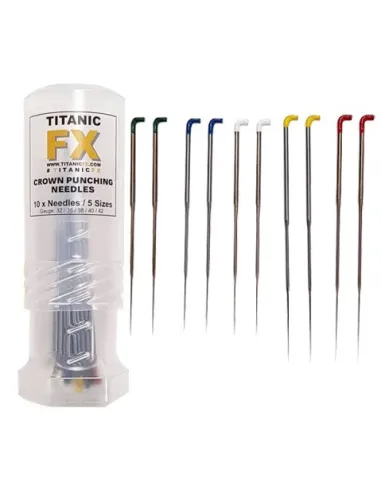
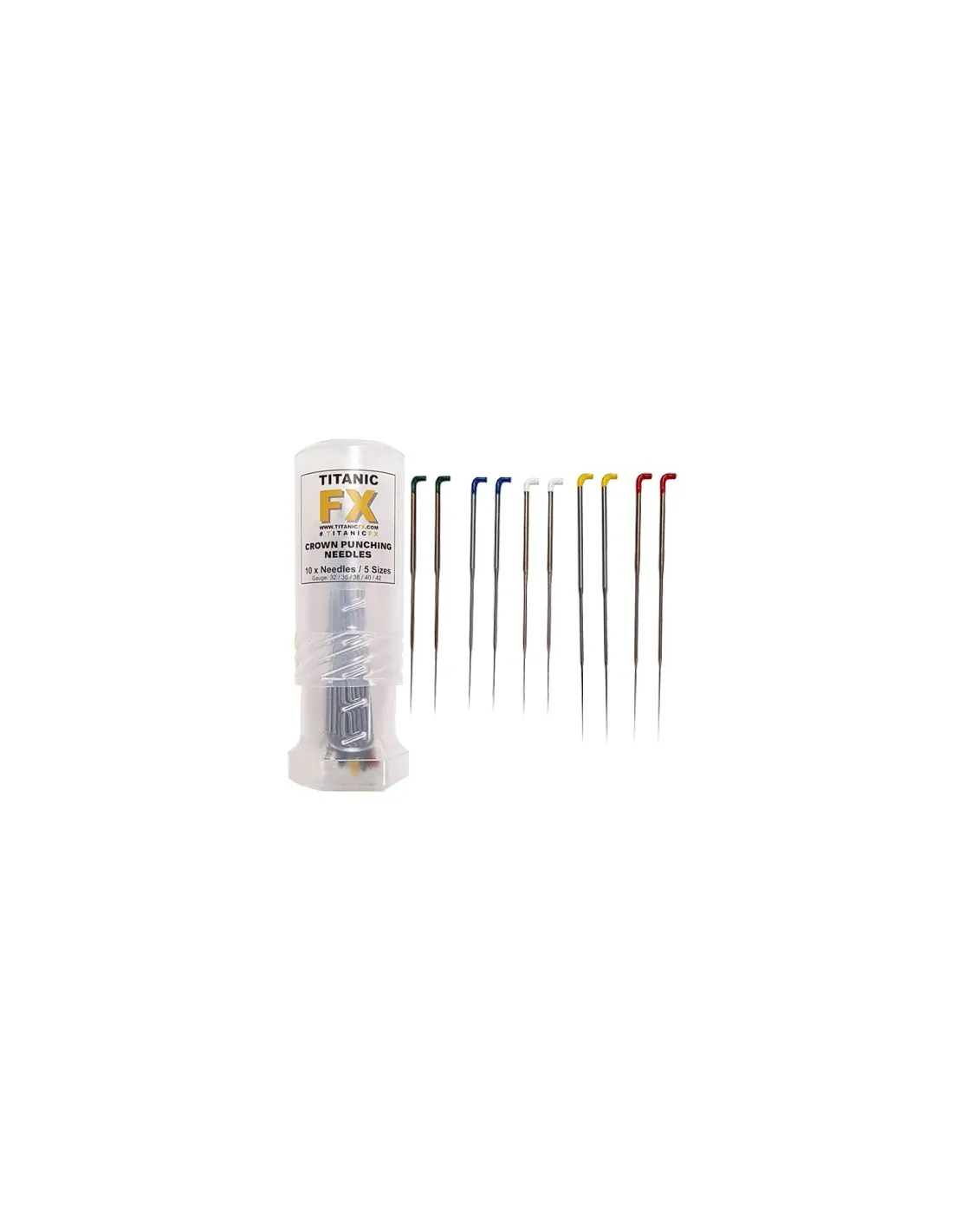
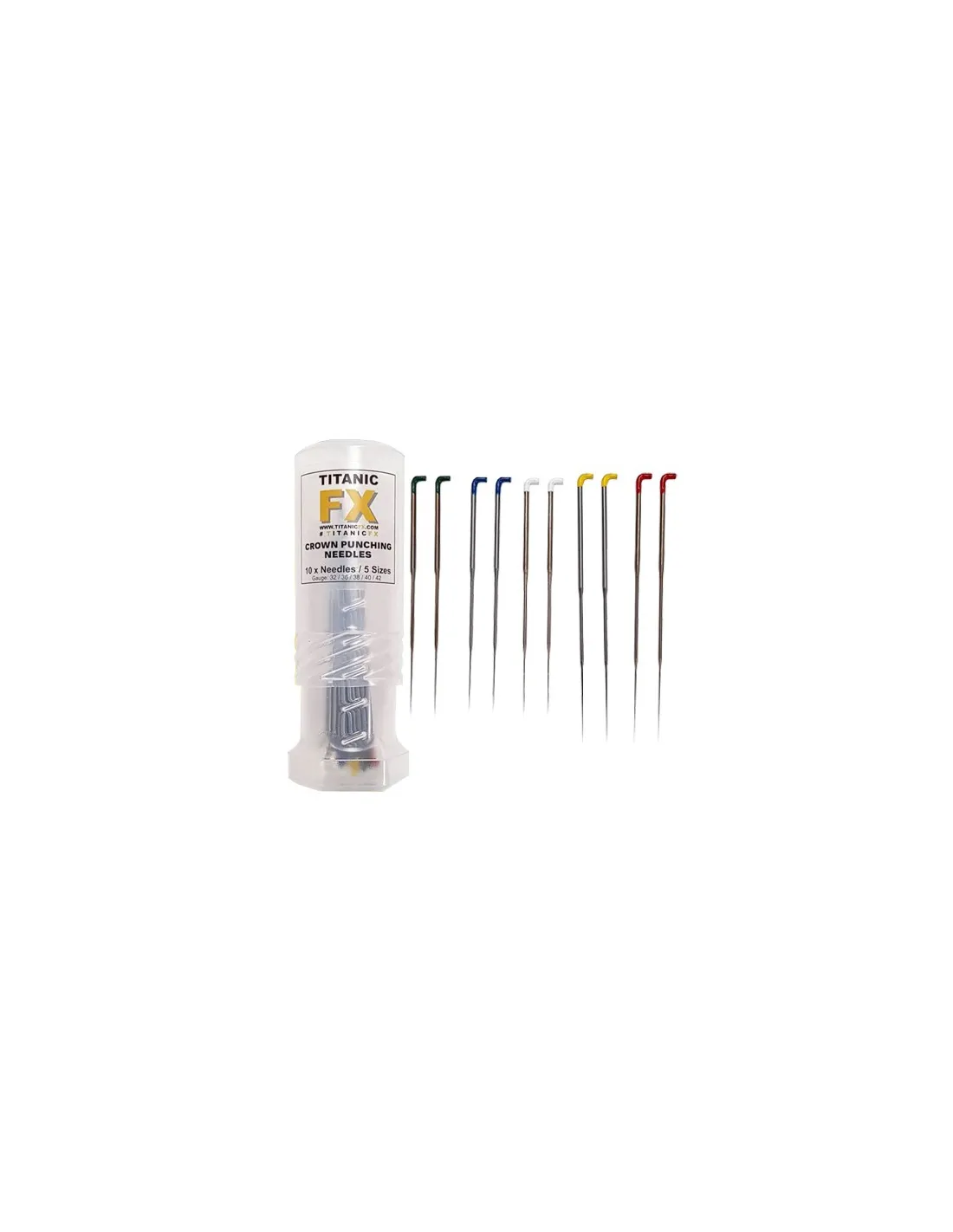
Set of 10 rooting needles for implanting hair into latex, foam latex and silicone masks. 5 sizes (19 to 43) for all fibre types.
Rooting needles are the essential tool for implanting hair, natural hair, mohair or synthetic fibres into masks and special effects pieces made from latex, foam latex or silicone. This complete set includes 10 needles in five different sizes, from the thickest for hidden areas to ultra-fine for the most delicate fibres, allowing you to work with precision and a natural finish on any FX makeup project.
Technical specifications
| Size | Type | Recommended use | Units |
|---|---|---|---|
| 19 | Very thick | Hidden areas, reinforcement zones | 2 |
| 36 | Standard | Standard human hair | 2 |
| 38 | Fine | Fine human hair | 2 |
| 40 | Very fine | Mohair or wool | 2 |
| 43 | Ultra fine | Very thin synthetic fibres | 2 |
What they are used for
Rooting needles are used in special effects workshops, animatronics and theatrical or film character design to implant hair strand by strand into flexible surfaces, achieving a realistic and integrated finish. They are the professional method for adding hair, beards, eyebrows, eyelashes or any type of hair to pieces including:
- Foam latex masks for special effects and theatrical character design
- Poured liquid latex masks
- Silicone pieces (facial prosthetics, bodies, creatures)
- Heads and busts for animatronics and puppets
- Character design pieces for film, television and music videos
- High-detail collector dolls and figures
How to use
- Prepare the piece: make sure the latex or silicone surface is clean, dry and free of Release agent in the area where you are going to implant the hair.
- Select the appropriate needle according to the type of fibre: size 19 for internal or reinforcement areas, size 36-38 for human hair, size 40 for mohair or wool, and size 43 for the finest fibres.
- Cut the hair or fibre into small, manageable bunches, at the desired length plus extra margin for anchoring.
- Fold the bunch in half, forming a loop at the end of the needle.
- Insert the needle perpendicularly into the surface of the piece and push the loop through the material until it is anchored inside.
- Carefully remove the needle and check that the hair is secured. In silicone, the material itself holds the fibres by pressure; in latex and foam latex, you can reinforce with a small drop of latex adhesive on the inside if the piece allows it.
- Repeat the process strand by strand or in small groups, following the natural direction of hair growth for a convincing result.
- Once the implantation is complete, comb, trim and style the hair according to the character design.
Tips and advice
Choose the right needle size
Using a needle that is too thick on a thin-walled silicone piece can damage the surface and create visible perforations. Always work with the finest needle that allows the chosen fibre to pass through. Reserve size 19 for internal areas or specific points where aesthetics are not a priority.
Direction and density
The secret to realistic rooted hair lies in respecting the natural direction of hair growth and slightly varying the angle of each implant. Work in orderly rows, from the nape forward or from the centre outward, depending on the area. A progressive density — finer at the edges, denser in the centre — avoids the "wig" effect.
Needle maintenance and lifespan
Needles wear out with continuous use, especially on high-hardness silicone pieces. Clean them after each session by removing fibre residue and store them protected to prevent bending or loss of sharpness. When you notice the tip becoming blunt and tearing the material rather than perforating it cleanly, it is time to replace it.
Frequently asked questions
Can hair be rooted into platinum silicone?
Yes. In fact, platinum silicone is one of the substrates where the hair rooting technique works best, because the material holds the fibres by friction without the need for additional adhesive. Choose fine needles (sizes 38-43) to avoid compromising the integrity of the piece and work with pieces of sufficient wall thickness.
What is the difference between rooting hair in latex and foam latex?
In foam latex, the spongy texture facilitates anchoring and fibres are retained more easily. In poured liquid latex the wall is thinner and more elastic, so it is advisable to use finer needles and, if necessary, reinforce the anchor on the inside with latex adhesive.
Can these needles be used to implant hair in collector dolls?
Yes, as long as the doll's head is made from latex or silicone. For rigid vinyl or other hard plastics, the rooting technique is not applicable and other hair insertion methods are required.
What type of hair or fibre can I use with these needles?
The needles are designed to work with human hair (natural or salon), animal hair (mohair, wool), synthetic fibres such as saran or modacrylic, and any textile fibre that is sufficiently thin. The needle size to choose depends on the thickness of the fibre: the finer the fibre, the higher the size number.
How many needles do I need for a complete project?
It depends on the size of the piece and the desired density. For a standard-size mask with full hair implantation, it is common to use several needles per project, especially when working with high-hardness silicone. Having at least two sets ensures you never run out of needles in the most commonly used sizes.
Can the needles be reused?
Yes, they are reusable as long as the tip remains in good condition. With use on materials such as silicone, the tips progressively become blunt. A needle in poor condition tears the material instead of perforating it cleanly, which ruins the surface finish of the piece.
How is implanted hair coloured to adjust the tone?
Once implanted, hair or fibres can be coloured with specific hair makeup palettes, which allow you to shade roots, add grey, simulate ageing or adjust the base tone. The Hair Illustrator palettes available at Feroca are the professional reference for this finish.
Is a special tool needed to hold the needle?
Needles can be used directly with the fingers for short sessions, but for longer work it is recommended to use a needle holder or needle handle to improve grip and reduce fatigue. Some professionals adapt handles from fine workshop tools for greater comfort.
No reviews
Tap to zoom