Shopping Cart


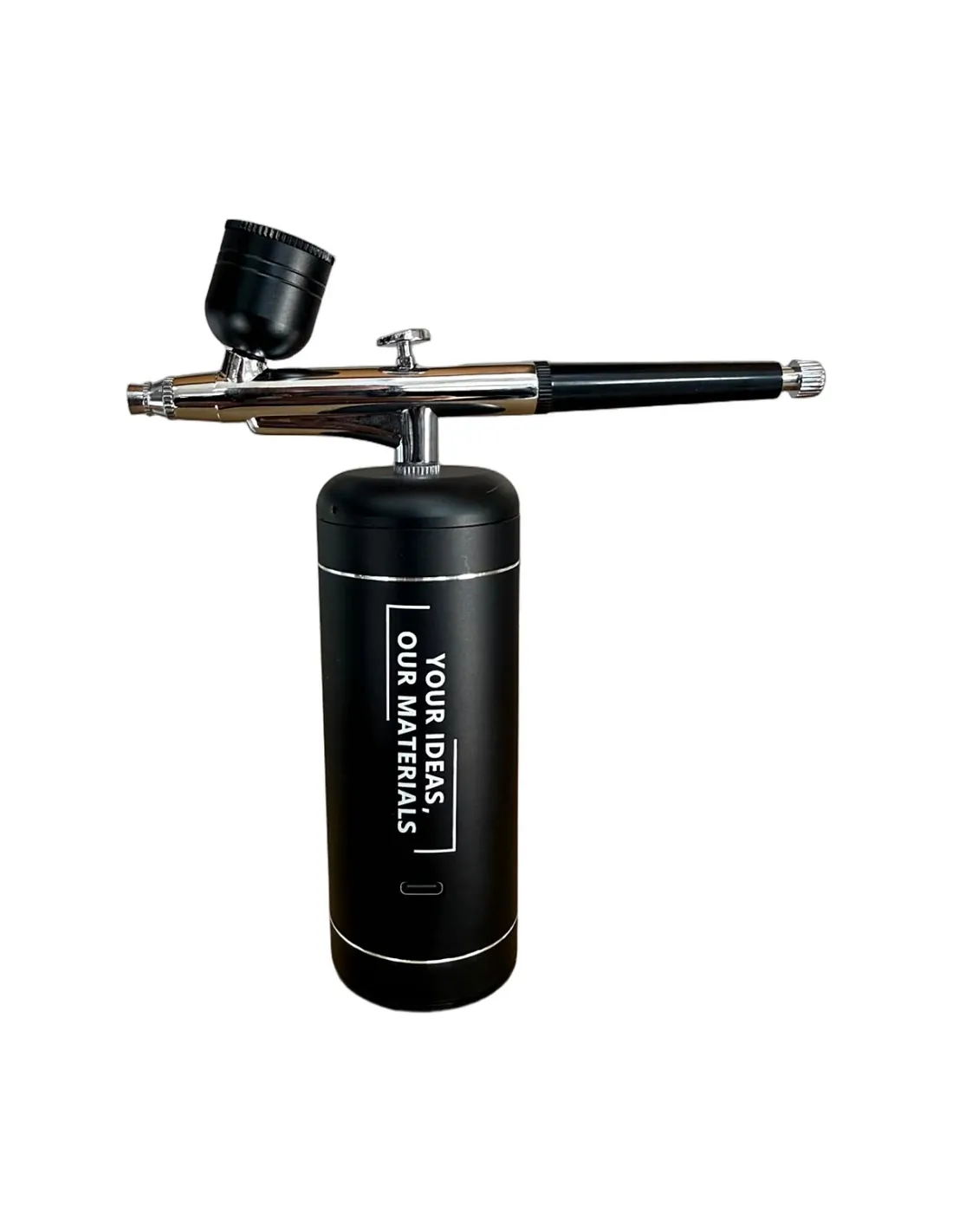
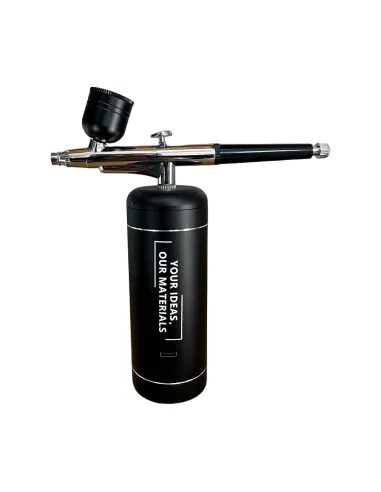
Airbrush with mini compressor
615022031
€35.00
42,35 € Tax incl.
42,35 € Tax incl.
Wireless airbrushing kit with USB-C rechargeable compressor, gravity-feed airbrush, coil hose, extra reservoirs and cleaning set, with 3 power levels (28, 30 and 40 psi). For scale modelling, FX and cosplay.
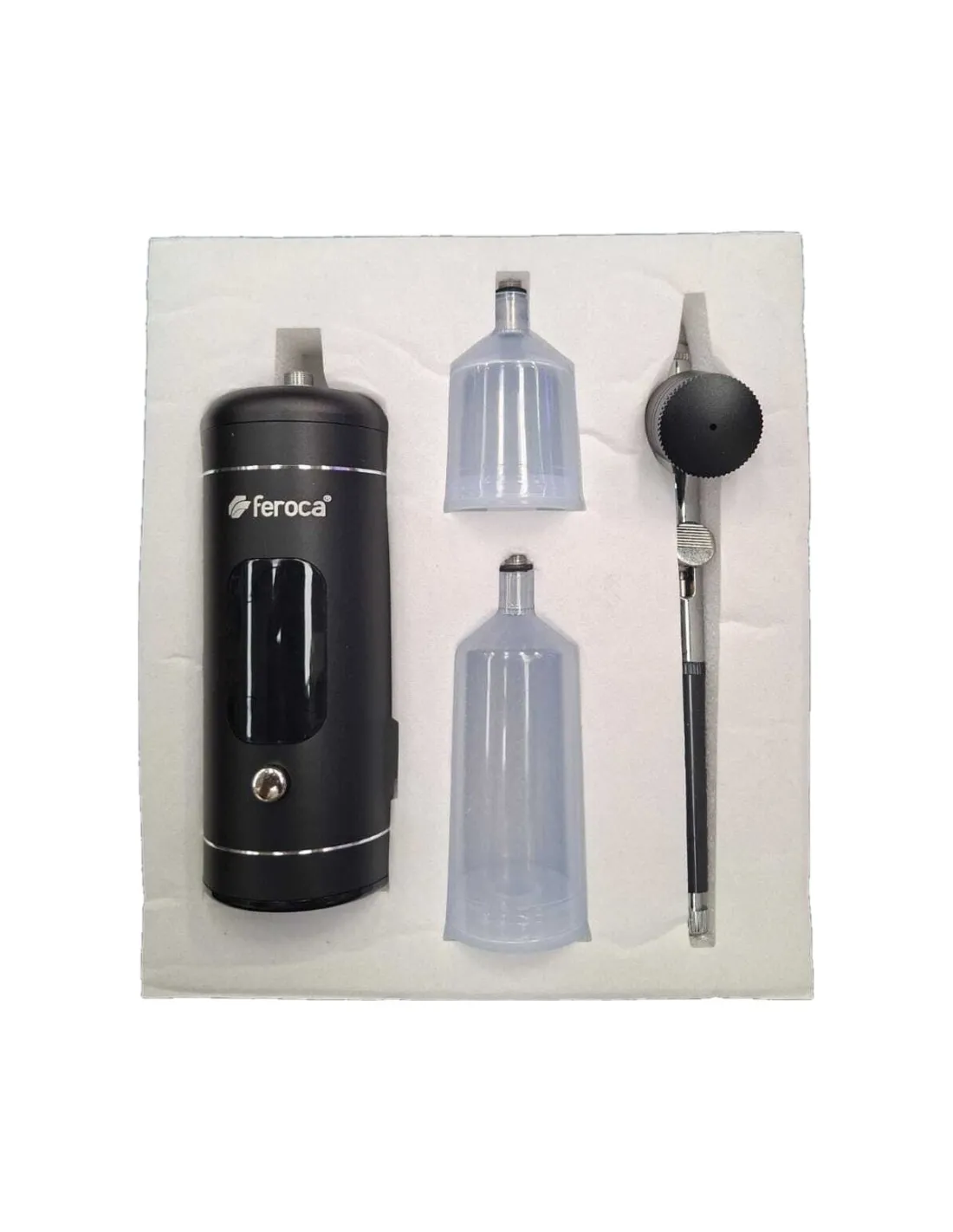
The Feroca «Airbrush System» kit is a complete airbrushing system with a USB-C rechargeable handheld compressor and a gravity-feed airbrush. You can use it in wireless mode —compressor and airbrush as a single unit— or separately via the included coil hose. Everything comes in a box with a custom foam tray, ready to use from the first moment. The compressor has 3 power levels —28, 30 and 40 psi— so you can match the airflow to each paint and type of job.
Technical specifications
| Feature | Detail |
|---|---|
| Airbrush type | Gravity feed (top cup with lid) |
| Trigger | Top trigger |
| Airbrush body | Chrome-plated |
| Compressor | Mini handheld compressor, matte black metal body |
| Power levels | 3 pressure levels: 28, 30 and 40 psi (≈1.9 / 2.1 / 2.8 bar) |
| Compressor charging | USB-C cable (included) |
| Usage modes | Wireless (airbrush screwed onto compressor) / with hose (compressor on desk) |
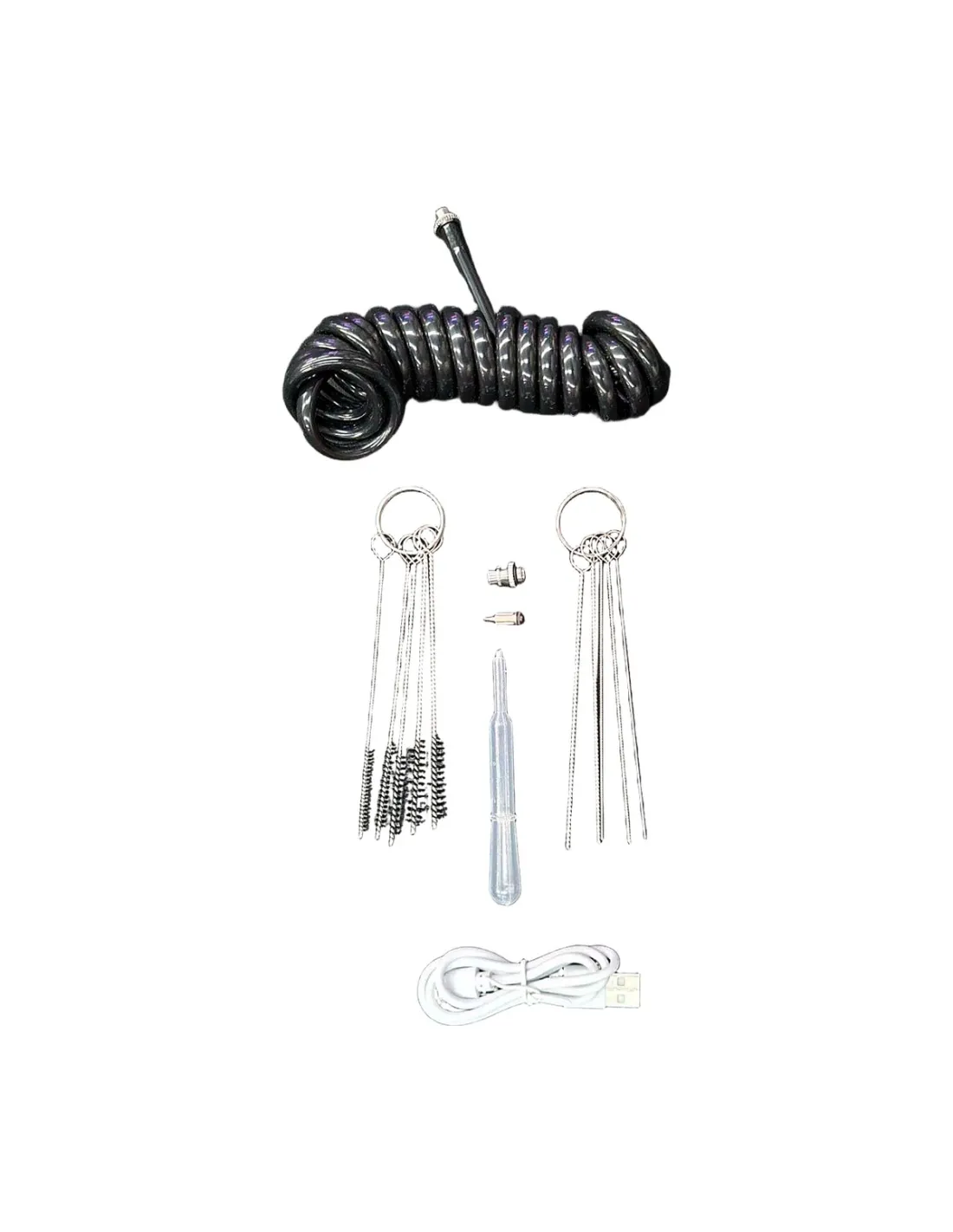
| Hose connection | Coil hose with threaded connector |
| Kit contents | Rechargeable compressor, airbrush with cup, 2 larger transparent reservoirs, coil hose, cleaning brush set, cleaning needle/wire set, replacement nozzle, thread adapter, dosing pipette, USB-C cable |
| Packaging | «Airbrush System» box with custom foam tray |
| Brand | Feroca (own brand) |
What it's used for
This kit is designed for professionals and advanced hobbyists who need a portable and versatile airbrushing system. It works with any fluid paint compatible with airbrushes, from thinned acrylics to alcohol-activated paints and airbrush-specific liquids.
- Scale modelling, wargaming and model kits: applying thin coats of acrylic paint, primers and gradients on miniatures and scale models
- Special effects makeup: alcohol-activated paints and airbrush liquids for FX on skin and prosthetics
- Painting latex masks with latex-specific paints
- Painting silicone prosthetics with silicone paint base
- Props and cosplay pieces: even base coats, weathering effects, gradients and shadows
- Crafts and customisation of garments, footwear and accessories
- Applying airbrush primers on miniatures before painting
How to use it
- Charge the compressor: connect it to the included USB-C cable and wait until the battery is fully charged before first use.
- Prepare the paint: thin it to a milk-like consistency. If it contains lumps or large particles, strain it before filling the cup. Use the appropriate acrylic thinner for acrylic paints.
- Choose your working mode: for greater freedom of movement, screw the airbrush directly onto the compressor and work in wireless mode. If you need longer sessions or prefer a lighter hand, connect the airbrush to the compressor via the coil hose and leave the compressor on the desk.
- Fill the cup: use the included pipette to dose the thinned paint without spills.
- Adjust distance and pressure: start at about 10–15 cm from the surface and regulate the trigger to control paint flow. Apply thin, progressive coats. Choose the power for the job: 28 psi for details and fine lines, 30 psi for general use and 40 psi for large backgrounds or thicker paints.
- Clean the airbrush between colours: empty the cup, add a few drops of specific cleaner and spray until it runs clear. Repeat if necessary.
- Final cleaning: disassemble the needle and nozzle, and clean them with the included brushes and wires. Never store the airbrush with dried paint inside.
Usage tips
Correct paint thinning
The most common cause of clogs is paint that is too thick. The consistency reference is whole milk: if the paint drips slowly from the pipette leaving a thin thread, it is well thinned. For acrylic paints, use a specific airbrush thinner, not water alone, to maintain adhesion and prevent the paint from cracking when dry.
Wireless mode vs. hose
Wireless mode is ideal for short jobs, hard-to-reach areas or when you need to move around the piece. For long sessions or when you work with your hand rested, use the hose: the compressor on the desk reduces wrist weight and the motor heat is not transferred to your hand. Charge the compressor after each session to keep it always ready.
Cleaning: the key to longevity
Cleaning the airbrush immediately after each use is what makes the difference between equipment that lasts years and one that clogs within a few months. Use specific cleaner compatible with the type of paint used (water-based for acrylics, alcohol-based for alcohol-activated paints). If the needle has dried paint residue, do not force it: soak it for a few minutes in the cleaner before removing the residue with a cleaning wire.
Frequently asked questions
What paints are compatible with this airbrush?
It works with any sufficiently fluid and well-thinned paint: acrylics for scale modelling, alcohol-activated paints for FX makeup, latex-specific and silicone-specific paints, and airbrush liquids in general. The key is that the paint is thinned to a milk-like consistency and strained if it has particles. It is not compatible with aggressive solvent-based paints or enamels without prior thinning.
What does the airbrush kit include?
Everything you need to start painting: the rechargeable mini compressor with its USB-C charging cable, the gravity airbrush with cup and lid, two larger transparent reservoirs, the coil hose, a replacement nozzle, a thread adapter, a dosing pipette and a set of cleaning brushes and wires. It comes in a box with a custom foam tray for storage and transport.
How do I prevent the nozzle from clogging?
The most common clog comes from paint that is too thick or from dried paint residue on the needle. Thin the paint correctly before painting, strain it if there are lumps and always clean the airbrush as soon as you finish, without letting paint dry inside. If it is already clogged, soak the needle and nozzle in specific cleaner and use the included wires to clear the channel.
At what distance should I paint to get a fine line?
For fine, precise lines work at about 5–8 cm from the surface, with the trigger pressed gently. For wide base coats and gradients, increase the distance to 15–20 cm and open the trigger more. Always practise on a piece of paper or card before moving to the final piece.
What should I use to clean the airbrush after using alcohol-activated paints?
For alcohol-activated paints you need a compatible cleaner, typically high-purity isopropyl alcohol or a specific cleaner formulated for that type of paint. Water alone is not enough to dissolve alcohol-based pigments. Use the included brushes and wires for mechanical cleaning of the needle and nozzle.
Can it be used to paint directly on skin?
Yes, as long as you use paints specifically formulated for application on skin, such as liquid paints for FX makeup. Never use modelling paints or other non-cosmetic-grade paints on skin.
Is it compatible with conventional studio compressors?
The airbrush connects via a threaded connector and the kit includes the coil hose and a thread adapter. To use it with a studio compressor, first check that its outlet thread matches that of the hose or the adapter.
Do I need to prime pieces before airbrushing?
In scale modelling and miniatures, priming greatly improves adhesion and allows you to see detail better before painting. You can use a grey primer applied by brush or airbrush as a first coat. For porous surfaces such as latex or silicone, consult the specific recommendations for each paint.
No reviews
Tap to zoom